

The political landscape of Argentina underwent a seismic shift in late 2023 with the election of Javier Milei, a self-described anarcho-capitalist who campaigned with a literal chainsaw to symbolize his intent to slash state bureaucracy and public spending. While his primary focus has been the stabilization of a nation plagued by triple-digit inflation and chronic debt, a central pillar of his "shock therapy" economic model involves the aggressive exploitation of Argentina’s vast, untapped natural resources. Chief among these is copper, a mineral that has become the linchpin of the global transition toward renewable energy. As Milei moves to dismantle long-standing environmental regulations to facilitate foreign investment, the country finds itself at a crossroads between the promise of an economic windfall and the risk of irreversible ecological degradation in the Andes Mountains.
The shift in policy represents a departure from decades of protectionist and interventionist strategies that left much of Argentina’s mineral wealth in the ground. While neighboring Chile leveraged the same geological formations to become the world’s leading copper producer, Argentina’s mining sector has remained largely dormant. However, with global demand for copper projected to rise by 30% by 2040 to meet the needs of electric vehicle (EV) production and power grid upgrades, the Milei administration views the current moment as a "golden opportunity" to integrate Argentina into the global green energy supply chain.
The Economic Context: From Stagnation to Exploitation
Argentina’s economic history over the last two decades has been defined by volatility. Since the 2001 sovereign default, the country has struggled with access to international credit, leading to a reliance on currency controls and export taxes. By the time Milei took office, the poverty rate had climbed above 40%, and the central bank’s reserves were depleted. In this context, the mining sector—particularly copper and lithium—is viewed as one of the few viable paths toward generating the hard currency needed to stabilize the peso and service international debt, including a massive $44 billion program with the International Monetary Fund (IMF).
Copper is uniquely positioned to drive this growth. Unlike lithium, which has seen volatile price swings, copper remains a fundamental industrial commodity with a supply-demand gap that experts warn could delay the global energy transition. According to data from the International Energy Agency (IEA), a single EV requires roughly two and a half times more copper than a conventional internal combustion engine vehicle. Furthermore, wind and solar installations are significantly more copper-intensive than fossil fuel power plants.
Argentina currently has no active copper mines; its last major operation, Alumbrera, ceased production in 2018. However, the country sits on estimated reserves of over 65 million tonnes of copper. To unlock this potential, Milei has moved to harmonize the business environment with international standards, proposing the "Rigi" (Incentive Regime for Large Investments), which offers 30 years of tax, customs, and exchange stability for projects exceeding $200 million.
The Legislative Battle: Reforming the Glacier Protection Law
The most significant hurdle for mining companies in Argentina has historically been the National Glacier Protection Law. Enacted in 2010, the law—officially known as the Minimum Standards for the Preservation of Glaciers and the Periglacial Environment—was hailed by environmentalists as a landmark achievement. It prohibited mining, oil, and gas drilling in glacier and periglacial zones, defining these areas as "strategic water reserves" for human consumption and agriculture.
In April 2024, as part of a broader legislative package, the Argentine Congress voted to reform this law. The amendment shifts the responsibility for identifying and protecting these zones from federal scientific bodies to provincial governments. Under the new framework, provincial authorities have the power to determine if a periglacial area is hydrologically "relevant" before granting mining permits.
Proponents of the reform, including the governors of mineral-rich provinces like San Juan, Catamarca, and Salta, argue that the 2010 law was overly broad and hindered development in areas with no significant water value. Critics, however, argue that this "federalization" of environmental oversight is a veiled attempt to bypass scientific rigor in favor of short-term economic gains. Juan Pablo Milana, a professor of geological science at the Universidad Nacional de San Juan, warns that the change creates a "crisis of representation," where local governments may prioritize corporate royalties over the long-term water security of their populations.
The McEwen Factor: Los Azules and the New Mining Paradigm
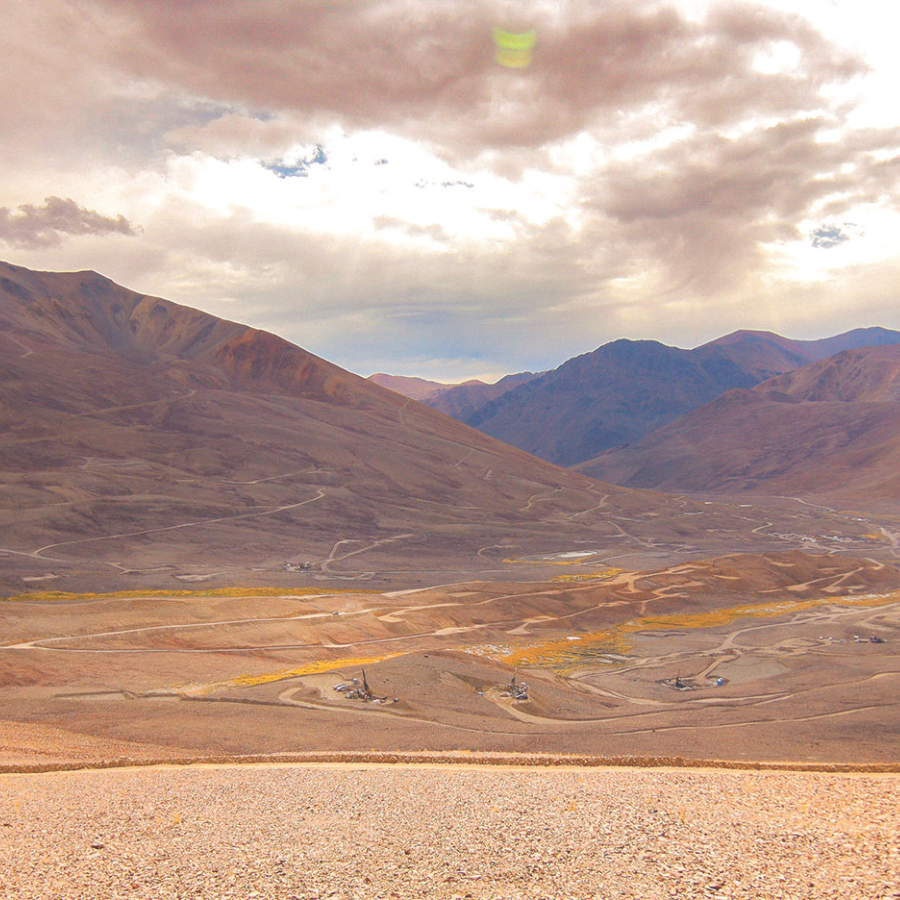
At the center of this burgeoning "copper rush" is McEwen Copper Inc., a subsidiary of the Canadian firm McEwen Mining, led by industry veteran Rob McEwen. The company’s flagship project, Los Azules, is located in the San Juan province at an elevation of 3,500 meters. A feasibility study completed in late 2023 suggests the site could produce approximately 327 million pounds of copper cathode annually, with an estimated net present value of $2.9 billion.
Rob McEwen, a member of the Canadian Mining Hall of Fame and the founder of Goldcorp, is positioning Los Azules as a "model for the 21st century." To counter the mining industry’s checkered reputation in South America, McEwen has proposed several "green" initiatives:
- Heap Leaching Technology: A process that uses significantly less water and energy than traditional milling and smelting.
- Renewable Energy: A commitment to powering the entire operation with wind and solar energy.
- Net-Zero Ambitions: A goal of achieving carbon neutrality by 2038.
- Transparency: Engaging world-renowned architects to design futuristic, sustainable worker accommodations and even a hotel to allow the public to observe operations.
Despite these promises, the project has faced legal challenges from environmental NGOs, which allege that the mine’s infrastructure will inevitably damage periglacial landforms that act as critical water storage in an increasingly arid region.
A History of Distrust: Environmental Violations and Public Backlash
The skepticism toward the mining boom is rooted in a history of environmental accidents. The Canadian giant Barrick Gold, which operates the Veladero gold mine in San Juan, has been a lightning rod for criticism. Between 2015 and 2017, the mine experienced three separate cyanide solution spills, leading to multi-million dollar fines and temporary shutdowns. These incidents galvanized a national movement against "megaminería" (mega-mining), leading to several provincial bans on open-pit mining that Milei is now pressuring local leaders to overturn.
The Argentine Association of Environmental Lawyers and Greenpeace Argentina have led the charge against the recent legislative reforms, gathering nearly a million signatures for a petition declaring the changes unconstitutional. They argue that the reforms violate the "non-regression principle" of environmental law, which prohibits the weakening of existing protections.
Chronology of the Argentine Copper Shift
- 2010: Argentina passes the National Glacier Protection Law, the first of its kind globally.
- 2015-2017: Multiple cyanide spills at the Veladero mine spark nationwide anti-mining protests.
- 2018: Copper exports fall to zero following the closure of the Alumbrera mine.
- 2019: The Supreme Court of Argentina upholds the constitutionality of the Glacier Law after a challenge by Barrick Gold.
- December 2023: Javier Milei is inaugurated, promising to deregulate the economy.
- April 2024: Congress passes reforms to the Glacier Law, transferring oversight to the provinces.
- Late 2024: The "Rigi" investment incentive program is implemented to attract major mining capital.
- 2025 (Projected): Construction is expected to begin at the Los Azules and Josemaría copper projects in San Juan.
- 2030 (Projected): Target date for Argentina to re-enter the global market as a significant copper exporter.
Broader Implications and Global Analysis
The developments in Argentina reflect a broader tension in the Global South regarding the "just transition." While developed nations in the Global North require massive quantities of minerals to reach their net-zero targets, the ecological and social costs of extracting those minerals are often borne by communities in South America, Africa, and Southeast Asia.
Leandro Gómez, of the Environment and Natural Resources Foundation (FARN), argues that the current model of the energy transition is "extractivist," focusing on the removal of wealth with little regard for local ecosystems. "The Global South is once again being asked to sacrifice its water and its mountains to fuel the consumption of the North," Gómez stated in a recent briefing.
Conversely, proponents of Milei’s plan argue that failing to develop these resources is a form of "poverty traps." They point to the fact that Chile has managed to maintain a robust mining sector while protecting its environment through sophisticated (though often contested) regulatory frameworks. For Argentina, the challenge will be to prove that it can provide the legal stability required by investors like Rob McEwen while maintaining the scientific integrity necessary to protect its most precious resource: water.
As the first shovels prepare to hit the ground in San Juan, the world is watching to see if Argentina can successfully navigate this "copper rush." If Milei succeeds, Argentina could become a major player in the 21st-century economy. If the environmental safeguards prove insufficient, however, the country risks a "bust" that could leave its Andean water towers—and the communities that depend on them—permanently scarred.
