

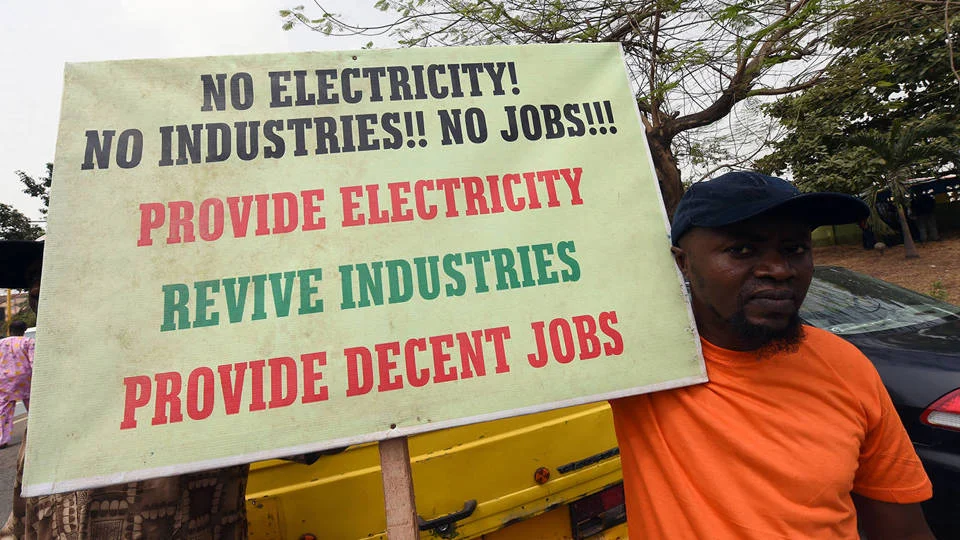
Africa stands at a critical juncture, possessing immense fossil fuel reserves yet grappling with the paradox of widespread extreme poverty and a lack of universal access to electricity. The continent holds approximately 125 billion barrels of confirmed oil and over 620 trillion cubic feet of natural gas, with substantial undiscovered deposits likely awaiting exploration. Despite this geological wealth, an estimated 600 million Africans remain without electricity, a figure that has stagnated since the COVID-19 pandemic and is projected to exceed half a billion by 2030. The core of this enduring challenge lies not in the scarcity of resources, but in the political decisions made by those in power, who have demonstrably prioritized hard-currency export revenues over domestic development and public investment.
The stark reality is that every barrel of oil exported from an African port to global markets represents a kilowatt-hour of potential electricity that could power homes, schools, and businesses across the continent. Similarly, long-term liquefied natural gas (LNG) contracts signed with foreign utilities commit vital energy resources that could fuel hospitals and drive industrial growth within Africa. This fundamental choice between exporting hydrocarbons for immediate foreign exchange and utilizing them for internal electrification is a consequential one, yet it is seldom subjected to open public debate. This article delves into the intricate dynamics of this energy paradox, exploring the economic justifications for exports, the compelling case for domestic utilization, and the pervasive distortions that have hindered equitable resource distribution.
The Rationale for Hydrocarbon Exports
The imperative for African nations to export their oil and gas is rooted in a complex web of economic dependencies. The continent relies heavily on imports for essential goods such as food, medicines, capital equipment, and manufactured products that are not yet produced at scale domestically. For many oil and gas-producing countries, these exports serve as the primary, and often the only, reliable source of foreign exchange. Without this inflow of hard currency, these nations would struggle to finance crucial imports, service their sovereign debt, and maintain the fiscal capacity necessary for basic governance and public services.
For instance, countries like Nigeria, Angola, and Equatorial Guinea have, for decades, depended on oil revenues to balance their national budgets and fund development projects. In the absence of robust domestic industrial bases or diversified export portfolios, hydrocarbons have historically been the bedrock of their foreign exchange earnings. This reliance is not merely a matter of preference but often a structural necessity dictated by global trade dynamics and the current state of their economies.
The Compelling Case for Domestic Electrification
Conversely, the argument for prioritizing domestic energy use is equally powerful, if not more so, when considering the well-being of African populations. Nigeria, for example, possesses sufficient natural gas reserves to achieve 100% electrification within its borders. Across the continent, numerous gas-to-power projects have demonstrated technical viability, offering a tangible pathway to energy independence and economic advancement.
The International Energy Agency (IEA) estimates that achieving universal electricity access in Africa would necessitate an annual investment of approximately $15 billion over a decade. While current annual commitments hover around $2.5 billion, a significant portion of this funding gap could be bridged by strategically deploying domestically produced hydrocarbons. This would not only address the immediate energy deficit but also lay the foundation for sustained economic growth and improved living standards.
From an economic theory standpoint, exporting a barrel of oil and using it to generate electricity domestically should, in principle, yield equivalent national wealth. This equivalence hinges on two critical conditions: sound governance and free market pricing. If the proceeds from oil exports are wisely invested and if domestic energy is priced at its true opportunity cost, the national benefit should be comparable.
The Distorting Realities: Corruption, Subsidies, and Geopolitics
However, in reality, neither of these conditions has been consistently met across many African hydrocarbon-producing nations. The most significant distortion is pervasive corruption. Instead of being channeled into electrification projects and broader public investment, hydrocarbon revenues are frequently siphoned off by elites. Nigeria, a nation that has generated over $600 billion in oil revenues since the 1960s, paradoxically continues to experience one of the world’s highest rates of extreme poverty. Similarly, Equatorial Guinea, despite achieving the continent’s highest per capita GDP during oil boom years, finds that over half of its population lives below the poverty line.
Research tracking offshore bank accounts has revealed that approximately 15% of windfall gains flowing to petroleum-producing countries with weak institutional safeguards end up in the hands of those in power. This "easy money" is often spent on conspicuous elite consumption rather than on essential public infrastructure and services that would benefit the wider population.
A second major distortion is the widespread practice of domestic energy subsidies. In many African producer states, consumers pay significantly less for fuel and electricity than their actual production or import costs. Angola, for instance, boasts the world’s fourth-cheapest retail gasoline prices, while Nigeria has historically maintained domestic gas prices so low that the development of gas-fired power plants becomes commercially unviable.
These subsidies, while often presented as a means of alleviating the burden on citizens, are in fact a cornerstone of the petrostate political economy. They serve as a diffuse benefit distributed to the populace, a subtle way to deflect attention from the vast wealth being extracted on their behalf but not equitably shared. Critically, these artificially low prices send misleading signals to both investors and governments, making hydrocarbon exports appear economically superior to domestic utilization, even when a welfare-based economic analysis would suggest otherwise.
Geopolitical Shocks Fueling Export Orientation
Recent geopolitical events have further exacerbated this dynamic, creating a third significant factor influencing Africa’s energy choices. Russia’s full-scale invasion of Ukraine in February 2022 led to the severance of approximately 80 billion cubic meters of annual gas supplies to Europe. This disruption, coupled with subsequent conflicts in the Middle East, tightened global LNG markets considerably. Consequently, European governments found themselves actively seeking new energy suppliers, turning to African nations like Algeria, Senegal, Mauritania, and Angola.
In 2023, Algeria emerged as the European Union’s second-largest pipeline gas supplier, providing 20% of imports, significantly increasing its export volumes. Angola has redirected LNG cargoes westward, and a new project off the coast of Mauritania and Senegal shipped its inaugural cargo to Atlantic markets in 2025.
For African hydrocarbon producers, this surge in global demand has translated into both increased revenues and a form of political justification for deepening their export orientation. Committing to 20-year gas supply contracts with Europe can be framed as an act of international solidarity and strategic diplomacy, rather than as a conscious decision that detracts from domestic electrification efforts.
There is a profound irony in this situation. While European governments collectively spent over $640 billion to shield their citizens from the economic fallout of the Ukraine crisis, a portion of these expenditures has indirectly bolstered the revenues of African producer governments. However, in many of these countries, these enhanced revenues are not flowing outwards to electrify households but are instead captured by elites, perpetuating the cycle of inequality.
A Looming Reckoning: Demographics and the Energy Transition
A significant reckoning for Africa’s energy policy appears inevitable. The continent’s population is projected to reach 2.5 billion by 2050, and with rapidly increasing domestic energy demand, Africa is on course to transition from a net energy exporter to a net energy importer by the early 2030s. This demographic shift presents a profound challenge: it is politically unsustainable for a young, urbanizing, and increasingly electricity-dependent population to endure persistent blackouts in countries that are visibly endowed with vast energy resources.
Furthermore, the global energy transition, driven by the imperative to combat climate change, is steadily narrowing the window during which oil and gas can be exported at premium prices to willing international buyers. As developed nations accelerate their shift towards renewable energy sources, the long-term demand for fossil fuels, particularly from traditional export markets, is likely to decline. This impending shift underscores the urgency for African nations to re-evaluate their energy strategies and prioritize the development of sustainable, domestically-focused energy systems.
The Path Forward: Reform or Instability?
The critical question facing African leaders is whether this necessary adjustment will be driven by deliberate, forward-thinking reform or by the destabilizing forces of mismanagement and public discontent. Meaningful reform would entail strengthening institutions to curb rent-capture, implementing energy pricing mechanisms that accurately reflect domestic opportunity costs, and systematically channeling hydrocarbon revenues towards widespread electrification and sustainable development initiatives.
The current trajectory, however, suggests a continuation of the status quo, where the crucial decisions about resource allocation are made in opaque forums, with little input from the citizens who are most affected. Africans are not being afforded a genuine choice between receiving foreign currency and powering their homes and industries. They are not being fully informed about which decisions are being made in their name, by whom, and for whose ultimate benefit. This pervasive silence surrounding energy policy is itself a political choice, and breaking it is the essential first step towards any serious and equitable reform. The continent’s future prosperity and stability hinge on its ability to shift from a model of resource extraction for export to one of resource utilization for domestic empowerment.
