

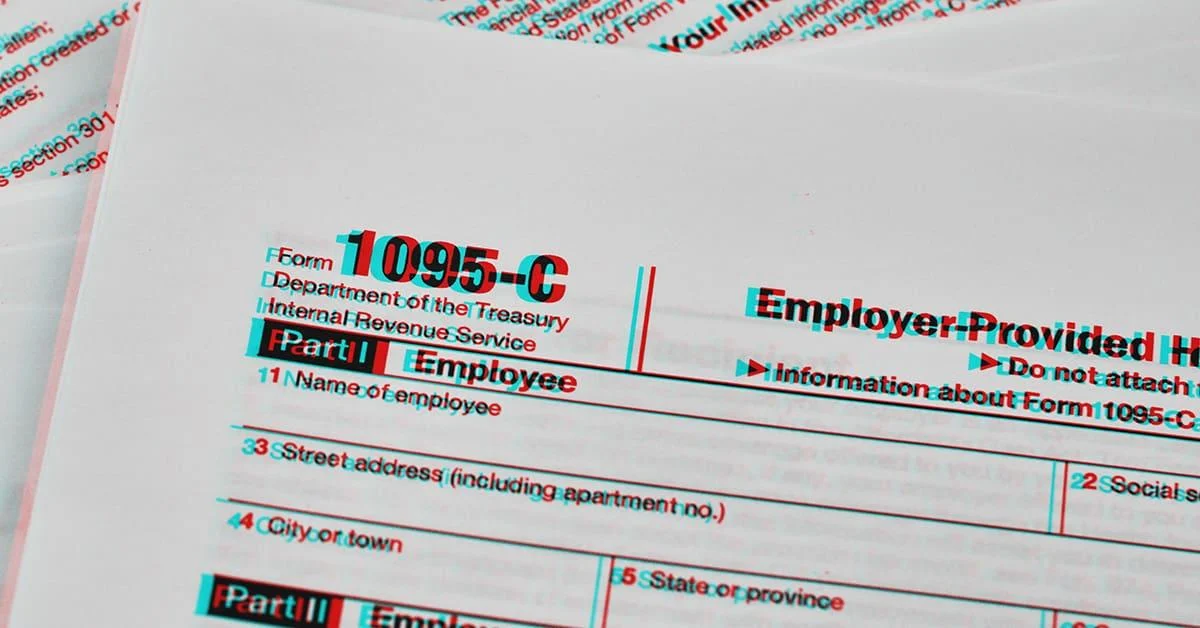
The annual rush to furnish and file IRS Forms 1095-C, a critical component of Affordable Care Act (ACA) compliance for employers, is a recurring pattern that often culminates in a frantic scramble for many organizations. However, according to John Sansoucie of CogNet, the root cause of these eleventh-hour crises rarely stems from a misunderstanding of the complex ACA legislation itself. Instead, the primary culprits are deeply entrenched operational and data management issues that only surface during the high-pressure filing season, leaving businesses with precious little time to rectify errors. Sansoucie posits that effective ACA compliance is fundamentally a data governance problem, and proactively managing ordinary employee lifecycle changes throughout the year can transform a stressful filing period into a mere administrative formality.
For decades, the ACA has mandated that applicable large employers (ALEs) offer affordable, minimum value health coverage to their full-time employees and their dependents, or face potential penalties. The IRS requires employers to report this coverage information on Forms 1095-C and 1094-C. These forms, due annually to both employees and the IRS, present a detailed snapshot of an employer’s health coverage offerings and an employee’s eligibility and enrollment status. The complexity of these reporting requirements, coupled with the sheer volume of employee data involved, creates a fertile ground for errors, particularly when data is not consistently or accurately maintained throughout the year.
The Illusion of Legal Understanding Versus the Reality of Data Gaps
While the intricacies of ACA regulations, such as full-time status determination rules, affordability safe harbors, and employer shared responsibility calculations, are well-documented and generally understood by compliance professionals in theory, their practical application falters due to data deficiencies. The ACA defines a full-time employee as one who averages at least 30 hours of service per week, or 130 hours of service per month. Employers can use various measurement methods, including the look-back measurement method, to determine full-time status for ongoing employees. This method involves a measurement period, followed by an administrative period, and then an stability period. Errors often arise not from a misinterpretation of these periods, but from the inability of HR and payroll systems to accurately track and aggregate employee service hours and status changes across these defined intervals.
One of the most prevalent issues identified by Sansoucie is the mishandling of midyear rehires. These employees, if rehired within a specified timeframe, should often have their prior service history carried forward for ACA purposes, impacting their measurement period. However, many systems erroneously treat them as new hires, resetting their measurement periods and potentially leading to incorrect full-time status determinations. Similarly, employees who transfer between related entities within a larger corporate structure can fall through the cracks of look-back calculations that are narrowly focused on a single employer identification number (EIN). This siloed approach to data tracking fails to recognize the continuous employment history across the organization.
The reclassification of workers, a common occurrence in today’s dynamic labor market, presents another significant data challenge. When an independent contractor is reclassified as an employee midyear, their partial-year record often fails to merge seamlessly with their subsequent employment data. This fragmentation of an employee’s history can lead to an incomplete picture of their service hours and eligibility, directly impacting ACA reporting accuracy. These scenarios, while seemingly ordinary employee lifecycle events, underscore a critical disconnect: HR systems are frequently optimized for payroll processing, which focuses on immediate payment accuracy, rather than for the longitudinal tracking required for ACA compliance, which necessitates a comprehensive view of an employee’s continuous service history over potentially extended measurement periods.
Cascading Failures: From Data Anomalies to Significant Penalties
The consequences of these data integrity issues are far from trivial. Inaccurate status determinations can trigger a cascade of problems, particularly in the calculation of employer shared responsibility payments (ESRPs). A handful of misclassified employees or incorrect affordability inputs can ripple through the entire employee population, exposing the organization to substantial financial penalties.
The affordability safe harbors, designed to provide employers with options to demonstrate that their coverage offerings are affordable, are particularly susceptible to data errors. Calculations are often based on outdated W-2 wage figures that have not been updated to reflect midyear raises or salary adjustments. Furthermore, reliance on the incorrect federal poverty line (FPL) year for affordability calculations can lead to misclassifications. The FPL figures are updated annually by the Department of Health and Human Services, and using an outdated figure can render coverage technically unaffordable when it should be considered so.
For organizations with a geographically dispersed workforce, the variations in pay stub formats and reporting periods across different states can further complicate affordability calculations. A single, uniform affordability formula applied across the entire company, without accounting for these regional differences, is likely to produce accurate results for the majority but will inevitably lead to errors for a significant subset of employees. These errors, when scaled across an entire workforce, can transform a minor data anomaly into a widespread compliance failure.
The financial implications of these errors are escalating. The IRS has significantly increased employer shared responsibility penalties. For the 2026 tax year, the penalty for a failure to offer minimum essential coverage to at least 95% of full-time employees and their dependents is $3,340 per full-time employee, a substantial increase from previous years. The penalty for failing to offer coverage that is both affordable and provides minimum value is even higher, reaching $5,010 per full-time employee. These figures highlight the substantial financial risk associated with even seemingly minor data inaccuracies in ACA reporting.
The Chronology of Crisis: Deadline Compression and its Impact
The severity of these data-related compliance failures is exacerbated by the timing of their discovery. These issues rarely surface in the quiet months of the year, such as June or July, when HR and payroll teams have more bandwidth to address them. Instead, they invariably emerge in January, immediately following the year-end close, a period when these departments are already stretched to their limits managing financial reporting, open enrollment, and other critical year-end processes.
An error identified midyear can be rectified through standard operational procedures. The employee’s status can be updated, affordability inputs recalculated, and the record corrected without undue pressure. However, the same error discovered during the 1095-C production phase must be addressed under the looming shadow of a filing deadline. This often means the same individuals responsible for closing the books and managing open enrollment are also tasked with identifying, investigating, and correcting complex data discrepancies.
While recent legislative efforts, such as the Paperwork Burden Reduction Act and the Employer Reporting Improvement Act, have aimed to ease some of the logistical burdens of ACA reporting, their impact is primarily on the administrative side. These acts, effective in 2025, extend the response window for proposed penalties from 30 to 90 days and allow many employers to satisfy furnishing requirements through posted notices instead of individual mailings. These changes provide some breathing room for administrative tasks but do little to address the underlying data inaccuracies that fuel the compliance failures.
The codes reported on Lines 14 and 16 of the 1095-C form are intended to convey information about an employer’s coverage and an employee’s eligibility. In practice, however, these codes often serve as an inadvertent diagnostic tool for the year’s HR data. A mismatch in these codes during form generation is far more likely to be a symptom of a long-standing eligibility tracking gap or a missing offer-of-coverage record that went unnoticed for months, rather than a simple reporting error. By the time the 1095-C production process brings these issues to light, the underlying problems have typically been festering since well before year-end. The IRS’s own methodology for initiating an Employer Shared Responsibility Payment (ESRP) review, outlined in Letter 226-J, directly corroborates this. This notice is generated by comparing the data reported on Forms 1094-C and 1095-C against the premium tax credits employees have claimed on their individual tax returns. The proposed penalty is a direct reflection of the data submitted on these forms, not an independent audit of actual employer actions.
Proactive Data Governance: The Antidote to Filing Season Chaos
The key to mitigating ACA compliance risks lies in a fundamental shift in approach: prioritizing data integrity and implementing continuous review processes well before the annual filing season. Businesses often place a great deal of trust in their software and third-party vendors, which is understandable. However, common-sense validation checks and internal audits of the data fed into these systems are crucial before initiating the filing process.
Treating ACA compliance as an ongoing, year-round process, rather than a singular year-end event, is paramount. This proactive strategy can leverage the existing teams and systems within most organizations. Reconciling full-time status changes on a monthly basis, rather than batching them for an annual review, allows for the timely identification and correction of misclassifications while they are still easily manageable. This continuous monitoring ensures that employee status changes, whether due to new hires, terminations, or shifts in work hours, are accurately reflected in real-time.
Similarly, affordability calculations should undergo regular scrutiny. A recurring check, at least quarterly, is essential to verify that the affordability formula accurately reflects current wage data and the appropriate federal poverty line year. Relying on a single calculation performed once a year, without adjustments for midyear changes, significantly increases the risk of error. This consistent review process ensures that the affordability calculations remain relevant and compliant with current IRS guidelines.
Clear ownership of the ACA compliance process is as critical as robust data management procedures. ACA compliance inherently intersects the domains of HR, payroll, and benefits. Status changes, in particular, often involve coordination across all three departments. When responsibility for tracking and communicating these changes is ambiguous, inconsistencies are almost inevitable. Assigning clear ownership, even if informally designated, can bridge these functional gaps and ensure that information flows accurately and promptly between departments. This can involve establishing cross-functional teams or designating a specific point person responsible for overseeing the entire ACA compliance data flow.
Ultimately, ACA compliance risk is a data governance challenge that often manifests as a stressful tax form filing ordeal. The true difficulty lies not in understanding the tax forms themselves, but in establishing a consistent rhythm for managing ordinary employee changes before they compound into significant compliance issues. By adopting a proactive, data-centric approach, organizations can transform the annual filing season from a period of intense pressure and potential penalties into a straightforward administrative formality, safeguarding both their financial health and their reputation. The IRS’s increasing focus on data-driven enforcement, as evidenced by the reliance on reported data for penalty assessments, underscores the imperative for businesses to master their internal data governance practices.
