

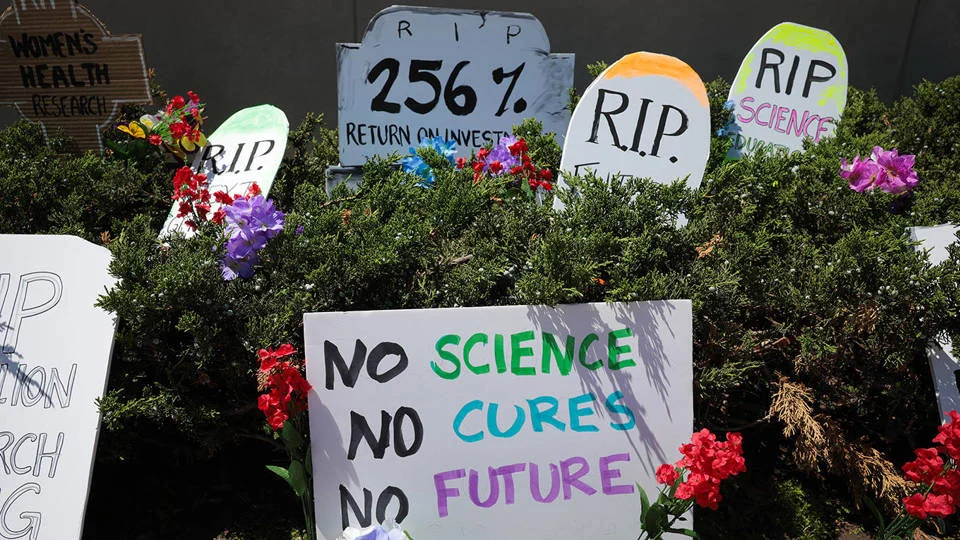
Washington D.C. – A sweeping proposed regulation from the White House Office of Management and Budget (OMB) has sent ripples of concern through the scientific community, threatening to fundamentally alter how crucial research funding is allocated in the United States. The draft rule, published on May 29, 2026, proposes to elevate the role of political appointees in the oversight and approval of scientific research grants, potentially shifting decision-making away from established peer-review processes and toward politically aligned priorities. This move, if implemented, could significantly diminish the autonomy and integrity of scientific inquiry, a cornerstone of American global leadership and technological advancement.
The proposed rule, detailed in a 412-page document filed with the Federal Register, aims to place scientific research funding under the direct supervision of political appointees. Under this new framework, the long-standing practice of peer review, a rigorous system that has guided research funding decisions in the U.S. since the aftermath of World War II, would be relegated to an "advisory" capacity. The ultimate authority for approving discretionary grants would rest with these political appointees, rather than with scientists and program officers who have historically made these determinations based on scientific merit. This represents a stark departure from decades of established practice, raising questions about the potential for bias and the long-term implications for scientific progress.
Historical Context: The Evolution of Research Funding in the United States
The U.S. has long recognized the vital role of government-funded scientific research in driving innovation, economic growth, and national security. Following World War II, a consensus emerged that investing in basic and applied scientific research was essential for maintaining America’s competitive edge. This led to the establishment of major federal funding agencies such as the National Science Foundation (NSF) in 1950 and the National Institutes of Health (NIH) expanding its scope significantly in the mid-20th century.
A core tenet of these institutions has been the principle of merit-based funding, primarily determined through rigorous peer review. This process involves submitting research proposals to panels of independent experts in the relevant scientific fields. These experts evaluate the proposals based on their scientific rigor, potential impact, feasibility, and the qualifications of the research team. This system, while not without its critics, has been credited with fostering a diverse and robust research ecosystem, supporting groundbreaking discoveries across a multitude of disciplines, from medicine and materials science to artificial intelligence and climate research.
The proposed OMB rule appears to challenge this established model by introducing a layer of political oversight that could override or heavily influence the recommendations of scientific reviewers. Critics argue that this could lead to funding decisions being driven by political expediency or ideological considerations, rather than by the scientific merit of the proposed research.
Key Provisions of the Proposed Rule
The 412-page draft regulation outlines a significant shift in the grant-making process. While specific details are still under scrutiny, the core of the proposal suggests the following:
- Elevated Role of Political Appointees: The rule proposes that political appointees, often appointed by the President and confirmed by the Senate, would have the final say on the approval of discretionary research grants. This would grant them considerable power over the direction of scientific inquiry.
- Diminished Role of Peer Review: Peer review, currently the primary mechanism for evaluating research proposals, would be designated as an "advisory" function. This implies that while expert opinions would still be sought, their recommendations might not be binding and could be overridden by appointees.
- Centralized Oversight: The OMB, through this proposed rule, appears to be seeking to exert greater centralized control over federal research funding across various agencies. This could lead to a more uniform, and potentially less flexible, approach to grant allocation.
- Focus on "Contestable" and "Presidential Control": The underlying rationale, as articulated in some analyses of the draft, suggests a desire to move away from research areas that are perceived as "plural, contestable, and beyond the president’s control." This framing has raised concerns about a potential narrowing of research scope and an emphasis on areas aligned with executive priorities.
Reactions and Concerns from the Scientific Community
The publication of the draft rule has elicited strong reactions from scientists, academic institutions, and professional organizations across the nation. Many express deep apprehension about the potential consequences for scientific integrity and American competitiveness.
Dr. Eleanor Vance, president of the American Association for the Advancement of Science (AAAS), stated, "This proposed rule represents a profound departure from the principles that have made American scientific research the envy of the world. Undermining the independence of peer review and injecting political influence into funding decisions risks stifling innovation, discouraging promising researchers, and ultimately harming our nation’s ability to address critical challenges."
Similar sentiments have been echoed by leaders of major universities and research institutions. A spokesperson for Stanford University commented, "Our research enterprise thrives on intellectual freedom and the pursuit of knowledge based on scientific merit. Any system that compromises these fundamental values will inevitably lead to a decline in the quality and impact of our research. We urge a thorough reconsideration of this proposal."
Concerns are particularly acute regarding the potential for the politicization of research in sensitive areas such as climate science, public health, and social sciences, where findings may sometimes conflict with prevailing political narratives. The fear is that research deemed politically inconvenient could be de-prioritized or outright rejected, irrespective of its scientific validity or societal importance.
Potential Implications for American Innovation and Global Standing
The long-term implications of such a shift in research funding policy could be far-reaching and detrimental to the United States’ position as a global leader in science and technology.
- Erosion of Scientific Integrity: The politicization of research funding can undermine public trust in scientific findings and institutions. If funding decisions are perceived as politically motivated, the credibility of scientific outcomes can be severely compromised.
- Stifled Innovation and Discovery: The peer-review process, despite its imperfections, has a proven track record of identifying and supporting high-impact research across a broad spectrum of inquiry. Introducing political filters could lead to a narrowing of focus, potentially overlooking breakthrough discoveries in nascent or unconventional fields.
- Brain Drain and Reduced Competitiveness: Talented researchers may be discouraged from pursuing careers in the U.S. or may seek opportunities in countries with more stable and independent research funding environments. This could lead to a "brain drain" of scientific talent, diminishing America’s innovative capacity.
- Economic Impact: Scientific research is a significant driver of economic growth, creating jobs, new industries, and technological advancements. A less effective or more politically constrained research system could hinder this economic engine.
- National Security Risks: In an era of rapid technological change, maintaining a robust and independent scientific research base is crucial for national security. Politicizing research funding could weaken the nation’s ability to develop cutting-edge technologies and address emerging threats.
The Road Ahead: Public Comment and Potential Challenges
The proposed rule is currently in a public comment period, allowing stakeholders to voice their concerns and provide feedback to the OMB. This period is crucial for scientists, educators, and the public to engage with the regulatory process and advocate for the preservation of a merit-based, independent research funding system.
The future of this proposed rule remains uncertain. It is likely to face significant opposition from a broad coalition of scientific organizations, academic institutions, and potentially even members of Congress who recognize the importance of scientific integrity. Legal challenges could also arise if the rule is seen as exceeding the statutory authority of the OMB or infringing upon established scientific principles.
The debate surrounding this proposed rule highlights a fundamental tension between political oversight and scientific autonomy. As the United States navigates complex global challenges, from public health crises to climate change and geopolitical competition, the integrity and robustness of its scientific research enterprise are more critical than ever. The proposed OMB regulation, if enacted, could represent a significant turning point, potentially reshaping the landscape of American scientific innovation for years to come. The coming months will be pivotal in determining whether the nation prioritizes political alignment or scientific excellence in its pursuit of knowledge and progress.
