

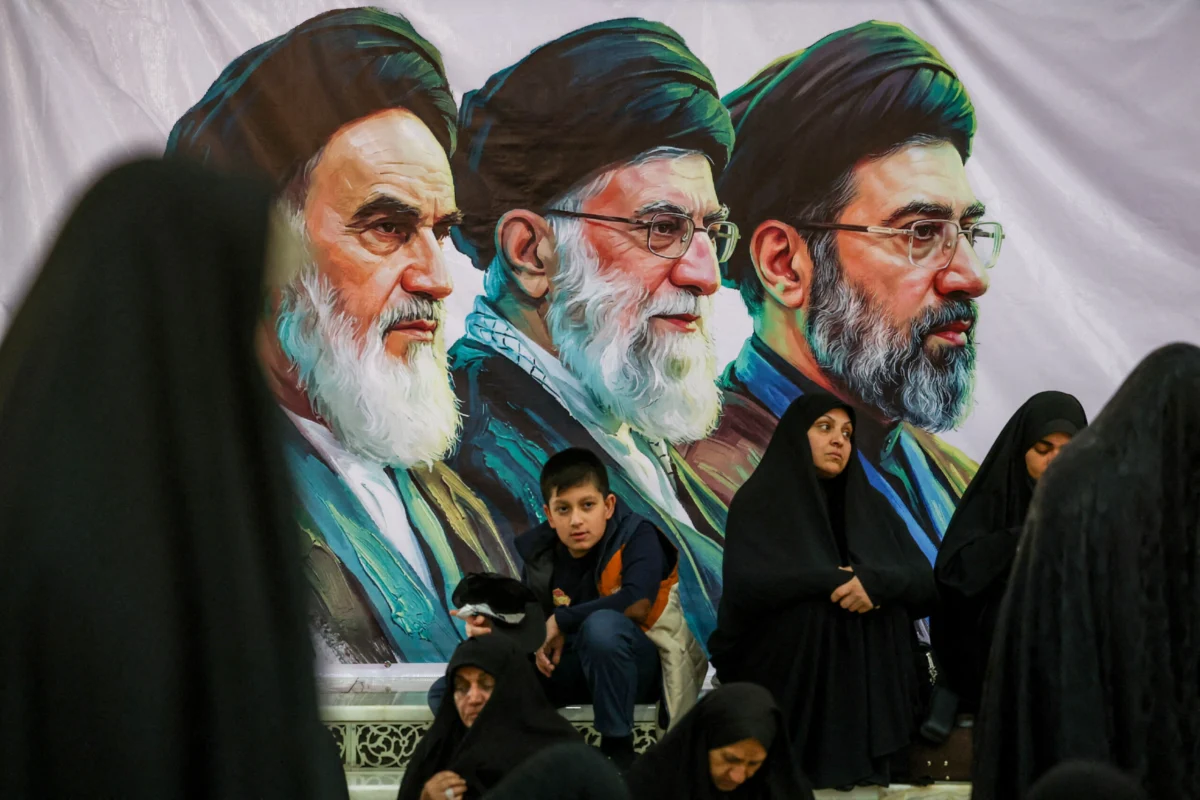
Funeral ceremonies for Iran’s late Supreme Leader Ali Khamenei are scheduled to commence in Tehran on July 4, culminating in his burial in his hometown of Mashhad on July 9, according to official state media reports. The elaborate national mourning period, which will include three days of ceremonies in the capital followed by a significant event in the holy city of Qom on July 7, marks a pivotal moment for the Islamic Republic, still navigating the aftermath of a direct conflict that necessitated the postponement of these rites from their initial March schedule. The commencement of the national funeral on July 4, coincidentally, aligns with the United States’ Independence Day, a date that has not gone unnoticed by observers of the often-strained relationship between the two nations.
Ayatollah Ali Khamenei, who was 86, passed away in February following a joint US-Israeli air strike on his compound, an incident that dramatically escalated an already volatile regional environment and plunged the Middle East into a period of unprecedented direct military confrontation. His death, after 35 years at the helm of Iran’s complex political and religious landscape, leaves a profound vacuum at the apex of the Islamic Republic’s power structure, triggering intense speculation about the future direction of the country and the process of succession.
A Leader’s End and a Nation’s Mourning
The passing of Ayatollah Khamenei marks the end of an era defined by his steadfast leadership, his commitment to the principles of the Islamic Revolution, and his unwavering defiance of Western influence. Having assumed the mantle of Supreme Leader in 1989 after the death of Ayatollah Ruhollah Khomeini, the charismatic founder of the Islamic Republic, Khamenei meticulously consolidated power, shaping Iran’s military and paramilitary apparatus into a formidable force both domestically and regionally. His leadership saw Iran develop its nuclear program, establish a robust "Axis of Resistance" across the Middle East, and withstand decades of international sanctions and political isolation.
The decision to postpone the funeral from March to July underscores the severity of the "US-Israel war" mentioned in official reports. This conflict, which erupted shortly before or around Khamenei’s death, involved direct military engagements between the United States and Israel on one side, and Iranian forces and its regional proxies on the other. It represented a significant escalation from the long-standing "shadow war" of cyberattacks, assassinations, and proxy skirmishes, bringing the region to the brink of a wider conflagration. The postponement of such a critical national event as the Supreme Leader’s funeral highlights the depth of the crisis and the need for a period of relative calm before the nation could properly mourn its leader. A fragile truce, announced on April 8, eventually paved the way for the rescheduling of the ceremonies, though underlying tensions remain palpable.
Chronology of a Tumultuous Period
The sequence of events leading to the current funeral arrangements paints a picture of a nation under immense pressure:
- February: A joint US-Israeli air strike targets Ayatollah Ali Khamenei’s compound. The strike results in the death of the 86-year-old Supreme Leader. This act marks an unprecedented escalation in regional hostilities, transforming the long-simmering tensions into direct military conflict.
- February-March: The immediate aftermath of Khamenei’s death sees Iran reeling. Amidst the shock, the "US-Israel war" intensifies, with reports of reciprocal strikes and heightened military alerts across the region. Initial plans for a national funeral are drafted but quickly deemed untenable due to the active conflict and the imperative to maintain national security and stability. The funeral is officially postponed.
- April 8: Following intense diplomatic efforts, potentially involving third-party mediators, a truce between the United States and Iran is announced. This cessation of hostilities, while fragile, provides a much-needed de-escalation, allowing the Iranian leadership to begin considering the logistics of a national mourning period.
- Early June: US Secretary of State Marco Rubio issues a statement observing that Mojtaba Khamenei, the son of the late Supreme Leader, appears to be taking a more active role in the political landscape. This observation fuels speculation about his potential succession, especially as negotiations between the US and Iran continue post-truce.
- Late June/Early July: Iranian state media announces the revised schedule for Ayatollah Khamenei’s funeral, with ceremonies beginning in Tehran on July 4 and the burial in Mashhad on July 9. The timing, notably coinciding with US Independence Day, carries symbolic weight.
The Legacy of Ayatollah Ali Khamenei
Ayatollah Ali Khamenei’s tenure as Supreme Leader was marked by significant domestic and international challenges. He inherited a nation still recovering from the devastating Iran-Iraq War (1980-1988) and striving to reconstruct its economy and society. Under his leadership, Iran made substantial strides in scientific and technological development, most notably in its nuclear program, which became a central point of contention with the international community.
Khamenei’s strategic vision for Iran involved strengthening its military capabilities, particularly the Islamic Revolutionary Guard Corps (IRGC), and expanding its regional influence through a network of allied non-state actors, often referred to as the "Axis of Resistance." This network includes groups like Hezbollah in Lebanon, various Shia militias in Iraq, the Houthis in Yemen, and the Assad regime in Syria. This strategy was designed to counter perceived US and Israeli hegemony in the Middle East and project Iranian power beyond its borders.
Domestically, Khamenei navigated periods of significant internal dissent, including the Green Movement protests in 2009, widespread economic protests in 2017-18 and 2019, and the protests ignited by the death of Mahsa Amini in 2022. Each instance saw the Supreme Leader championing national unity and Islamic values, often responding with a firm hand to maintain order and uphold the principles of the Islamic Revolution. His leadership was characterized by a deep suspicion of Western intentions and a steadfast commitment to Iran’s independence and self-reliance. While Khomeini was the revolutionary ideologue, Khamenei was the astute strategist who institutionalized the revolution’s ideals and built its formidable state apparatus.
The Succession Question: Mojtaba Khamenei and Beyond
The death of a Supreme Leader in Iran triggers a complex, constitutionally defined succession process. The Assembly of Experts, an 88-member body of high-ranking clerics elected by the public, is tasked with identifying and appointing the new Supreme Leader. While the process is ostensibly democratic, the inner workings are often shrouded in secrecy, and the influence of powerful factions within the clerical establishment is significant.
Mojtaba Khamenei, the second son of the late Supreme Leader, has emerged as a prominent figure in the succession discourse. Although traditionally maintaining a low public profile, his reported increased activity, as noted by US Secretary of State Marco Rubio, suggests he is being groomed or is actively positioning himself for a leadership role. Mojtaba is known to be influential within the IRGC and among conservative factions, raising the possibility of a dynastic succession, a concept that could be controversial within the Islamic Republic, which theoretically eschews hereditary rule.
While Mojtaba is a strong contender, other figures within the clerical establishment may also be considered. The choice of the next Supreme Leader will be critical in determining Iran’s future trajectory, both domestically and internationally. A successor from a more reformist wing, though less likely given the current political climate, could signal a shift towards greater openness, while a hardliner would likely ensure continuity with Khamenei’s policies of regional assertiveness and resistance to Western pressure. The Assembly of Experts’ decision will shape Iran’s geopolitical standing for decades.
Inferred Reactions and Broader Implications
The news of Ayatollah Khamenei’s death and the impending funeral ceremonies have elicited a range of anticipated reactions from various stakeholders:
- Iranian Officials: Expect profound expressions of grief, national unity, and unwavering commitment to the late leader’s legacy. Messages will likely emphasize the continuity of the Islamic Revolution’s ideals and a resolve to withstand external pressures. There will be strong condemnation of the US-Israeli strike, reaffirming Iran’s right to self-defense and potentially vowing retaliation at an opportune moment.
- Regional Allies (Axis of Resistance): Groups like Hezbollah, Hamas (though not directly mentioned, part of the broader resistance), and various Iraqi and Yemeni militias will likely issue strong statements of solidarity, mourning the loss of their patron and pledging to continue the fight against perceived adversaries. This could potentially lead to renewed tensions in various regional flashpoints as these groups seek to demonstrate their continued resolve.
- International Community: Reactions will be varied. Allies such as China and Russia will likely offer condolences and express hopes for stability in Iran. European nations may issue cautious statements, emphasizing the need for regional de-escalation and calling for a peaceful transition. Adversaries, particularly the United States and Israel, while not explicitly celebrating, will likely observe the events closely, focusing on the implications for regional security and future policy. Secretary Rubio’s statement regarding Mojtaba Khamenei highlights the close scrutiny from Washington.
- Domestic Population: While state-organized mourning will be extensive, the reaction among the Iranian populace will likely be complex. A significant portion will genuinely mourn their leader, viewing him as a symbol of national pride and resistance. Others, particularly those who have participated in past protests or are critical of the regime, may view the transition with a mix of apprehension and cautious hope for change, albeit silently given the prevailing political climate.
The passing of Ayatollah Khamenei, particularly under such dramatic circumstances, carries profound implications. Domestically, the succession process will test the stability of Iran’s political system. The new Supreme Leader will face the immediate challenge of consolidating power, managing potential internal dissent, and addressing persistent economic woes exacerbated by decades of sanctions and the recent conflict. Regionally, the future of the "Axis of Resistance" will be closely watched. While the network is well-established, a new leader might alter its strategic direction or operational intensity. Internationally, the implications are equally significant. The future of Iran’s nuclear program, its engagement with global powers, and its overall foreign policy stance will hinge on the vision of the next Supreme Leader. The fragile truce with the United States and Israel adds another layer of complexity, with the potential for either renewed confrontation or, perhaps, a cautious path towards de-escalation depending on the new leadership’s approach. The coming days of national mourning and the subsequent selection process will undoubtedly reshape Iran’s destiny and, by extension, the geopolitical landscape of the Middle East.
