

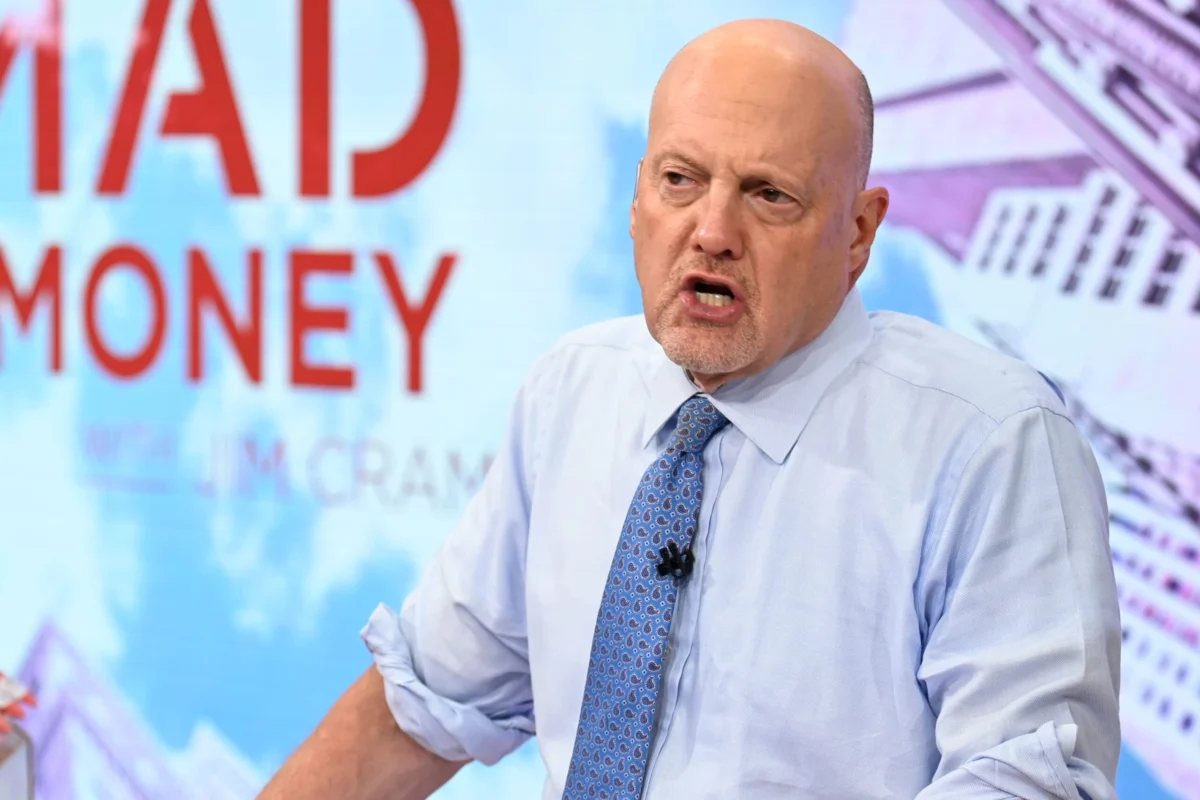
CNBC’s Jim Cramer observed a pronounced shift in investor behavior on Wednesday, noting a decisive move away from speculative and riskier segments of the market towards more traditionally defensive assets. This pivot, which Cramer termed a "flight to safety," unfolded as all three major U.S. stock indexes concluded the trading day in negative territory, signaling broader market apprehension. The Dow Jones Industrial Average experienced a significant decline, shedding 953 points, or 1.87%. Concurrently, the S&P 500, a broad market barometer, fell by 1.62%, and the technology-heavy Nasdaq Composite saw the steepest percentage drop at 1.98%. While the headline figures painted a picture of a general market downturn, Cramer’s analysis delved deeper, revealing a fundamental rotation of capital beneath the surface.
This discernible shift represents a departure from the market dynamics that have characterized much of the past decade, particularly the sustained rally driven by high-growth technology companies. According to the "Mad Money" host, the market has "lost its appetite for danger," indicating a collective investor sentiment prioritizing stability and resilience over aggressive growth potential. This change in appetite is not merely speculative; it is reflected in tangible market movements and the composition of stocks reaching new annual highs.
The Evidence: A Look at 52-Week Highs
To underscore his point, Cramer meticulously examined the list of S&P 500 stocks that hit 52-week highs on Wednesday. What he found was a striking contrast to the market leadership of recent years. The roster was overwhelmingly dominated by companies operating in traditionally defensive sectors. Real Estate Investment Trusts (REITs), known for their stable income streams and dividend payouts, featured prominently. Insurers, which often exhibit less cyclicality and provide essential services, also made a strong showing. Furthermore, consumer staples companies, which produce goods and services deemed essential regardless of economic conditions, were well-represented. These sectors typically appeal to investors during periods of economic uncertainty due to their perceived stability, consistent cash flows, and often attractive dividend yields.
Cramer also highlighted the presence of two stocks from his Charitable Trust on this list: Linde and TJX Companies. Linde, a global industrial gas and engineering company, benefits from diversified end markets and essential product offerings, making it a relatively stable investment. TJX Companies, the parent company of T.J. Maxx and Marshalls, operates in the off-price retail segment, a business model that can demonstrate resilience even during economic downturns as consumers seek value. "You know what this says to me?" Cramer questioned rhetorically, "This market’s in flight. It doesn’t want a lot of risk." His statement encapsulated the prevailing mood: a collective retreat from speculative bets in favor of established, dependable businesses.
A Stark Departure from Recent Market Leadership
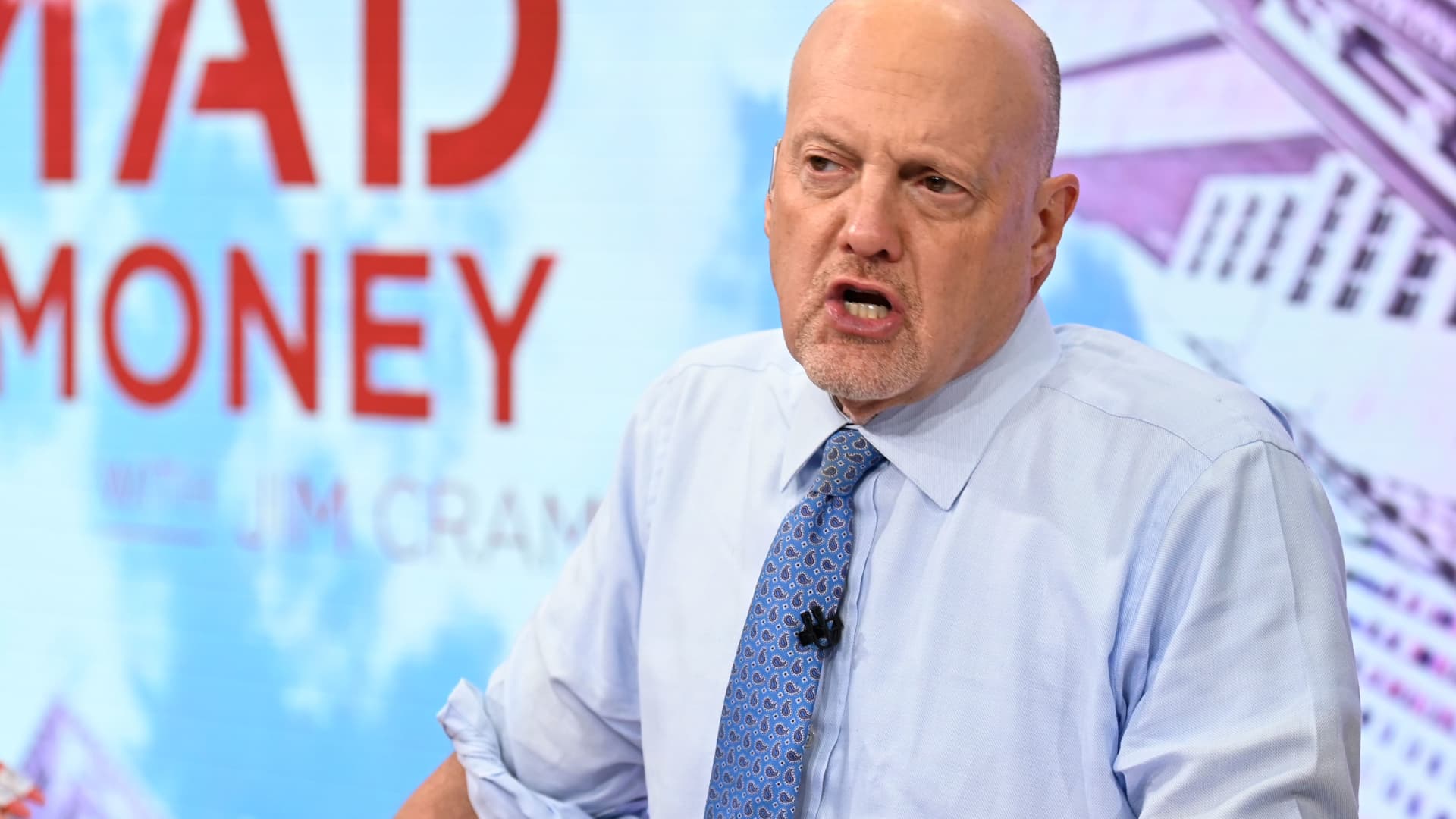
The absence of high-flying technology and growth stocks from the 52-week high list was particularly telling. For years, the market had been propelled by innovation and rapid expansion within the technology sector, with companies often valued more on future growth potential than immediate profitability or dividend payouts. This era, characterized by low interest rates and abundant liquidity, fostered an environment where investors were willing to pay a premium for growth, often overlooking traditional valuation metrics. However, Wednesday’s market action suggested a significant reversal of this trend.
Only a handful of technology-related companies managed to appear on the list of 52-week highs. Notable exceptions included Applied Materials and KLA Corp, both prominent semiconductor equipment manufacturers. Their inclusion, however, was attributed to specific industry tailwinds rather than a broader tech resurgence. These companies are currently benefiting from robust demand for memory chips and other semiconductor components, a critical and often supply-constrained segment of the global economy. This particular strength, driven by long-term secular trends like digitalization and artificial intelligence, allowed them to defy the broader tech sector’s retreat.
This composition marks a "stark departure" from the market leadership investors have grown accustomed to, as Cramer emphasized. The narrative has shifted from chasing exponential growth in nascent technologies to prioritizing fundamental strength. Investors, it appears, are increasingly valuing stable cash flows, consistent dividend income, and businesses that possess inherent resilience against an uncertain economic backdrop. Cramer succinctly summarized this sentiment: "The people have spoken. They want safety, they want yield, and maybe they’re just sick and tired of the data center and the fast growers that now grow more slowly and represent too much risk."
Contextualizing the Shift: Economic Undercurrents
The "flight to safety" observed by Cramer is not an isolated event but rather a symptom of broader macroeconomic anxieties that have been accumulating over recent months. A confluence of factors is contributing to this investor re-evaluation. Foremost among these is persistent and elevated inflation, which has reached multi-decade highs across many developed economies. The Consumer Price Index (CPI) and Producer Price Index (PPI) have consistently demonstrated inflationary pressures, eroding purchasing power and profit margins for businesses.
In response to surging inflation, central banks worldwide, most notably the U.S. Federal Reserve, have embarked on aggressive monetary tightening cycles. This involves raising benchmark interest rates and quantitative tightening measures aimed at reducing liquidity in the financial system. Higher interest rates increase the cost of borrowing for companies and consumers, potentially slowing economic activity and making future earnings for growth companies less attractive when discounted back to present value. The prospect of sustained rate hikes has significantly impacted valuations, particularly for growth stocks that rely heavily on future earnings projections.
Furthermore, geopolitical tensions, particularly the ongoing conflict in Ukraine, have exacerbated supply chain disruptions and sent commodity prices soaring, adding another layer of uncertainty to the global economic outlook. Fears of an impending recession, fueled by hawkish central bank rhetoric and decelerating economic indicators, are becoming increasingly prevalent among economists and market participants. In such an environment, businesses with predictable earnings, strong balance sheets, and the ability to pass on costs to consumers are often preferred.

Implications for Investor Portfolios
This paradigm shift carries significant implications for investor portfolios and asset allocation strategies. For years, the mantra of "There Is No Alternative" (TINA) often guided investors towards growth stocks, given the low yields offered by bonds. However, with rising interest rates, bonds are beginning to offer more competitive yields, providing a genuine alternative for risk-averse investors. This makes the "yield" aspect Cramer mentioned even more critical.
The renewed focus on defensive sectors and dividend-paying stocks suggests a rotation from "growth" to "value" investing. Value stocks, characterized by lower price-to-earnings ratios, stable earnings, and often higher dividend yields, have historically outperformed growth stocks during periods of economic contraction or uncertainty. This shift highlights the importance of diversification and a balanced approach, moving away from overconcentration in any single sector, particularly those sensitive to interest rate fluctuations.
For individual investors, this market dynamic may necessitate a re-evaluation of their risk tolerance and investment horizons. While high-growth companies still hold long-term potential, the immediate environment favors businesses that can weather economic storms. This includes companies in utilities, healthcare, consumer staples, and certain industrial sectors that provide essential services or products. The emphasis is on capital preservation and steady returns rather than speculative gains.
Looking Ahead: A New Market Reality?
The observations made by Jim Cramer on Wednesday underscore a potentially enduring change in market sentiment. While short-term fluctuations are always possible, the underlying economic pressures—inflation, rising interest rates, and recession fears—suggest that the "flight to safety" could be more than a fleeting trend. Investors appear to be recalibrating their expectations, moving from an era of cheap money and boundless growth optimism to one characterized by caution and a demand for tangible value.
The market’s message is clear: stability, reliable cash flows, and attractive yields are back in vogue. As the global economy navigates a complex period of transition, the sectors and companies that can offer these attributes are likely to continue attracting capital, potentially heralding a new era of market leadership distinct from the tech-driven dominance of the past. The "boring" stocks, as some might label them, are demonstrating their resilience and proving to be anything but uninteresting to investors seeking safe harbor in turbulent times.
