

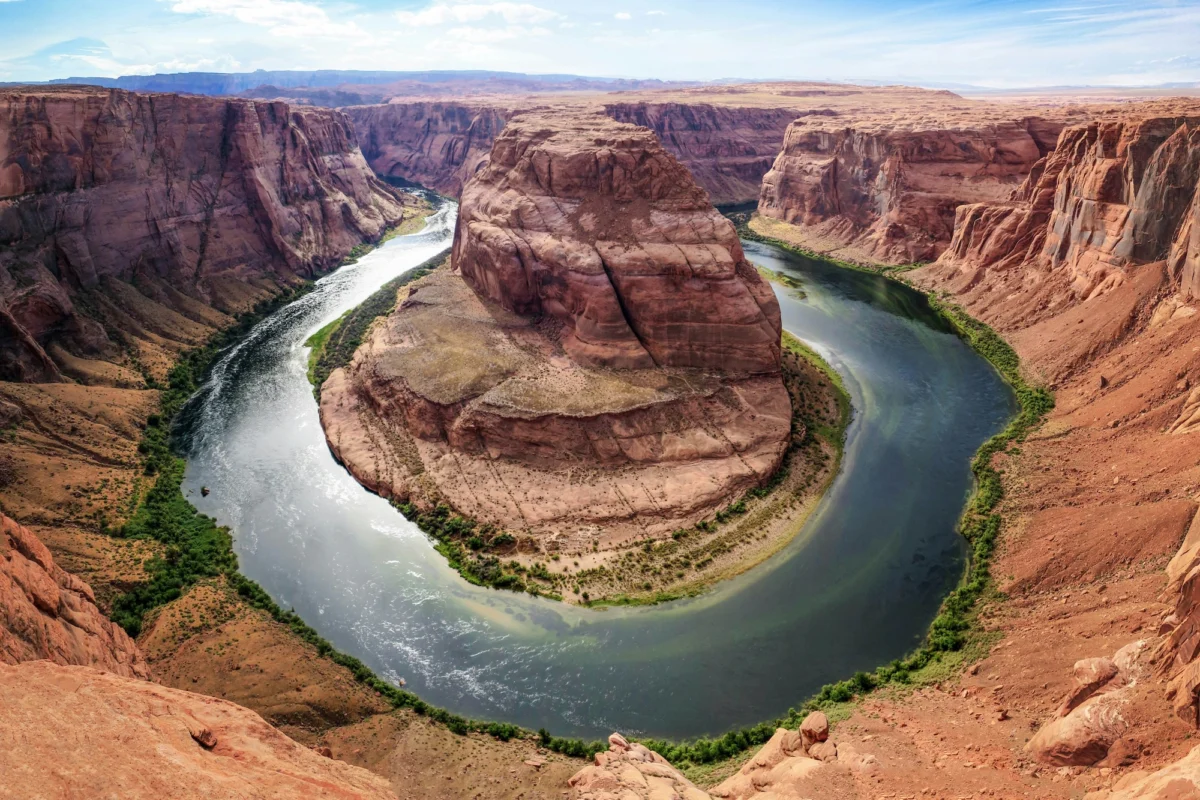
The Colorado River Basin, a vital lifeline for the American Southwest, is currently the site of a high-stakes race between human ingenuity and a rapidly warming climate. For decades, major metropolitan centers like Phoenix, Las Vegas, and Denver have implemented aggressive water conservation strategies, often referred to as demand management. These programs—ranging from the removal of ornamental turf to the installation of high-tech leak detection systems—have successfully decoupled population growth from water consumption. However, new research and hydrological modeling suggest that these efforts, while heroic, may no longer be sufficient to stave off a permanent water crisis as climate change accelerates.
A recent study conducted by researchers Renee Obringer and Dave White, published in collaboration with academic institutions and highlighted by The Conversation, indicates that the Southwest is approaching a "conservation ceiling." While individual actions and municipal policies have significantly reduced the "gallons per capita per day" (GPCD) metrics across the basin, the sheer volume of water lost to evaporation and reduced snowpack is beginning to outpace the savings achieved by residents. The findings underscore a sobering reality: the region can no longer rely solely on using less; it must fundamentally reimagine how water is sourced, shared, and valued.
The Foundation of the Crisis: A Century of Over-Allocation
To understand the current predicament, one must look back to the Colorado River Compact of 1922. This foundational agreement divided the river’s water among seven states: the Upper Basin (Colorado, New Mexico, Utah, and Wyoming) and the Lower Basin (Arizona, California, and Nevada). At the time of the compact’s drafting, the river’s annual flow was estimated based on an unusually wet period in the early 20th century. This resulted in a "paper water" problem, where the legal rights to the river’s water exceeded the actual physical volume of water available in most years.

In the 21st century, this historical error has collided with a "megadrought"—the driest period in the region in over 1,200 years. Climate change has transformed the hydrological cycle of the West. Warmer temperatures mean that more precipitation falls as rain rather than snow, and a thirstier atmosphere evaporates moisture directly from the soil and the river’s surface before it can reach downstream reservoirs like Lake Mead and Lake Powell. Since 2000, the Colorado River’s flow has declined by approximately 20%, and scientists warn it could drop another 20% to 30% by mid-century if emissions are not drastically curtailed.
Success and Limitation: The Tale of Three Cities
The research focused on three pivotal cities—Phoenix, Las Vegas, and Denver—each of which represents a different approach to urban water management in an arid environment.
Las Vegas: The Gold Standard of Recycling
Las Vegas is perhaps the most striking example of conservation success. Often criticized for its fountains and opulent resorts, the city is actually a global leader in water efficiency. Since 2002, Southern Nevada has reduced its per capita water use by nearly 60%, even as its population surged by more than 750,000 people.
The city’s strategy is two-pronged. First, it aggressively targets "non-functional turf." Nevada law now mandates the removal of grass that serves only an aesthetic purpose, such as in street medians and office parks. Second, Las Vegas recycles nearly 100% of its indoor water. Every gallon that goes down a drain—from showers, sinks, and toilets—is treated and pumped back into Lake Mead, earning the city "return flow credits" that allow it to pull more water out of the lake. However, the study notes that because Las Vegas is already so efficient, there is very little "slack" left in the system to absorb future climate shocks.

Phoenix: Landscaping and Smart Growth
Phoenix, situated in the heart of the Sonoran Desert, has managed to reduce its total water use over the last 20 years despite a population increase of roughly 40%. The city has focused on shifting the cultural paradigm of desert living, moving away from the "Oasis" model of the mid-20th century toward "Xeriscaping"—landscaping that requires little to no irrigation.
Phoenix also utilizes a sophisticated system of underground aquifers, "banking" water during wetter years to be pumped during droughts. Yet, the new modeling shows that by 2060, Phoenix’s available surface water could drop below historical averages even under moderate climate scenarios. The study suggests that the savings from residential conservation are being neutralized by the sheer reduction in upstream flow from the Salt, Verde, and Colorado Rivers.
Denver: The High-Altitude Challenge
Denver faces a unique set of challenges as a city that draws water from both sides of the Continental Divide. Its conservation programs have been effective, but it remains vulnerable to the timing of the spring runoff. If the snowpack melts too early due to rising temperatures, the city’s reservoirs may fill and spill before the peak demand of the summer months, leading to mid-summer shortages despite a "good" snow year.
The "Rebound Effect" and Behavioral Economics
A critical component of the research involved analyzing the human element of water use. Traditional "demand management" often relies on reactive policies, such as mandatory watering restrictions during a declared drought. While these measures work in the short term, researchers identified a "rebound effect," where consumption often returns to pre-drought levels once the immediate crisis passes and restrictions are lifted.

To counter this, the study integrated survey data to understand how residents view water conservation. The findings revealed a "participation gap": a significant portion of the population expresses strong support for environmental protection but does not actively participate in available programs, such as turf replacement rebates or smart-meter installations. Bridging this gap through behavioral economics and community engagement is essential, but the study warns that even 100% participation in these programs cannot fully offset the projected losses from climate change.
The Agricultural Elephant in the Room
While cities are often the face of water conservation, they represent only a fraction of the total water use in the Colorado River Basin. Approximately 70% to 80% of the river’s water is diverted for agriculture, much of it used to grow thirsty crops like alfalfa and hay for livestock, often in the middle of the desert.
The researchers suggest that for municipal supplies to remain stable, the region must look toward cross-sector solutions. This includes "fallowing" agreements, where farmers are paid to leave fields unplanted during dry years, and "buy and dry" strategies where cities purchase agricultural water rights. However, these solutions are fraught with economic and social consequences, potentially hollowing out rural communities and impacting national food security.
The Water-Energy Nexus
The study also highlights the often-overlooked link between water and electricity. In the Southwest, water is used to generate hydroelectric power at the Hoover and Glen Canyon Dams. Simultaneously, traditional fossil fuel and nuclear power plants require vast amounts of water for cooling. As water levels in Lake Mead and Lake Powell drop, the turbines produce less electricity, forcing the grid to rely on other sources that may themselves be water-intensive.

Transitioning to wind and solar energy is not just a carbon-reduction strategy; it is a water-saving strategy. Photovoltaic solar panels and wind turbines require virtually no water to operate, making them essential components of a water-secure future in the West.
Future Infrastructure: Desalination and Beyond
If demand management has reached its limit, the region must look toward "supply-side" innovations. The study points to large-scale infrastructure projects like wastewater recycling plants and desalination.
Desalination, particularly of seawater, is often cited as the ultimate solution for coastal states like California, which could then leave more Colorado River water for inland states like Arizona and Nevada. However, the costs are astronomical. The Claude "Bud" Lewis Carlsbad Desalination Plant in California, for instance, cost approximately $1 billion to construct—four times the initial estimate—and the energy required to remove salt from water makes it one of the most expensive ways to produce drinking water.
Brackish groundwater desalination and large-scale regional recycling plants (such as the proposed project between the Metropolitan Water District of Southern California and Southern Nevada) are more likely to be the next frontier. These projects represent a shift from "using what the river gives us" to "creating a closed-loop system."

Chronology of Impending Policy Shifts
The next few years are critical for the basin’s future. The current guidelines for operating the Colorado River reservoirs expire in 2026.
- 2023-2024: States and the federal government entered emergency negotiations to prevent Lake Mead from reaching "dead pool" levels, where water can no longer flow through the dam.
- 2025: Formal proposals for the post-2026 management framework will be finalized.
- 2026: A new "Law of the River" must be signed, likely involving mandatory, permanent cuts to water allocations that reflect the reality of a shrinking river.
Conclusion: A New Paradigm for the West
The research by Obringer and White serves as a clarion call for policymakers. The era of "easy" conservation—installing a better showerhead or watering the lawn on Tuesdays—is coming to an end. While these actions remain necessary, they are no longer sufficient.
The future of the American West depends on a multi-faceted approach: aggressive climate mitigation to slow the warming of the basin, massive investment in water-recycling infrastructure, a fundamental restructuring of agricultural water rights, and a shift toward water-independent energy sources. The success of Phoenix, Las Vegas, and Denver in reducing demand proves that change is possible, but the looming shadow of climate change indicates that the pace of that change must now accelerate. The glimpse of the future provided by these cities suggests that while we can live with less water, we cannot live without a radically different plan for how to manage it.
