


In a move that has sent ripples through the North American urban planning and environmental sectors, the Ontario provincial government has formally passed the Building Homes and Improving Transportation Infrastructure Act, 2024, widely known as Bill 98. This omnibus legislation represents a significant shift in the province’s approach to municipal governance and environmental regulation, effectively dismantling several of the City of Toronto’s most successful climate-focused initiatives. For over two decades, Toronto has been recognized as a global leader in sustainable urban development, primarily through the pioneering Toronto Green Standard (TGS) and its accompanying green roof bylaws. However, the new provincial mandate removes the legal foundation for these local requirements, prioritizing a streamlined development process over the stringent environmental benchmarks that have defined the city’s skyline for a generation.
The Legacy of the Toronto Green Standard
The Toronto Green Standard was introduced in 2006 as a voluntary set of guidelines before becoming a mandatory requirement for new development applications in 2010. It was designed as a multi-tier system aimed at reducing greenhouse gas emissions, enhancing biodiversity, and managing stormwater. At its core, the TGS utilized a "carrot-and-stick" methodology. Tier 1 was mandatory for all new planning applications, while Tiers 2 through 4 offered financial incentives, such as development charge refunds, for builders who opted to exceed the baseline and meet higher energy-efficiency targets.
This performance-based approach was revolutionary because it did not dictate specific building materials or technologies. Instead, it set rigorous targets for energy use intensity, greenhouse gas intensity, and thermal demand. This allowed architects and developers the flexibility to innovate, choosing the most cost-effective methods to reach the city’s goals. Over its 16-year mandatory lifespan, the TGS has been credited with removing nearly one million tonnes of greenhouse gas emissions from the atmosphere—the equivalent of taking hundreds of thousands of cars off the road for a year.
Furthermore, the economic benefits of the TGS have been substantial. By improving the energy performance of the built environment, the city estimates that homeowners and building operators have saved approximately $407.6 million in utility costs. These savings were particularly vital in a city like Toronto, which has faced a persistent housing affordability crisis. By lowering the long-term operational costs of housing, the TGS provided a hedge against rising energy prices for residents.
The Dismantling of the Green Roof Industry
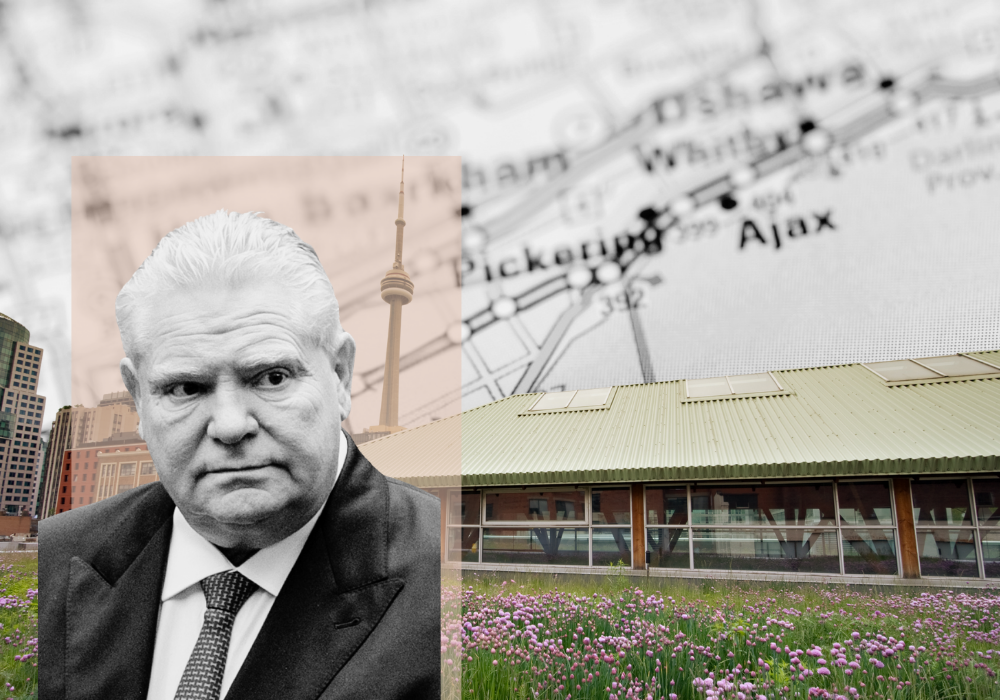
Parallel to the TGS was Toronto’s Green Roof Bylaw, enacted in 2009. It was the first of its kind in North America, requiring green roofs on new commercial, institutional, and residential developments with a minimum floor area of 2,000 square meters. The results were tangible: between 2010 and 2024, the bylaw led to the creation of over 1,200 green roofs across the city.
Beyond their aesthetic appeal, these installations served critical infrastructure roles. They mitigated the "urban heat island" effect, where concentrated concrete and asphalt raise city temperatures, and they captured significant amounts of stormwater, reducing the strain on Toronto’s aging sewer systems during heavy rainfall. The bylaw also birthed a specialized local industry. According to city data, the green roof sector in Toronto grew into a $50-million-a-year industry, supporting approximately 1,200 jobs in design, installation, and maintenance.
Bill 98, building on previous provincial moves to repeal the legislation mandating these roofs, effectively ends this era. While developers may still choose to include green roofs, they are no longer legally required to do so, and municipalities are now restricted from enforcing such standards as a condition of development approval.
A Chronology of Policy Rollbacks
The passage of Bill 98 is not an isolated event but rather the culmination of a multi-year effort by the Progressive Conservative government under Premier Doug Ford to reduce what it describes as "red tape" in the housing sector. To understand the current landscape, it is necessary to look at the timeline of legislative changes:
- 2006–2010: Toronto develops and mandates the Toronto Green Standard (TGS).
- 2009: The Green Roof Bylaw is enacted, setting a North American precedent.
- 2018–2021: The provincial government begins signaling a shift toward centralized planning authority, emphasizing housing supply volume over municipal environmental standards.
- 2022: The province introduces Bill 23, the More Homes Built Faster Act. This legislation initially sought to limit the ability of municipalities to use the TGS, but legal interpretations at the time allowed Toronto to maintain its standards under its climate action plan, TransformTO.
- 2023: The government moves to repeal the specific legislation that authorized Toronto’s Green Roof Bylaw.
- May 2024: Bill 98, the Building Homes and Improving Transportation Infrastructure Act, is passed. This bill removes all references to "sustainable design" from the Planning Act and explicitly prohibits municipalities from requiring electric vehicle (EV) charging infrastructure in new developments.
The Impact on Electric Vehicle Infrastructure
One of the most controversial aspects of Bill 98 is the removal of the requirement for builders to provide EV charging stations or "rough-ins" for electric vehicles. As the global automotive industry shifts toward electrification, urban centers have struggled to keep pace with charging demand, particularly in high-density residential towers where retrofitting parking garages with charging infrastructure can be prohibitively expensive.
By mandating that new buildings include this infrastructure from the start, Toronto was attempting to future-proof its housing stock. Phil Pothen, counsel at Environmental Defence, notes that the new provincial policy "arbitrarily scapegoats parking for zero-emissions vehicles." He argues that since many municipalities have already eliminated mandatory minimum parking requirements to reduce construction costs and carbon-heavy concrete use, preventing them from requiring EV readiness in the parking spaces that are built is a counterproductive move that undermines the transition to a low-carbon economy.
Official Responses and Political Friction
The reaction from municipal leaders and environmental advocates has been one of deep concern. Jason Thorne, Toronto’s Chief Planner, stated that the city is not supportive of the changes, noting that they "limit Toronto’s ability to advance local climate objectives." Despite this opposition, Thorne indicated that the city would be forced to cooperate with the province to implement the new law, highlighting the power imbalance between the provincial and municipal levels of government in Ontario.
In the provincial legislature, Peter Tabuns, the NDP’s environment and conservation critic, has been a vocal opponent of Bill 98. Tabuns argues that the Ford government’s policies are "developer-friendly" at the expense of long-term climate resilience. He pointed to the increasing frequency of extreme weather events, such as urban flooding and heatwaves, as evidence that the province should be strengthening, not weakening, building standards. "The Tories are not a particularly forward-looking bunch," Tabuns remarked, suggesting that the removal of EV requirements undermines the very automotive industry the province claims to support.
Economic Analysis and Broader Implications
The provincial government’s primary justification for Bill 98 is the urgent need to increase housing supply. By removing municipal requirements like the TGS and green roofs, the government argues it is reducing the cost of construction, which should, in theory, be passed on to homebuyers. However, critics and economists point out that the "savings" from skipping green infrastructure are often dwarfed by the long-term costs of climate change and energy inefficiency.
How-Sen Chong of the Toronto Environmental Alliance emphasizes that the TGS was a proven money-saver. "Just the energy efficiency piece has saved Torontonians millions and millions of dollars," he noted. The concern now is that by lowering the baseline for new construction, the province is locking in decades of higher energy bills and higher carbon emissions for buildings that will stand for 50 to 100 years.
There is also the question of market predictability. The TGS provided a clear, 20-year roadmap for developers, allowing them to plan investments and supply chains. By abruptly removing these standards, the province may have introduced a level of regulatory uncertainty that could discourage green tech investors from entering the Ontario market.
The Path Forward: Density and Incentives
While Bill 98 represents a significant setback for building-level sustainability, some advocates see a potential path forward through other urban planning avenues. Phil Pothen suggests that the current focus on "missing middle" housing—such as townhomes and small apartment buildings in traditionally single-family neighborhoods—could offset some of the carbon losses. Increased density reduces urban sprawl, which is a major driver of transportation-related emissions.
Furthermore, municipalities may still be able to offer voluntary incentives. While they can no longer require sustainable design, they can potentially offer faster approvals or tax breaks for developers who choose to follow the old TGS guidelines. However, with the provincial government’s aggressive stance against climate-related building policies, there is skepticism regarding whether such voluntary measures will be allowed to persist.
As Toronto continues to grow, the tension between provincial housing targets and municipal climate goals remains unresolved. The passage of Bill 98 marks a definitive turn in Ontario’s political landscape, where the immediate pressure to build has superseded the long-term necessity of building sustainably. The true cost of this shift may not be felt today, but in the utility bills and climate resilience of the city for decades to come.
