

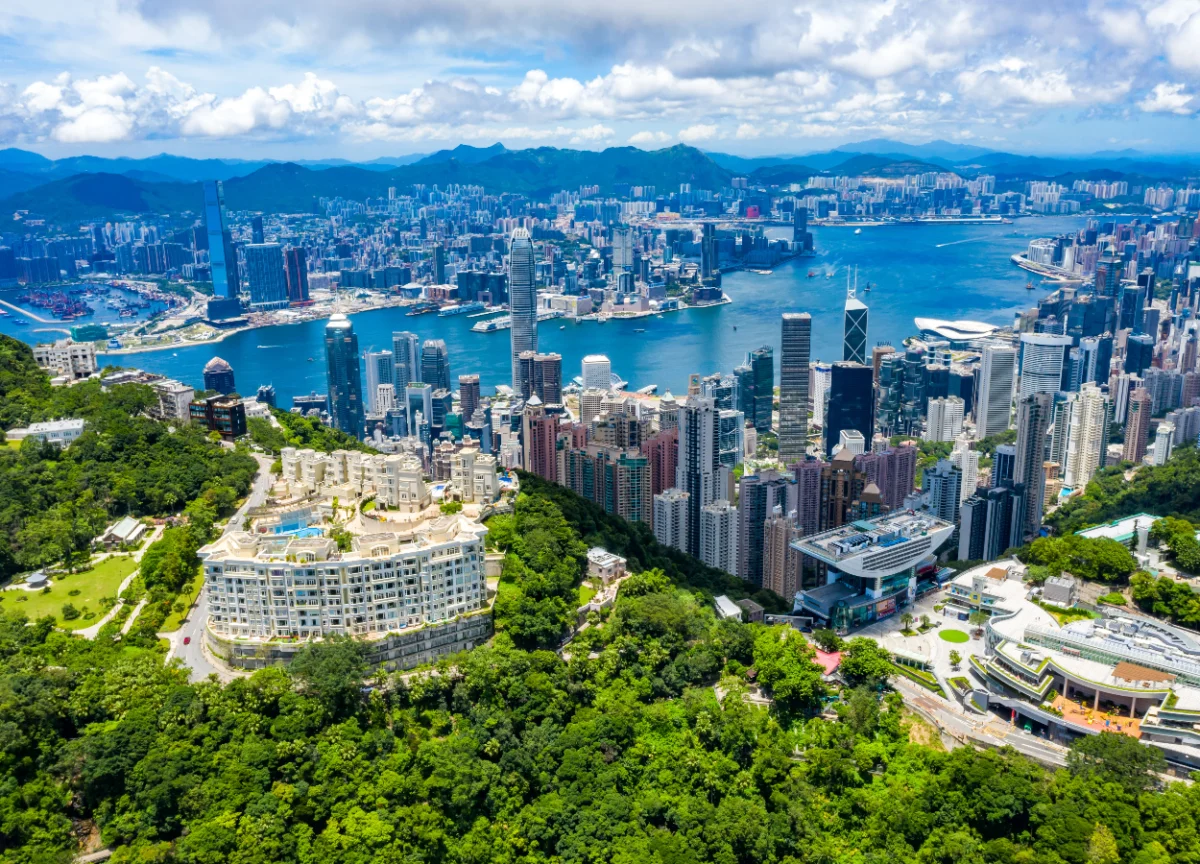
Hong Kong has ascended to become the world’s leading center for global offshore wealth, a significant shift that sees the special administrative region of China surpass Switzerland, according to the latest findings from Boston Consulting Group’s (BCG) 2026 Global Wealth Report. The report, which meticulously analyzes the impact of escalating worldwide geopolitical tensions on private finances, reveals that Hong Kong was home to an impressive $2.9 trillion in offshore wealth in 2025. This figure represents a notable increase of over 10 percent compared to the previous year, a surge largely attributed to augmented wealth inflows from mainland China.
The robust growth in Hong Kong’s offshore wealth is underpinned by a confluence of factors, with the city’s vibrant initial public offering (IPO) market playing a pivotal role. In 2025, Hong Kong distinguished itself as the premier global venue for IPO fundraising, experiencing a remarkable year-on-year surge in proceeds of 231 percent, reaching a substantial US$37.4 billion. This data, provided by Hong Kong Exchanges and Clearing Limited (HKEX), underscores the city’s magnetic pull for capital seeking entry into public markets.
The Shifting Tides of Global Offshore Wealth
The BCG report highlights that Hong Kong has "narrowly" edged past Switzerland to claim the title of the world’s largest cross-border booking center. Both financial powerhouses reported an identical store of offshore wealth at $2.9 trillion in 2025. However, Switzerland’s sustained success, according to BCG, is largely anchored in its long-standing reputation as a secure and stable jurisdiction, a crucial differentiator amidst the rising tide of geopolitical instability experienced in other regions globally.
Projections for Future Growth and Shifting Dynamics
Looking ahead, the trajectory of cross-border wealth in Hong Kong is projected to continue its upward climb, with an anticipated increase to $4.6 trillion by 2030. The report anticipates that wealth originating from mainland China will constitute the dominant share of this growth, expected to reach a staggering $3.1 trillion by the end of the decade.
Switzerland, while now second in the global ranking, is also forecast to experience significant expansion in its offshore wealth holdings. By 2030, its offshore wealth is predicted to reach $4 trillion, marking a substantial 38 percent increase. This continued growth solidifies Switzerland’s position as an established and enduring hub for offshore wealth, particularly for high-net-worth individuals (HNWIs) from Western Europe and the Middle East.
Hong Kong’s Strategic Advantages and Emerging Challenges
Hong Kong’s strategic location and its deep integration with the burgeoning economies of Asia position it advantageously to harness wealth generated from rapidly expanding sectors. Industries such as Korean semiconductors and Chinese AI microchips are expected to contribute significantly to the projected growth in cross-border wealth by 2030. This forward-looking projection acknowledges the dynamic nature of global economic development and Hong Kong’s capacity to act as a conduit for this burgeoning capital.
However, the former British colony is not without its potential headwinds. The report suggests that geopolitical tensions, particularly those involving the United States and its allies, could lead to a diversion of some cross-border wealth away from Hong Kong. Specifically, wealth originating from Japan and Taiwan might find alternative destinations due to these evolving geopolitical dynamics.

Singapore’s Rise as a Secure Haven
In contrast to some of the challenges Hong Kong might face, these same geopolitical shifts are seen as potentially benefiting Singapore. The city-state has already demonstrated its credentials as a safe haven for global capital. In 2025, Singapore’s cross-border wealth saw a robust increase of 10.3 percent compared to the previous year, reaching $2.1 trillion. This consistent growth further cements Singapore’s standing as a stable and attractive destination for international investors seeking security and diversification.
Global Offshore Wealth Surges Amidst Investor Diversification Strategies
The overall international offshore wealth market experienced a significant upswing in 2025, rising by 8.4 percent to reach a collective total of $15.7 trillion. This broad-based growth underscores a key trend identified in the BCG report: investors are increasingly prioritizing diversification not only across different asset classes but also across various jurisdictions and currencies. This strategic approach to wealth management reflects a heightened awareness of global economic uncertainties and a desire to mitigate risks by spreading assets geographically.
Background Context: The Evolving Landscape of Wealth Management
The financial landscape for offshore wealth has been in constant flux, shaped by technological advancements, regulatory changes, and, more recently, significant geopolitical realignments. For decades, Switzerland has been the undisputed leader in offshore banking and wealth management, renowned for its banking secrecy laws, political neutrality, and stable economic environment. This reputation attracted vast sums of capital from individuals and corporations seeking to protect their assets and optimize their financial strategies.
However, the past decade has witnessed a gradual shift. Increased international pressure for greater transparency in financial dealings, exemplified by initiatives like the Common Reporting Standard (CRS), has eroded some of the traditional advantages of offshore jurisdictions. Simultaneously, the rapid economic ascendant of Asia, particularly mainland China, has led to a significant increase in the volume of wealth being generated within the region. This has naturally created a demand for financial services and investment opportunities closer to home, a demand that Hong Kong, with its unique status as a gateway to China and its robust financial infrastructure, has been exceptionally well-positioned to meet.

Chronology of Key Developments
- Pre-2010s: Switzerland firmly established as the dominant global center for offshore wealth, characterized by strict banking secrecy and a reputation for stability.
- Early 2010s onwards: Growing international pressure for financial transparency, leading to the implementation of global standards like CRS, which began to impact traditional offshore havens.
- Mid-2010s: Significant economic growth in mainland China and other Asian economies leads to a burgeoning class of HNWIs within the region.
- Late 2010s – Early 2020s: Increased geopolitical tensions and trade disputes create a more uncertain global economic environment, prompting investors to seek diversification and safe-haven assets. Hong Kong’s role as a financial hub for China strengthens.
- 2025 (as per BCG report): Hong Kong surpasses Switzerland as the leading global offshore wealth hub, driven by mainland Chinese capital inflows and strong IPO activity. Singapore also sees significant growth in cross-border wealth.
- 2026 (BCG Global Wealth Report release): The report details these shifts and provides future projections, emphasizing the impact of geopolitical factors.
- 2030 (Projected): Further growth anticipated for Hong Kong and Singapore, while Switzerland maintains its position as a key European offshore center.
Supporting Data and Analysis
The BCG report provides critical data points that illustrate the magnitude of this shift:
- Hong Kong’s Offshore Wealth (2025): $2.9 trillion (over 10% growth year-on-year).
- Switzerland’s Offshore Wealth (2025): $2.9 trillion.
- Hong Kong’s IPO Fundraising (2025): US$37.4 billion (231% year-on-year increase).
- Singapore’s Cross-Border Wealth (2025): $2.1 trillion (10.3% growth year-on-year).
- Global Offshore Wealth (2025): $15.7 trillion (8.4% growth year-on-year).
- Projected Hong Kong Cross-Border Wealth (2030): $4.6 trillion (with $3.1 trillion from mainland China).
- Projected Switzerland Offshore Wealth (2030): $4 trillion (38% increase).
The analysis suggests that Hong Kong’s proximity to mainland China, its well-established financial infrastructure, and its role as a vital trading and investment gateway are the primary drivers of its ascendancy. The surge in IPO activity is a direct consequence of this, as companies increasingly choose Hong Kong to list and raise capital, attracting both domestic and international investors.
Implications for Global Financial Markets
The repositioning of Hong Kong as the premier offshore wealth hub has several significant implications for global financial markets. Firstly, it signals a continued rebalancing of financial power towards Asia, reflecting the region’s growing economic influence. Secondly, it highlights the importance of geopolitical stability and regulatory clarity in attracting and retaining offshore wealth. Jurisdictions that can offer a secure environment, coupled with efficient financial services, are likely to benefit the most.
Furthermore, the trend of investors diversifying across jurisdictions and currencies, beyond just asset classes, suggests a more sophisticated and risk-aware approach to wealth management. This could lead to increased competition among financial centers to offer tailored services that cater to these evolving investor needs. The report’s findings also imply a potential shift in investment flows, with capital increasingly seeking opportunities within Asia, driven by its dynamic growth prospects.

While Hong Kong’s rise is a testament to its economic resilience and strategic advantages, the report also serves as a reminder that the global financial landscape remains fluid. Ongoing geopolitical developments and evolving regulatory frameworks will continue to shape the future of offshore wealth management, creating both opportunities and challenges for financial centers worldwide. The sustained success of any hub will depend on its ability to adapt to these changes, maintain investor confidence, and offer a compelling value proposition in an increasingly interconnected and dynamic global economy.
