

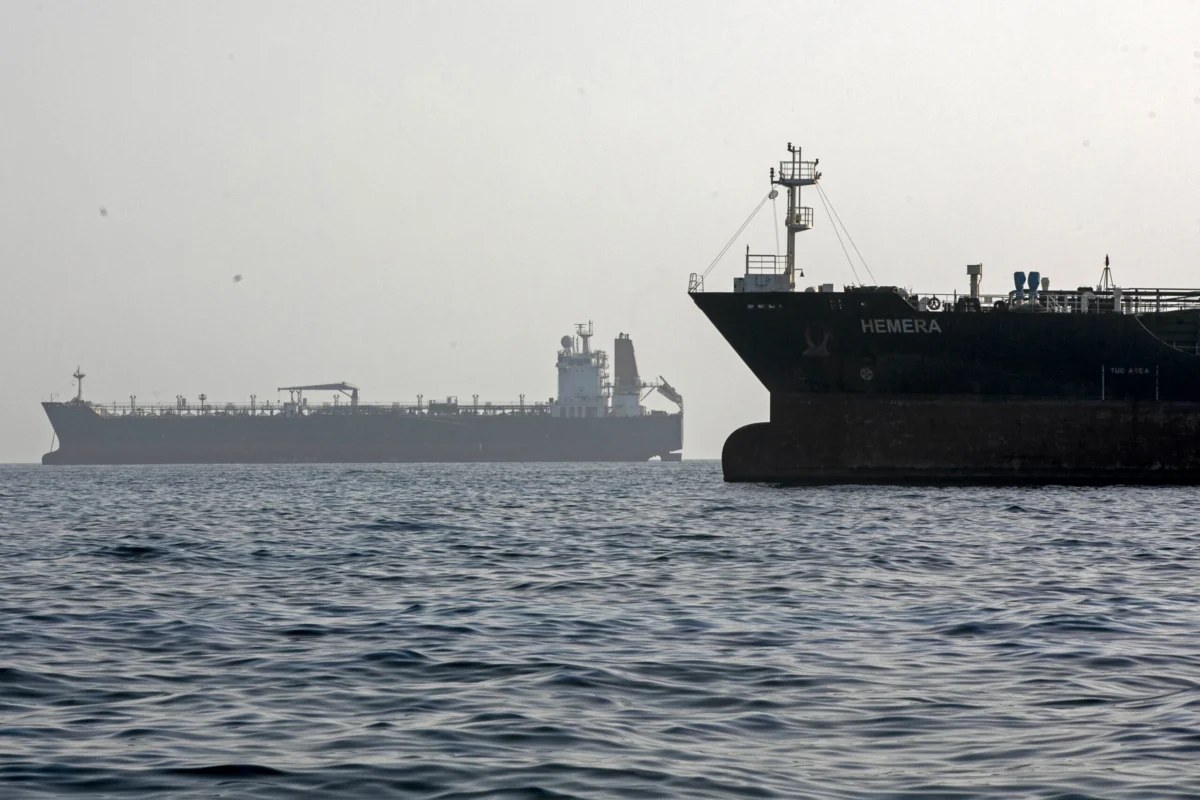
U.S. Central Command announced Tuesday that its forces had successfully intercepted multiple Iranian ballistic missiles and drones, subsequently launching defensive strikes in response to "attempted attacks" by Iran. This latest exchange marks a significant escalation in a cycle of hostilities that continues to imperil a fragile ceasefire, further dimming prospects for a lasting peace agreement. The incident underscores the persistent volatility in the region, where diplomatic efforts have repeatedly faltered.
Escalation of Hostilities in Regional Waters and Airspace
According to a statement released by CENTCOM, Iran launched several ballistic missiles toward regional neighbors, though none reportedly achieved their intended targets. Specifically, two Iranian missiles aimed at Kuwait were described as falling short or breaking apart mid-flight. Simultaneously, three missiles launched toward Bahrain were decisively intercepted by a joint effort of U.S. and Bahraini air defense systems. In addition to these missile threats, U.S. forces also engaged and downed three one-way attack drones dispatched by Iran. These drones were reportedly targeting civilian mariners transiting the strategically important regional waters. In a direct act of self-defense, American forces then conducted strikes against an Iranian military ground control station located on Qeshm Island.
A Three-Month Stalemate: The Fragility of the Ceasefire
The current regional conflict, now three months into its active phase, has solidified into a precarious stalemate. Despite repeated attempts, the United States and Iran have thus far failed to translate a fragile ceasefire into a durable peace accord. This ongoing impasse has created an environment ripe for recurrent escalations, making any potential de-escalation efforts increasingly challenging. The lack of sustained dialogue and the deep-seated mistrust between the two nations have contributed significantly to the protracted nature of the conflict.
Diplomatic Maneuvers and Unanswered Communications
Reports indicate that Iran is currently reviewing a peace proposal put forth by the Trump administration, aimed at pausing the ongoing hostilities. However, Iranian media reported on Tuesday that the nation has not communicated with Washington for several days regarding this agreement. Conversely, U.S. President Donald Trump has publicly stated that negotiations are ongoing, creating a disconnect in official narratives and adding a layer of uncertainty to the diplomatic landscape. This communication gap highlights the complexities and potential pitfalls in mediating such a high-stakes geopolitical dispute.
Recent Tit-for-Tat Attacks and Strategic Implications
Tensions on the ground have demonstrably intensified in recent weeks, leading to a series of retaliatory actions. Iran’s Revolutionary Guard Corps (IRGC) has been implicated in attacks targeting the U.S. Fifth Fleet headquarters, as well as an airbase and helicopters within the region. These actions were reportedly carried out using missiles and drones, and the IRGC described them as a response to an alleged U.S. strike on a communications tower situated south of Qeshm Island, according to reports citing Iranian media.
Further compounding the volatile situation, the IRGC’s navy reportedly targeted a vessel identified as the Panaya with missiles. This action was also framed as a reprisal for what Iran described as a U.S. attack on an Iranian tanker near the Strait of Hormuz. The alleged U.S. action involved a projectile that reportedly damaged the tanker’s engine room. These incidents underscore a pattern of escalating reciprocal strikes, each claiming to be a defensive measure against perceived aggression.
Regional Governments Sound Alarms Amidst Drone Attacks

Governments across the Gulf region have responded to the heightened threats by issuing alerts and activating defense systems. Kuwait’s air defenses confronted what they termed "hostile missile and drone attacks" on Wednesday, prompting the country to urge its citizens to adhere strictly to established security and safety instructions. Similarly, Bahrain’s interior ministry activated warning sirens, directing residents to seek shelter in response to the unfolding events. The coordinated nature of these attacks, affecting multiple regional actors, amplifies the perceived threat and the urgency for de-escalation.
Market Resilience Amidst Geopolitical Uncertainty
Despite the escalating regional tensions, Asian markets displayed a degree of resilience on Wednesday, mirroring gains seen on Wall Street, where major averages had achieved fresh record closes overnight. Japan’s Nikkei 225 index, in particular, reached a record high. This market behavior suggests that investors, to some extent, have looked past the immediate geopolitical uncertainties, prioritizing economic fundamentals and corporate performance.
Rick Gardner, Chief Investment Officer at RGA Investments, commented on CNBC’s "Squawk Box Asia" on Wednesday, acknowledging the difficulty in predicting the timeline for the resolution of the conflict and ongoing negotiations. He anticipates that markets will likely experience oscillations, driven by negative shocks related to the conflict and the persistent strength of corporate earnings. Gardner characterized the market environment as a "two-edged sword," cautioning that investors who withdraw from markets due to geopolitical uncertainty risk being "on the wrong side of the trade." He emphasized the continued strength of corporate earnings and forward-looking guidance as key factors supporting sustained investment.
Background and Historical Context
The current escalation is not an isolated incident but rather a continuation of a long-standing geopolitical rivalry between the United States and Iran. The two nations have been at odds for decades, with their relationship marked by periods of intense hostility and cautious diplomatic engagement. The Strait of Hormuz, a critical chokepoint for global oil shipments, has frequently been a focal point of these tensions, with both sides engaging in actions that threaten freedom of navigation.
The recent cycle of attacks can be traced back to earlier skirmishes and perceived provocations. The U.S. has consistently accused Iran and its proxy forces of destabilizing activities in the Middle East, including attacks on shipping and military installations. Iran, in turn, has accused the U.S. of interference and aggression, often citing its own security concerns and regional influence. The ongoing conflict is intrinsically linked to broader regional power dynamics, involving various state and non-state actors with competing interests.
Analysis of Implications
The persistent cycle of attacks and counter-attacks has several significant implications. Firstly, it perpetuates regional instability, posing a constant threat to global energy supplies and international trade routes. The Strait of Hormuz, in particular, remains a vulnerable artery, and any disruption could have far-reaching economic consequences.
Secondly, the failure to achieve a lasting peace deal erodes the credibility of diplomatic efforts and reinforces a confrontational approach. This can embolden hardline factions on both sides, making future negotiations even more challenging. The reliance on military responses, even if framed as defensive, creates a dangerous feedback loop of escalation.
Thirdly, the ongoing conflict diverts valuable resources that could otherwise be allocated to economic development, humanitarian aid, or other pressing global issues. The human cost of such conflicts, often borne by civilian populations, is also a significant and often overlooked consequence.
Finally, the geopolitical uncertainty generated by these events can have a ripple effect on global financial markets, as evidenced by the cautious optimism tempered by ongoing concerns. While markets may show resilience in the short term, sustained conflict and instability could eventually lead to more significant economic repercussions. The ability of international actors to foster genuine dialogue and de-escalate tensions will be crucial in navigating this complex and volatile geopolitical landscape. The ongoing diplomatic efforts, however fraught with difficulty, remain the most viable path toward a more stable and peaceful future for the region.
