

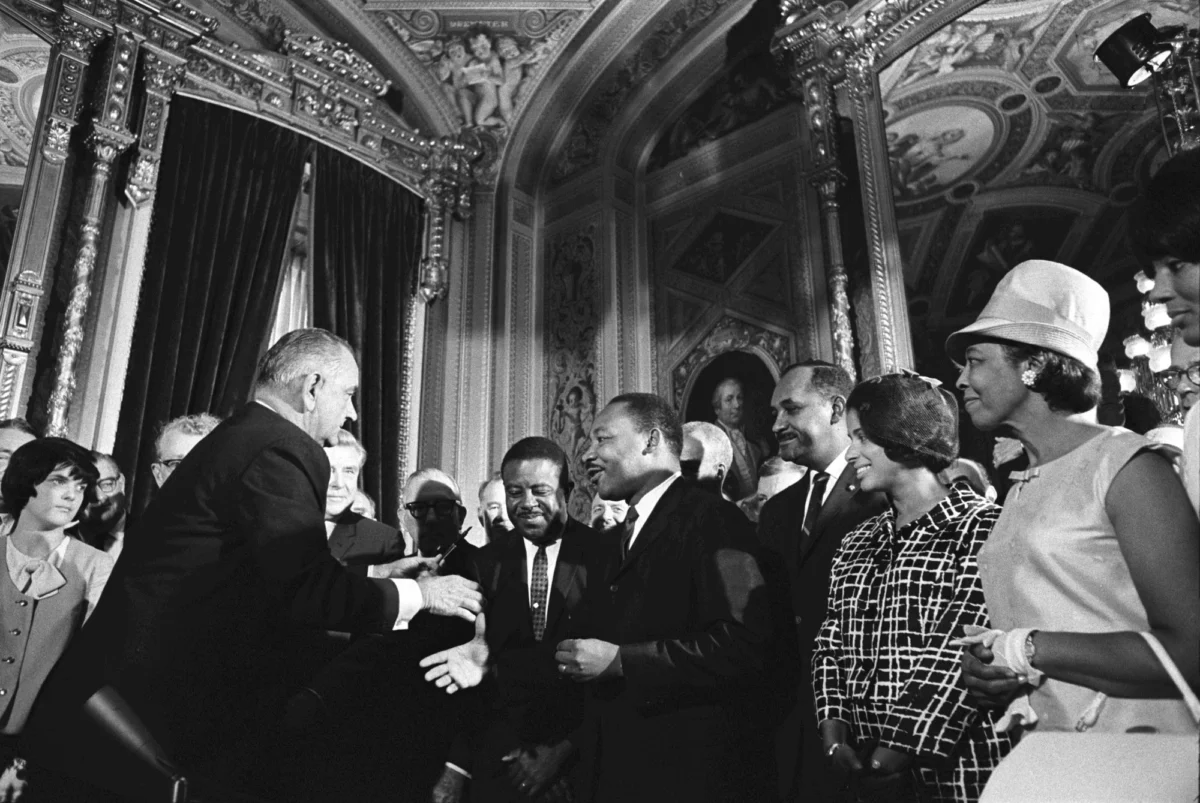
The landscape of American democracy underwent a seismic shift last week as a 6-3 conservative majority on the U.S. Supreme Court issued a landmark ruling in Louisiana v. Callais, significantly narrowing the scope of the landmark 1965 Voting Rights Act. The decision, which supports Republican-led efforts to redraw congressional maps outside of the traditional decennial census cycle, has ignited a firestorm of legal challenges, grassroots protests, and political maneuvering ahead of the critical 2026 midterm elections. By effectively weakening Section 2 of the Voting Rights Act—a provision designed to prevent the dilution of minority voting power—the Court has opened the door for states to implement maps that critics argue are designed with "laser-like precision" to suppress opposition voters and cement partisan control.
The Legal Erosion of the Voting Rights Act
To understand the gravity of the Louisiana v. Callais decision, one must look back to the origins of the Voting Rights Act (VRA) of 1965. Signed into law by President Lyndon B. Johnson during the height of the Civil Rights Movement, the VRA was intended to dismantle the systemic barriers that prevented Black Americans and other racial minorities from exercising their right to vote. For decades, Section 2 of the Act served as a vital tool for the Department of Justice and civil rights organizations to challenge redistricting plans that "packed" minority voters into a single district or "cracked" them across several districts to neutralize their influence.

However, the current Supreme Court has presided over a steady dismantling of these protections. This trajectory gained momentum in 2013 with Shelby County v. Holder, which struck down the "preclearance" formula that required states with a history of discrimination to seek federal approval before changing voting laws. In 2019, the Court further restricted federal oversight by ruling that partisan gerrymandering—the practice of drawing maps to favor one political party—was a "political question" beyond the reach of federal courts.
The 2026 ruling in Louisiana v. Callais represents the latest and perhaps most definitive blow. By allowing Louisiana to bypass the creation of a second majority-Black district, the Court has signaled that the historical mandate for "majority-minority" districts is no longer an absolute requirement, even in states with documented histories of racial bias in the electoral process.
The Rise of Mid-Census Redistricting
Historically, the redrawing of electoral maps occurs once every ten years following the release of U.S. Census data. This decennial process is intended to ensure that congressional districts remain equal in population. However, the 2026 cycle has seen an unprecedented departure from this norm. Following public calls from President Donald Trump for his allies to "guarantee" a Republican majority in the House of Representatives, several states have moved to proactively redraw their maps mid-decade.

Texas led this charge in August 2025, with the Republican-controlled legislature adopting a new map projected to net the party up to five additional House seats. Florida, Missouri, North Carolina, Ohio, and Utah quickly followed suit. This "redistricting war" has not been one-sided; Democratic-led states like California and New York have also initiated mid-census map changes to counterbalance Republican gains. In California, a new measure aims to expand the Democratic majority by five seats, while Virginia voters recently approved a map designed to yield a 10-1 Democratic advantage—a move currently tied up in state courts.
This cycle of retaliatory redistricting has created an environment of "electoral chaos," according to Michael Li, senior counsel at the Brennan Center for Justice. Li warned as early as 2021 that the lack of federal guardrails would lead to gerrymandering at "unprecedented levels," a prediction that has materialized in the lead-up to the 2026 midterms.
State-Level Flashpoints: Louisiana, Alabama, and Beyond
The immediate fallout of the Supreme Court’s ruling was felt most acutely in the Deep South. In Louisiana, Governor Jeff Landry issued an emergency executive order to halt the state’s primary elections, clearing the way for the legislature to discard a previously court-ordered map that included a second majority-Black district. Despite an emergency lawsuit filed by the ACLU and other civil rights groups, the Supreme Court rejected a request for a rehearing, allowing the state to proceed with a map more favorable to the GOP.

In Alabama, the situation is equally volatile. Governor Kay Ivey and the state legislature are currently considering the elimination of one or both of the state’s majority-Black districts. This move is particularly controversial given Alabama’s central role in the civil rights struggle; the late Congressman John Lewis, who was brutally beaten by police during the 1965 "Bloody Sunday" march in Selma, spent his career warning against the very erosion of voting power now taking place in his home state. If Alabama proceeds, it may be forced to annul the results of its primary elections, which were scheduled to begin on May 19.
Mississippi and Tennessee have also joined the fray. Tennessee lawmakers recently convened a special session to redraw congressional lines, a move that protesters argue will eliminate the state’s only remaining majority-Black district. Republican officials defended the move as reflecting the "will of Tennessee voters," though this claim was met with hundreds of citizens marching on the state Capitol in Nashville to voice their dissent.
Political Implications and the 2026 Midterm Outlook
The push for mid-census redistricting comes at a time of significant political vulnerability for the Trump administration. While the President’s allies hope that gerrymandered maps will provide a firewall against a potential "blue wave," recent data suggests that the strategy could backfire.
Public dissatisfaction with the administration has reached record highs. According to a recent ABC News poll, 62 percent of Americans believe the country is headed in the wrong direction. This discontent is driven largely by economic factors. While the 2024 campaign focused heavily on the "price of eggs" and grocery store inflation, those costs have continued to rise. Furthermore, the administration’s decision to engage in a military conflict with Iran in February 2026 caused domestic gas prices to skyrocket, alienating a broad swath of the electorate.
Polling data indicates that the "Latino vote," which the GOP heavily relied on in 2024, is shifting. A survey by UnidosUS found that 81 percent of Hispanic voters in Texas are concerned that the executive branch is exercising too much authority. Nationally, Florida International University polling shows that 60 percent of Latino voters now intend to support Democratic candidates in the midterms.
The "generic ballot" test—a key indicator of which party voters prefer to control Congress—currently shows a 10-point lead for Democrats, according to an NPR/PBS/Marist survey. Pollster Nate Silver has noted similar trends in Emerson College and YouGov polling, suggesting that even with favorable maps, Republicans face a steep uphill battle to maintain their House majority.

Grassroots Resistance and the Path Forward
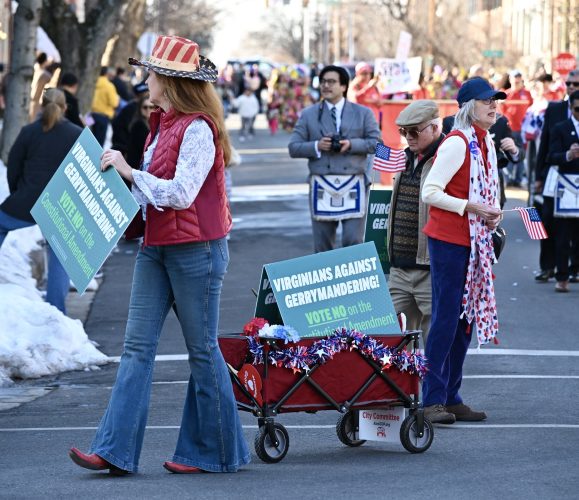
As the legal battles play out in the courts, a parallel movement is growing on the streets. From Birmingham to Baton Rouge, thousands of citizens have organized rallies to protest what they describe as the "theft of the vote." In Alabama, high-profile Democratic figures, including Senator Cory Booker and former Senator Doug Jones, have joined local representatives like Terri Sewell to mobilize voters.
The message from these advocates is clear: while the Supreme Court may have limited the legal avenues for challenging gerrymandering, the ultimate power still resides with the electorate. "They can draw the lines, but they can’t stop us from crossing them to get to the polls," one protester in Ohio remarked during a rally of more than 400 people at the State House.
The 2026 midterms will serve as a definitive test of the resilience of American democratic institutions. With the Supreme Court having largely stepped back from its role as a referee in electoral disputes, the responsibility for ensuring fair representation has shifted to state legislatures, lower courts, and, most importantly, the voters themselves. As the November election approaches, the "redistricting wars" are no longer just a technical dispute over map coordinates; they are a fundamental struggle over the meaning of "one person, one vote" in the 21st century.

Conclusion: A Turning Point for Representative Democracy
The convergence of the Louisiana v. Callais ruling, the rise of mid-decade redistricting, and a volatile economic climate has created a "perfect storm" in American politics. The actions taken by Southern governors and the conservative wing of the Supreme Court have fundamentally altered the rules of engagement for the 2026 midterms.
However, the historical precedent of the Voting Rights Act reminds us that progress is rarely linear. Just as the activists of the 1960s overcame systemic disenfranchisement through persistence and legal ingenuity, today’s voting rights organizations are adapting to a new era of challenges. Whether the current maps hold or are overturned by future litigation, the 2026 election cycle will be remembered as the moment when the battle for the ballot box returned to the center of the American consciousness. The coming months will determine if the House of Representatives reflects the diverse will of the people or the strategic interests of those who draw the lines.
