

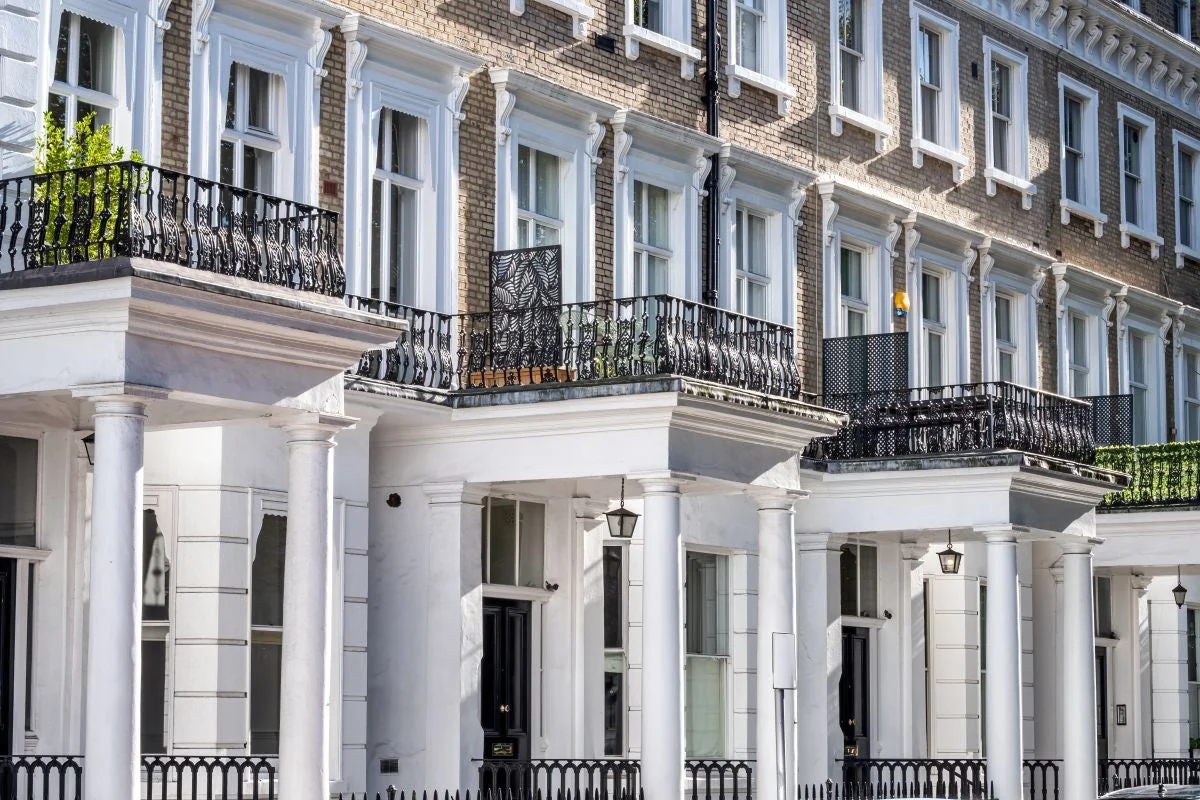
London’s super-prime property market, typically a bastion of stability and wealth, has experienced a dramatic downturn, with sales figures in the first quarter of 2026 hitting their lowest point since before the COVID-19 pandemic. Data compiled by leading property consultants Savills reveals a stark 54% decrease in transactions for properties valued at £10 million and above when compared to the same period in 2025. This significant contraction underscores a palpable sense of caution among the world’s wealthiest prospective buyers, a sentiment directly linked to escalating geopolitical tensions, particularly the renewed conflict in the Middle East.
The figures paint a sobering picture for the upper echelons of London’s real estate landscape. In the first quarter of 2026, only 16 super-prime transactions were recorded. This figure is notably lower than the 15 transactions observed in the third quarter of 2019, a period preceding the global upheaval caused by the pandemic. Even the initial lockdown quarter of Q2 2020, which saw 19 sales, represented a higher volume than the current figures. The total value of these high-end sales has also been severely impacted, plummeting from £650 million in Q1 2025 to just £290 million in Q1 2026, a reduction of over 55%.
Geopolitical Tremors Ripple Through Mayfair and Kensington
The report from Savills explicitly identifies the unfolding conflict in the Middle East as a primary catalyst for this market recalibration. Frances McDonald, Director of Residential Research at Savills, commented on the phenomenon, stating, "Renewed caution has swept back into the super-prime London market following the start of the conflict in Iran. This segment of the market is most sensitive to periods of economic and geopolitical uncertainty, and, as a result, transactional activity fell more steeply across the remainder of the quarter." This sensitivity is a well-documented characteristic of the super-prime sector, where ultra-high-net-worth individuals (UHNWIs) often exhibit a more cautious approach to significant investments when global stability appears precarious.
The implications of such geopolitical instability are far-reaching. For UHNWIs, investment decisions are rarely made in isolation. They are influenced by a complex interplay of economic forecasts, political stability, and perceived safety of assets. In times of heightened global tension, capital often seeks havens perceived as secure, and while London has historically been such a haven, current global dynamics appear to be fostering a more risk-averse investment climate. This can lead to a temporary pause in major capital deployment as individuals and their advisors reassess the global economic landscape.
A Wider Market Slowdown: Prime Properties Feel the Pinch
The slowdown is not confined solely to the super-prime segment. The broader prime property market, defined by transactions between £5 million and £10 million, has also witnessed a decline. In the first quarter of 2026, 52 such sales were recorded, a decrease from the 69 transactions that took place between January and March of the previous year. Financially, this translates to £350 million in prime property sales in Q1 2026, a reduction of £120 million compared to the same period in 2025. This indicates a more widespread cooling of demand within the luxury property sector, suggesting that the factors affecting the super-prime market are having a ripple effect across the higher end of the market.
Underlying Economic Currents and Shifting Investor Sentiment
While geopolitical events are the immediate trigger, other underlying economic factors and policy considerations may also be contributing to the subdued market. The article briefly touches upon the tax environment, noting that while some HNWIs might seek London for security, the prevailing tax regime can dissuade them from purchasing property. This suggests a longer-term consideration for investors, where the overall attractiveness of London as a place to invest capital is being weighed against its tax implications.
The report also highlights a contrasting trend in the super-prime lettings market. The reluctance of some potential buyers to commit to purchases has inadvertently benefited the luxury rental sector, particularly for those relocating to the UK on a short-term basis. Olivia McSweeney, a super-prime London letting specialist at Sotheby’s International Realty, confirmed the surge in demand for high-end rentals, stating, "The demand is definitely there, but the supply is the challenge for us this year for super-prime lettings." This dynamic creates a bifurcated market, where the inability to buy translates into heightened demand for premium rental properties.
A Buyer’s Market Emerges Amidst the Downturn
Despite the challenging conditions for sellers, the current market presents a potential opportunity for astute buyers. Charlie Gibson, a property broker at OB Private, observes that the market is currently favourable for purchasers. "Prime property has been selling for discount on previous prices," Gibson noted. "Properties are still trading, albeit it is taking a longer time for sales to take place." This suggests that vendors who are motivated to sell may be accepting lower offers to facilitate transactions in a slower market. The extended time it takes for sales to complete is a common characteristic of a buyer’s market, where negotiation power shifts from the seller to the buyer.

Historical Context and Precedent
To fully appreciate the current market situation, it is beneficial to consider historical data. The period before the pandemic, specifically 2019, is often used as a benchmark for pre-disruption market conditions. The fact that Q1 2026 sales figures have dipped below those of Q3 2019 is significant. It implies that the market has not only failed to recover to pre-pandemic levels in terms of transaction volume but has, in fact, fallen to a new low. The Q2 2020 lockdown figures, while representing a period of unprecedented disruption, serve as a point of comparison that highlights the severity of the current contraction. The market’s resilience and recovery trajectory in the years following 2020 were strong, making this recent downturn particularly noteworthy.
Broader Implications for London’s Real Estate Ecosystem
The impact of this super-prime market slowdown extends beyond individual transactions. It can affect related industries, including wealth management, legal services, interior design, and luxury retail, all of which cater to the UHNWI demographic. A sustained downturn in high-value property sales could lead to reduced activity and revenue for businesses reliant on this segment of the economy.
Furthermore, the narrative around London as a global financial and residential hub is also being subtly reshaped. While the city retains its allure for its cultural offerings, financial infrastructure, and historical prestige, the current market conditions suggest that external factors can significantly influence its attractiveness to global capital. The interplay between geopolitical stability, economic policies, and investor confidence will continue to be crucial determinants of London’s position in the global super-prime property landscape.

Future Outlook and Expert Commentary
The Savills report, while detailing the current slump, implicitly points towards a market that is highly sensitive to external shocks. The recovery of the super-prime market will likely be contingent on a de-escalation of geopolitical tensions and a stabilization of the global economic outlook. Analysts will be closely watching for any signs of renewed confidence among UHNWIs and a potential shift in their investment strategies.
The article also references related cautionary notes for offshore property holdings, suggesting a broader re-evaluation of international real estate investments in light of evolving geopolitical risks. This underscores the interconnectedness of global markets and the need for sophisticated risk management strategies for high-net-worth individuals and their portfolios.
The current data serves as a potent reminder that even the most exclusive markets are not immune to global events. The sharp decline in London’s super-prime property sales underscores the delicate balance of factors that drive investment at the highest echelons of the market, and the significant influence that geopolitical stability, or the lack thereof, can exert. As the market navigates these turbulent times, the focus will remain on how swiftly and effectively these underlying uncertainties can be addressed, paving the way for a potential resurgence in demand for London’s most coveted addresses. The coming quarters will be critical in determining whether this downturn is a temporary correction or the beginning of a more prolonged period of recalibration for London’s super-prime property sector.
