

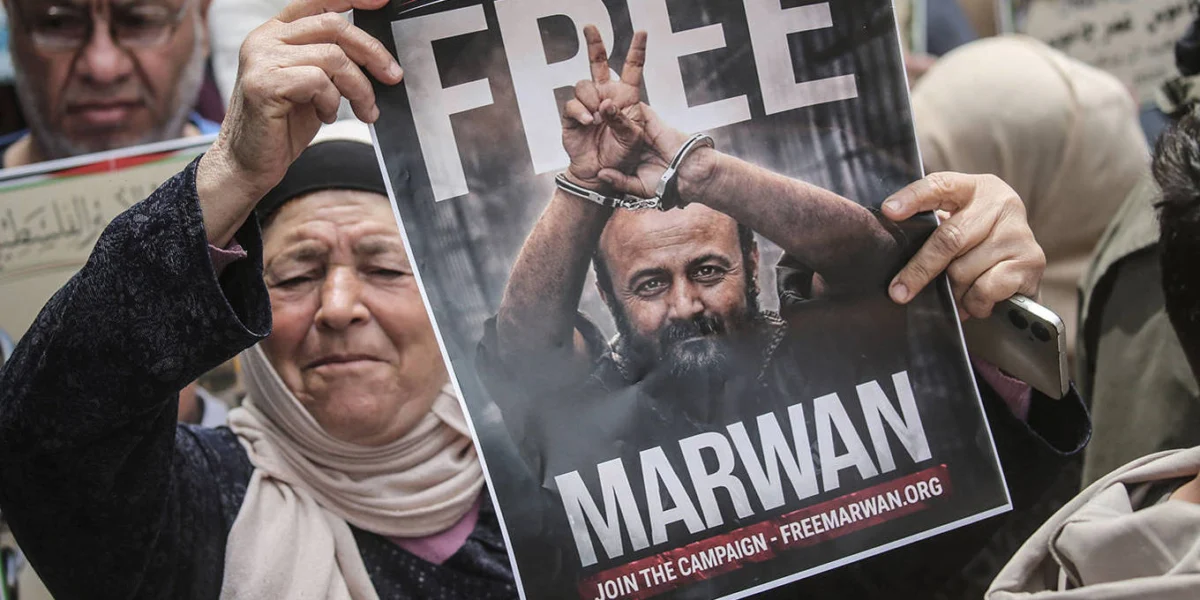
The international community has long envisioned a two-state solution to the Israeli-Palestinian conflict, a vision increasingly solidified by the widespread recognition of Palestine on the 1967 borders. This broad consensus among United Nations member states provides a clear framework for the establishment of an independent Palestinian state existing alongside Israel. However, the realization of this vision has been consistently hampered by a critical missing element: credible Palestinian leadership capable of navigating the complex political landscape and forging a path towards lasting peace. In this context, the imprisoned politician Marwan Barghouti emerges as a figure with the potential to bridge this leadership gap and revitalize the stalled peace process.
The Enduring Quest for a Two-State Solution
The concept of a two-state solution, where an independent Palestinian state would coexist peacefully with Israel, has been the cornerstone of international diplomacy for decades. This framework, often grounded in the pre-1967 armistice lines, has garnered significant support globally. As of recent UN records, a substantial majority of member states officially recognize the State of Palestine within these internationally agreed-upon borders. This widespread diplomatic recognition signifies a unified international stance on the territorial basis for a future Palestinian state, creating a shared blueprint for its establishment. The persistent challenge, however, lies not in the absence of an agreed-upon map, but in the political will and the leadership necessary to implement such a vision on the ground.
US Engagement and the Barghouti Factor
US President Donald Trump, known for his penchant for bold diplomatic initiatives and a stated desire to achieve a breakthrough in the Middle East, is urged to re-engage with the Palestinian-Israeli conflict. This enduring issue has profoundly shaped regional politics for generations, and past US administrations have largely failed to broker a lasting peace. The argument presented is that to achieve what his predecessors could not, President Trump should consider engaging with Marwan Barghouti, a Palestinian leader currently serving a life sentence in Israeli prison for his role in the Second Intifada. Barghouti, despite his incarceration, is portrayed as possessing the unique legitimacy and popular support within Palestine that could be instrumental in advancing the peace process. His supporters view him as a unifying figure capable of commanding respect across various Palestinian factions and engaging constructively with Israeli counterparts.
Background and Chronology of the Conflict and Barghouti’s Rise
The Israeli-Palestinian conflict, a deeply entrenched dispute over land, identity, and sovereignty, has a long and complex history dating back to the early 20th century. Key milestones include:
- 1947: The UN proposes the Partition Plan for Palestine, recommending the creation of independent Arab and Jewish states.
- 1948: The State of Israel is declared, leading to the first Arab-Israeli War. Hundreds of thousands of Palestinians are displaced, an event known as the Nakba.
- 1967: The Six-Day War results in Israel’s occupation of the West Bank, Gaza Strip, East Jerusalem, and the Golan Heights. This period marks the basis for the internationally recognized borders for a future Palestinian state.
- Late 1980s/Early 1990s: The First Intifada, a Palestinian uprising against Israeli occupation, gains momentum.
- 1993: The Oslo Accords are signed, establishing the Palestinian Authority and outlining a framework for a two-state solution, with interim self-governance for Palestinians.
- 2000-2005: The Second Intifada, a more violent uprising, erupts following the collapse of peace talks.
- 2002: Marwan Barghouti, a prominent leader of Fatah and a key figure in the Second Intifada, is arrested by Israeli forces.
- 2004: Barghouti is convicted by an Israeli court on multiple charges, including murder and terrorism, and sentenced to five life sentences. He maintains his innocence, arguing his actions were part of a legitimate struggle against occupation.
- 2006: Hamas wins the Palestinian legislative elections, leading to internal Palestinian divisions and international boycotts.
- 2007 onwards: The Palestinian Authority, led by Fatah, governs parts of the West Bank, while Hamas controls Gaza, exacerbating the political fragmentation.
- 2010s: Numerous rounds of peace talks, often mediated by the US, fail to achieve a lasting agreement.
- 2017: US President Donald Trump declares his administration’s commitment to facilitating an Israeli-Palestinian peace deal.
- 2020: The Abraham Accords are signed, normalizing relations between Israel and several Arab nations, bypassing the Palestinian issue.
- 2026 (present context): The call for US engagement with Marwan Barghouti gains renewed traction amidst the ongoing impasse.
Marwan Barghouti’s political trajectory is deeply intertwined with the Palestinian struggle for self-determination. He rose to prominence during the First Intifada, becoming a charismatic and widely respected figure within Fatah. During the Second Intifada, he was seen by many Palestinians as the de facto leader of the uprising, advocating for armed resistance against the Israeli occupation while also expressing a willingness to engage in political negotiations. His arrest and subsequent imprisonment did not diminish his symbolic standing for a significant portion of the Palestinian population. Polls conducted over the years have consistently shown him to be a popular choice for Palestinian leadership, often outranking other political figures, including those not currently incarcerated.
Supporting Data and International Recognition
The international framework for a Palestinian state is not merely aspirational; it is underpinned by concrete diplomatic actions. As of June 2026, reports from the United Nations indicate that over 130 member states officially recognize the State of Palestine. This recognition typically aligns with the borders established by the 1967 Six-Day War, encompassing the West Bank, Gaza Strip, and East Jerusalem as its capital. This widespread endorsement by the global community provides a robust foundation for the creation of a sovereign Palestinian entity.
However, the practical implementation of this recognition faces significant obstacles. The ongoing Israeli occupation of the Palestinian territories, the continued expansion of Israeli settlements in the West Bank, and the unresolved issues of Palestinian refugees, borders, and security remain formidable challenges. The fragmentation of Palestinian political leadership, with the division between Fatah in the West Bank and Hamas in Gaza, further complicates efforts to present a unified negotiating front.
The Argument for Barghouti’s Candidacy
The argument for Marwan Barghouti’s pivotal role stems from his perceived ability to transcend these divisions. Unlike many other Palestinian leaders who are either associated with specific factions or have lost public trust due to perceived corruption or ineffectiveness, Barghouti retains a broad base of support. His lengthy imprisonment has, for many, solidified his image as a martyr and a steadfast defender of the Palestinian cause.
Furthermore, Barghouti has, at various times, expressed a pragmatic approach to negotiations. While an advocate for Palestinian rights and an end to the occupation, he has also indicated an openness to a two-state solution based on international law and UN resolutions. His proponents suggest that his current status, while a severe personal hardship, paradoxically positions him as an outsider to the current political establishment, potentially allowing him to negotiate with a degree of independence from entrenched interests.
Potential Implications and Reactions
Engaging Marwan Barghouti in peace talks could have several significant implications:
- Renewed Palestinian Unity: His involvement might foster greater cohesion among Palestinian factions, creating a more unified negotiating team. This could enhance the credibility of any future agreements reached.
- Increased International Leverage: A leadership figure with broad Palestinian backing and a willingness to engage could bolster the international community’s efforts to pressure Israel into concessions.
- Shifting Israeli Calculations: For Israel, engaging with a figure like Barghouti, who is widely seen within Palestine as legitimate, might necessitate a reassessment of its negotiating posture. However, the Israeli government’s stance on Barghouti has historically been one of firm opposition, viewing him as a convicted terrorist.
- Challenges to the Status Quo: Barghouti’s release, or even his active participation in negotiations from prison, would represent a significant challenge to the current political and security arrangements.
Reactions to the idea of Barghouti’s central role are likely to be sharply divided. Palestinian factions, while perhaps acknowledging his symbolic importance, would still need to reconcile their internal differences to present a united front. Some might see his release as a prerequisite for any meaningful engagement.
Israeli officials have consistently portrayed Barghouti as a dangerous figure responsible for violence. His conviction by Israeli courts means that any move towards his release or significant political involvement would face immense political and legal hurdles within Israel. The security establishment would likely raise strong objections, citing his past actions and the potential for him to incite further violence.
The international community, particularly the United States, would face the delicate task of balancing its desire for peace with the legal and political realities surrounding Barghouti’s imprisonment. Any US initiative involving him would require careful diplomatic maneuvering to navigate Israeli concerns and secure broader international support.
Analysis of the Path Forward
The proposition of Marwan Barghouti as a key facilitator of peace presents a complex but potentially transformative avenue. The international community’s clear consensus on the 1967 lines provides the architectural blueprint for a Palestinian state. What has been absent is the dynamic leadership capable of bringing that blueprint to life. Barghouti, with his widespread support among Palestinians and his historical role in the resistance and diplomacy, embodies a potential catalyst for change.
However, the path is fraught with challenges. His continued imprisonment, the deeply entrenched positions of the Israeli government, and the persistent internal divisions within Palestinian politics are formidable obstacles. Any successful engagement would require a paradigm shift in diplomatic strategy, one that acknowledges the existing international consensus while creatively addressing the leadership deficit.
Ultimately, the efficacy of Marwan Barghouti’s potential role hinges on a confluence of factors: the willingness of the US to invest significant political capital, the capacity of Palestinian factions to unite behind him, and a potential recalibration of Israeli security and political calculations. Without these elements, the international blueprint for a Palestinian state, however well-defined, may continue to remain a distant aspiration. The current juncture, marked by a clear international framework and a recognized need for credible leadership, presents a critical moment for exploring all avenues that could lead to a just and lasting resolution to the Israeli-Palestinian conflict.
