

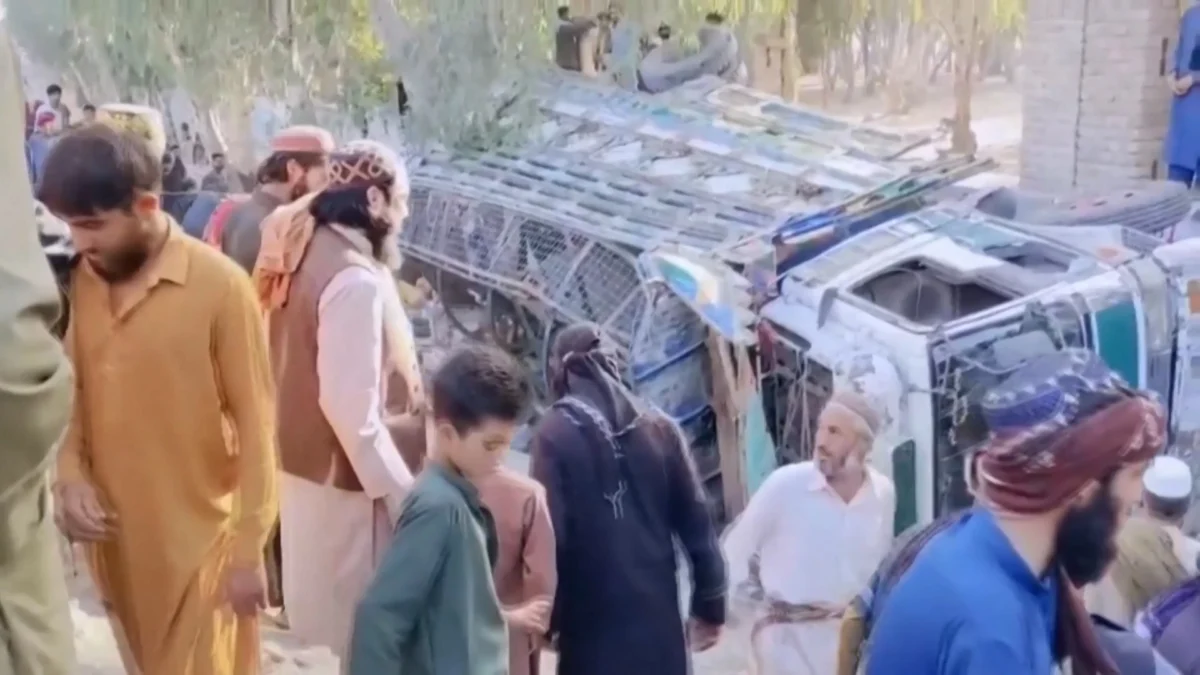
A catastrophic road accident in eastern Afghanistan’s Laghman Province on May 30, 2026, claimed the lives of at least 22 individuals and left 36 others injured when a truck transporting recently returned Afghan refugees overturned. The incident, which occurred under circumstances still being investigated, has cast a somber light on the perilous journeys undertaken by vulnerable populations attempting to reintegrate into a nation grappling with persistent humanitarian and economic challenges. Officials from the provincial administration confirmed the fatalities and injuries, stating that preliminary reports suggest the driver lost control of the vehicle, leading to the tragic rollover. An immediate and thorough investigation has been launched by Afghan authorities to ascertain the precise cause of the accident and to ensure accountability.
The tragedy unfolded on a notoriously difficult stretch of road within Laghman, a province situated strategically between Kabul and the eastern border regions, often serving as a transit corridor for those returning from neighboring countries. The victims were part of a larger group of Afghans who had recently returned to their homeland, seeking a new beginning amidst the complex and often precarious landscape of post-conflict Afghanistan. Many of these returnees possess limited resources, having spent years, if not decades, as refugees in Pakistan or Iran, and often rely on informal and sometimes unsafe transport methods to reach their intended destinations within Afghanistan. The truck, believed to be an older model cargo vehicle repurposed for passenger transport, was reportedly overloaded, a common and dangerous practice in the region that significantly heightens the risk of accidents.
Details of the Incident and Immediate Aftermath
The accident occurred in the early morning hours, around 05:30 local time, as the truck was navigating a winding section of highway in the Alingar district of Laghman. Eyewitnesses, some of whom were survivors, recounted a sudden loss of control by the driver, followed by the vehicle veering off the road and overturning violently. The impact was severe, trapping many passengers beneath the wreckage and scattering others across the roadside. The sheer force of the crash resulted in instantaneous fatalities for many, while others sustained critical injuries, including fractures, head trauma, and internal bleeding.
Local residents were among the first responders, rushing to the scene to provide assistance, pulling survivors from the mangled remains of the truck, and administering initial first aid. Their efforts were soon bolstered by provincial emergency services, including police, medical personnel, and disaster relief teams. Ambulances from nearby districts were dispatched, ferrying the injured to provincial hospitals in Mehtar Lam, the capital of Laghman, and some with more severe conditions were transferred to larger medical facilities in Kabul. The provincial health directorate confirmed that medical teams were overwhelmed but working tirelessly to treat the influx of casualties. Identifying the deceased proved challenging in some cases due to the extent of injuries and the lack of personal documentation among some of the returnees, underscoring the disarray often experienced by these vulnerable individuals.
The Plight of Returnees: A Deepening Crisis
This tragic incident underscores the profound and often overlooked dangers faced by Afghan refugees returning to their homeland. For decades, Afghanistan has been a major source of refugees globally, with millions seeking asylum and economic opportunities in neighboring countries, particularly Pakistan and Iran. In recent years, however, there has been a significant push for repatriation, often driven by host countries’ policies, economic pressures, and, in some cases, the hope of improved conditions within Afghanistan.
The process of return is rarely straightforward. Many returnees face immense challenges upon their arrival, including lack of housing, limited access to livelihoods, inadequate social services, and the psychological burden of displacement and uncertainty. The journey itself is frequently fraught with peril. Unregulated transport, often involving overcrowded and poorly maintained vehicles, is a common reality for those who cannot afford safer alternatives. These informal transport networks often operate on dangerous routes, pushing the limits of vehicle capacity and driver endurance, all while traversing an infrastructure notoriously ill-equipped for heavy traffic and high speeds. The individuals aboard the ill-fated truck in Laghman were not merely passengers; they were families, individuals, and children carrying the weight of their past and the fragile hopes for their future, now shattered by a preventable accident.
Laghman Province: A Crossroads for Return
Laghman Province, located in eastern Afghanistan, plays a critical role in the country’s humanitarian landscape. Its proximity to the border with Pakistan makes it a frequent entry point and transit hub for returnees. The province’s terrain is characterized by mountainous areas interspersed with fertile river valleys, but its road network, like much of Afghanistan’s, suffers from significant underdevelopment and disrepair. Major arteries are often unpaved or poorly maintained, with potholes, erosion, and narrow sections posing constant hazards. These conditions are exacerbated during adverse weather, such as heavy rains or dust storms, which can further reduce visibility and road grip.
For returnees, Laghman is often just one stop on a longer journey to their ancestral villages or to urban centers where they hope to find work. The lack of organized, safe, and affordable transportation options often forces them into the hands of informal transporters who prioritize profit over passenger safety. This economic vulnerability, coupled with the urgent need to reach their final destinations, creates a demand for cheap transport, inadvertently fueling a market for unsafe practices.
Road Safety in Afghanistan: A Perilous Journey
Road safety in Afghanistan remains a critical public health and development challenge. The country consistently ranks among those with the highest rates of road traffic fatalities globally, relative to its vehicle population. Factors contributing to this grim reality include:
- Poor Infrastructure: Many roads are unpaved, poorly maintained, or lack proper signage and safety barriers.
- Overloaded Vehicles: Trucks, buses, and even smaller vehicles are routinely overloaded with both goods and passengers, compromising stability and braking capacity.
- Reckless Driving: A significant portion of accidents are attributed to speeding, reckless overtaking, and driving under the influence.
- Lack of Enforcement: Weak regulatory frameworks and inconsistent enforcement of traffic laws allow dangerous practices to persist.
- Vehicle Maintenance: Many vehicles, particularly those used for commercial or informal transport, are old, poorly maintained, and lack essential safety features.
- Limited Driver Training: Inadequate training and licensing standards contribute to a prevalence of unskilled drivers.
The Laghman incident is a stark reminder that these systemic issues disproportionately affect the most vulnerable segments of the population, including returning refugees who often have no alternative but to rely on such precarious means of transport.
Official Response and Investigation
In the wake of the tragedy, Afghan authorities have moved swiftly to initiate a comprehensive investigation. The Ministry of Interior Affairs released a statement expressing profound condolences to the families of the victims and assuring the public that all efforts would be made to determine the exact circumstances leading to the accident. A special task force comprising traffic police, criminal investigators, and provincial officials has been assigned to the case. Their mandate includes examining the vehicle’s condition, assessing the driver’s licensing and experience, analyzing the road conditions at the time of the crash, and investigating any potential negligence on the part of the transport operator.
The provincial governor of Laghman, while visiting the injured in local hospitals, pledged full support for the victims and their families. He highlighted the immediate provision of emergency medical care and announced that efforts were underway to facilitate the respectful burial of the deceased, with assistance provided to families for funeral arrangements. The Ministry of Refugees and Repatriation also issued a statement, acknowledging the severe risks faced by returnees and reiterating its commitment to working with international partners to establish safer and more organized repatriation and reintegration programs. While such statements offer reassurance, the practical implementation of comprehensive safety measures remains a significant hurdle in a resource-constrained environment.
Humanitarian Organizations React
The United Nations High Commissioner for Refugees (UNHCR) and the International Organization for Migration (IOM), key agencies involved in supporting Afghan refugees and returnees, swiftly reacted to the news with deep sorrow. In separate statements, both organizations extended their heartfelt sympathies to the families of the deceased and wished a speedy recovery to the injured. A spokesperson for UNHCR highlighted the inherent vulnerabilities of returnees, emphasizing the urgent need for safe and dignified pathways for those choosing to return to Afghanistan. The IOM representative underscored the importance of regulated transport services and called upon authorities and humanitarian actors to redouble efforts in ensuring the safety and protection of all migrants and returnees.
These organizations have long advocated for better road safety measures and more robust support systems for returnees, often citing the lack of formal reception and transit centers, as well as the unregulated nature of internal transportation, as significant concerns. The Laghman accident serves as a tragic reinforcement of these warnings, prompting renewed calls for international assistance to bolster Afghanistan’s capacity to manage the complex challenges associated with large-scale returns. Aid workers on the ground confirmed their readiness to provide psychosocial support to survivors and families affected by the tragedy, recognizing the deep trauma such events inflict.
Statistical Context: A Grim Reality
The scale of Afghan returns, particularly from Pakistan and Iran, has been substantial in recent years. In 2023 alone, for example, over 1.7 million Afghans returned from Pakistan, and hundreds of thousands more from Iran, often under immense pressure. While these numbers fluctuate, the overall trend points to a continuous flow of individuals navigating a challenging return. Each of these journeys carries inherent risks, amplified by the desperate circumstances that often compel them.
Road accident statistics in Afghanistan paint an equally grim picture. According to the World Health Organization (WHO), road traffic injuries are a leading cause of death and disability in low- and middle-income countries, and Afghanistan is no exception. While precise, up-to-date figures for 2026 are not available, historical data consistently show thousands of fatalities and tens of thousands of injuries annually on Afghan roads. For instance, in previous years, estimates ranged from 3,000 to 5,000 road traffic fatalities annually, with many more suffering life-altering injuries. The Laghman incident, with its high casualty count, unfortunately, adds to this sobering tally, highlighting that such tragedies are not isolated events but symptomatic of deeper systemic issues.
Broader Implications and Future Challenges
The Laghman truck accident carries significant broader implications for Afghanistan and the international community. Firstly, it underscores the persistent humanitarian crisis that continues to plague the nation, where basic safety and protection for its most vulnerable citizens remain precarious. The incident serves as a stark reminder that the journey home for many Afghans is fraught with peril, often leading to further suffering rather than relief.
Secondly, it will likely intensify calls for improved road safety standards and enforcement. While a massive overhaul of infrastructure may be a long-term goal, immediate measures such as stricter vehicle inspections, limitations on overloading, better driver training, and more rigorous traffic law enforcement are critically needed. The involvement of returnees in this tragedy also highlights the necessity for specific programs aimed at ensuring their safe transport and integration.
Thirdly, the incident could prompt a re-evaluation of repatriation policies, both by host countries and international organizations. While voluntary returns are encouraged, the conditions under which these returns occur, and the safety nets available upon arrival, must be critically assessed. There is an urgent need for more structured, safer, and better-resourced repatriation processes that prioritize the well-being of individuals over political or logistical expediency.
Finally, this tragedy adds another layer of complexity to the already strained resources of Afghanistan’s healthcare system and humanitarian aid efforts. Treating the injured, providing support to grieving families, and managing the aftermath of such a large-scale incident places immense pressure on local capacities, further emphasizing the need for sustained international support for Afghanistan’s recovery and development. The collective trauma experienced by the survivors and the broader community will also necessitate long-term psychosocial support, an often-overlooked aspect of disaster response.
The tragic loss of 22 lives in Laghman is a poignant reminder of the multifaceted challenges confronting Afghanistan. It highlights the desperate circumstances of returning refugees, the inherent dangers of the country’s transportation infrastructure, and the urgent need for comprehensive solutions that prioritize human life and dignity. As the investigation proceeds, the hope remains that lessons learned from this devastating incident will contribute to preventing future tragedies and pave the way for a safer, more humane future for all Afghans.
