

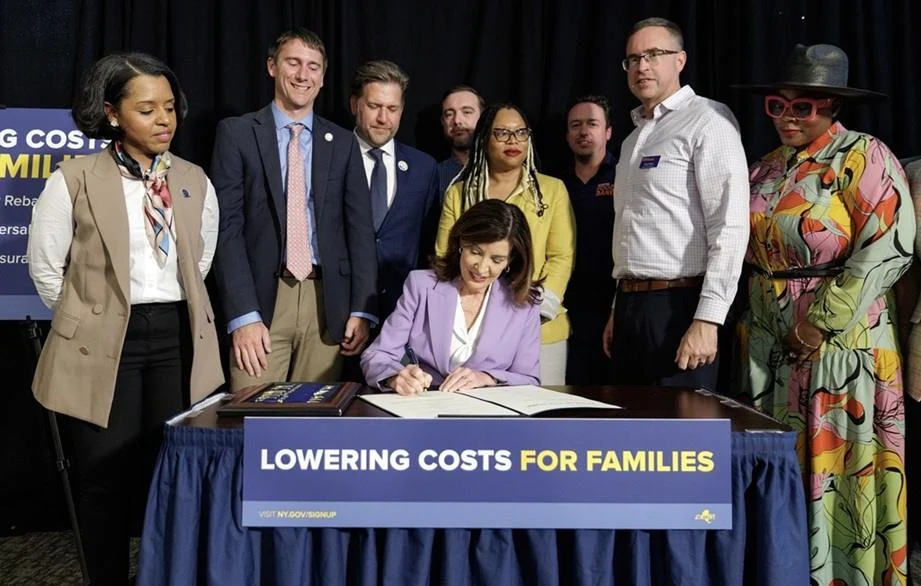
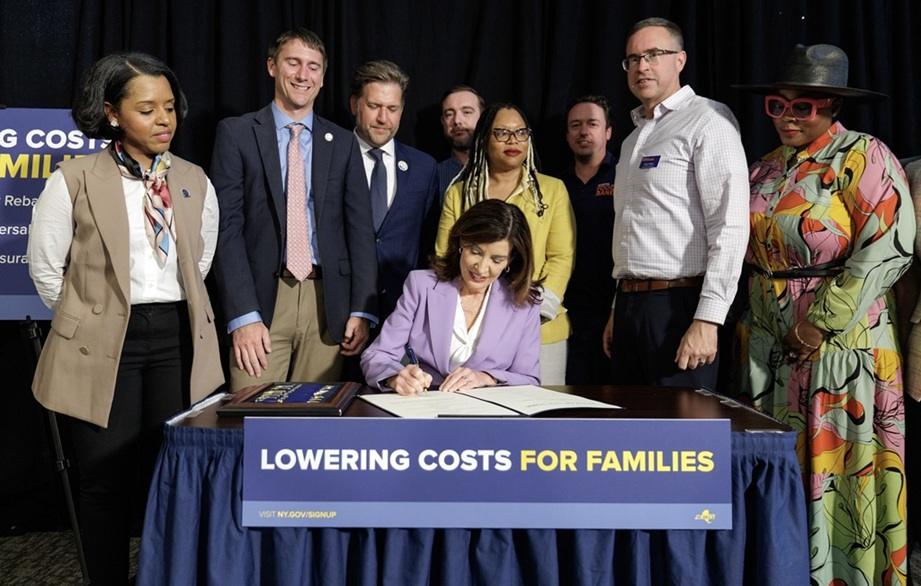
In a move that has sent ripples through the environmental and political landscape of the Northeast, Governor Kathy Hochul officially signed New York State’s 2027 executive budget on Thursday. The finalized legislation, which followed weeks of intense negotiations with state legislators, includes a controversial overhaul of the state’s landmark climate law. Most notably, the budget formally pushes back New York’s primary greenhouse gas emissions reduction targets, effectively abandoning the 2030 interim goal in favor of a revised 2040 mandate. This legislative shift marks a significant retreat from the ambitious timeline established nearly a decade ago and underscores the growing friction between climate aspirations and economic realities.
The revision to the state’s climate framework comes after a series of warnings from the Governor’s office throughout the early months of 2026. Governor Hochul has increasingly characterized the original targets as "costly and unattainable," arguing that sticking to the 2030 deadline would impose "crushing costs" on both New York businesses and residents. The administration has pointed to a drastically altered geopolitical landscape as the primary catalyst for this policy pivot, citing high inflation, supply chain disruptions in the renewable energy sector, and what the Governor described as a "full-on assault on renewables and tax incentives" by the federal government and Republican-led initiatives.
The Evolution of the Climate Leadership and Community Protection Act
To understand the gravity of the recent budget changes, one must look back to the inception of the Climate Leadership and Community Protection Act (CLCPA). Signed into law in 2019, the CLCPA was hailed as one of the most ambitious climate mandates in the United States, if not the world. It set a legally binding path for New York to reach a zero-emission electricity sector by 2040 and to reduce economy-wide greenhouse gas emissions by at least 85% by 2050, compared to 1990 levels.
A critical component of the original 2019 law was the interim target: a 40% reduction in emissions by 2030. This target was designed to ensure that the state did not backload its decarbonization efforts, forcing immediate action across the transportation, building, and industrial sectors. However, as the 2020s progressed, the state struggled to translate these statutory goals into enforceable regulations. The Department of Environmental Conservation (DEC) was tasked with adopting specific regulations to meet these targets by 2024, a deadline that passed without the necessary framework being established.
The delay led to a significant legal challenge. In late 2025, the Supreme Court of New York intervened, ordering the DEC to issue the required regulations by early 2026. The court’s ruling made it clear that the state was in violation of its own statutes. By amending the law within the 2027 budget, Governor Hochul and the state legislature have effectively bypassed this court order, resetting the legal clock and providing the administration with a new, more lenient timeline.
New Targets and Regulatory Timelines
Under the newly signed budget, the 40% reduction target for 2030 has been replaced. The state is now legally aiming for a 60% reduction in greenhouse gas emissions by 2040, using the 1990 baseline. While 60% is a higher percentage than the previous 40% interim goal, the ten-year extension provides the state and private industry with a much wider window to implement the massive infrastructural changes required for decarbonization.
Furthermore, the deadline for the DEC to finalize and implement the regulations necessary to achieve these reductions has been pushed out to 2028. This four-year delay from the original 2024 deadline is intended to allow for a more thorough economic impact analysis and to align state regulations with the current availability of green technology and grid capacity.
Critics argue that this "kicking the can down the road" approach undermines the urgency of the climate crisis. Proponents, however, suggest that the 2030 goal was mathematically impossible given the current pace of offshore wind development and the slow rate of building electrification in high-density areas like New York City.
The Fate of the Cap-and-Invest Program
While the budget significantly delays emissions targets, it does offer a lifeline to one of the Governor’s signature climate initiatives: the Cap-and-Invest program. First proposed by Hochul in 2023, the program aims to set an annual cap on the total amount of greenhouse gas emissions allowed in the state. Large emitters would be required to purchase allowances for the pollution they produce, with the cap decreasing every year.
The revenue generated from these auctions—estimated to be in the billions of dollars—is intended to be funneled back into climate-resilient infrastructure, clean energy rebates for low-income New Yorkers, and transition support for workers in the fossil fuel industry. Despite its potential, the program has faced numerous delays. It was notably absent from the 2025 and 2026 budgets as the administration grappled with concerns over potential increases in gas prices and utility bills.
The 2027 budget requires the DEC to continue the implementation process for the Cap-and-Invest program, keeping it as a central pillar of the state’s strategy to hit the new 2040 targets. By maintaining the program’s viability, the state hopes to create a market-based mechanism that incentivizes private sector decarbonization without relying solely on direct taxpayer funding.

Reactions from Environmental Advocates and Industry Leaders
The reaction to the budget’s climate provisions has been sharply divided. Environmental advocacy groups, who spent years lobbying for the CLCPA, have expressed a sense of betrayal. The Natural Resources Defense Council (NRDC) issued a scathing statement following the budget’s approval, describing the move as "deeply disappointing" and a blow to New York’s status as a climate leader.
Jackson Morris, the NRDC’s Director of State Power Sector, Climate & Energy, warned that the delay would have long-term economic and health consequences. "This action is likely to increase costs for many New Yorkers in the long run, while prolonging harmful pollution and fossil fuel dependence," Morris said. "While the budget stops short of dismantling New York’s core climate obligations, it substantially weakens key elements, undercutting the law’s ambition, accountability, and enforceability at a critical moment."
In contrast, some business groups and utility providers have quietly welcomed the move. Industry leaders have long argued that the 2030 timeline did not account for the complexities of upgrading an aging power grid or the sheer volume of renewable energy generation needed to replace retired gas plants. The extra decade, they argue, allows for a more "orderly transition" that protects grid reliability and prevents sudden spikes in energy costs for consumers.
Economic and Geopolitical Pressures
The decision to scale back climate goals cannot be viewed in isolation from the broader economic and political environment. Governor Hochul’s rhetoric regarding the "assault on renewables" refers to a shift in federal policy that has seen a reduction in subsidies for wind and solar projects, alongside increased regulatory hurdles for interstate transmission lines.
In New York specifically, the offshore wind industry—once the crown jewel of the state’s green energy plan—has faced significant headwinds. Several major projects were canceled or renegotiated in 2024 and 2025 due to rising interest rates and the soaring cost of materials. These setbacks made the 2030 goal of 70% renewable electricity increasingly unlikely, forcing the state to recalibrate its expectations.
Additionally, the state is facing a looming "peaker plant" crisis. Many of the state’s oldest and most polluting power plants, which only run during times of peak demand, were scheduled for retirement to meet the original CLCPA goals. However, without sufficient renewable capacity to replace them, energy officials warned of potential blackouts in downstate regions, further complicating the push for rapid decarbonization.

Analysis: The Implications of a Pushed-Back Timeline
The shift from a 2030 to a 2040 focus represents a fundamental change in New York’s climate strategy. By moving the goalposts, the state is prioritizing economic stability and political feasibility over the aggressive "front-loading" of emissions cuts.
From a policy perspective, this may allow for a more strategic deployment of technology that is currently in its infancy, such as long-duration battery storage and green hydrogen. However, from a scientific perspective, the delay means that a significant volume of greenhouse gases that would have been mitigated under the 2030 plan will now be released into the atmosphere over the next decade.
Furthermore, New York’s retreat may signal a trend for other states. As a pioneer in climate legislation, New York’s struggles to meet its mandates serve as a cautionary tale for other jurisdictions. If a state with New York’s resources and political will finds its targets "unattainable," it may prompt a broader re-evaluation of climate timelines across the United States.
Chronology of New York’s Climate Mandates
- July 2019: Governor Andrew Cuomo signs the CLCPA, setting a 40% emissions reduction target for 2030 and 85% for 2050.
- January 2023: Governor Hochul proposes a statewide Cap-and-Invest program to fund the transition.
- December 2024: The DEC misses the statutory deadline to finalize regulations for the 2030 targets.
- October 2025: The Supreme Court of New York rules that the DEC must issue regulations by early 2026.
- January 2026: Governor Hochul publicly describes original climate goals as "costly and unattainable."
- May 2026: The 2027 State Budget is signed, officially moving the interim target to 2040 and delaying regulations until 2028.
As New York embarks on this revised path, the focus will shift to the 2028 regulatory deadline. The coming two years will be critical as the DEC and the New York State Energy Research and Development Authority (NYSERDA) attempt to build a framework that satisfies the new law while navigating the complex interplay of technology, finance, and public opinion. For now, the "Green New York" envisioned in 2019 has been deferred, replaced by a more cautious approach to the energy transition.
