

Egypt has launched an urgent and comprehensive diplomatic intervention, racing against time to salvage a precarious Gaza ceasefire agreement teetering on the brink of total collapse. The intensified efforts come in response to a grave escalation in Israeli military actions across the Gaza Strip and a series of provocative statements from top Israeli officials that threaten to unravel months of painstaking international diplomacy and reignite full-scale conflict in the beleaguered enclave. Cairo’s immediate objective is to de-escalate the volatile situation and push all parties back to the negotiating table before the week concludes, aiming to prevent a catastrophic return to all-out war.
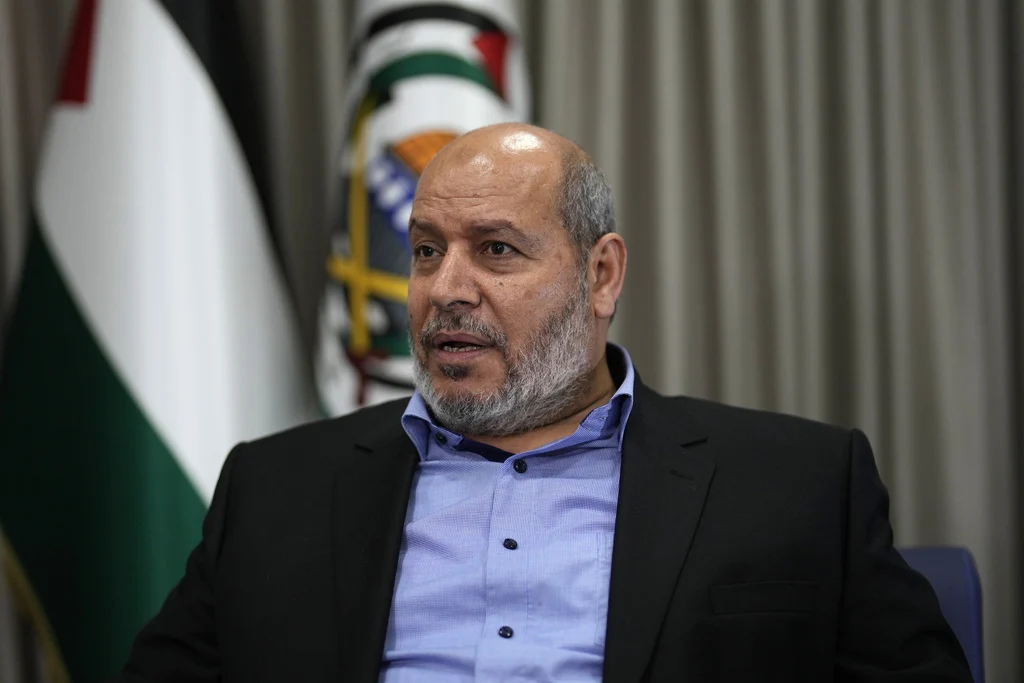
The Egyptian government has issued a stern warning to Israel, cautioning against any expansion of its occupational presence within Gaza, a move explicitly stated to undermine all ongoing efforts to secure a lasting peace. This warning follows a brutal wave of deadly Israeli airstrikes and ground incursions that have significantly increased Palestinian casualties. Concurrently, a senior Hamas delegation, led by its chief negotiator Khalil al-Hayya, has been formally invited to Cairo for urgent discussions. An Egyptian intelligence official, speaking anonymously to Al Jazeera due to the sensitivity of the situation, described the contacts between the various parties as "intense," underscoring the critical nature of Egypt’s frantic diplomatic sprint.
Escalation and Breach of Agreement
The current crisis is deeply rooted in a series of recent Israeli actions that directly contravene the spirit and letter of the US-brokered comprehensive peace plan, which was signed in October 2025 under the administration of then-President Donald Trump. This agreement, hailed at the time as a significant step towards de-escalation, aimed to end a devastating two-year period of conflict. Mediators involved in the 2025 accord now assert that Israel’s recent directives fundamentally violate the core tenets of that plan, which sought to establish a framework for stability and reconstruction in Gaza.
In the past two weeks alone, the Israeli military offensive has claimed the lives of at least 141 Palestinians. This grim toll contributes to a broader pattern of violence, with at least 929 Palestinians reportedly killed in Israeli attacks since the October 2025 ceasefire initially took effect. These figures paint a stark picture of a ceasefire that has been, at best, inconsistently observed, and at worst, systematically undermined by persistent hostilities.
A pivotal moment in the current escalation occurred on Thursday when Israeli Prime Minister Benjamin Netanyahu issued a directive ordering the military to expand the area under its control within Gaza from 53% to an alarming 70%. This unilateral territorial expansion, if implemented, would effectively annex a significant portion of the Strip, further fragmenting the enclave and severely complicating any future prospects for Palestinian self-governance or a viable two-state solution. Such a move is seen by international observers and mediators as a direct repudiation of the principles enshrined in the 2025 peace plan, which implicitly, if not explicitly, sought to maintain the territorial integrity of Gaza.
Adding to the regional outrage, Israeli Defence Minister Israel Katz publicly revived a controversial blueprint for the "voluntary migration" of Palestinians out of the enclave. This highly contentious concept, long viewed by Palestinians and the international community as a thinly veiled proposal for forced displacement, was articulated during an announcement confirming the assassination of Mohammed Odeh, Hamas’s newly appointed military chief. Odeh’s death, along with that of another prominent Hamas military figure, Izz al-Din al-Haddad, in preceding attacks, has further inflamed tensions. Katz asserted that this displacement scheme would be implemented "at the right time and in the right manner," sending a chilling message across the region and beyond.
A Fragile Peace: Background of the 2025 Ceasefire
The October 2025 ceasefire agreement was a crucial, albeit tenuous, attempt to halt a cycle of intense violence that had plagued Gaza for two years. During that period, the conflict had resulted in an unprecedented humanitarian crisis, with estimates suggesting that tens of thousands of Palestinians were either killed or severely injured. The original Al Jazeera report, citing a figure of 72,000 Palestinians killed over two years, underscores the catastrophic human cost, though this number is often interpreted by humanitarian agencies as encompassing both fatalities and severe injuries, highlighting the immense suffering endured by the civilian population. Furthermore, the vast majority of Gaza’s population had been rendered homeless, their lives shattered by relentless bombardment and destruction of infrastructure.
The 2025 agreement, brokered with significant US involvement, sought to establish a baseline of "neither war nor peace" – a temporary cessation of overt hostilities to allow for humanitarian aid, initial reconstruction efforts, and a pathway for further political negotiations. Its terms reportedly included provisions for a reduction in Israeli military incursions, increased access for goods and people, and potential mechanisms for addressing prisoner exchanges, though the full details were not publicly disseminated. The underlying premise was that both sides would adhere to a period of calm, creating an environment conducive to more comprehensive peace talks. However, the period since October 2025 has been marked by sporadic violence and a consistent sense of unease, with both sides frequently accusing the other of breaches. The recent surge in Israeli attacks and the explicit threats of territorial expansion and displacement have now pushed this already fragile arrangement to its breaking point.
Egypt’s Diplomatic Front and International Engagement
Cairo’s current diplomatic push is multifaceted, involving coordination with key regional and international mediators. Egypt has been working closely with officials in Qatar and Turkiye, both of whom have historically played significant roles in mediating Israeli-Palestinian conflicts. Crucially, Egypt has also engaged with United States officials, recognizing Washington’s unique influence over Israel. An Egyptian source indicated that Cairo has specifically appealed to President Donald Trump to urgently intervene and restrain Prime Minister Netanyahu, given the gravity of the recent Israeli escalations in Gaza. This highlights the perceived need for strong international pressure to bring Israel back into compliance with the 2025 agreement.
Hamas, for its part, has confirmed receiving Egyptian communications aimed at de-escalating the situation and preventing the complete collapse of the talks. A senior Hamas official abroad told Al Jazeera that a meeting in Cairo with Egyptian mediators was anticipated within days, signaling a potential, albeit narrow, window for dialogue. Hamas has publicly attributed the ceasefire’s precarious state to "repeated Israeli violations" and has issued a strong call to the US and other guarantor countries to take "serious and urgent" steps to compel Israel to honor its commitments under the existing agreement. This underscores Hamas’s position that Israel bears primary responsibility for the current crisis and that international accountability is essential.
Underlying Motivations and Political Dynamics
The Egyptian source further suggested that Netanyahu’s recent statements regarding the expansion of Israel’s occupation in Gaza, as well as the targeted attacks on Hamas military figures, are significantly influenced by domestic "electoral calculations" and compounded by "difficulties Netanyahu faces in Lebanon." This analysis points to the complex interplay between internal Israeli politics and its foreign policy decisions.
Netanyahu, leading a coalition often reliant on hardline factions, frequently faces pressure from his political base to adopt hawkish stances, particularly concerning security matters. Actions perceived as strong responses to Hamas or assertive territorial claims can bolster his standing among certain segments of the Israeli electorate. Furthermore, the mention of "difficulties in Lebanon" alludes to potential regional challenges or security concerns along Israel’s northern border, which could be influencing strategic decisions in Gaza, possibly as a means of projecting strength or diverting attention. This intricate web of political maneuvering adds layers of complexity to the already volatile situation, making genuine de-escalation a formidable challenge for mediators.
Humanitarian Catastrophe and the Specter of Displacement
The implications of a collapsed ceasefire and intensified conflict are catastrophic, particularly for the already beleaguered civilian population of Gaza. The enclave, one of the most densely populated areas on Earth, has endured years of blockade and repeated conflicts, leading to a profound humanitarian crisis. The "vast majority of Gaza’s population made homeless" statistic is a stark indicator of the scale of displacement and destruction that has already occurred. Many of these internally displaced persons are living in overcrowded shelters or makeshift accommodations, often lacking basic necessities such as clean water, food, and medical supplies.
The revival of the "voluntary migration" plan by Defence Minister Katz, coupled with Egypt’s strong rejection of any measures pushing Gaza’s residents towards the Rafah crossing, highlights the profound fear of forced displacement. International law unequivocally prohibits forcible transfers of populations, which can constitute war crimes. The Rafah crossing, already a choke point for humanitarian aid and the only exit point for many Palestinians, represents a critical flashpoint. Any attempt to force a mass exodus towards Egypt would create an unprecedented humanitarian disaster at the border, with severe implications for regional stability and Egypt’s national security. Cairo’s explicit warning against such a scenario underscores its unwavering commitment to preventing any demographic engineering or mass displacement that could spill over into its territory.
Broader Implications and the Path Forward
The potential collapse of the Gaza ceasefire carries far-reaching implications, extending beyond the immediate conflict zone. Regionally, it risks reigniting broader instability, potentially drawing in other actors and further destabilizing an already volatile Middle East. The credibility of international mediation efforts, particularly those involving the United States, would also be severely undermined if such a carefully brokered agreement is allowed to unravel without significant intervention.
Moreover, a return to full-scale conflict would further diminish any realistic prospects for a long-term peace agreement or a viable two-state solution, a concept already facing immense challenges. The international community’s responsibility to uphold international law, protect civilian populations, and ensure accountability for violations would be brought into sharp focus. The current crisis serves as a stark reminder of the precarious balance in the Israeli-Palestinian conflict and the urgent need for sustained, robust diplomatic engagement to prevent a descent into even greater violence and human suffering. Egypt’s tireless efforts, supported by other regional and international partners, represent a critical lifeline for a peace process that currently hangs by the thinnest of threads.
