

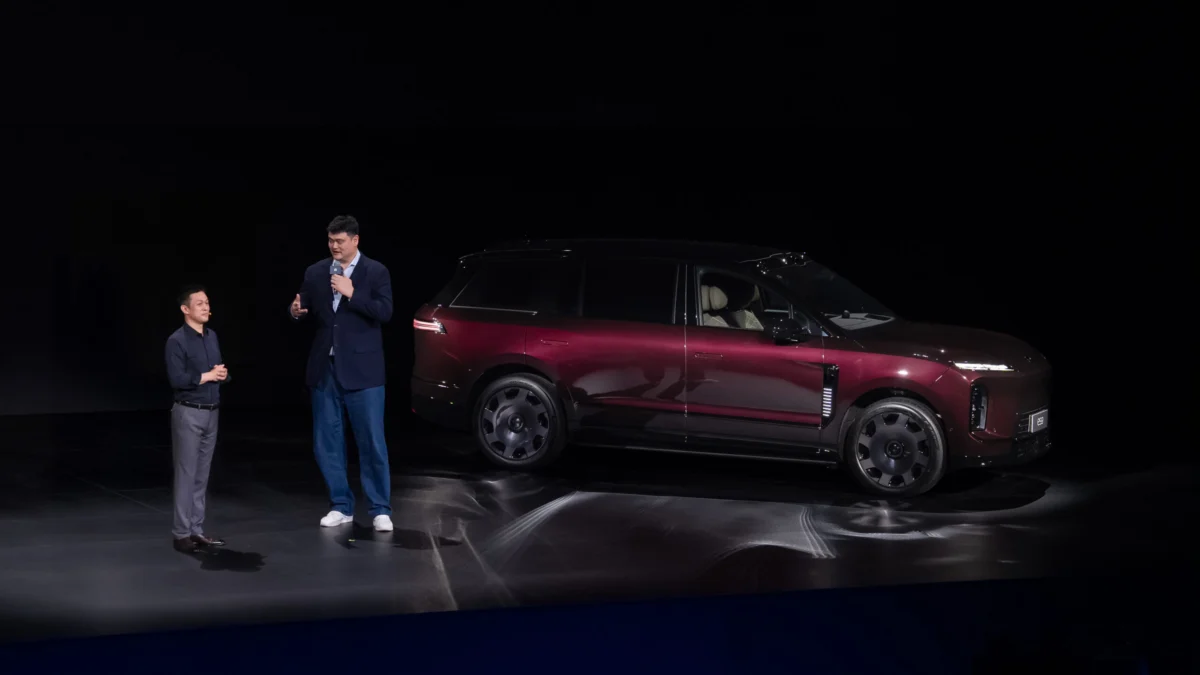
The Chinese automotive landscape, long characterized by double-digit growth and an unprecedented transition toward electrification, is entering a phase of structural cooling that marks the conclusion of its "golden era." This assessment comes directly from William Li, the founder and CEO of NIO, who issued the warning during the official launch of the company’s latest flagship model, the ES9 executive SUV. Despite NIO reporting a resilient 23% year-over-year increase in sales for the previous month, Li’s outlook for the broader industry remains cautious, reflecting a market that is grappling with domestic saturation, intensifying price wars, and shifting consumer preferences.
The declaration coincides with a period of significant volatility for the world’s largest auto market. For seven consecutive months, domestic sales in China have trended downward or stagnated, prompting concerns that the explosive expansion seen between 2015 and 2023 has reached a natural ceiling. While the "New Energy Vehicle" (NEV) segment—which includes both battery-electric vehicles (BEVs) and plug-in hybrid electric vehicles (PHEVs)—continues to gain market share at the expense of internal combustion engine (ICE) vehicles, the total volume of the industry is no longer expected to see the "gangbuster" growth that once defined it.
The Paradox of Growth Amid Stagnation
The timing of Li’s remarks is particularly notable given the successful debut of the NIO ES9. As a flagship executive SUV, the ES9 represents the pinnacle of NIO’s technological and design capabilities, targeting a high-end demographic that has traditionally favored European luxury brands. Early market reception suggests the ES9 will be a significant volume driver for the company in the latter half of 2026. However, Li’s insistence on a "sobering reality" for the industry suggests that individual product successes may no longer be enough to lift the entire sector.
NIO’s recent performance—growing 23% in a month where many competitors struggled—highlights a widening gap between top-tier EV manufacturers and the rest of the field. This divergence suggests that the "golden era" was defined by a rising tide that lifted all boats, whereas the new era will be defined by aggressive consolidation and a "survival of the fittest" mentality.
A Chronology of the Chinese Automotive Boom
To understand the weight of Li’s "golden era" comment, one must look at the trajectory of the Chinese market over the last decade.
- The Subsidy Era (2010–2019): Massive government incentives and the "Dual Credit" policy forced a rapid pivot toward electrification. During this time, hundreds of EV startups emerged, supported by local government investments and a burgeoning supply chain centered around battery giants like CATL.
- The Mainstream Breakthrough (2020–2023): Even during the global pandemic, China’s EV market exploded. Tesla’s entry into Shanghai acted as a catalyst, spurring domestic brands like NIO, XPeng, and Li Auto to accelerate their R&D. By 2023, NEV penetration in many Chinese Tier-1 cities exceeded 50%.
- The Price War and Saturation (2024–2025): The market entered a hyper-competitive phase characterized by aggressive price cuts. While this benefited consumers, it decimated the profit margins of smaller manufacturers.
- The Current Transition (2026): Total domestic sales have hit a plateau. The industry is now shifting from a growth-driven model to a replacement-driven model, where new sales largely come from customers trading in older vehicles rather than first-time buyers.
Strategic Divergence: Domestic Focus vs. Global Expansion
A key point of Li’s address focused on NIO’s strategic commitment to the Chinese domestic market. This stands in contrast to many of its peers, such as BYD and Great Wall Motor, which have aggressively sought to offset slowing domestic demand by expanding into Europe, Southeast Asia, and Latin America.

Li noted that the global landscape for pure electric vehicles is currently more fraught with challenges than it is for hybrids. In many international markets, the lack of charging infrastructure and the withdrawal of government subsidies have led to a resurgence in demand for plug-in hybrids (PHEVs) and extended-range electric vehicles (EREVs). Because NIO remains a "pure-play" BEV company, it faces a steeper uphill battle in regions where the transition to full electrification is lagging.
Furthermore, geopolitical tensions and the imposition of anti-subsidy tariffs by the European Union and the United States have complicated the export math for Chinese manufacturers. By doubling down on the Chinese market, NIO aims to leverage its sophisticated battery-swapping network—a proprietary infrastructure that provides a competitive advantage in high-density Chinese cities but remains in its infancy abroad.
Supporting Data: The Shift in Market Composition
While the overall automotive market in China is expected to remain flat in 2026, the internal composition of the market is shifting radically. According to industry forecasts, sales of traditional gasoline-powered cars are expected to drop by double digits this year. In contrast, the plug-in segment is still projected to grow, albeit at a more measured pace than the triple-digit surges of the early 2020s.
Data from the China Passenger Car Association (CPCA) indicates that the "golden era" growth rates of 20% to 30% for the entire industry have been replaced by a forecast of 0% to 2% total volume growth. For NIO, maintaining a 23% growth rate in such an environment is an outlier, driven largely by brand loyalty and the technological leap represented by the NT3.0 platform underpinning the new ES9.
Official Responses and Industry Sentiment
Industry analysts have largely echoed Li’s sentiments, noting that the "easy wins" in the Chinese market are over. "The low-hanging fruit of first-time car owners in major cities has been picked," stated one senior analyst at a Shanghai-based firm. "What we are seeing now is a brutal fight for market share in Tier-3 and Tier-4 cities, and a desperate need for brands to differentiate themselves through software and services rather than just hardware."
Other Chinese automakers have reacted to the stagnation by pivoting their manufacturing footprints. While NIO remains focused on domestic high-end BEVs, competitors like Li Auto have found immense success with EREVs, which alleviate range anxiety for users in regions with sparse charging networks. This reinforces William Li’s observation that the "pure electric" path is currently more challenging outside of China’s most developed urban centers.
The Impact of the ES9 and the Executive Segment
The ES9 launch is a critical pillar of NIO’s strategy to navigate this stagnant era. By targeting the executive SUV segment, NIO is moving into a high-margin territory where brand prestige and "smart" features—such as autonomous driving capabilities and AI-integrated cabins—outweigh simple price considerations.

The ES9 features NIO’s latest generation of electric drive systems and is designed to take full advantage of the company’s 150 kWh ultra-long-range battery packs. By providing a vehicle that can compete with the likes of the Mercedes-Benz EQS SUV or the BMW iX, NIO is attempting to capture the remaining "growth pockets" within the luxury demographic, even as the mass market cools.
Broader Implications for the Global Economy
The end of the "golden era" in China’s auto industry has significant implications for the global economy. For years, China has been the primary engine of growth for international automakers like Volkswagen, GM, and Toyota. As domestic brands like NIO and BYD capture a larger slice of a shrinking or stagnant pie, foreign legacy automakers are seeing their market shares erode at an accelerating pace.
Moreover, the "stagnation" mentioned by Li may lead to an overcapacity issue. If Chinese factories are built to produce 30 million cars a year but the domestic market only absorbs 25 million, the resulting "export push" could trigger further trade disputes with Western nations. Li’s decision to focus on the domestic market may be a preemptive move to avoid the volatility of international trade politics, focusing instead on deepening NIO’s ecosystem within the world’s most advanced EV environment.
Conclusion: Navigating the New Normal
William Li’s warning serves as a definitive marker for the transition of the Chinese auto industry from adolescence to maturity. The "golden era" of effortless expansion is being replaced by an era of efficiency, technological consolidation, and strategic depth. For NIO, the success of the ES9 will be a litmus test for whether a premium, BEV-only brand can continue to thrive in a market that is no longer growing in volume, but is rapidly evolving in sophistication.
As 2026 progresses, the industry will watch closely to see if other CEOs follow Li’s lead in tempering expectations. For now, the message is clear: the race is no longer about who can grow the fastest, but who can remain standing as the landscape of the world’s largest auto market permanently shifts. High-quality products like the ES9 and robust infrastructure like battery swapping may be the only way to navigate this new, less certain reality.
