

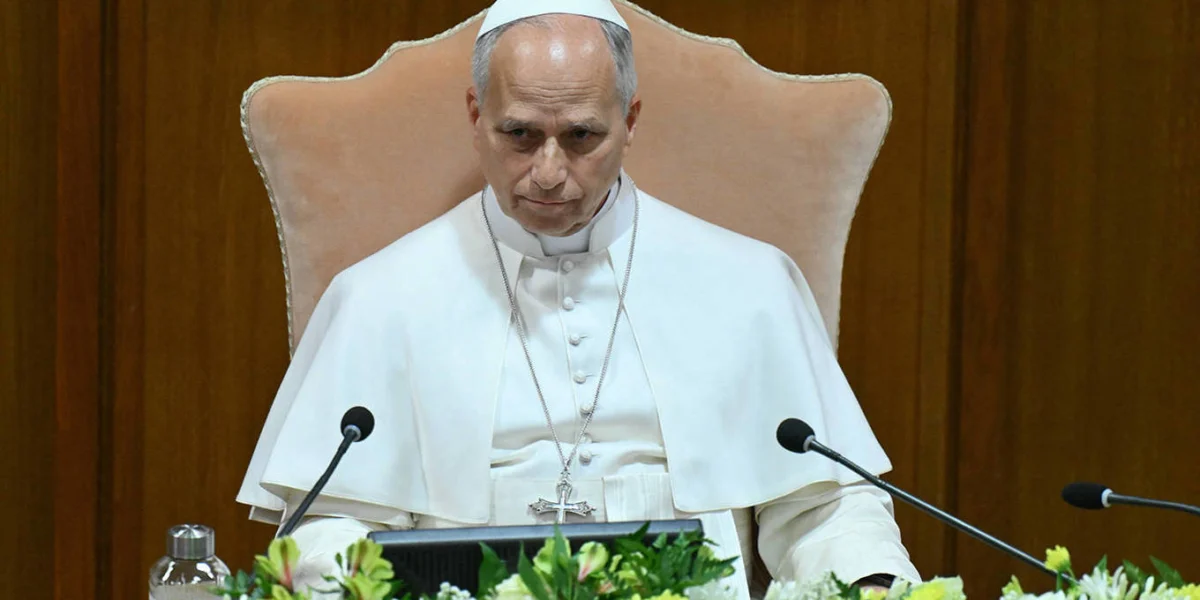
Vatican City, May 27, 2026 – Pope Leo XIV has unveiled his inaugural encyclical, Magnifica Humanitas, a comprehensive and forceful declaration from the Holy See addressing the burgeoning influence of artificial intelligence (AI) and its perceived threats to the fundamental dignity and uniqueness of human existence. The document, released on May 15th, articulates a clear rejection of "posthumanism" and asserts an "essential, categorical, and insurmountable difference between humans and machines." This pronouncement is being hailed as a significant moment, urging both religious and secular audiences to confront the profound ethical and existential questions posed by rapidly advancing technology.
The choice of topic by Pope Leo XIV is deeply resonant, drawing a direct parallel to his historical namesake, Pope Leo XIII. In 1891, Leo XIII issued Rerum Novarum, a seminal encyclical that navigated the turbulent waters of the Industrial Revolution, seeking to reconcile the Catholic Church with the seismic societal shifts brought about by rapid industrialization and the rise of new economic philosophies. By addressing AI, Leo XIV positions the Church as a contemporary voice grappling with a similarly transformative technological epoch, framing the ethical considerations of artificial intelligence as a paramount concern for the 21st century.
The Core Tenets of Magnifica Humanitas
Magnifica Humanitas, meaning "The Magnificence of Humanity," systematically outlines the Church’s stance on AI. The encyclical emphasizes the inherent value and irreplaceable nature of human consciousness, creativity, and spiritual capacity. It argues that while AI can offer significant benefits and advancements, it should not be viewed as a replacement for, or an equal to, human beings. The document articulates a theological framework that underpins this distinction, highlighting the concept of humanity being created in the image of God, a characteristic that is inherently spiritual and beyond the scope of computational processes.
Key arguments within the encyclical include:
- The Uniqueness of Human Consciousness: The document posits that human consciousness, with its capacity for subjective experience, emotion, moral reasoning, and spiritual awareness, is fundamentally different from the algorithmic processes that drive AI. It asserts that AI, however sophisticated, operates on data and logic, lacking the intrinsic qualitative experience that defines human sentience.
- Rejection of Posthumanism: Pope Leo XIV directly confronts the concept of posthumanism, which often envisions a future where humans transcend biological limitations through technological integration, potentially merging with or being superseded by advanced AI. Magnifica Humanitas unequivocally rejects this trajectory, viewing it as a dilution of what makes humanity sacred and unique.
- The Dignity of Labor and Creation: Echoing Rerum Novarum‘s focus on the dignity of labor in the industrial age, the new encyclical touches upon the impact of AI on employment and human creativity. It calls for a careful consideration of how AI is integrated into the workforce to ensure that human dignity and the intrinsic value of human work are preserved, rather than diminished.
- Ethical Governance of AI: The encyclical urges for robust ethical frameworks and international cooperation to guide the development and deployment of AI. It stresses the responsibility of creators, policymakers, and users to ensure that AI serves humanity and uphns its values, rather than undermining them.
Context: The Dawn of the AI Era and Papal Precedents
The release of Magnifica Humanitas comes at a time when AI is rapidly evolving from a niche technological field into a pervasive force impacting nearly every sector of society. From sophisticated language models capable of generating human-like text and imagery to advanced algorithms driving autonomous systems and medical diagnostics, AI’s capabilities are expanding at an unprecedented rate.
This rapid advancement has sparked widespread debate about its potential benefits, such as solving complex global challenges like climate change and disease, and its potential risks, including job displacement, the spread of misinformation, and the erosion of human autonomy. Within this complex landscape, the Catholic Church, with its global reach and moral authority, has been observing these developments closely.
While this is Pope Leo XIV’s first encyclical specifically on AI, the Vatican has previously shown interest in the ethical implications of technology. In 2019, the Pontifical Academy for Social Sciences convened a workshop on the ethics of artificial intelligence, and in 2020, the Pontifical Academy of Sciences released a document on the ethical implications of artificial intelligence. These earlier engagements laid some groundwork for the more comprehensive statement now issued by Pope Leo XIV.
Chronology of Papal Engagement with Technology
- 1891: Pope Leo XIII issues Rerum Novarum, addressing the social and economic upheaval of the Industrial Revolution and affirming the dignity of labor.
- 2019: The Pontifical Academy for Social Sciences hosts a workshop on the ethics of artificial intelligence, bringing together experts from various fields.
- 2020: The Pontifical Academy of Sciences publishes a document outlining ethical considerations for AI development and deployment.
- May 15, 2026: Pope Leo XIV releases his first encyclical, Magnifica Humanitas, directly addressing the challenges and opportunities presented by artificial intelligence.
- May 27, 2026: The encyclical is widely disseminated and begins to be analyzed by religious leaders, ethicists, technologists, and governments worldwide.
Supporting Data and Emerging Trends in AI
The context for Magnifica Humanitas is buttressed by significant global investment and rapid advancements in AI. Global spending on AI solutions was projected to reach over $150 billion in 2024, with an expected compound annual growth rate (CAGR) of 20-30% in the coming years, according to various market research firms. This surge in investment reflects the perceived transformative potential of AI across industries such as healthcare, finance, manufacturing, and entertainment.
Furthermore, the capabilities of AI systems are demonstrably advancing. Large Language Models (LLMs) have shown remarkable proficiency in understanding and generating human language, leading to applications in content creation, customer service, and even scientific research. AI is also making strides in areas like medical diagnosis, with algorithms demonstrating accuracy comparable to, and in some cases exceeding, human experts in identifying certain diseases from medical imagery. The development of more sophisticated robotics and autonomous systems further blurs the lines between human and machine capabilities in physical tasks.
However, these advancements are accompanied by growing concerns. Studies from organizations like the World Economic Forum have highlighted the potential for significant job displacement due to automation powered by AI, with millions of jobs projected to be transformed or eliminated in the next decade. The proliferation of AI-generated content has also amplified concerns about the spread of misinformation and disinformation, posing challenges to democratic processes and public discourse. Ethical dilemmas surrounding algorithmic bias, data privacy, and the potential for AI to be used for malicious purposes remain subjects of intense debate.
Reactions and Inferred Statements from Related Parties
The release of Magnifica Humanitas has elicited a range of immediate responses, reflecting the diverse perspectives on AI.
Religious Leaders: Many Catholic bishops and theologians have lauded the encyclical as a timely and essential pastoral guidance. Archbishop Vincenzo Bellini of Milan stated, "Pope Leo XIV’s words resonate deeply with the faithful, reminding us of the sacredness of human life and the moral compass we must maintain in navigating technological progress." Similar sentiments have been expressed by leaders of other Christian denominations, who often find common ground in discussions on human dignity and ethical technology.
Ethicists and Academics: Ethicists specializing in AI and technology have largely welcomed the encyclical as a significant contribution to the ongoing global dialogue. Dr. Anya Sharma, a leading AI ethicist at the University of Oxford, commented, "The encyclical provides a valuable philosophical and theological grounding for the ethical considerations surrounding AI. Its emphasis on the intrinsic worth of human consciousness offers a crucial counterpoint to purely utilitarian or technocentric approaches." However, some scholars have noted that while the encyclical offers a strong moral stance, the practical implementation of its principles will require extensive interdisciplinary collaboration.
Technologists and Industry Leaders: The tech industry’s reaction has been more varied. While some companies have expressed commitment to developing AI responsibly and ethically, others may view certain aspects of the encyclical as a potential constraint on innovation. A spokesperson for the Global AI Alliance, an industry consortium, issued a statement acknowledging the Pope’s concerns and affirming the industry’s commitment to "developing AI that benefits humanity, while respecting fundamental values." However, specific directives within the encyclical, such as the emphasis on the "insurmountable difference," could lead to debates about the future of AI development, particularly in fields aiming for artificial general intelligence (AGI) or human-level AI.
Policymakers and Governments: Governments worldwide, grappling with the regulatory challenges of AI, are likely to incorporate the encyclical’s principles into their policy discussions. The Vatican’s moral authority often influences international discourse on human rights and ethical standards. Discussions are expected to focus on how to translate the encyclical’s theological arguments into actionable policies related to AI safety, accountability, and the protection of human dignity in the digital age. International bodies like the United Nations are likely to engage with the document as they continue to deliberate on global AI governance frameworks.
Broader Impact and Implications
The implications of Magnifica Humanitas extend far beyond the Catholic Church. The encyclical serves as a powerful moral and philosophical statement that can influence societal attitudes towards AI across cultures and belief systems.
- Shaping the AI Ethics Discourse: By framing the debate around the inherent dignity and uniqueness of humanity, the encyclical provides a robust ethical foundation that can inform future discussions on AI regulation, development, and deployment. It encourages a shift from a purely functional or economic assessment of AI to a deeper consideration of its impact on human identity and societal values.
- Encouraging Responsible Innovation: The encyclical’s call for ethical governance and its critique of posthumanist trends can prompt technology developers and corporations to prioritize human well-being and societal benefit in their innovation processes. This could lead to greater investment in AI safety research and the development of more human-centric AI applications.
- Promoting Interreligious and Secular Dialogue: While originating from a Catholic perspective, the core message of Magnifica Humanitas about the value of humanity resonates with many secular humanistic and philosophical traditions. This can foster broader interreligious and secular dialogues about the future of humanity in an increasingly technologically advanced world.
- Navigating the Future of Work and Society: The encyclical’s emphasis on the dignity of human labor and the potential displacement by AI could spur policy initiatives aimed at retraining workforces, creating new forms of meaningful employment, and ensuring that the economic benefits of AI are shared more equitably. It also raises questions about the very definition of "work" and "value" in a society where AI can perform many tasks.
- Addressing Existential Questions: Ultimately, Magnifica Humanitas prompts humanity to engage with profound existential questions: What does it mean to be human in an age of intelligent machines? What are the boundaries of our relationship with technology? And how can we ensure that technological progress serves to enhance, rather than diminish, our humanity?
In conclusion, Pope Leo XIV’s encyclical Magnifica Humanitas is a landmark document that not only articulates the Catholic Church’s considered response to the rise of artificial intelligence but also offers a profound reflection on the enduring value of human existence. It serves as a crucial exhortation, urging humanity to approach the transformative power of AI with wisdom, responsibility, and a deep appreciation for the irreplaceable grandeur of human life.
