

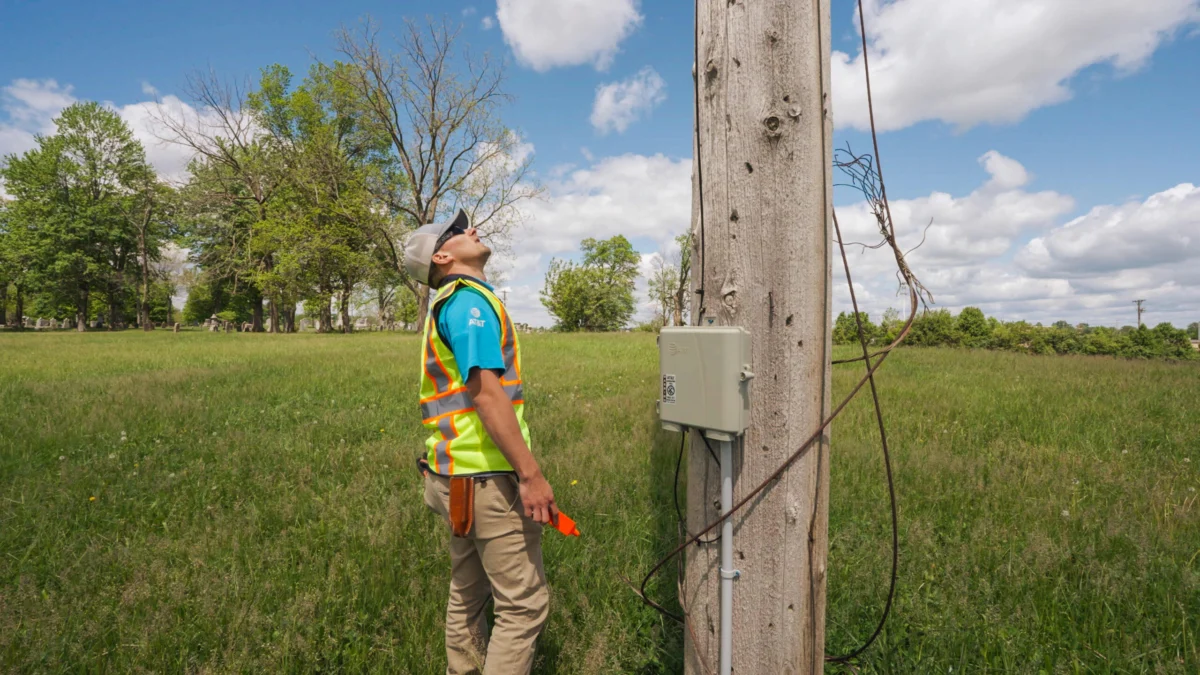
From the quiet suburbs of Dayton, Ohio, to the bustling boardrooms of Dallas, the individuals driving AT&T’s next phase of expansion are not the fresh-faced college graduates with expensive four-year degrees of generations past. Instead, the company is increasingly relying on skilled, blue-collar workers, individuals ready to engage in hands-on labor, and AT&T, like many in the telecommunications and technology sectors, is finding a significant shortage of qualified candidates.
"We need people who know how to actually work with electricity. We need people who understand photonics. We need people who can go into folks’ homes and connect this infrastructure to make it work right," AT&T CEO John Stankey articulated to CNBC during a recent interview from the company’s Dallas headquarters. He emphasized the challenges in recruitment: "We find that we’ve got to go out and find them, train them, and incent them to come in. It’s not like we’re growing them on trees in the United States."
This dilemma at AT&T—the struggle to find blue-collar workers at a time when a record number of college students are projected to graduate—underscores a palpable crisis emerging for new degree holders. As the initial wave of the Artificial Intelligence revolution makes its mark on the U.S. economy, the traditional pathway to the middle class through higher education is being re-evaluated. For much of the postwar era, the societal contract was clear: a college degree was a reliable ticket to upward mobility. However, as AI permeates corporate America and begins to automate entry-level tasks that once served as a starting point for graduates, this promise is showing signs of fracturing. While widespread layoffs due to AI have not yet materialized on a massive scale, many new graduates, particularly those in AI-vulnerable industries, are beginning to realize that their degrees may no longer guarantee the career opportunities they once did.
The Shifting Tide of the American Bargain
The post-World War II era saw a significant expansion of higher education in the United States, fueled by initiatives like the GI Bill and the growth of public universities. This period fostered a widespread belief, shared across the political spectrum, that investing in education was a sound strategy. Labor historian Shannan Clark, an associate professor of history at Montclair State University, described this era as witnessing an "explosion" in higher education, with a common understanding that a more trained, capable, and knowledgeable workforce would inherently be a more productive one. This led to millions of Americans transitioning from physically demanding labor in factories to roles in air-conditioned offices, exchanging manual tools for keyboards, and securing more stable, salaried positions. By the close of the 20th century, the prevailing sentiment was that education combined with diligence offered a clear path to the American Dream.
While data continues to show that four-year degrees generally correlate with higher lifetime earnings and lower unemployment rates, the perception of college as the sole or safest route to the American Dream has shifted. Surging higher education costs and the burden of student debt have led to questions about the return on investment. According to research from the Federal Reserve Bank of New York, the return on investment for a four-year degree, while still significant at approximately 12.5% as of 2024, has remained relatively stagnant for the past three decades, failing to surpass 13%.
Now, the rapid advancement and integration of AI are poised to exert even greater pressure on the perceived value of a college diploma. Aaron Cheris, a consultant and global head of Bain & Company’s retail practice, articulated this shift: "What does AI do best? AI is basically an infinite supply of 21-year-old interns that are smart but have no context. The job they used to do is now the one that AI is doing, right? AI is doing the entry-level job."
This dynamic is making it increasingly challenging for new graduates to secure employment. Data from the Federal Reserve Bank of New York indicates that the average unemployment rate for recent college graduates (ages 22-27) has seen an uptick. From a historical average of 4.5% since 1990, this rate rose to approximately 5.4% in 2025.
AI’s Impact on Early-Career Professionals
The impact of AI appears to be particularly acute for entry-level employees in fields susceptible to automation. A research paper published by Stanford’s Digital Economy Lab, titled "Canaries in the Coal Mine?," revealed that between mid-2024 and September 2025, early-career workers in roles highly exposed to AI—such as software developers, marketing professionals, and sales managers—experienced 16% slower employment growth compared to their counterparts in less exposed fields. This trend persisted even after controlling for various economic factors. The study utilized payroll data from ADP and found that individuals in roles where AI was expected to augment rather than automate their work experienced job growth during the same period.
Erik Brynjolfsson, a Stanford University economist and leading expert on AI, noted the growing concern: "It is notable that since we came out with the first draft of the paper, the effect has grown from 13% to 16%, so whatever it is, it’s not rebounding, or wasn’t some kind of temporary blip." He cautioned that if this trend continues for young workers in AI-exposed roles, its effects will inevitably broaden across the entire labor market.
Further corroborating these findings, Lee Tucker, a senior economist with the Center for Economic Studies at the U.S. Census Bureau, published research that identified a similar impact on early-career workers within the agency’s quarterly workforce indicators. Tucker’s analysis indicated a 9% drop in hiring for workers aged 22-24 in AI-exposed industries (finance, insurance, professional services) immediately following the widespread adoption of ChatGPT in late 2022, when compared to other industries. Between the third quarter of 2022 and the second quarter of 2025, employment in these sectors declined by 12% to 15%, resulting in an estimated 150,000 fewer early-career jobs. While acknowledging that some of this decline may predate AI and could be influenced by other factors, Tucker emphasized that the reduction in employment was primarily due to fewer hires rather than layoffs. "I empathize with early career workers, especially new graduates that are trying to get hired or just starting sort of their first rung on the career ladder," Tucker told CNBC. "It is true that it is tough out there, and the data really do back that up."
The Evolving Role of Junior Professionals
The proliferation of generative and agentic AI, with its capacity to handle tasks previously performed by junior professionals, has ignited discussions about the future of roles such as junior consultants, investment banking analysts, and first-year associates in law firms. Companies are now grappling with the strategic decision of whether to continue recruiting large cohorts from top universities, investing significant time and resources in their training, or to reallocate those investments and allow AI to assume these foundational responsibilities.
Derek Waldron, chief analytics officer at JPMorgan Chase, acknowledged the potential for "some rightsizing" in recruitment classes during a recent interview, stating, "It’ll depend on the pipelines, the opportunities. In some cases, bigger [classes], in some cases, frankly, could be smaller as well." Waldron also suggested that the nature of work for junior employees who are hired may evolve, shifting from direct task execution to managing AI systems. "The world is moving to a paradigm where every employee becomes a manager, but a manager of AI systems," he explained. "So whereas a new joiner in the past was basically primarily the worker doing the work, the expectation is that they would be able to come in and begin to act as a manager of sort of AI tools."
This paradigm shift could present an advantage for entry-level employees who are digital natives and possess a greater innate understanding of AI technologies. Yehuda Shmidman, CEO of WHP Global, expressed enthusiasm for hiring such individuals: "I want more of them. If you’ve been using AI to help you with that final paper at school, we’re probably going to want to know how you’re going to use AI to help us with the next contract negotiation. So I’m all in favor of it."
However, this also underscores the critical need for students to graduate with AI skills that extend beyond basic application. Omair Tariq, founder and CEO of Cart.com, a logistics and fulfillment provider, stated that he is only interested in hiring candidates who can demonstrate advanced AI capabilities. He articulated the challenge: "When you’re in college, all you know is what’s in your curriculum. The curriculum is available in a book or online. It’s all tangible, it’s all ones and zeros. It’s all the sh– that AI can read in 30 seconds that you took four and a half years to read. So tell me again what you can do that AI can’t do, because you don’t have any real-world experience."

Educational institutions are already feeling the pressure to adapt their curricula and pedagogical approaches to prepare students for an AI-driven future. Matt Sigelman, president of the Burning Glass Institute, a think tank focused on the future of work, stated, "For graduates to compete effectively, they’re going to need to know how to do at age 22 what they used to do at age 27. They’re going to need to be able to start their careers in the middle and not the beginning." The speed at which colleges can implement these changes may significantly influence the future career trajectories of their graduates in the AI era.
Tobias Sytsma, an economist at the think tank Rand specializing in AI and the future of work, warned that recent graduates, those burdened with student loan debt, and individuals preparing for college may face the most significant challenges during this transitional period. If the observed impact on early-career workers continues, it could lead to long-term economic "scarring," manifesting as persistent unemployment, underemployment, and lower lifetime incomes. A substantial disruption to the middle-class pipeline—the traditional route from college to higher-paying jobs—could have profound economic consequences, potentially leading to reduced consumption, decreased housing demand, and exacerbated inequality. "The size of that transition cohort is important," Sytsma noted. "If it takes 20 years and… basically everyone that was thinking about going to college or just finished college is really struggling, then that’s a huge chunk of the future workforce that’s going through this scarring process."
The Resurgence of Skilled Trades and Blue-Collar Opportunities
While the landscape for white-collar professionals is undergoing a seismic shift, a different narrative is unfolding in the realm of skilled trades and blue-collar labor. The construction and maintenance of the infrastructure powering the AI revolution—data centers, advanced manufacturing facilities, and expanded communication networks—are creating a robust demand for workers who possess practical, hands-on skills.
Nvidia CEO Jensen Huang, speaking at the World Economic Forum, highlighted this trend: "This is the largest infrastructure buildout in human history that is going to create a lot of jobs. We are going to have plumbers and electricians and construction and steel workers and network technicians and people who install and fit out the equipment." He further noted that many of these roles are expected to command six-figure salaries as the U.S. addresses a "great shortage" of qualified workers.
AT&T’s significant investment of $250 billion over the next five years to expand its fiber network, in response to the demands of AI data centers and increased network usage, exemplifies this trend. Approximately 15% of this investment is earmarked for hiring and training, primarily for blue-collar front-line workers and skilled technicians, rather than corporate office roles. "As a society and within the United States, we’ve put a huge premium in value socially on a college degree, maybe for good reason, but in some cases… we maybe have missed the mark," Stankey reflected. "That hasn’t been optimal when you see the cost of education increasing at higher than the rate of inflation and yet we’re short HVAC [heating, ventilation and air conditioning] repair people, we’re short electricians, we’re short technicians that can go in and work on fiber."
This surge in demand for skilled trades is occurring against a backdrop of a national shortage in these critical occupations. Associated Builders and Contractors (ABC) reported in January that the U.S. faces a deficit of approximately 350,000 workers needed to meet construction service demands, a figure projected to rise to over 450,000 next year. The U.S. Department of Education anticipates that by 2030, approximately 2.1 million skilled trades jobs could go unfilled. Shortages are particularly acute in regions with major infrastructure projects, such as semiconductor fabrication facilities, exacerbated by an aging workforce, with about one-fifth of electricians over the age of 55. Anirban Basu, chief economist for ABC, stated, "Even if construction spending fails to exceed expectations this year and next, contractors will continue to struggle to fill open positions, especially in certain occupations and regions. Recent industry efforts to accelerate skilled worker development have helped, but the industry is effectively swimming upstream."
Kyson Cook’s American Dream: A Blue-Collar Reality
In a small Ohio city between Dayton and Columbus, the American Dream is a tangible reality for 24-year-old Kyson Cook. A premises technician with AT&T, Cook’s work involves connecting the company’s fiber infrastructure to customer homes. He owns a three-bedroom home, carries no debt beyond his mortgage, and typically finishes his workday by 4:30 p.m., affording him ample time for personal pursuits and family. He enjoys financial stability that allows for discretionary spending on his daughter’s toys, vacations, and dining out, alongside consistent contributions to her mutual fund.
Cook describes his job as "the coolest job in the world," a sentiment he shares with pride. He finds satisfaction in his role, likening the experience of working on telephone poles to being a superhero. While acknowledging the physical demands and exposure to the elements, he emphasizes the significant benefits that come with the profession. Cook, whose father and grandfather also worked at AT&T, joined the company in April 2022 after leaving college, having realized he preferred hands-on work. Within a year, he had saved enough to purchase his home. When his daughter was born, he returned to college for a bachelor’s degree, with AT&T covering the tuition through its reimbursement program, viewing it as a potential pathway for future promotion, even if not strictly required for management roles.
Cook is one of thousands of technicians instrumental in AT&T’s network expansion to support the demands of an AI-driven future. While AT&T’s global workforce has contracted significantly over the past decade, the company is actively increasing headcount in specific areas, particularly focusing on recruiting skilled tradespeople who do not require a college degree for entry. AT&T plans to hire approximately 3,000 technicians this year, with intensified recruitment efforts in areas like Nashville, San Francisco, and North Carolina, where skilled worker shortages are pronounced. This adds to the 10,000 technicians hired over the past three years. The company’s investment in training per employee can range from $50,000 to $80,000.
The Economic Implications and Societal Re-evaluation
The shift in demand towards skilled trades is occurring as college-educated adults over the age of 25 are experiencing a slight increase in unemployment. For nearly a decade, excluding the COVID-19 pandemic, the unemployment rate for bachelor’s degree holders in this age group remained at or below 3%. However, in August 2025, this figure climbed to 3.2%, the first time it surpassed 3% in roughly nine years. Data from the U.S. Bureau of Labor Statistics also indicates that white-collar roles, such as management, professional, and office jobs, have seen rising unemployment each year since 2023. Conversely, unemployment for blue-collar positions, including construction and maintenance, has largely declined or remained stable.
Despite these trends, the fundamental benefits of a college degree—lower lifetime unemployment and higher earnings—remain statistically significant. Between January 2000 and April 2026, the average unemployment rate for individuals with only a high school diploma was 5.7%, compared to 3.2% for those with a bachelor’s degree. While these recent fluctuations are relatively minor and the job market remains generally healthy, the divergence in unemployment trends between blue- and white-collar workers is a development economists are closely monitoring. Bharat Chandar, a postdoctoral researcher at the Stanford Digital Economy Lab and co-author of the "Canaries in the Coal Mine?" report, advised caution in drawing definitive conclusions from these small trends, suggesting that further observation is necessary to discern long-term patterns.
Incentives and the Future of Work
To attract and retain technicians like Cook and other skilled laborers, AT&T is offering competitive compensation packages. Field technicians can receive sign-on and retention bonuses ranging from $5,000 to $10,000, with entry-level wages between $18.18 and $31.45 per hour, varying by location and experience. These roles also typically include comprehensive benefits such as medical insurance, 401(k) plans, tuition reimbursement, paid parental leave, adoption assistance, and discounts on AT&T services.
Stankey believes that addressing the shortage of skilled tradespeople requires not only government intervention but also a fundamental societal re-evaluation of the necessity of a four-year degree for all workers. "We probably ought not to just assume that sending everybody to a four-year degree is the right answer," he stated. "We should be more thoughtful about what that four-year degree needs to look like, or what that advanced learning needs to look like, and also ask, does all work require that?"
Historically, office-based professions have carried greater prestige and social standing than hands-on, blue-collar work, which is often more physically demanding and carries inherent risks. The work performed by telecommunications line installers and repairers, for instance, has a higher rate of fatal workplace injuries compared to the overall workforce, according to BLS data. These roles also require physical exertion, such as lifting up to 60 pounds, availability during holidays, and the ability to work in various weather conditions and confined spaces.
Cook himself acknowledges the physical toll of his job, recounting experiences of working in the rain to the point of being chilled to the bone. Yet, he asserts he would still choose being a technician over an office job. He believes that pursuing a white-collar career path would have left him in debt, without homeownership, and earning less. Crucially, Cook expresses a sense of job security regarding AI: "I don’t think robots can be climbing poles anytime soon. Computers can’t do what we do." This sentiment reflects a growing understanding that while AI may transform many industries, certain hands-on, skilled trades may remain resilient, offering a different, yet equally valid, pathway to economic security and the American Dream.
