

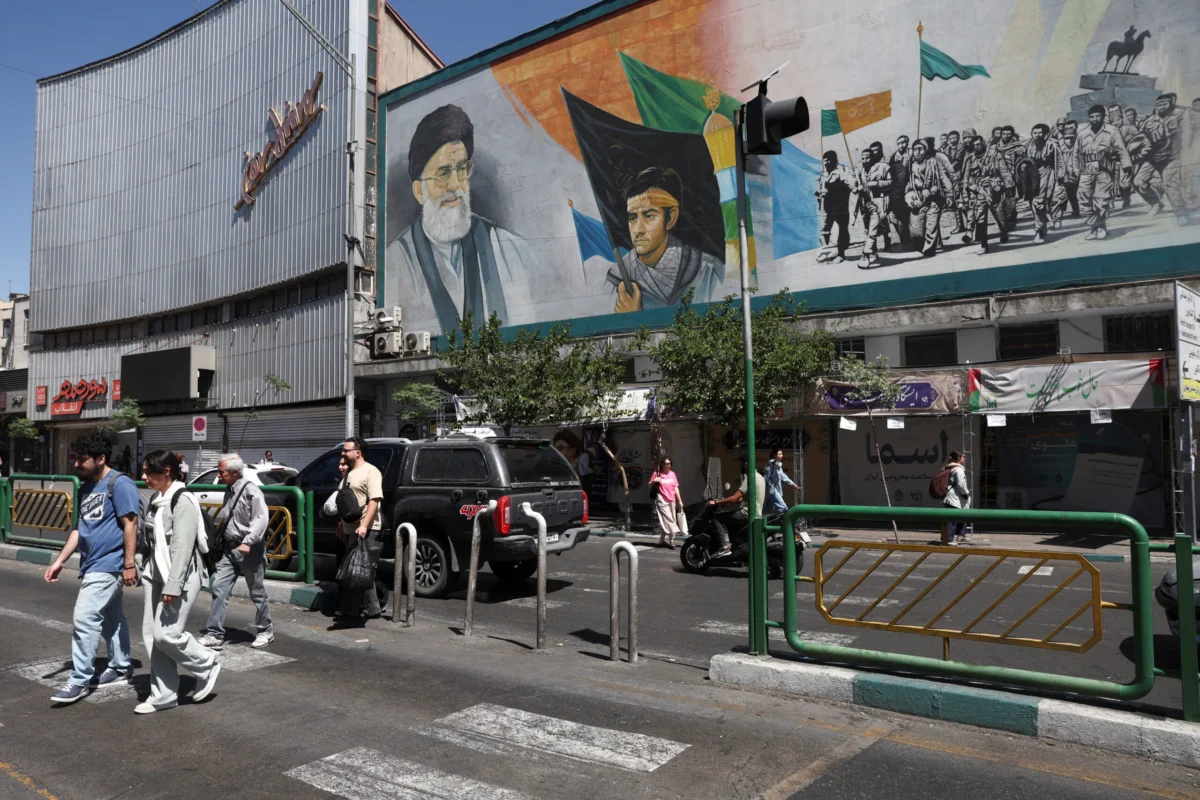
United States forces have confirmed a series of military strikes in southern Iran, characterizing these operations as "self-defence" at a moment when a high-level Iranian delegation is engaged in sensitive diplomatic talks in Qatar. The coordinated strikes, reported to have targeted strategic military infrastructure in and around the southern port city of Bandar Abbas, mark a significant escalation in regional tensions, occurring concurrently with efforts to de-escalate through dialogue. Iranian state media had earlier reported multiple explosions in Bandar Abbas, a vital maritime hub situated near the Strait of Hormuz, a narrow waterway critical for global energy supplies, through which approximately one-fifth of the world’s oil and gas transits daily.
The Pentagon, in a statement released hours after the Iranian reports, asserted that the strikes were a necessary response to "imminent threats" posed by Iranian-backed proxies and direct Iranian military activities in the region, without specifying the exact nature of these threats or previous provocations. This development casts a long shadow over the ongoing negotiations in Doha, which aim to address a range of contentious issues, including Iran’s nuclear program, regional security, and the potential for a prisoner exchange. Tehran has, through its Foreign Ministry spokesman, cautioned against overly optimistic expectations for a swift resolution, acknowledging "progress" in the Qatari-mediated discussions but explicitly stating that a comprehensive deal is "not imminent."
Escalation in the Gulf: A Detailed Chronology
The events unfolded rapidly, beginning with reports from Iranian sources on Tuesday morning.
Early Morning (Local Time, Iran):
- 03:30 AM – 04:15 AM: Residents of Bandar Abbas and surrounding coastal areas reported multiple powerful explosions. Social media channels and local news outlets quickly began circulating unverified reports and footage depicting plumes of smoke rising from naval and military installations.
- 04:30 AM: Iranian state media, citing local officials, confirmed "several incidents" involving explosions in the vicinity of Bandar Abbas. Initial reports indicated no immediate casualties but suggested damage to military sites.
- 05:00 AM: The Islamic Revolutionary Guard Corps (IRGC) issued a brief statement acknowledging "foreign aggression" against its installations in the southern region and vowing a "decisive response."
Mid-Morning (Local Time, Qatar/Washington D.C.):
- 08:00 AM (Doha Time): The Iranian delegation, led by Deputy Foreign Minister Ali Bagheri Kani, commenced its second day of closed-door discussions with Qatari mediators and, reportedly, indirect contact with US envoys in Doha. The news of the strikes in Iran began to filter into diplomatic circles, raising immediate concerns about the viability of the talks.
- 09:30 AM (Washington D.C. Time): The United States Central Command (CENTCOM) released a statement confirming that US forces had conducted "precision self-defence strikes" against "multiple targets" in southern Iran. The statement elaborated that these targets included missile launch sites, facilities associated with fast-attack craft, and unmanned aerial vehicle (UAV) storage and launch platforms, all deemed to be directly involved in or supporting recent "destabilizing activities" in international waters and against US interests in the wider Middle East. The statement emphasized that all actions were taken to "protect US personnel and partners" and to "deter further aggression."
Afternoon:
- 12:00 PM (Tehran Time): Iran’s Foreign Ministry strongly condemned the US strikes as an act of "blatant aggression" and a "violation of international law." Despite the condemnation, the Ministry reiterated Iran’s commitment to diplomatic engagement, particularly the talks underway in Qatar, but warned that such actions could "jeopardize regional stability and dialogue efforts."
- 01:30 PM (Doha Time): Qatari officials, speaking on background, expressed deep concern over the escalation, urging both sides to exercise maximum restraint and to prioritize diplomatic channels. They underscored the fragility of the ongoing negotiations and the potential for the strikes to derail progress.
Strategic Significance of Bandar Abbas and the Strait of Hormuz
Bandar Abbas is not merely a port; it is Iran’s largest port city and a critical naval base for the IRGC Navy and the regular Iranian Navy. Its strategic importance is manifold:
- Gateway to the Strait of Hormuz: Located on the northern shore of the Strait of Hormuz, it directly overlooks the narrowest point of the passage. Any disruption here has immediate global repercussions for energy markets.
- Energy Exports: It is a key node for Iran’s oil and gas exports and the movement of tankers.
- Military Hub: It houses significant naval assets, including patrol boats, frigates, submarines, and various coastal defense systems. The targeting of alleged missile launch sites and fast-attack craft facilities suggests an intent to degrade Iran’s capacity for maritime interdiction and asymmetric warfare in the Gulf.
- Economic Lifeline: Beyond military assets, Bandar Abbas is a commercial lifeline for Iran, handling a vast majority of its seaborne trade. Disruptions here can have severe economic consequences for the country.
The US justification of "self-defence" implies that the targeted assets were either actively involved in or poised to launch attacks that the US deemed a direct threat. This narrative aligns with long-standing US concerns regarding Iran’s naval activities, including harassment of commercial shipping, seizure of tankers, and deployment of drones and missiles in the Gulf and Red Sea, often attributed to Iran’s proxies or direct actions by the IRGC.
Background and Broader Context of US-Iran Tensions
The recent strikes are not an isolated incident but rather the latest flashpoint in a decades-long, often volatile, relationship between Washington and Tehran. The current heightened tensions stem from several interconnected factors:

- Nuclear Deal Collapse (JCPOA): The 2018 US withdrawal from the Joint Comprehensive Plan of Action (JCPOA) and the subsequent re-imposition of crippling sanctions have been a major driver of animosity. Iran has since expanded its nuclear program beyond JCPOA limits, prompting international concern and fears of proliferation.
- Regional Proxy Wars: Both the US and Iran are deeply involved in various proxy conflicts across the Middle East, from Yemen and Iraq to Syria and Lebanon. Iranian-backed groups have frequently targeted US personnel and interests, leading to retaliatory strikes by the US.
- Maritime Security: The Gulf region has seen numerous incidents involving oil tankers and commercial vessels, with both sides accusing the other of aggression. The Strait of Hormuz remains a critical flashpoint for these encounters.
- Drone and Missile Capabilities: Iran’s burgeoning drone and missile programs are a significant concern for the US and its regional allies, perceived as tools for projecting power and destabilizing the region.
The ongoing talks in Qatar, mediated by a traditionally neutral and influential Gulf state, were seen as a rare opportunity for indirect dialogue aimed at de-escalation. Qatar has a track record of facilitating difficult negotiations, including between the US and the Taliban, and has maintained diplomatic ties with both Washington and Tehran. The timing of the US strikes, however, suggests a deliberate strategy of applying pressure even while diplomatic channels remain open, a tactic often referred to as "coercive diplomacy."
Official Statements and International Reactions
United States:
A senior Pentagon official, speaking on condition of anonymity, elaborated on the strikes, stating, "Our actions were calibrated and necessary to protect our forces and deter further attacks. We observed patterns of activity that indicated an imminent threat to international shipping lanes and US and allied interests in the region. These strikes targeted specific capabilities that Iran uses to project power and threaten maritime commerce." The State Department also issued a statement, reaffirming its commitment to diplomatic solutions but underscoring Washington’s resolve to "defend its personnel and partners against Iranian aggression and its destabilizing activities."
Iran:
Iran’s Supreme National Security Council convened an emergency meeting following the strikes. Later, a spokesman for the council declared that Iran "reserves the right to respond decisively to any aggression against its sovereignty and territorial integrity." While maintaining a strong posture, Iranian Foreign Minister Hossein Amir-Abdollahian, currently in Doha, reportedly held urgent consultations with Qatari counterparts, emphasizing that the "path of diplomacy remains open, but not at the expense of national dignity and security." He reportedly stressed that the US actions were "counterproductive" and undermined the spirit of the ongoing talks.
Qatar:
The Qatari Foreign Ministry released a statement expressing "deep concern over the escalating military actions" and calling for "immediate de-escalation and adherence to international law." The statement reiterated Qatar’s commitment to facilitating dialogue and urged all parties to "prioritize diplomacy and avoid actions that could further destabilize the region."
International Bodies and Regional Players:
- United Nations: UN Secretary-General António Guterres called for "maximum restraint" from all parties and emphasized the importance of upholding international law and resolving disputes through peaceful means.
- European Union: An EU spokesperson stated that the bloc was closely monitoring the situation and reiterated its call for de-escalation, emphasizing that "military actions must not derail diplomatic efforts."
- Israel: While refraining from direct comment on the US strikes, Israeli officials privately expressed support for actions that counter Iranian regional influence and capabilities. Israeli security analysts noted that such strikes serve to degrade Iranian assets that could be used against Israel or its allies.
- Saudi Arabia: The Saudi Foreign Ministry issued a cautious statement, urging "all parties to exercise self-restraint" and expressing hope for "calm and stability in the vital Gulf region," reflecting a desire to avoid a wider conflict that could disrupt its own economic interests.
Analysis of Implications and Broader Impact
The timing of the US strikes, coinciding with sensitive diplomatic talks, presents a complex set of implications:
- Impact on Diplomacy: The most immediate concern is the potential derailment of the Qatar talks. While both sides have verbally committed to diplomacy, military action often makes compromise more difficult, strengthening hardliners in Tehran and potentially eroding trust. It could be interpreted as a US attempt to negotiate from a position of strength, or conversely, as a provocation designed to sabotage progress.
- Risk of Miscalculation: The tit-for-tat nature of US-Iran confrontations carries an inherent risk of miscalculation, potentially leading to an unintended, wider conflict. Iran’s vowed "decisive response" could manifest in various ways, including renewed attacks on shipping, cyberattacks, or actions through its regional proxies.
- Regional Stability: The Gulf region is already fragile, grappling with conflicts in Yemen, Iraq, and Syria. Any further escalation between the US and Iran could destabilize the entire region, impacting trade, investment, and security.
- Oil Markets: The Strait of Hormuz is a global chokepoint. Even the threat of disruption can cause oil prices to spike, impacting the global economy. The attacks near Bandar Abbas immediately send jitters through energy markets.
- Internal Iranian Dynamics: Such external military pressure often galvanizes nationalistic sentiment within Iran, potentially uniting disparate political factions against a common enemy. It could also strengthen the hand of the IRGC and other hardline elements who advocate for a more confrontational approach.
- US Foreign Policy Posture: The strikes underscore the Biden administration’s dual strategy of pursuing diplomacy while maintaining a robust deterrent posture against perceived threats. It aims to demonstrate resolve without necessarily initiating a full-scale conflict. However, critics might argue that such actions complicate diplomatic pathways.
The Path Forward: Uncertainties and Outlook
The immediate aftermath of the strikes will be crucial. The world will be watching for Iran’s next move, particularly whether its "decisive response" will be rhetorical, diplomatic, or military. The fate of the Qatar talks hangs in the balance, as both sides weigh the benefits of continued dialogue against the perceived need to assert dominance.
Experts suggest several scenarios:
- Limited Retaliation, Continued Diplomacy: Iran might opt for a symbolic or limited retaliation, possibly through proxies or in the cyber domain, while still signaling its willingness to continue talks in Qatar. This would allow both sides to save face while keeping the diplomatic door ajar.
- Escalation and Stalled Talks: Iran could choose a more significant response, leading to a direct confrontation or more severe disruptions in the Gulf, which would likely halt the Qatar talks indefinitely and push the region closer to a broader conflict.
- Diplomatic Breakthrough Despite Pressure: Less likely, but not impossible, is that the very act of military pressure might compel both sides to accelerate negotiations in Qatar to prevent further escalation.
The situation remains highly fluid and precarious. The US strikes in southern Iran, amidst ongoing diplomatic efforts, highlight the inherent tensions in a region where geopolitical rivalries often intersect with critical global economic interests. The international community continues to urge restraint and a renewed commitment to peaceful resolution, recognizing the profound implications of any further misstep in this delicate balance of power.
