

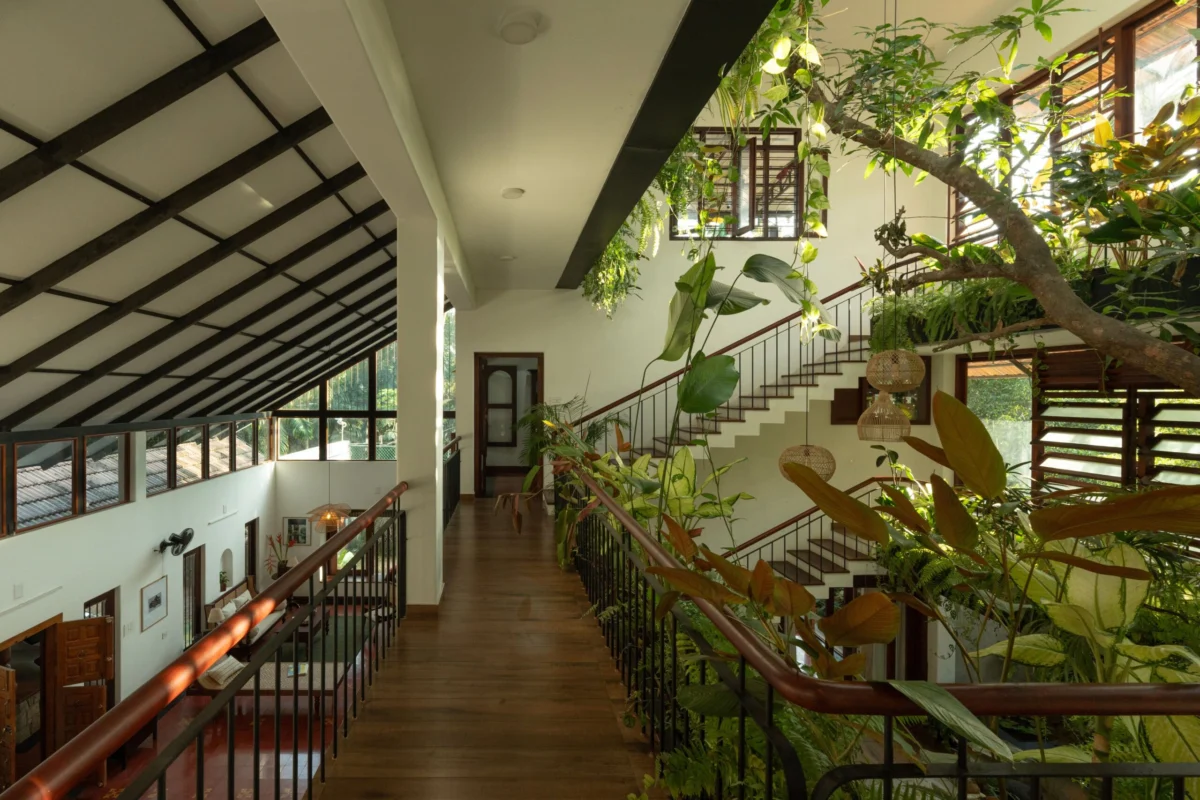
In the cultural capital of Kerala, the city of Thrissur, a residential project has emerged as a landmark of biophilic design and sustainable reconstruction. Led by architect Arjun Joshy of the firm Naked Volume, the project was commissioned by Sharan, a software engineer who, like many Indian professionals during the COVID-19 pandemic, underwent a profound recalibration of lifestyle and geographic priorities. The residence, designed for a family of six, represents a growing trend in Indian architecture that prioritizes environmental preservation and multigenerational harmony over the standard modern aesthetic of concrete and glass. At the heart of this architectural endeavor lies a single mango tree, which served as both the primary constraint and the central inspiration for the entire structure.

The Genesis of a Pandemic-Driven Relocation
The narrative of this Kerala home begins with the global shift in work culture initiated in 2020. Sharan, who had spent years navigating the high-intensity environments of India’s urban tech hubs, found himself returning to his roots during the lockdowns. The transition was not merely a temporary escape but a permanent decision to provide his family—his wife, a teacher, their two young sons, and his parents—with a living environment that offered "breathability" and "meaning."
This shift is reflective of a broader socio-economic phenomenon in India. According to various labor migration reports from 2021-2022, the "reverse migration" of high-skilled workers from Tier-1 cities like Bengaluru and Hyderabad back to Tier-2 and Tier-3 cities saw a 15-20% uptick during the pandemic. For Sharan, the move necessitated a residence that could accommodate three generations under one roof while maintaining the delicate balance between communal gathering and individual privacy.

Upon enlisting Arjun Joshy and his practice, Naked Volume, the initial assessment of the site revealed a small, aging structure that was no longer fit for the family’s needs. However, rather than opting for a standard "clear-and-build" approach, the team engaged in a process of architectural salvage. The old timber from the original home was carefully dismantled and set aside for reuse, a practice that reduces the carbon footprint of new construction and preserves the material history of the site.
Architectural Chronology and Site Logic
The project timeline was defined by a rigorous site-mapping process. The most significant feature of the plot was a sprawling mango tree located almost precisely where a traditional building footprint would normally sit. In many conventional construction scenarios, such a tree would be removed to maximize square footage. However, Joshy’s design philosophy dictated that the tree remain undisturbed.

The construction followed a meticulous chronology:
- Site Mapping and Tree Preservation: The root system and canopy spread were professionally assessed to ensure that the foundation of the new house would not impede the tree’s health.
- Demolition and Salvage: The existing "stooping" house was dismantled, with high-quality timber recovered for the new structure’s interior elements.
- Core Construction: The building was designed around a central atrium, allowing the mango tree to remain in its original position while being "embraced" by the new walls.
- Material Sourcing: Local materials, including rubble for cladding and mud bricks for the walls, were sourced to ensure the building’s thermal mass was appropriate for Kerala’s humid tropical climate.
- Interior Refinement: Regional crafts, such as Athangudi tiling, were integrated into the final stages of the build to ground the home in local tradition.
The logistical challenge of building around a living organism meant that the circulation of the house, particularly the path to the upper floor, had to be redesigned on-site. This iterative process allowed the architect to respond to the tree’s natural growth patterns, resulting in a staircase that coils around the courtyard, doubling as a functional path and a viewing platform for the ripening fruit.

Materiality and Environmental Data
The material palette of the Thrissur residence is a calculated blend of traditional Kerala architecture and modern engineering. The use of rubble cladding and mud brick walls is not merely an aesthetic choice but a functional one. Mud bricks, or stabilized earth blocks, have a high thermal lag, meaning they absorb heat during the day and release it slowly at night. In a region like Thrissur, where summer temperatures frequently exceed 35°C (95°F), these materials significantly reduce the need for artificial air conditioning.
The roofing utilizes Mangalore tiles, a staple of South Indian architecture since the late 19th century. These tiles are known for providing excellent ventilation and heat insulation. By incorporating a sloping roof design, Joshy ensured that the heavy monsoon rains typical of Kerala are efficiently managed while maintaining a "regionally rooted silhouette."

Furthermore, the integration of contemporary interventions—such as a glass roof over certain sections and a mechanical lift—addresses the needs of the elderly parents in the household. This hybridity allows the home to function as a modern machine for living while retaining the soul of a traditional Kerala "Nalukettu" (four-sided) house.
The Courtyard: A Social and Spiritual Nucleus
The central courtyard functions as the "orchestral" center of the home. In traditional Indian architecture, the courtyard (or angan) serves as a natural ventilator and a social hub. In this specific project, the courtyard is transformed into a large atrium that provides the mango tree with the vertical space required for continued growth.

Sharan describes the space as the "heart of the home," noting that it naturally draws the family together. From a psychological perspective, this design aligns with biophilic principles—the human tendency to seek connections with nature. Studies in environmental psychology suggest that homes integrated with natural elements can reduce stress levels by up to 30% and improve cognitive function in children.
Adding a spiritual dimension to the design, a pooja space (a dedicated room for prayer and meditation) was established near the base of the mango tree. In Indian cultural tradition, certain trees, including the mango tree, are often associated with prosperity and longevity. By placing the sanctuary for spiritual reflection at the tree’s roots, the design reinforces the connection between the family’s daily life and the natural world.

Professional Responses and Architectural Analysis
Architectural critics and peers have noted that Arjun Joshy’s work on this project represents a shift toward "Naked Volume"—a term that suggests a focus on the essential qualities of space and light rather than superficial ornamentation. The decision to allow the tree to dictate the circulation of the house is seen as a bold move that challenges the developer-driven "maximum efficiency" model of residential construction.
"Many decisions were refined on-site," Joshy remarked, highlighting a move away from rigid, pre-determined blueprints toward a more responsive form of architecture. This instinctual approach has resulted in a space that feels "un-overworked," a rare quality in high-end residential design.

The guest bedroom and the children’s rooms were also designed with specific orientations to the environment. The guest room features dual windows—one facing inward toward the courtyard and the other looking out toward the treetops—creating an intimate, ruminative atmosphere. The children’s rooms utilize a softer palette, providing a calm environment for study and rest.
Broader Impact and Implications for Future Design
The Thrissur residence serves as a case study for the future of sustainable living in rapidly developing nations. As India faces the dual challenges of climate change and urban sprawl, the "Thrissur Model"—saving existing flora and using salvaged materials—offers a viable path forward.

- Economic Sustainability: While building around a tree and salvaging timber may increase initial labor costs, the long-term savings in energy consumption (due to natural cooling) and the preservation of property value through unique design are significant.
- Cultural Preservation: By using Athangudi tiles and Mangalore roofing, the project supports local artisans and keeps regional craft traditions alive in an era of mass-produced construction materials.
- Ecological Stewardship: The preservation of a single mature tree has a measurable impact on local biodiversity and air quality. A mature tree can absorb approximately 48 pounds of carbon dioxide per year, providing a small but vital contribution to the home’s overall environmental balance.
As the summer months arrive in Kerala, the house settles into a rhythm of shade and conversation. The "soft thud of falling fruit" serves as a reminder that the architecture here does not compete with the life of the site; rather, it facilitates a harmonious coexistence. In the final analysis, the Thrissur home is more than a residence; it is a statement on the necessity of patience, the value of tradition, and the enduring importance of the natural world in the modern domestic sphere. Arjun Joshy and the family of six have demonstrated that the most sophisticated architectural solutions are often those that make room for life to grow—preferably with a mango in hand.
