

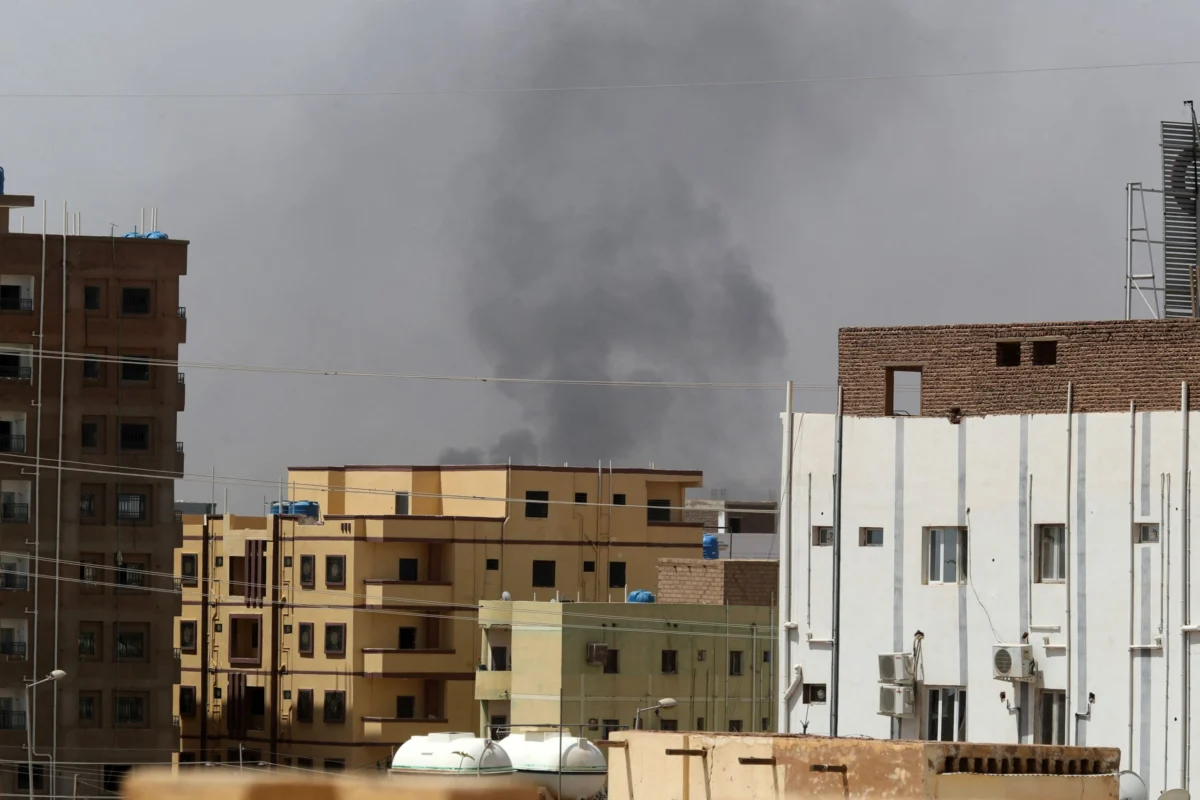
The Sudanese capital of Khartoum remained gripped by the sounds of sporadic artillery and gunfire on Sunday, even as residents expressed a cautious sense of hope following the announcement of a week-long ceasefire agreement signed in Jeddah, Saudi Arabia. This latest diplomatic breakthrough, brokered by the United States and the Kingdom of Saudi Arabia, aims to provide a much-needed reprieve for a civilian population that has endured five weeks of relentless urban warfare between the Sudanese Armed Forces (SAF) and the paramilitary Rapid Support Forces (RSF). Unlike previous verbal commitments to pause hostilities, which were almost immediately violated, this agreement represents the first formally signed document between the two warring factions since the conflict erupted on April 15, 2023.
The agreement, officially titled the "Agreement on a Short-Term Ceasefire and Humanitarian Arrangements," was finalized late Saturday night and is scheduled to take effect at 9:45 p.m. local time on Monday. A critical component that distinguishes this deal from its predecessors is the inclusion of an internationally supported monitoring mechanism. This committee, comprising representatives from Saudi Arabia, the United States, and the warring parties themselves, is tasked with overseeing compliance and facilitating the delivery of humanitarian aid to a city where basic services have largely collapsed. Despite the diplomatic progress, the atmosphere in Khartoum remains tense, as witnesses reported continued clashes in central and southern districts throughout Sunday, underscoring the volatility of the situation on the ground.
The Genesis of a National Crisis
The current conflict is the violent culmination of a long-simmering power struggle between two of Sudan’s most powerful military figures: General Abdel Fattah al-Burhan, the head of the SAF, and General Mohamed Hamdan Dagalo, widely known as Hemedti, who leads the RSF. The two generals were once uneasy allies, having collaborated in the 2019 ousting of longtime autocrat Omar al-Bashir following a massive popular uprising. They further consolidated their grip on power in October 2021 by orchestrating a coup that derailed Sudan’s fragile transition toward civilian-led democracy.
However, the partnership fractured over the details of a new, internationally backed "Framework Agreement" intended to return the country to civilian rule. The primary point of contention was the timeline and command structure for integrating the RSF—a powerful paramilitary group with roots in the Janjaweed militias of Darfur—into the regular Sudanese army. Hemedti pushed for a ten-year integration period, while Burhan insisted on a two-year window. This technical dispute over military reform rapidly escalated into a full-scale war for control of the state, turning Khartoum, a city of over five million people, into a primary battlefield.
A Humanitarian Catastrophe in Numbers
The five weeks of fighting have exacted a staggering toll on Sudan’s civilian population and infrastructure. According to data provided by the World Health Organization (WHO), at least 705 people have been confirmed killed and more than 5,287 injured. However, medical professionals and local activists on the ground warn that these figures are likely a significant undercount, as many bodies remain uncollected in the streets or are buried in private gardens because it is too dangerous to reach cemeteries.
The displacement crisis has reached alarming proportions. Approximately 1.1 million people have been forced to flee their homes since mid-April. Of these, roughly 840,000 are internally displaced within Sudan, while more than 250,000 have crossed international borders into neighboring countries such as Egypt, Chad, South Sudan, and Ethiopia. The influx of refugees is placing immense pressure on regional neighbors, many of whom were already struggling with their own internal economic and security challenges.
In Khartoum, the situation is increasingly desperate. Residents report a near-total collapse of the healthcare system, with an estimated 70% of hospitals in conflict zones currently out of service. Those that remain open are operating with severe shortages of medicine, surgical supplies, and fuel for generators. Mass looting has become a daily reality, targeting everything from private residences and vehicles to food warehouses and diplomatic missions. The World Food Programme (WFP) has reported that significant portions of its emergency food stocks have been plundered, further hindering efforts to stave off widespread hunger.
Details of the Jeddah Agreement
The Jeddah talks, which have been ongoing for several weeks, were designed to address the immediate humanitarian needs of the population rather than achieve a final political settlement. The seven-day truce focuses on several key objectives:
- Humanitarian Access: The agreement mandates the creation of safe corridors for the delivery of food, water, and medical supplies to civilians trapped in active combat zones.
- Restoration of Essential Services: Both parties have committed to allowing technical teams to repair critical infrastructure, including water pumping stations, power plants, and telecommunications networks.
- Withdrawal from Civilian Facilities: A major point of contention has been the occupation of hospitals, schools, and private homes by military forces. The agreement calls for the vacation of these facilities to allow for their intended use.
- The Monitoring Mechanism: To prevent the "blame game" that followed previous failed truces, the US-Saudi monitoring committee will use satellite imagery and other intelligence tools to identify which party violates the ceasefire, providing a layer of accountability that was previously absent.
While the international community has hailed the agreement as a step forward, analysts remain skeptical about the ability of Burhan and Hemedti to control their forces. Neither leader traveled to Jeddah to sign the deal personally, leading some to question their level of commitment to the process. Furthermore, both generals have repeatedly declared their intent to achieve a decisive military victory, suggesting that the ceasefire may be viewed by some commanders as an opportunity to regroup and resupply rather than a prelude to peace.
Voices from the Ground
For the millions of civilians caught in the crossfire, the Jeddah deal represents a glimmer of hope in an otherwise bleak landscape. Safaa Ibrahim, a 35-year-old resident of Khartoum who has seen her family scattered by the violence, expressed the exhaustion felt by many. "We’re tired of this war," she told Reuters. "We’ve been chased away from our homes, and the family has scattered between towns in Sudan and Egypt. We want to return to normal life and safety. Al-Burhan and Hemedti have to respect people’s desire for life."
Similarly, Mohamed Hamed, an activist remaining in the capital, emphasized the urgency of the humanitarian corridors. "The people of Khartoum are waiting for the truce and the opening of humanitarian corridors," he said. "The health situation is getting worse day after day." The lack of clean water and electricity, combined with the scorching heat of the Sudanese summer, has created a "living hell" for those unable to flee.
The Military Perspective and the Call to Arms
The Sudanese Army has maintained that its operations are necessary to "cleanse" the capital of what it terms "rebel militias." Senior army general Yassir al-Atta, speaking on Sudan state TV, defended the military’s use of heavy weaponry and air strikes, claiming the RSF has used residential areas as shields. "The army has been trying to remove the RSF from homes, schools, and hospitals," Atta stated.
In a concerning development, Atta also addressed calls from tribal leaders for civilians to take up arms. While he stated that a general mobilization is not currently required, he asserted that residents have a "natural right" to self-defense if attacked in their homes. "Let them arm themselves to protect themselves," he said. This rhetoric has raised fears among international observers that the conflict could devolve into a decentralized civil war or ethnic conflict, particularly in the Darfur region, where the RSF and tribal militias have a long and bloody history.
Regional and Global Implications
The instability in Sudan threatens to radiate across the Sahel and the Horn of Africa. Sudan’s strategic location on the Red Sea and its borders with seven countries make its stability vital for regional security. A prolonged conflict could disrupt global shipping lanes, exacerbate human trafficking networks, and provide a vacuum for extremist groups to exploit.
The United States and Saudi Arabia have invested significant diplomatic capital in the Jeddah process. For Washington, the goal is to prevent a total state collapse that could draw in regional powers like Egypt (which supports the SAF) or the United Arab Emirates (which has historical ties to Hemedti). For Riyadh, a stable Sudan is essential for its "Vision 2030" economic plans, which include significant investment in Red Sea tourism and infrastructure.
Conclusion and Future Outlook
As the Monday evening deadline for the ceasefire approaches, the world is watching to see if the guns will finally fall silent. The Jeddah agreement is a fragile construct, built on the hope that both sides recognize the impossibility of a quick victory and the mounting international pressure to avoid a total humanitarian catastrophe.
However, even if the seven-day truce holds, the path to a permanent peace remains arduous. The fundamental issues that sparked the war—the integration of the RSF and the transition to civilian rule—remain unresolved. Mediators have acknowledged that the current deal is merely a "short-term" measure. Future rounds of talks will need to move beyond humanitarian arrangements to address the removal of forces from urban centers and the establishment of a political framework that includes the civilian groups that led the 2019 revolution.
For now, the people of Khartoum can only wait and listen. Whether the silence on Monday night is the result of the ceasefire or merely a pause before the next barrage will determine the fate of millions and the future of Africa’s third-largest nation. The international monitoring mechanism faces its first major test, and the credibility of both General Burhan and General Hemedti hangs in the balance. As the humanitarian crisis deepens, the margin for error has disappeared, leaving Sudan at a critical crossroads between a fragile peace and a descent into state failure.
