

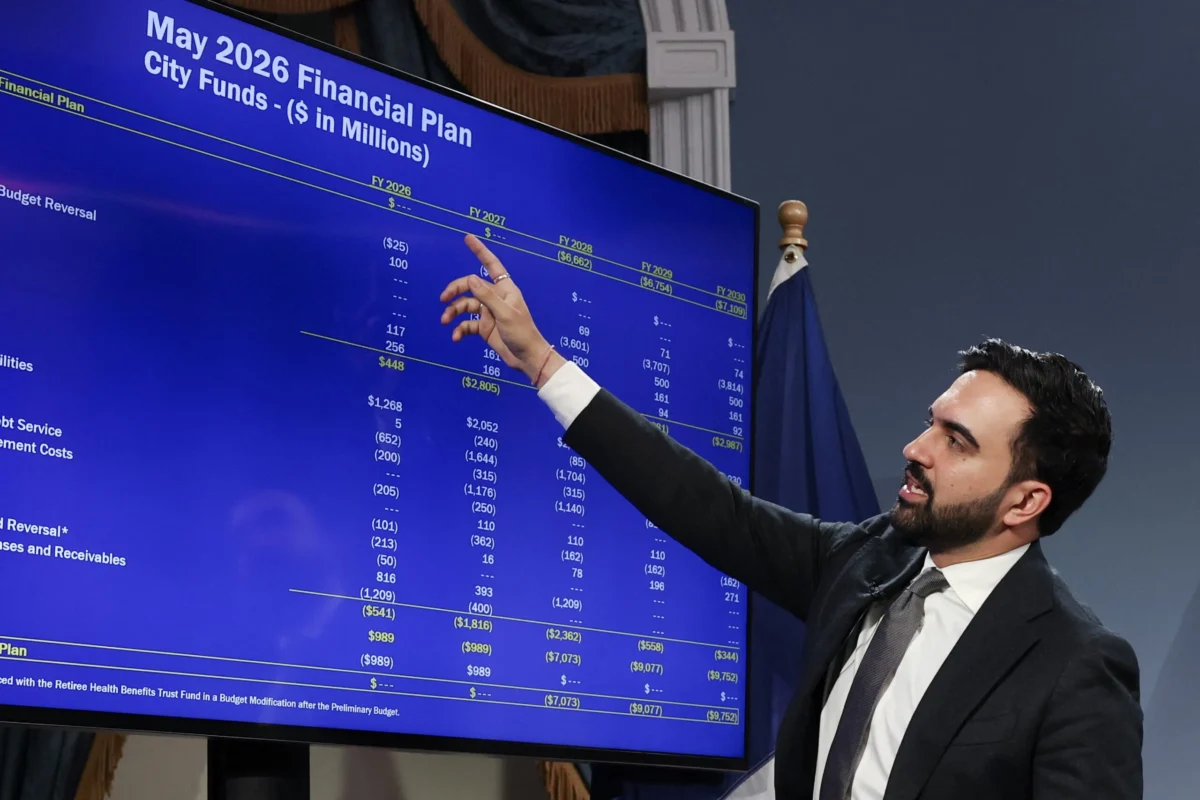
New York City’s leadership, spearheaded by Mayor Zohran Mamdani and supported by New York State Governor Kathy Hochul, is charting a new course in urban finance by proposing a significant tax on pied-à-terre properties. This once-niche policy idea, targeting second homes, vacation apartments, and luxury units that often sit partially or entirely unused, is rapidly gaining mainstream traction not just in the Big Apple, but across major global cities from Vancouver to London. The proposed tax is a cornerstone of a broader state and city initiative to address a substantial fiscal year 2027 budget deficit, estimated to run into the billions, while simultaneously confronting a deepening housing affordability crisis that has long plagued the metropolis.
The decision to pursue a pied-à-terre tax marks a strategic shift in Mayor Mamdani’s fiscal policy. Earlier in the week, in a move widely seen as politically astute, Mamdani abandoned initial plans to impose broader property tax increases on many middle-class homeowners. This pivot likely spared the progressive mayor from a potentially contentious political battle with a significant portion of the city’s electorate, redirecting the financial burden towards the city’s wealthiest property owners and absentee landlords. The proposed tax specifically targets non-resident second homes valued at $5 million or more, framing it as a measure designed to extract revenue from luxury assets rather than essential housing for full-time residents.
However, the path to implementation has not been without its immediate controversies. The proposal has already ignited a political firestorm for Mayor Mamdani, particularly following a highly publicized incident in early May 2026, in which he posted a video standing outside a luxurious Manhattan building. This particular building is home to a unit owned by hedge fund billionaire Ken Griffin. Griffin, a well-known politically conservative figure and a significant donor, swiftly responded to Mamdani’s public gesture with vocal pushback, including a stark threat to curtail future business investments and operations in New York City. This high-profile clash underscores the inherent tensions simmering between the city’s burgeoning socialist democratic leadership and its entrenched billionaire class, a dynamic that observers anticipate will continue to percolate as the city grapples with wealth redistribution policies. Despite these political skirmishes, the city’s luxury real estate market has, perhaps counter-intuitively, demonstrated remarkable resilience, with sales remaining robust, suggesting a complex interplay of factors influencing investment decisions beyond immediate tax proposals.
The fundamental question now confronting New York City, as it contemplates this novel form of property taxation, is its efficacy: Does it work as intended? To seek answers, policymakers and analysts are turning their gaze to existing examples from around the world, where various iterations of second-home and vacancy taxes have been implemented across several major housing markets, offering a mosaic of outcomes and lessons learned.

Global Precedents: A Growing Trend in Urban Finance
The concept of taxing underutilized properties or second homes is not unique to New York. It represents a burgeoning global trend, reflecting a shared struggle among major cities to manage escalating housing costs, persistent budget shortfalls, and visible symbols of economic inequality.
In Canada, Vancouver stands as one of the earliest and most prominent adopters with its "Empty Homes Tax" (EHT), introduced in 2017. This was subsequently complemented by a federal "Underused Housing Tax" (UHT) across Canada, which came into effect in 2022. Following Vancouver’s lead, Toronto also recently implemented its own "Vacant Home Tax" (VHT) in 2022, signaling a concerted effort across Canadian urban centers to leverage taxation as a tool for housing policy. Vancouver’s officials have explicitly framed their EHT as a means to "return empty or under-utilized properties to use as long-term rental homes for people who live and work in Vancouver," according to public materials issued by the City of Vancouver. The city has also committed to reinvesting all net revenue generated from the EHT directly into affordable housing initiatives, thereby creating a direct link between the tax and its stated social objective. Initial reports from Vancouver indicated a notable decline in vacant homes in the years following the tax’s implementation, with the city reporting a reduction in the number of empty properties and an increase in long-term rental availability. For instance, the city reported that in its first year, the EHT helped return thousands of empty homes to the rental market, reducing the vacancy rate by 26% among previously empty properties. By 2022, the EHT had generated over CAD$100 million for affordable housing initiatives.
Across the Atlantic, European capitals have also embraced similar measures. London, a global financial hub and luxury property hotspot, applies various forms of surcharge or higher taxation on second residences and underused properties through its Council Tax system. Empty properties can incur a premium of up to 300% of the standard Council Tax after two years. Paris, another city grappling with acute housing shortages, imposes both a "taxe sur les logements vacants" (TLV) on properties vacant for over a year in specific areas and a higher "taxe d’habitation sur les résidences secondaires" (THRS) on second homes. The French capital is, in fact, contemplating even steeper vacancy penalties. According to reporting by Le Monde, Paris plans to significantly increase taxes on vacant housing, with local officials expressing hope that such measures could push tens of thousands of units back onto the market. Jacques Baudrier, Paris deputy mayor for housing, told the paper, "We hope that at least 20,000 homes will return to the market as a result," highlighting the ambitious targets associated with these policies.
Beyond North America and Europe, Singapore offers an even more aggressive model. The city-state imposes some of the highest foreign buyer surcharges globally, known as the Additional Buyer’s Stamp Duty (ABSD), which can reach as high as 60% for certain categories of foreign purchasers. These measures, frequently adjusted, are primarily designed to cool speculative investment, stabilize property prices, and prioritize housing access for its citizens, demonstrating a strong government hand in managing its property market.
The Genesis of NYC’s Fiscal Challenge and Housing Crisis
New York City’s current budget deficit, the impetus for the pied-à-terre tax, is a complex confluence of post-pandemic economic shifts and burgeoning expenditure. The exodus of residents during the initial stages of the COVID-19 pandemic, coupled with the widespread adoption of remote work, has significantly impacted the city’s commercial real estate market. Empty office buildings translate to lower property tax revenues and reduced economic activity, creating a substantial hole in the city’s coffers. As of early 2026, commercial office vacancy rates in Manhattan hovered around 20%, a historic high, impacting property values and thus tax assessments. Furthermore, increased spending on social services, including support for a growing migrant population and expanded public health initiatives, has placed additional strain on the municipal budget. Mayor Mamdani’s administration projects a deficit of over $4 billion for fiscal year 2027, necessitating urgent and innovative revenue-generating solutions.

Concurrently, New York City continues to battle a severe housing affordability crisis. Rents have soared to unprecedented levels, with the median rent for a one-bedroom apartment in Manhattan routinely exceeding $4,000 in early 2026, representing a significant increase over pre-pandemic levels. Vacancy rates remain critically low, often hovering below 2%, far below the healthy 5% benchmark typically needed for a balanced rental market. This scarcity, combined with high demand and limited new construction, has made homeownership an increasingly unattainable dream for many middle-class New Yorkers, and even basic rental housing a struggle for lower-income residents. The sight of dark, unoccupied luxury condos in prime urban neighborhoods has become a potent and highly visible symbol of this inequality, fueling public resentment and political pressure for action. The pied-à-terre tax, therefore, serves not only as a potential revenue stream but also as a symbolic gesture addressing these deep-seated frustrations within the city’s electorate.
Chronology of Key Events Leading to the Proposal
- Late 2025: Projections for New York City’s fiscal year 2027 budget reveal a significant deficit, prompting calls from city financial officials for new revenue streams.
- March 14, 2026: Mayor Zohran Mamdani’s office initially floats proposals for addressing the budget deficit, including potential adjustments to broader property taxes, which immediately draws criticism from middle-class homeowner groups.
- April 24, 2026: The idea of a pied-à-terre tax, targeting luxury second homes, begins to gain traction within city and state legislative discussions as an alternative to broader property tax increases, seen as a more politically palatable option.
- May 6, 2026: Mayor Mamdani releases a video on social media, making a public statement related to the proposed tax and luxury property ownership, specifically referencing a building known to house a unit owned by prominent hedge fund billionaire Ken Griffin. This video is widely circulated and draws immediate attention.
- May 6, 2026 (Same Day): Ken Griffin, through a spokesperson for his firm Citadel, issues a strong public rebuke to Mamdani’s actions and the proposed tax, explicitly threatening to withdraw future business investments and potentially relocate operations from New York City due to the perceived hostile business environment. This incident quickly escalates into a political crisis for the Mayor, dominating local news cycles.
- May 11, 2026: Despite the political fallout and Griffin’s threat, reports from luxury real estate brokers and market analysts indicate that high-end real estate sales in Manhattan remain strong, suggesting limited immediate impact on the overall trajectory of the luxury market.
- May 12, 2026: Mayor Zohran Mamdani officially speaks about the fiscal year 2027 budget proposal, confirming the inclusion of the pied-à-terre tax as a central revenue-generating measure and announcing the definitive abandonment of plans to raise property taxes on middle-class homeowners, a move intended to alleviate public concern.
- May 12, 2026 (Concurrent): The New York City Comptroller’s office releases an independent report analyzing the potential revenues of the proposed pied-à-terre tax, offering a more conservative estimate than the Mayor’s office and detailing potential behavioral responses from property owners.
Expert Analysis: Efficacy and Limitations
While the appeal of a pied-à-terre tax is clear – targeting wealth and addressing visible inequality – its practical effectiveness remains a subject of considerable debate among economic and urban policy experts. Thomas Brosy, a senior research associate at the Urban-Brookings Tax Policy Center, categorizes these policies into two main types: recurring property tax surcharges and one-time transaction taxes. He emphasizes that "the distinction matters because it affects how strongly owners adjust behavior over time." New York’s proposal, an annual tax on non-resident second homes worth $5 million or more, falls into the recurring surcharge category. Brosy also highlights a key difference: "In general, these policies tax homes based on occupancy or ownership status, not necessarily on the property’s value or the owner’s income or wealth," distinguishing NYC’s value-based threshold from many global examples which often apply a flat rate or lower value thresholds.
However, skepticism regarding the broader impact on housing affordability is prevalent. Paul Cheshire, professor of economic geography at the London School of Economics, asserts that "New York is a follower, not a leader" in implementing such taxes, but cautions that policymakers often "misdiagnose the problem." He argues that "the biggest misconception is that these taxes will improve housing affordability in large ‘super cities.’ The problem is mainly constrained housing supply via policy," pointing to fundamental issues like restrictive zoning, lengthy approval processes, and high construction costs as the primary drivers of housing scarcity, rather than the mere presence of second homes. Cheshire also notes that second homes typically constitute a relatively small share of total housing stock, even in communities with high concentrations, often around 10-15%, which inherently limits the potential scale of any tax base.
Brosy’s research and observations from cities like
