

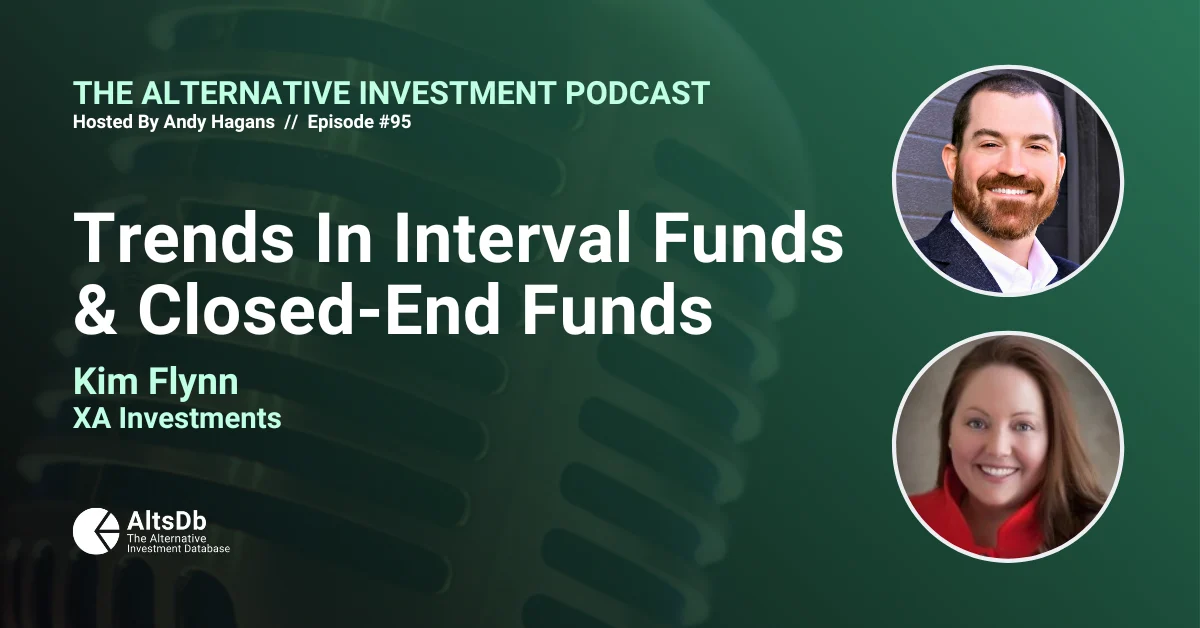
The financial industry is witnessing a significant surge in the popularity and assets under management for interval funds, a specialized investment vehicle that has become a cornerstone of the broader alternative investments sector. Over the past five years, these funds have experienced "incredible growth," mirroring the overall expansion of alternative strategies accessible to a wider investor base. Kim Flynn, managing director at XA Investments, a firm at the forefront of this evolving market, recently shared insights into the success, challenges, and opportunities facing interval fund sponsors in an interview on The Alternative Investment Podcast.
The Rise of Interval Funds: A Product of Evolving Investor Needs
Interval funds, a unique structure within the ’40 Act framework, have gained traction by offering a compelling blend of accessibility and exposure to less liquid alternative asset classes. Unlike traditional open-end mutual funds, which allow daily subscriptions and redemptions at net asset value (NAV), or listed closed-end funds, which trade on exchanges at market-determined prices (often at a discount or premium to NAV), interval funds offer periodic liquidity. Investors can typically invest on a daily basis, but redemptions are usually limited to a specific percentage of the fund’s outstanding shares, often around 5% per quarter, through a tender offer process.
This structure provides fund sponsors with a crucial advantage: the ability to invest in assets with longer holding periods and less frequent valuation, such as private equity, real estate, and private credit, without facing the immediate redemption pressures inherent in daily-valued mutual funds. This strategic flexibility allows interval funds to potentially generate attractive total returns by capitalizing on illiquid asset opportunities that might be inaccessible or impractical for more liquid investment vehicles.
Kim Flynn, with her extensive background in product development, including her tenure at Nuveen where she was instrumental in the launch of over 40 closed-end funds, highlighted the "niche product category" that these structures represent. Her experience at Nuveen, a market leader in listed closed-end funds, particularly in municipal bonds, provided a deep understanding of complex product development and the strategic use of listed vehicles.
"The work that we did at Nuveen, one thing that surprises people is that it was often in partnership with outside portfolio managers," Flynn explained. "When I left Nuveen in 2016, I launched an asset management platform as part of an investment bank here in Chicago, to do just that, to focus on alternatives, and to do it in partnership with sub-advisors." This pivot towards partnering with external managers and focusing on alternative strategies laid the groundwork for her current role at XA Investments, which specializes in helping asset managers launch and scale these complex products.
Navigating the Nuances: Closed-End vs. Interval Funds
The distinction between listed closed-end funds and interval funds is critical for understanding their respective roles in the alternatives ecosystem. Listed closed-end funds, such as Business Development Companies (BDCs), are exchange-traded and their share prices can deviate significantly from their underlying NAV. While this can present opportunities for savvy investors to buy at a discount, it also means the market dictates the price, not necessarily the intrinsic value of the assets.
"Closed-end funds are just that. They’re closed to raising new capital," Flynn noted. "So, once an initial public offering or an initial offering of shares is done, typically, the fund is closed and listed on an exchange like the New York Stock Exchange. So they do share some traits with ETFs, but ETFs have mechanisms, creation redemption units, that allow them to grow and to shrink."
The historical average discount for listed closed-end funds has hovered around 4.5%, a figure that sometimes mirrored initial sales loads. However, market dislocations, such as those experienced in recent years, can widen these discounts considerably. Flynn pointed out that currently, discounts are averaging over eight percent, with some 2021 IPOs trading at 10% to 20% discounts, presenting potential opportunities for secondary market buyers.
Interval funds, while also a type of closed-end structure, offer a different liquidity profile. "The exit is typically gated or limited to 5% a quarter," Flynn elaborated. "And so, that’s what allows those funds to invest more heavily in illiquid securities, and frankly, generate attractive total returns in some of these assets that require a longer investment hold period." This intermittent liquidity is key to their ability to hold a broader range of alternative assets, including real estate, private equity, venture capital, and private credit.
Challenges and Opportunities in a Maturing Market
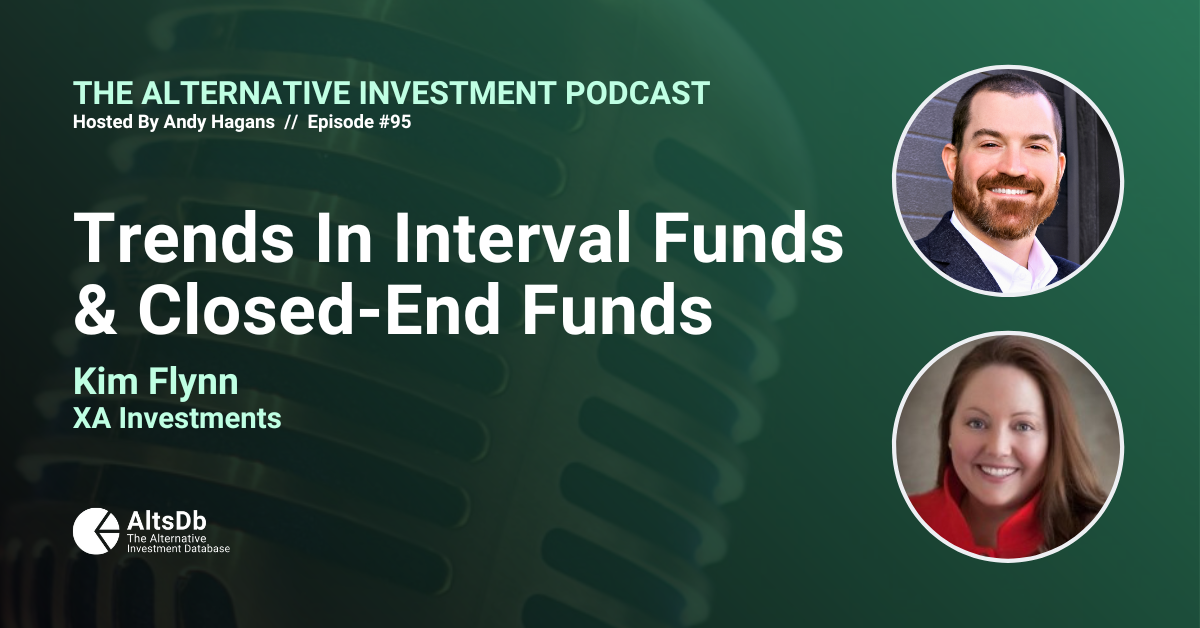
The rapid growth of interval funds has not been without its challenges. One significant concern is the potential for misaligned expectations regarding liquidity. Flynn expressed caution, stating, "I do find that as we observe industry participants, a lot of them gloss over, and they frankly oversell the liquidity of an interval fund. These are not mutual funds, and they should not be sold in that fashion." The possibility of prorated redemptions, especially during periods of market stress, can be frustrating and worrying for investors who may not fully grasp the underlying liquidity constraints.
"The market hasn’t been tested just yet," she added, referring to the potential impact of a prolonged downturn on these structures. The historical precedent of the 2008 financial crisis, where similar vehicles faced significant redemption pressures, serves as a stark reminder of the importance of robust liquidity management and clear investor communication.
Despite these challenges, opportunities abound. The increasing acceptance of alternatives by a broader investor base, particularly through Registered Investment Advisors (RIAs), has fueled demand for products like interval funds. XA Investments has been actively advising asset managers on how to navigate this landscape, focusing on best practices for product design, marketing, and investor education.
Best Practices for Interval Fund Sponsors
For fund sponsors looking to launch successful interval funds, several key strategies are emerging as critical. Flynn emphasized the importance of starting with the client in mind, particularly the RIA channel, which has become a primary gateway for these products.
"Many of them are launching with seed capital or lead capital, or even private funds that get contributed," Flynn noted. "Investors don’t want to go into a small, subscale fund." This commitment of initial capital helps build confidence and demonstrates the sponsor’s belief in the fund’s long-term viability.
Furthermore, expense waivers and management fee waivers are becoming standard practice to make new funds more attractive, especially as they scale to $500 million or $1 billion in assets. This financial commitment from sponsors is crucial for competing in a market that has grown significantly. The number of interval funds has surpassed 180, creating a crowded landscape, particularly for credit-focused strategies. Sponsors need a clear competitive edge and a well-defined strategy to stand out.
Education remains paramount. "The buyer base for these funds initially is largely RIAs, but it’s still fairly concentrated," Flynn observed. Expanding this buyer base beyond RIAs already comfortable with alternatives requires clear communication about the product’s structure, risks, and intended investment horizon.
Emerging Trends in Alternative Investments
Looking ahead, Flynn identified three key trends shaping the alternatives industry:
- RIAs Launching Proprietary Interval Funds: Increasingly, RIAs are looking to develop their own interval funds to leverage their direct client relationships. This move aims to capture a larger portion of the fee structure and offer bespoke investment solutions.
- FinTech Platforms and Direct-to-Consumer Offerings: Similar to RIAs, FinTech platforms are leveraging their client relationships to launch their own interval funds, targeting both accredited and, in some cases, non-accredited investors. This trend democratizes access to alternative investments, though careful consideration of investor suitability remains critical.
- Impact Investing Funds: Despite some ESG backlash in the U.S., there is a growing interest in impact-focused interval funds. These funds invest in alternative or illiquid securities with the explicit goal of generating positive social or environmental impact alongside financial returns, offering a distinct profile compared to ESG-labeled ETFs.
The "incredible growth" of interval funds is a testament to their ability to bridge the gap between illiquid alternative assets and the demand for structured, accessible investment products. As the market continues to mature, the focus on investor education, transparent communication, and robust product design will be crucial for ensuring the sustained success and responsible growth of this dynamic sector.
