

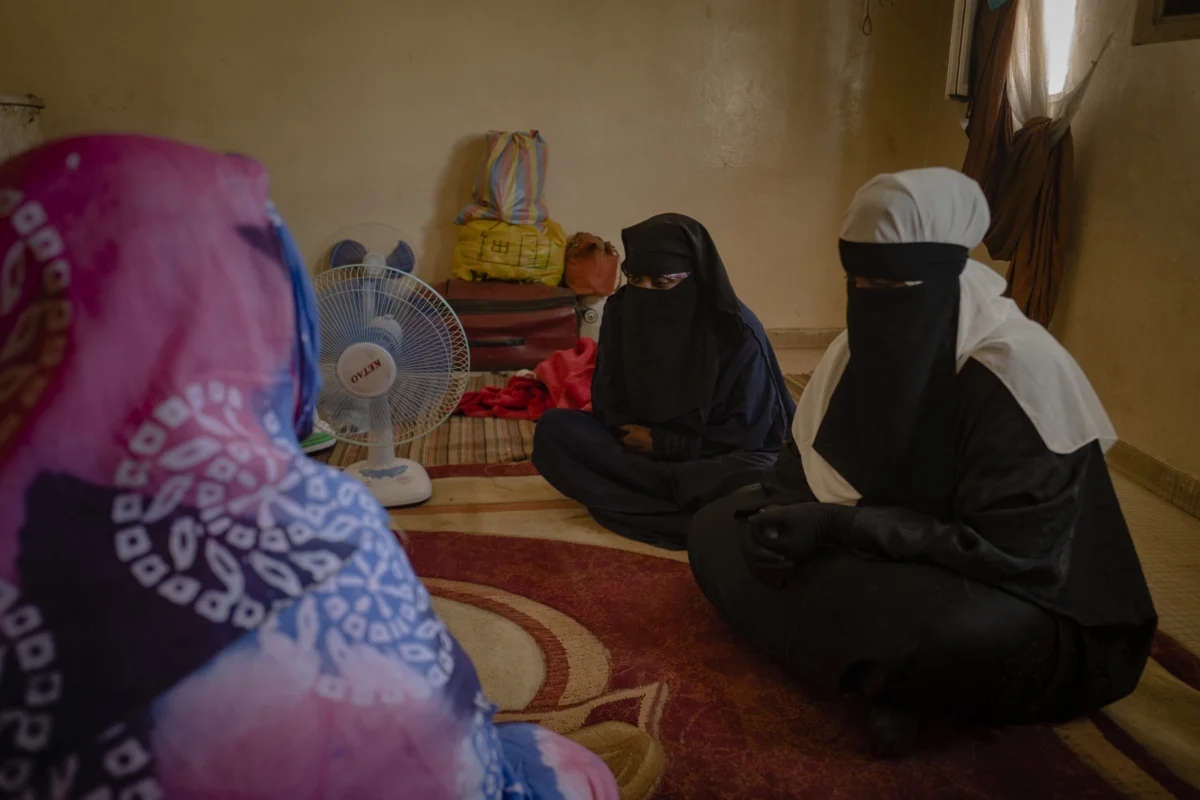
Across the vast, arid stretches of the Sahel and West Africa, the geopolitical landscape is increasingly defined by a volatile mix of insurgent expansion, military upheavals, and a deteriorating security apparatus. In neighboring Mali, Burkina Faso, and Niger, fragile democratic experiments have collapsed into military rule, while armed groups linked to Al-Qaeda and the Islamic State continue to exploit the vacuum left by retreating state authority and the withdrawal of international peacekeeping forces. Yet, amidst this regional "arc of instability," Mauritania has emerged as a distinct and resilient outlier. While the Sahel has become nearly synonymous with endemic violence and displacement, the Islamic Republic of Mauritania has managed to maintain a decade of relative domestic peace. Analysts and state officials point to a unique pillar of this stability: the mourchidates, a specialized corps of female Islamic spiritual guides who are leading an intellectual and social offensive against radicalization.
The mourchidates program, formally integrated into the Mauritanian state apparatus under the Ministry of Islamic Affairs in 2021, represents a departure from traditional, security-heavy counterterrorism strategies. These women are not soldiers or police officers; they are highly trained theologians, certified scholars, and social counselors. Their mission is to occupy the ideological spaces where extremist narratives often take root—mosques, schools, community centers, and, most critically, the high-security prison cells where radicalized individuals are held. By engaging with vulnerable populations through the lens of faith, the mourchidates aim to dismantle the theological justifications for violence, replacing them with a discourse centered on tolerance, civic responsibility, and mainstream Islamic jurisprudence.
A Chronology of Reform: From Casablanca to Nouakchott
The conceptual framework for Mauritania’s mourchidates finds its origins in the Kingdom of Morocco. Following the 2003 Casablanca bombings—a series of coordinated suicide attacks that claimed 45 lives and shattered the North African nation’s sense of security—Morocco embarked on a comprehensive restructuring of its religious field. Recognizing that a purely militarized response would fail to address the root causes of radicalization, the Moroccan monarchy introduced the mourchidates program in 2006. These women were the first in the region to be officially sanctioned by a state to provide religious guidance, a role traditionally reserved for men.
Youssra Biare, a prominent Moroccan researcher specializing in religious sociology, notes that the Moroccan model proved that women’s religious leadership is a potent tool for peacebuilding. By providing formal theological and social training, the state empowered women to address the emotional and social fractures that extremist recruiters often exploit. For Mauritania, watching its neighbors descend into chaos in the 2010s, the Moroccan blueprint offered a culturally grounded alternative to Western-led counterterrorism models.
Mauritania’s own history with extremism served as a catalyst for this adoption. Between 2005 and 2011, the country faced a surge in attacks by Al-Qaeda in the Islamic Maghreb (AQIM), including the 2005 raid on the Lemgheity military base and the 2008 assassination of French tourists near Alleg. These events forced the Mauritanian leadership to reassess its strategy. In 2010, the government initiated the "Grand Dialogue," a series of debates between state-sponsored scholars and imprisoned militants. This established the precedent that theological engagement was as vital as border security. The formalization of the mourchidates in 2021 was the natural evolution of this "soft power" approach, extending the dialogue from elite scholarly circles to the grassroots of Mauritanian society.
The Intellectual Battleground: Inside the Prison System
One of the most challenging environments for the mourchidates is the prison system. Historically, prisons in the Sahel have functioned as "universities of jihad," where petty criminals are radicalized by seasoned insurgents. Mauritania has sought to flip this script. Within the walls of Nouakchott’s correctional facilities, mourchidates engage in intensive, long-term counseling with detainees convicted of terrorism-related offenses.

What distinguishes these women is their depth of scholarship. They are not merely social workers; they are experts in Quranic interpretation (tafsir), Islamic jurisprudence (fiqh), and the history of theological thought. When sitting across from a detainee who believes that violence against civilians is a religious duty, the mourchidates do not rely on secular platitudes. Instead, they engage the detainee on their own terms, using primary Islamic texts to deconstruct extremist interpretations.
This process is often slow and requires immense patience. By building a rapport based on mutual religious respect, the mourchidates are able to address the psychological grievances—such as perceived injustice or marginalization—that drive individuals toward radical groups. They offer a "re-education" that emphasizes the Maqasid al-Sharia (the higher objectives of Islamic law), which include the preservation of life and the maintenance of social order. This ideological "de-programming" is essential for the eventual reintegration of these individuals into society, reducing the risk of recidivism.
Prevention and Community Outreach
While the work in prisons is reactive, the primary strength of the mourchidates lies in prevention. Armed groups in the Sahel, such as Jama’at Nusrat al-Islam wal-Muslimin (JNIM), frequently recruit by exploiting the lack of state services and the prevalence of poverty. They offer a sense of belonging and a religious justification for grievances against the state.
The mourchidates operate as a first line of defense in the community. They travel to remote villages, bustling urban markets, and youth centers to provide an alternative narrative. Aminata Dia, a founding member of the Elles Du Sahel Network and executive director of the nonprofit Malaama, emphasizes that the Mauritanian model recognizes that security responses alone are insufficient. "The country invested in prevention, religious dialogue, and community trust-building," Dia told Al Jazeera.
By educating young people on the values of charity, accountability, and tolerance, the mourchidates fill the intellectual vacuum that extremists seek to occupy. They also provide family counseling, recognizing that mothers and sisters are often the first to notice signs of radicalization in their male relatives. By empowering women within the domestic sphere with religious knowledge, the program creates a "neighborhood watch" of ideological moderation.
Supporting Data and the "Mauritanian Exception"
The effectiveness of Mauritania’s multifaceted approach is reflected in regional security data. According to the Global Terrorism Index, while deaths from terrorism in the Sahel increased by over 2,000% between 2007 and 2022, Mauritania has not experienced a major terrorist attack on its soil since 2011. This "Mauritanian Exception" is particularly striking when compared to the Liptako-Gourma tri-border area (Mali, Burkina Faso, and Niger), which has become the global epicenter of extremist violence.
In 2023, the Sahel region accounted for 43% of global terrorism deaths, yet Mauritania’s borders remained largely secure. While the country’s professionalized military and improved intelligence gathering are critical factors, security analysts point to the social cohesion fostered by programs like the mourchidates as the invisible glue holding the nation together. The Ministry of Islamic Affairs reports that the program has reached thousands of students and hundreds of detainees, creating a buffer of "informed faith" that resists the simplistic, binary worldview of insurgent groups.

Official Responses and Global Implications
The success of the mourchidates has garnered international attention, particularly from the United Nations and the African Union. In recent forums on Sahelian security, officials have praised Mauritania’s ability to combine "hard" and "soft" security measures. Yahia Elhoussein, a scholar who runs a training school for mourchidates in Nouakchott, argues that the program’s credibility stems from its lack of coercion. "They educated young people on the true teachings of Islam… playing an important role in de-radicalization without any use of force," Elhoussein noted.
However, the model faces significant challenges. Critics and some regional observers question whether the Mauritanian experience can be replicated in countries where state legitimacy has completely eroded. In Mali or Burkina Faso, where the government’s presence is often viewed with suspicion or hostility, state-sponsored religious guides might be dismissed as mere mouthpieces for the regime. Furthermore, the mourchidates program requires significant resources for training and deployment—resources that are scarce in war-torn economies.
Analysis of Broader Impacts
The Mauritanian model suggests a paradigm shift in how the international community views counterterrorism. For decades, the focus has been on drone strikes, special forces operations, and border walls. Mauritania’s experience indicates that the most durable defense against violent extremism is a culturally resonant, intellectually rigorous, and gender-inclusive approach to religious education.
The involvement of women is particularly transformative. In many conservative societies in the Sahel, women have unique access to private spaces and family units that male officials cannot reach. By elevating women to positions of religious authority, Mauritania is not only countering extremism but also subtly shifting social dynamics, demonstrating that female scholarship is vital to national security.
As the Sahel continues to grapple with an escalating crisis, the mourchidates of Mauritania stand as a testament to the power of dialogue over destruction. Their work suggests that the battle for the Sahel will not be won on the battlefield alone, but in the classrooms, the mosques, and the quiet conversations between a scholar and a seeker, where the "true teachings" of peace are painstakingly restored. While no single program can solve the complex web of poverty and governance failures in the region, the mourchidates provide a glimmer of hope—a model of resilience that prioritizes the human mind as the ultimate frontier of security.
