

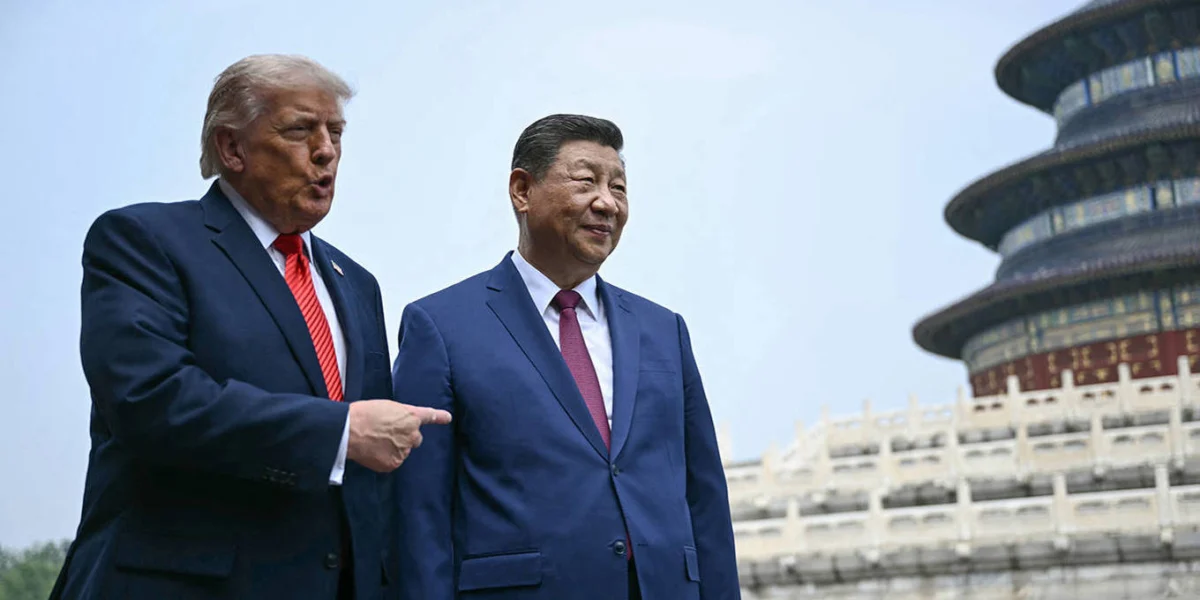
The recent summit between Donald Trump and Xi Jinping in Beijing, while yielding no immediate resolutions on contentious issues like tariffs, Taiwan, or the protracted Iran war, signaled a subtle yet significant shift towards a more pragmatic engagement between the United States and China. This discernible moderation in tone, moving away from a purely adversarial stance, suggests a tacit acknowledgment of the deeply intertwined economic destinies of the two global powers. Rather than viewing their bilateral relationship exclusively through the prism of a zero-sum geopolitical struggle, both President Trump and President Xi appeared to embrace a more nuanced understanding of their shared economic realities and the potential pitfalls of complete economic disentanglement.
A Summit of Restrained Diplomacy
The summit, held in mid-May 2026, followed a period of escalating trade tensions and heightened geopolitical rhetoric. For months leading up to the meeting, the global economic landscape had been buffeted by unpredictable policy shifts, with Washington and Beijing frequently engaging in retaliatory measures that threatened to destabilize global supply chains. Observers had widely anticipated a high-stakes confrontation, with expectations of either a dramatic de-escalation or a further hardening of positions. The reality, however, was a display of controlled diplomacy, characterized by a restrained and cordial atmosphere that belied the underlying competitive pressures.
This departure from previous confrontational encounters was not lost on analysts. While no joint press conferences were held, and the official statements were carefully worded, the general sentiment conveyed was one of a willingness to engage, even in the absence of immediate breakthroughs. This measured approach suggests an implicit recognition that a complete economic decoupling, a concept that had gained traction in some policy circles, is neither practically achievable nor economically advisable. The sheer scale of interdependence, built over decades of trade, investment, and technological collaboration, presents a formidable barrier to such a drastic severance.
Economic Interdependence: The Unseen Anchor
The United States and China are inextricably linked through a complex web of economic ties. China remains a primary destination for American exports and a significant source of imports for the US consumer market. American companies have substantial investments in China, leveraging its vast manufacturing capabilities and growing consumer base. Conversely, Chinese holdings of US Treasury bonds represent a substantial portion of America’s national debt, a factor that imbues the economic relationship with a degree of mutual vulnerability.
Data from the US Bureau of Economic Analysis consistently highlights this deep integration. Prior to the recent trade skirmishes, bilateral trade in goods and services regularly exceeded hundreds of billions of dollars annually. While tariffs and trade barriers have undoubtedly impacted these figures, the fundamental infrastructure of this economic relationship remains robust. For instance, the global technology sector, a key arena of competition between the two nations, relies heavily on a sophisticated global supply chain where components and expertise flow across borders, including between the US and China. Attempts to artificially dismantle this system would likely lead to significant disruptions, increased costs for consumers and businesses alike, and a potential deceleration of innovation.
A Chronology of Shifting Dynamics
The trajectory leading to the Beijing summit can be traced through a series of evolving diplomatic and economic events:
- Early 2020s: Initial phases of heightened trade friction, characterized by tit-for-tat tariffs and increased scrutiny of cross-border investments.
- Mid-2020s: Growing recognition among some policymakers in both nations of the detrimental impact of extreme decoupling rhetoric on global economic stability. Concerns mounted regarding supply chain vulnerabilities exposed by geopolitical events.
- Late 2025: A series of high-level, albeit often private, dialogues between US and Chinese officials aimed at identifying areas of potential cooperation and de-escalating tensions. This period saw a subtle shift in public pronouncements, with less emphasis on outright confrontation and more on managed competition.
- Early 2026: Preparations for the Trump-Xi summit intensify, with both sides signaling a desire for a direct engagement to assess the state of the relationship and explore avenues for a more stable, albeit competitive, future.
- May 2026: The Beijing summit takes place, characterized by a restrained tone and a focus on pragmatic engagement rather than immediate conflict resolution.
Navigating Technological Leadership
The competition for technological leadership is arguably the most potent driver of US-China rivalry. Both nations are investing heavily in cutting-edge fields such as artificial intelligence, quantum computing, semiconductors, and renewable energy. This race for innovation is not only about economic dominance but also has significant implications for national security and global influence.
However, even in this fiercely competitive domain, complete separation is proving to be an impractical aspiration. Global research and development efforts often involve international collaboration, and the intellectual property landscape is a complex tapestry woven by contributions from various countries. While concerns about intellectual property theft and technology transfer are legitimate, outright sanctions and boycotts can stifle innovation and create inefficiencies. The Beijing summit likely acknowledged the need for mechanisms to manage this competition, perhaps through established international norms or bilateral agreements, rather than through a complete technological embargo.
Broader Impact and Implications
The restrained approach adopted at the Beijing summit, while not resolving existing disputes, carries significant implications for the global economic order.
A More Predictable Global Environment
For global markets, a less confrontational stance between the world’s two largest economies offers a degree of predictability. This can encourage cross-border investment, facilitate international trade, and reduce the uncertainty that has plagued businesses and investors in recent years. The reduction of geopolitical risk, even if incremental, can spur economic growth worldwide.
The Future of Multilateralism
The summit’s outcome could also influence the future of multilateral institutions. If the US and China can find common ground on managing their competitive relationship, it could pave the way for more effective cooperation within forums like the World Trade Organization (WTO) or the International Monetary Fund (IMF). Conversely, continued deep-seated rivalry could further strain these organizations and lead to a more fragmented global governance system.
The Balance of Power Redefined
The summit’s emphasis on pragmatic engagement suggests a potential recalibration of the global balance of power. Instead of a direct, all-out confrontation, the future may see a more complex dynamic of "managed competition," where rivalry coexists with strategic cooperation in areas of mutual interest. This could involve a more nuanced approach to issues such as climate change, global health, and international financial stability, where collaboration is essential for progress.
Reactions and Inferences
While official statements were carefully measured, industry leaders and international diplomats likely reacted with a mix of relief and cautious optimism. Businesses that rely on US-China trade would have welcomed any indication of a less volatile relationship. Economic analysts, in particular, would have scrutinized the language and body language for signs of a willingness to de-escalate. It is plausible that some stakeholders, particularly those in sectors heavily reliant on cross-border collaboration, expressed their support for a more pragmatic approach behind closed doors, emphasizing the economic costs of a complete rupture.
The Path Forward: Managed Competition
The Beijing summit did not signal an end to US-China competition, but rather a potential evolution in its nature. The acknowledgment that complete economic decoupling is neither feasible nor desirable suggests a future characterized by "managed competition." This approach would involve identifying areas where competition is unavoidable and setting clear boundaries, while simultaneously seeking opportunities for cooperation on global challenges.
This pragmatic approach, if sustained, could lead to a more stable and prosperous global economy. It recognizes that while rivalry is inevitable in the pursuit of national interests, mutual destruction is a price too high to pay. The restrained diplomacy witnessed in Beijing may well represent the beginning of a new, more complex, but potentially more sustainable, era in the relationship between the United States and China. The long-term implications will depend on the sustained commitment of both nations to this more pragmatic path, navigating the intricate balance between competition and necessary collaboration.
