

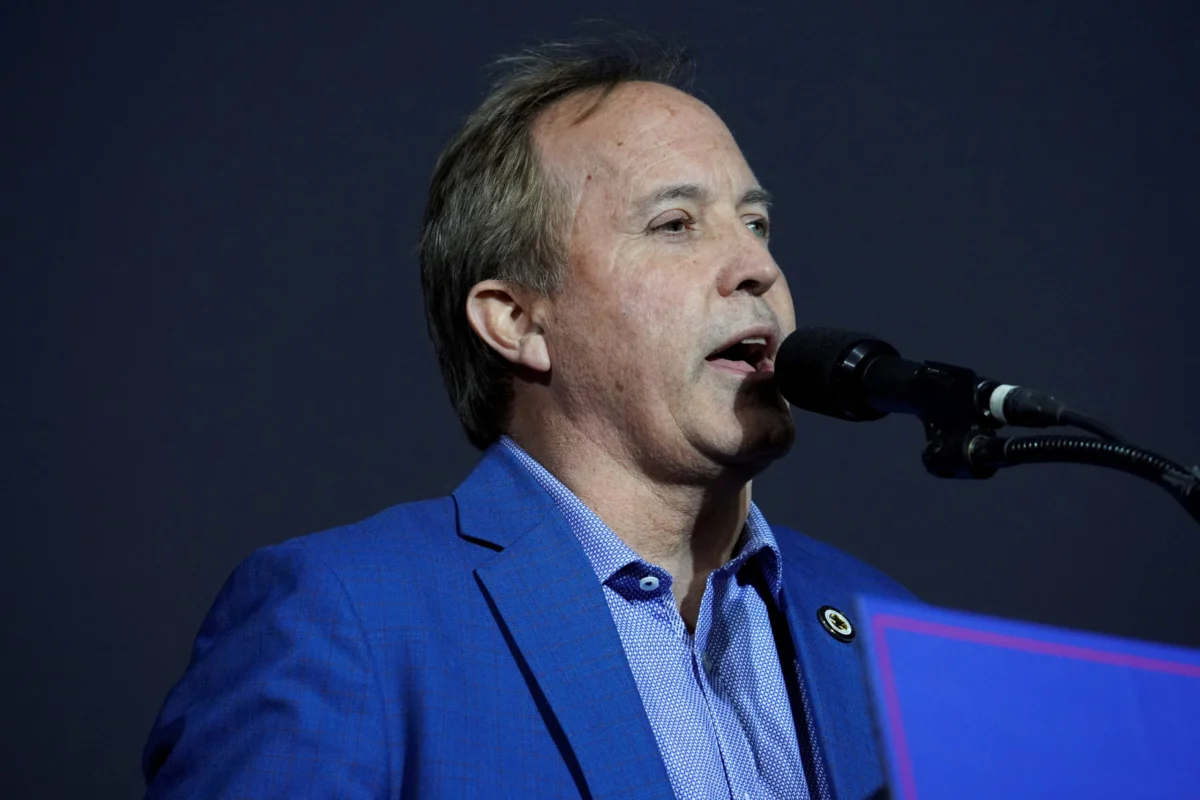
United States President Donald Trump has officially thrown his considerable political weight behind Texas State Attorney General Ken Paxton, endorsing him in the high-stakes Republican runoff for a U.S. Senate seat. This endorsement, announced in advance of next week’s Republican primary runoff, pits Paxton against incumbent Senator John Cornyn, a move that could reshape the dynamics of the Texas GOP and potentially impact the broader Republican landscape in Washington. The battle for the Republican nomination is already tight, with various polls showing mixed results, and the eventual nominee faces a formidable challenge from Democrat James Talarico in the general election, where surveys indicate a remarkably close contest.
The Weight of a Presidential Endorsement
President Trump’s endorsement of Ken Paxton was delivered through a lengthy post on his Truth Social platform, where he lauded Paxton as "extremely loyal to me and our AMAZING MAGA MOVEMENT." In stark contrast, Trump criticized Senator Cornyn, stating that the veteran lawmaker was not supportive of him during "times were tough." This statement echoes a pattern seen in numerous Republican primaries across the nation, where Trump has frequently used his endorsements to reward allies and punish perceived adversaries within the party, often prioritizing loyalty to his "America First" agenda over traditional Republican bona fides or incumbency.
Trump’s influence within the Republican Party remains profound, particularly in primary contests. His endorsement often serves as a significant boost, capable of swaying undecided voters and galvanizing his base. Earlier in March, Trump had even issued a stern warning to candidates who failed to secure his backing, declaring that they should "DROP OUT OF THE RACE." This assertive stance underscores the power he wields and the expectation of unwavering allegiance from those seeking to align with his political movement. For Paxton, who has cultivated a strong pro-Trump image, this endorsement is a validation of his loyalty and a powerful tool in mobilizing conservative voters ahead of the runoff. For Cornyn, it presents a direct challenge, forcing him to either counter Trump’s narrative or navigate a path to victory without the former president’s blessing, a difficult proposition in a state where Trump remains highly popular among the Republican base.
Navigating Texas’s Primary System
The Texas electoral system mandates that a candidate must secure a clear majority of the votes to clinch a party nomination. In the state’s initial primary election held in early March, neither Ken Paxton nor John Cornyn managed to cross this threshold, thereby necessitating a runoff. This second round of voting is a common feature in states like Texas and ensures that the nominee truly represents the majority sentiment of the party electorate.
Texas also operates with an open primary system, a feature that allows voters to participate in either party’s primary without needing to be a registered member of that party. However, voters must pledge to vote only in one party’s primary election. This system can introduce an element of unpredictability, as it theoretically allows for cross-over voting, where independents or even members of the opposing party might choose to vote in a particular primary to influence the outcome. In a high-profile Republican runoff like this one, it could mean that more moderate voters, or even Democrats strategically voting, could play a role in determining whether Paxton’s populist appeal or Cornyn’s more traditional conservatism prevails. However, the practical impact of such cross-over voting in a deeply partisan runoff is often debated and difficult to quantify definitively.
The Contenders: A Deep Dive into the Republican Race
Ken Paxton: A Career Marked by Controversy
Ken Paxton, 63, has forged a remarkable, albeit controversial, political career. Despite facing repeated waves of scandal and legal challenges, he has never lost an election, a testament to his enduring appeal among a significant segment of Texas voters. His political journey has been anything but smooth, characterized by high-profile legal battles and ethical questions that have drawn national attention.
One of the most significant controversies dogging Paxton is his indictment on felony securities fraud charges, dating back to 2015. The charges allege that Paxton failed to register with state securities regulators and defrauded investors in a tech startup before he became attorney general. This long-standing legal cloud has persisted throughout his tenure, with trials repeatedly delayed by various legal maneuvers. Critics argue that these charges demonstrate a pattern of ethical lapses, while his supporters often dismiss them as politically motivated attacks.
More recently, Paxton faced an unprecedented impeachment by the Texas House of Representatives in May 2023, an action that saw a bipartisan coalition of lawmakers vote to remove him from office. The articles of impeachment included allegations of bribery, abuse of public trust, and obstruction of justice, stemming from his alleged use of his office to benefit a political donor and retaliate against whistleblowers within his own agency. The impeachment process was a dramatic spectacle, revealing deep fissures within the Texas Republican Party. Although he was ultimately acquitted by the Texas Senate in September 2023, largely due to the votes of his Republican colleagues, the episode highlighted the deep divisions and concerns many, even within his own party, harbor regarding his conduct. The adultery allegations, though less legally impactful, have also contributed to the perception of a politician often embroiled in personal and professional scandal.
Despite these significant hurdles, Paxton’s base remains fiercely loyal. He has successfully framed these legal and ethical challenges as evidence of a "deep state" or establishment conspiracy against him, a narrative that resonates strongly with Trump’s supporters. His populist rhetoric, aggressive stance on conservative issues, and unwavering support for Donald Trump have solidified his position as a standard-bearer for the MAGA movement in Texas.
John Cornyn: The Incumbent’s Battle
John Cornyn, 74, is a long-serving fixture in the U.S. Senate, representing Texas since 2002. Prior to his Senate tenure, Cornyn served as Texas Attorney General and on the Texas Supreme Court, building a distinguished career rooted in traditional conservative principles. Throughout his time in Washington, he has held significant leadership positions, including Senate Majority Whip, demonstrating his influence and standing within the Republican conference. He is known for his measured demeanor, legislative acumen, and a more conventional approach to politics compared to Paxton’s firebrand style.
Cornyn’s campaign strategy has focused on his experience, legislative achievements, and his ability to deliver for Texas in Washington. He positions himself as a reliable conservative voice, capable of navigating the intricacies of federal policymaking. However, his long tenure and more traditional political style have made him a target for the populist wing of the party, which views establishment figures like Cornyn with suspicion, often aligning with Trump’s critiques of the Washington elite. The former president’s direct attack on Cornyn’s loyalty during "tough times" is a clear attempt to paint him as insufficiently aligned with the MAGA agenda, a potent weapon in a Republican primary.
Polls Paint a Conflicting Picture
The Republican runoff is shaping up to be a tight contest, as evidenced by a series of recent polls that present a mixed and often contradictory view of the race. An early May poll conducted by Texans for a Conservative Majority, a Super PAC explicitly aligned with Senator Cornyn, showed the incumbent leading by a narrow 1 point. This suggests that Cornyn’s campaign believes he is competitive and that his message is resonating.
Conversely, a Lone Star Liberty PAC poll, backed by a Super PAC supporting Ken Paxton, presented a dramatically different picture, showing the attorney general leading by a significant 11 points. Such a wide disparity between partisan-affiliated polls is common in highly contested races, as these organizations often conduct surveys designed to energize their base and influence media narratives.
More independent polls, often considered a more reliable gauge of public sentiment, indicate a closer, but still competitive, race. For instance, a poll from the University of Houston Hobby School of Public Affairs found Paxton holding a modest 3-point advantage over Cornyn. These independent surveys suggest that while Paxton may have an edge, the race is far from decided, and voter turnout in the runoff will be a critical factor. The discrepancies underscore the difficulty in accurately predicting the outcome and highlight the intense battle for voter perception between the two Republican heavyweights.
Concerns within the broader Republican Party about Paxton’s electability in the general election are palpable. Texas State Representative Matt Shaheen, a Republican, voiced these anxieties in a post on X, stating unequivocally that "Ken Paxton would be a disaster for Texas conservatives!" This sentiment reflects a fear among some Republicans that Paxton’s numerous controversies could alienate moderate voters and independents, making the seat vulnerable to a Democratic challenger, despite Texas’s strong Republican leanings in statewide races.
Trouble with the Senate: The General Election Outlook
The eventual Republican nominee will not have an easy path to victory in the general election. Recent polls suggest that Democrat James Talarico is either the favorite or well within the margin of error, signaling a potentially historic challenge for Texas Republicans.
James Talarico, a State Representative, represents a new generation of Democratic leadership in Texas. His campaign is likely to capitalize on the divisions within the Republican Party and the controversies surrounding Ken Paxton. His platform is expected to focus on issues that resonate with younger voters, urban populations, and the state’s growing diverse demographics, such as education, healthcare access, and economic opportunity.
A newly released poll from the Barbara Jordan Public Policy Research and Survey Center found that in a general election matchup, Talarico is tied with Paxton, while Cornyn would lead by a mere 1 point. This indicates that Talarico is a strong contender against either Republican. Other polls paint an even starker picture for the Republicans. A University of Texas poll shows Talarico winning by 7 points in a hypothetical matchup against Cornyn and by 8 points against Paxton. Similarly, Texas Public Opinion Research shows Talarico leading by 5 points against Paxton and 3 points against Cornyn.
These numbers are particularly alarming for Republicans, given Texas’s long history of voting for conservative candidates in statewide elections. Democrats have frequently expressed optimism that Texas could turn blue, or at least purple, citing changing demographics and growing dissatisfaction with Republican policies in urban and suburban areas. However, despite these claims and persistent efforts, Democrats have not held statewide office in the Lone Star State since 1994, a nearly three-decade drought. The competitiveness of the current polls, especially against a controversial figure like Paxton, suggests that this election could represent a genuine opportunity for Democrats to break that long streak.
Broader Implications: A Shifting Political Landscape
The ramifications of this runoff and President Trump’s endorsement extend beyond Texas, potentially impacting national Republican unity and the balance of power in the U.S. Senate. Mark Jones, a professor of political science at Rice University in Houston, Texas, articulated these concerns to Al Jazeera, stating, "Paxton, more likely than not, would have won without Trump’s endorsement. Now Trump has alienated the Republican majority in the Senate, Senator Thune, in particular, who’s been lobbying nonstop for Trump to endorse Cornyn."
Senator John Thune, currently the Senate Minority Whip, holds a crucial leadership position within the Republican caucus. Trump’s decision to endorse Paxton over an incumbent like Cornyn, a prominent figure and former whip himself, could strain relationships between the former president and key Senate Republicans. This alienation could complicate Trump’s efforts to rally support for his agenda, should he pursue future political endeavors or even a potential presidential run. It underscores a fundamental tension within the modern Republican Party: the struggle between loyalty to Donald Trump and adherence to traditional party structures and leadership.
Furthermore, Jones highlighted another critical implication: "He’s also bought himself a John Cornyn who, if he loses on May 26th, has little reason to support the Trump administration during his final seven months in office." If Cornyn is defeated in the runoff, his remaining term in the Senate would be spent as a lame-duck senator, potentially unburdened by the need to appeal to Trump’s base. This could lead to a more independent stance on legislative matters, potentially hindering any efforts by the Trump administration to push through specific policies or appointments during that period. Such a scenario could create further friction within the Republican ranks and complicate legislative efforts.
The current composition of the U.S. Senate is finely balanced, with Republicans holding a majority of 53 seats, Democrats holding 45, and two independents – Bernie Sanders of Vermont and Angus King of Maine – who caucus with the Democrats. In such a tight environment, every seat is crucial. A Democratic victory in Texas, while historically challenging, would be a monumental shift, potentially altering the balance of power in the Senate and sending shockwaves through both national parties. It would not only challenge the long-held notion of Texas as an unassailable Republican stronghold but also energize Democratic efforts across the country, particularly in other historically conservative states with evolving demographics. Conversely, a Republican hold, especially with a candidate as polarizing as Paxton, would reaffirm the strength of the conservative base in Texas but potentially at the cost of internal party unity and broader electability concerns.
The Texas Senate runoff is more than just a local election; it is a microcosm of the ongoing ideological struggle within the Republican Party and a key indicator of the potential for a shifting political landscape in one of America’s largest and most influential states. The outcome will not only determine who represents Texas in the Senate but will also offer significant insights into the enduring power of presidential endorsements, the impact of candidate controversies, and the future trajectory of both Republican and Democratic strategies in the years to come.
