

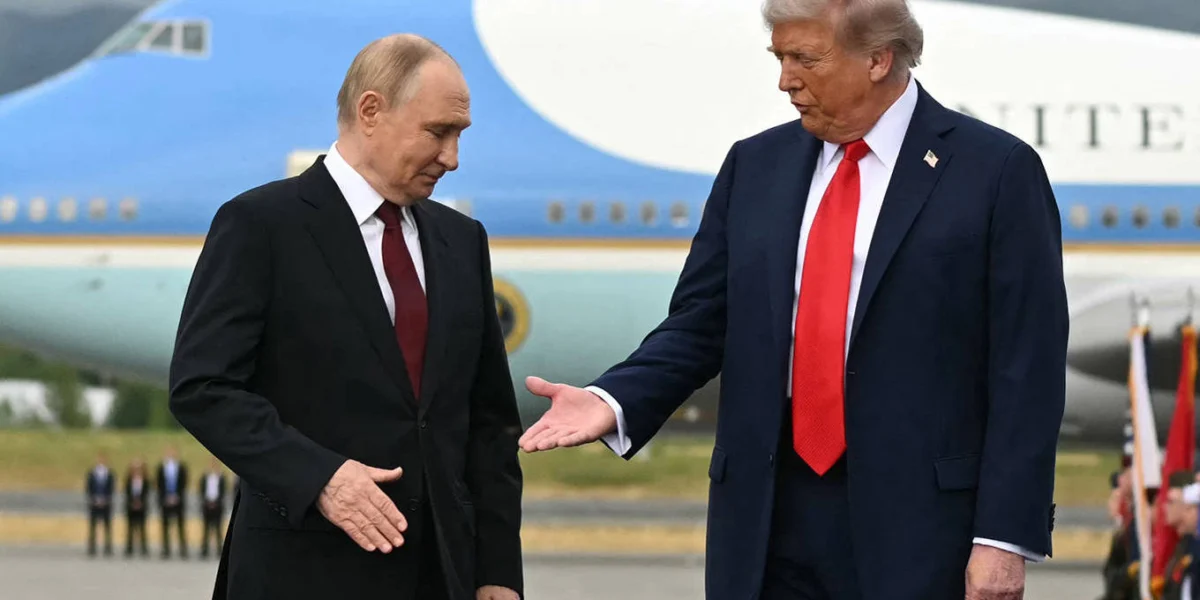
STOCKHOLM – In a striking parallel of strategic miscalculation and national entanglement, both Russian President Vladimir Putin and former U.S. President Donald Trump find themselves mired in conflicts they initiated, now desperately seeking mutual, albeit limited, assistance to extricate themselves from escalating quagmires. Both leaders, driven by a perceived invincibility of their respective military apparatuses and a conviction in their personal strategic acumen, have steered their nations into protracted and increasingly costly wars. The current geopolitical landscape reveals two aging titans, once symbols of assertive leadership, now grappling with the unintended and devastating consequences of their ambitious gambits, with neither possessing the decisive advantage required to engineer a clean or favorable exit.
The current predicaments of Putin and Trump are not isolated incidents but rather the culmination of deeply rooted leadership styles and foreign policy doctrines that prioritized unilateral action and a dismissal of established international norms. For Putin, the full-scale invasion of Ukraine in February 2022, an escalation of a conflict that began in 2014, was predicated on a belief in a swift military victory and a reunification of perceived historical Russian lands. This ambition has instead resulted in a grinding war of attrition, immense human suffering, and unprecedented international sanctions that have strained the Russian economy. The initial assumption of a rapid collapse of Ukrainian resistance and a welcoming populace proved to be a catastrophic misreading of the nation’s resolve and the geopolitical landscape.
Similarly, Trump’s foreign policy approach, characterized by an "America First" ethos, often saw him questioning long-standing alliances and embracing transactional diplomacy. While not directly initiating a large-scale conventional war in the mold of Putin’s Ukraine invasion, his presidency was marked by a series of confrontational actions and withdrawals from international agreements that destabilized existing global order. His rhetoric and policies often sowed discord, and his admiration for strongmen leaders, including Putin, created an atmosphere where aggressive unilateralism was implicitly encouraged. The ongoing challenges facing the United States in navigating a complex and multipolar world, including the resurgence of great power competition, can be seen as a lingering consequence of this period of strategic recalibration.
A Divergent Path to Entrapment
While both leaders are ensnared in self-inflicted conflicts, the nature and trajectory of these entrapments differ significantly.
Putin’s Ukraine Quagmire: A Strategic Overreach
Vladimir Putin’s decision to launch a full-scale invasion of Ukraine in February 2022 was a pivotal moment in post-Cold War international relations. The stated objectives, including the "demilitarization" and "denazification" of Ukraine, alongside preventing its NATO expansion, masked a deeper ambition to reassert Russian dominance in its near abroad and fundamentally alter the European security architecture.
Chronology of the Conflict:
- 2014: Following the Euromaidan Revolution in Ukraine, Russia annexed Crimea and supported separatists in the Donbas region, initiating an eight-year low-intensity conflict.
- February 24, 2022: Russia launches a full-scale invasion of Ukraine from multiple fronts, including Belarus and occupied Crimea. Initial advances aim for Kyiv, Kharkiv, and other major cities.
- March-April 2022: Ukrainian forces, bolstered by Western military aid and a strong defensive posture, repel Russian advances on Kyiv and in the north. Russia refocuses its efforts on the Donbas and southern Ukraine.
- September 2022: Ukraine launches successful counteroffensives in the Kharkiv region, reclaiming significant territory. Russia subsequently announces a partial mobilization.
- November 2022: Ukrainian forces liberate the city of Kherson, a major strategic and symbolic victory.
- 2023: A protracted war of attrition ensues, with both sides engaged in intense fighting, particularly around Bakhmut and other key eastern cities. Ukraine launches a counteroffensive in the summer, achieving limited territorial gains.
- Early 2024: Russia intensifies its offensive operations, particularly in the Donbas, while Ukraine faces challenges with ammunition shortages and delays in Western military aid.
Supporting Data and Analysis:
The human cost of the war is staggering. The United Nations High Commissioner for Refugees (UNHCR) estimates millions of Ukrainians have been displaced internally or have sought refuge abroad. Civilian casualties, though difficult to verify precisely, are in the tens of thousands. Economically, Russia faces significant challenges due to extensive sanctions imposed by the United States, European Union, and other allies. These sanctions have targeted key sectors of the Russian economy, including finance, energy, and technology, leading to a contraction of its GDP and a decline in living standards for many citizens.
The military costs are also immense. Both sides have suffered substantial casualties, and the destruction of military hardware has been extensive. Russia’s initial expectation of a swift victory, relying on a perceived superiority of its conventional forces, has been dashed by Ukraine’s tenacious defense, its effective use of Western-supplied advanced weaponry, and its ability to adapt its military strategies. The conflict has also exposed significant logistical and command issues within the Russian military.
The international response has been largely unified in its condemnation of Russia’s aggression and its support for Ukraine. This includes significant military and financial aid to Ukraine, as well as the imposition of sanctions. However, the long-term implications for global security are profound, including a renewed focus on collective defense within NATO and a re-evaluation of energy security and supply chains.
Trump’s "America First" Legacy: Global Instability and Shifting Alliances
Donald Trump’s presidency (2017-2021) was characterized by a disruptive approach to foreign policy, marked by a skepticism of multilateral institutions, a penchant for bilateral deals, and a rhetoric that often prioritized perceived national interests above global cooperation. While not directly responsible for initiating a large-scale military invasion, his administration’s actions and pronouncements contributed to a less predictable and more volatile international environment.
Key Actions and Their Context:
- Withdrawal from the Trans-Pacific Partnership (TPP): In January 2017, Trump withdrew the U.S. from the TPP, a major trade agreement negotiated by the Obama administration. This move was seen as a signal of his administration’s protectionist leanings and a reduction in U.S. engagement in Asian economic affairs, potentially creating space for China to expand its influence.
- Renegotiation of NAFTA (USMCA): Trump pursued a renegotiation of the North American Free Trade Agreement, leading to the United States-Mexico-Canada Agreement (USMCA). While a successor agreement was reached, the process was marked by confrontational rhetoric and uncertainty for businesses operating in the region.
- Withdrawal from the Paris Agreement: In June 2017, Trump announced the U.S. withdrawal from the Paris Agreement on climate change, a move widely criticized by environmental groups and international leaders. This decision signaled a rejection of global efforts to combat climate change and strained diplomatic relations with key allies.
- Imposition of Tariffs: Trump implemented significant tariffs on goods from countries including China, Mexico, and European nations, sparking trade disputes and retaliatory measures. These actions aimed to reduce trade deficits and protect American industries but led to increased costs for consumers and disruptions in global supply chains.
- Questioning NATO’s Value: Trump repeatedly questioned the value and fairness of the NATO alliance, suggesting that member states were not contributing their fair share to collective defense. This rhetoric caused considerable unease among European allies, who relied on the security guarantees provided by NATO.
- Engagement with Authoritarian Leaders: Trump often expressed admiration for leaders like Vladimir Putin and Kim Jong Un, engaging in direct diplomacy without the usual interagency consultation or adherence to established protocols. This approach was criticized for potentially undermining democratic norms and empowering autocratic regimes.
Analysis of Implications:
Trump’s "America First" policies created a period of significant uncertainty in global affairs. His administration’s transactional approach to diplomacy and its skepticism of multilateralism led to a weakening of established international norms and institutions. This created openings for other powers to assert their influence and contributed to a more fragmented and unpredictable geopolitical landscape. The withdrawal from international agreements and the imposition of tariffs disrupted global trade and strained relationships with key allies, potentially hindering collective responses to global challenges such as pandemics and climate change. The enduring legacy of this period is a debate about the role of the United States in the world and the effectiveness of its traditional alliance structures.
Seeking Mutual Salvage: A Desperate Gambit
The current convergence of Putin and Trump’s strategic challenges stems from a shared predicament: the failure of their ambitious initial plans and the growing domestic and international pressure to extricate themselves from costly and unpopular conflicts. They are, in essence, looking to each other for a degree of mutual, albeit indirect, support.
For Putin, a crucial element of his current strategy involves weakening the resolve of Western allies supporting Ukraine. This is where a potential Trump presidency, with its history of questioning NATO and its transactional approach to foreign policy, becomes strategically significant. If Trump were to re-enter the White House and adopt a stance that reduces Western unity and military support for Ukraine, it would significantly alleviate pressure on Russia. Putin may be betting that a Trump administration would be more amenable to a deal that favors Russian interests, potentially involving a division of Ukrainian territory or a rollback of NATO’s eastern flank.
Conversely, Donald Trump, facing a complex domestic political landscape and seeking to project an image of strength and decisive leadership, could view a de-escalation of international conflicts, particularly those involving Russia, as a political win. His past rhetoric has often suggested a willingness to engage directly with adversaries to strike "deals." If he were to return to power, he might see an opportunity to leverage a perceived Russian willingness to negotiate, even if that negotiation is framed by Putin’s current military gains. Trump’s focus on domestic issues and a desire to reduce perceived foreign entanglements could align with a strategy of seeking a swift, albeit potentially unfavorable, resolution to conflicts that he views as draining American resources and attention.
Statements and Reactions (Inferred):
While direct, explicit statements of mutual reliance are unlikely given the geopolitical sensitivities, the actions and rhetoric of both leaders and their associated political factions offer inferential clues. Kremlin officials have, at various times, expressed a desire for negotiations with Ukraine but have consistently framed these negotiations on terms that are unacceptable to Ukraine and its allies, often demanding recognition of territorial gains. This stance aligns with a strategy of leveraging military strength to achieve political objectives through diplomacy, a strategy that would be bolstered by a weakening of Western unity.
From the Trump camp, rhetoric has consistently focused on ending perceived "endless wars" and prioritizing American interests. This sentiment, if translated into policy, could lead to a reduction in military aid to Ukraine and a greater willingness to engage in direct talks with Russia, potentially accepting outcomes that Putin would deem favorable. Supporters of Trump often point to his past willingness to engage directly with adversaries as a sign of his diplomatic prowess, even if critics view it as a dangerous concession.
Analysis of Implications:
The potential for a convergence of interests between Putin and Trump, however transactional and self-serving, carries significant implications for the global order.
- Weakening of Western Alliances: A U.S. foreign policy under a potential Trump administration that disengages from NATO or significantly reduces its commitment to collective security would create fissures within the alliance. This could embolden Russia and other revisionist powers, leading to increased instability in Eastern Europe and beyond.
- Reshaping the European Security Architecture: The war in Ukraine has already led to a significant recalibration of European security. A withdrawal of U.S. support could force European nations to accelerate their own defense spending and strategic planning, but the lack of a unified U.S. stance would complicate these efforts.
- Impact on International Norms: The idea that territorial gains through military force can be legitimized through subsequent diplomatic maneuvering, particularly with the backing of a major global power like the United States, would represent a significant erosion of international law and the principle of territorial integrity.
- Domestic Political Ramifications: For both leaders, the success or failure of their efforts to extricate themselves from these wars will have profound domestic political consequences. For Putin, continued military stalemate or defeat could exacerbate internal dissent. For Trump, a perceived failure to deliver on promises of peace or to effectively manage foreign policy could undermine his political standing.
In conclusion, the current geopolitical moment presents a stark image of two leaders, Vladimir Putin and Donald Trump, caught in the destructive currents of wars they initiated. Their shared predicament lies in the unfulfilled promises of their initial strategic gambits and the mounting costs of their protracted military engagements. Their apparent search for mutual, albeit indirect, assistance underscores a shared desire to extricate themselves from these quagmires. However, neither holds a winning hand. Putin’s military objectives in Ukraine remain elusive, and his economy strains under sanctions. Trump, while potentially able to reshape U.S. foreign policy, faces a complex international landscape and domestic challenges that will undoubtedly influence his actions. The unfolding dynamics between these two figures, driven by a blend of personal ambition and strategic necessity, will continue to shape the trajectory of global security for years to come.
