

The geopolitical landscape of the Middle East is currently dominated by a pervasive and dangerous narrative: the assertion that the member states of the Gulf Cooperation Council (GCC) must ultimately align themselves with either the Islamic Republic of Iran or the State of Israel. This binary framing, while politically convenient for external actors and simplified for public consumption, represents a profound strategic misunderstanding of the region’s long-term interests. For the monarchies of the Gulf, security is not a zero-sum game played between two regional rivals; rather, it is a complex pursuit of stability that seeks to prevent the Arabian Peninsula from becoming the primary theater of a catastrophic regional war.
The central interest of the Gulf states is neither the defense of Tehran’s revolutionary export nor the advancement of Tel Aviv’s security doctrine. Instead, the focus remains on the preservation of a regional environment conducive to economic diversification, infrastructure development, and domestic stability. In this context, any escalation involving Iran, Israel, and the United States is viewed not as a distant geopolitical event, but as a direct existential threat to the sovereign interests of the Gulf.
The Geography of Vulnerability and the Cost of Conflict
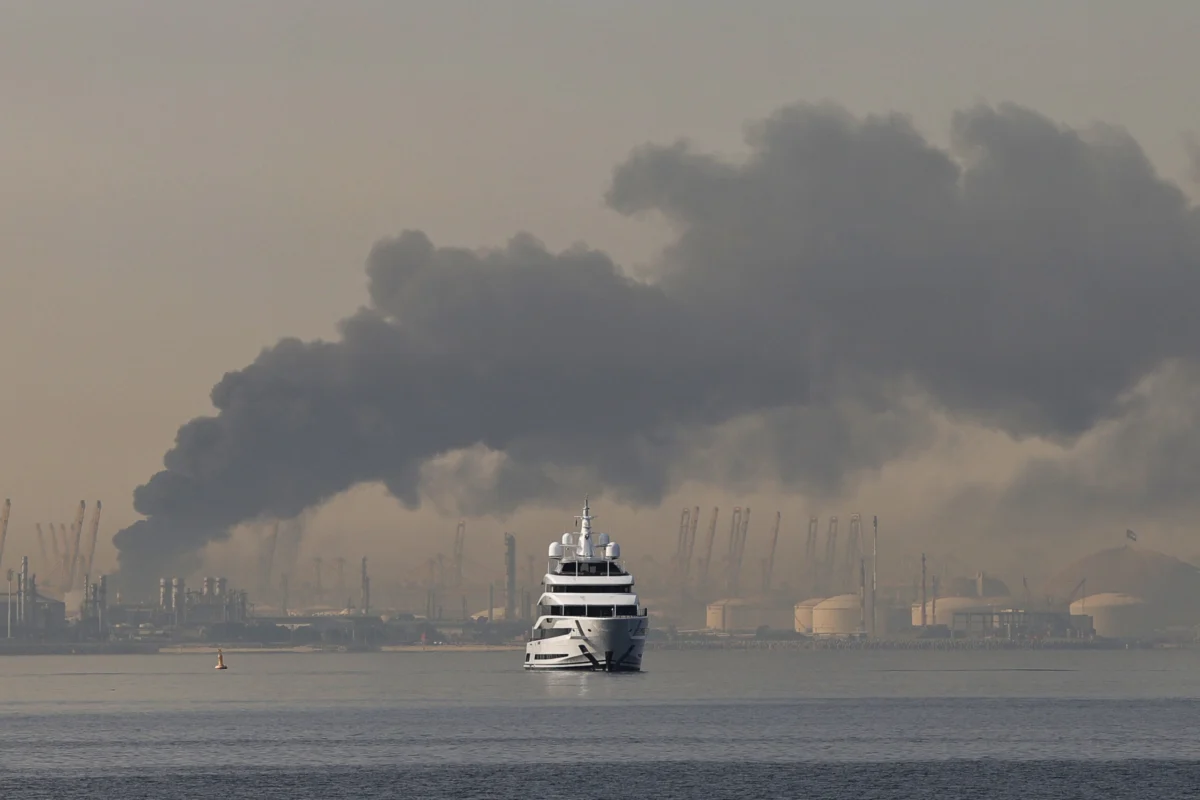
For states like Saudi Arabia, the United Arab Emirates (UAE), and Qatar, the prospect of regional confrontation is inseparable from their own domestic security. The geography of the Gulf ensures that any significant military engagement automatically incurs costs for all neighbors. This vulnerability is manifested through several critical vectors: the security of the Strait of Hormuz, the integrity of energy infrastructure, the stability of global shipping lanes, and the confidence of international investors.
The "false choice" between Iran and Israel assumes that the Gulf can insulate itself from the fallout of a collision between the two. However, recent history and projected scenarios—including a second major conflict theorized for 2026—demonstrate that the Gulf is often the arena where these rivalries are contested. In June, when Israeli operations targeted Iranian interests, the ripples were felt across the water. By September, the targeting of assets in Doha during an Israeli air campaign underscored a chilling reality: even states that prioritize mediation and neutral diplomacy are not shielded from the kinetic consequences of regional escalation.
A Chronology of Escalation and the Gulf Response
To understand the current precarious balance, it is necessary to examine the timeline of events that have shaped the Gulf’s "stability-first" doctrine.
- May–June 2019: Sabotage attacks on oil tankers near the Port of Fujairah and in the Gulf of Oman highlighted the vulnerability of maritime lifelines.
- September 2019: The drone and missile attacks on Saudi Aramco’s Abqaiq and Khurais facilities temporarily halved the Kingdom’s oil production, proving that multi-billion dollar air defense systems could be bypassed by low-cost proxy technology.
- 2020–2022: The Abraham Accords signaled a shift toward normalization between Israel, the UAE, and Bahrain, based on shared concerns regarding Iran. However, this did not result in a formal military alliance, as the Gulf states remained wary of being dragged into a direct war.
- April 2024: The first-ever direct missile and drone exchange between Iran and Israel forced Gulf states to navigate a diplomatic minefield, as their airspace became a transit point for projectiles and interceptors.
- June–September (Recent Narrative Events): Attacks impacting regional hubs like Doha served as a catalyst for a renewed Gulf consensus that "strategic autonomy" is the only path forward.
These events have taught the GCC that while Iran’s proxy networks and missile capabilities remain a central concern, a policy of pure confrontation—or "maximum pressure"—often results in the Gulf becoming the primary target for Iranian retaliation.
The Economic Imperative: Why Stability is the Only Option
The Gulf states are currently engaged in the most ambitious economic transformations in their history. Saudi Arabia’s Vision 2030, Qatar’s National Vision 2030, and the UAE’s "We the UAE 2031" strategy all rely on massive inflows of Foreign Direct Investment (FDI), the growth of the tourism sector, and the establishment of the region as a global logistics hub.
Data from the World Bank and the IMF suggest that a major regional conflict could contract Gulf GDP by double digits in a single fiscal year. For instance, the Strait of Hormuz remains the world’s most important oil transit chokepoint, with approximately 21 million barrels per day—roughly 21% of global petroleum liquids consumption—passing through it. Any prolonged closure or "weaponization" of the Strait would not only collapse global energy markets but would effectively bankrupt the diversification efforts of the littoral states.
Furthermore, the rise of the "Giga-projects" like NEOM in Saudi Arabia requires a perception of absolute safety. International capital is risk-averse; a single missile strike on a commercial hub or a major desalination plant can undo a decade of branding efforts aimed at portraying the Gulf as a safe haven for global wealth.
Strategic Autonomy: A Multi-Track Diplomacy
In response to these pressures, the Gulf states have moved away from a monolithic foreign policy. Instead, they have adopted a strategy of "strategic autonomy," characterized by maintaining multiple, often contradictory, relationships simultaneously.
- Qatar’s Mediation Role: Doha has carved out a niche as the region’s indispensable interlocutor. By maintaining channels with Tehran, Hamas, the Taliban, and the United States, Qatar seeks to act as a pressure-release valve. The recent Israeli strikes targeting Doha represent a direct threat to this mediation model, suggesting that "neutral ground" is increasingly hard to maintain.
- The Omani Bridge: Muscat has historically served as the quiet backchannel for U.S.-Iran communications. Oman’s policy is rooted in the belief that Iran cannot be "removed" from the map, and therefore, a sustainable security architecture must include, rather than exclude, Tehran.
- The UAE’s Pragmatism: While the UAE remains a signatory to the Abraham Accords and maintains security cooperation with Israel, it has also moved to de-escalate with Iran, restoring full diplomatic ties and focusing on economic engagement as a means of conflict de-escalation.
- The Saudi Rebalance: Riyadh has pursued a high-stakes balancing act: exploring normalization with Israel to secure U.S. security guarantees while simultaneously restoring ties with Iran through a Chinese-brokered deal in 2023.
Maritime Security and the Threat of Weaponized Shipping
The Gulf’s national security is inextricably linked to freedom of navigation. For these states, maritime security is not a Western naval slogan but a national necessity. The "Tanker Wars" of the 1980s remain a vivid memory, and the modern threat of "cyber-piracy," drone swarms, and naval mines in the Bab al-Mandeb and the Strait of Hormuz keeps regional planners on high alert.
The GCC has increasingly realized that it cannot rely solely on the U.S. Fifth Fleet to guarantee these routes. Consequently, there has been a surge in investment in regional maritime coordination, indigenous naval capabilities, and shared intelligence networks. The goal is to create a "layered defense" that combines Western technology with regional diplomatic de-escalation.
Broader Implications and the Role of Global Powers
The refusal of the Gulf to choose between Iran and Israel also reflects a broader shift in global poles of power. The United States remains the primary security guarantor, but its perceived "pivot" away from the Middle East has created a vacuum. China has emerged as the largest trading partner for nearly every Gulf state, and its interests are purely commercial and stability-oriented.
By refusing to join a pro-Israel or anti-Iran "bloc," the Gulf states are signaling to Washington, Beijing, and Moscow that they will no longer be used as pawns in a larger geopolitical struggle. This strategic autonomy allows them to:
- Partner with the U.S. on counter-terrorism and air defense.
- Engage China on infrastructure and 5G technology.
- Maintain energy cooperation with Russia through OPEC+.
- Keep diplomatic channels open with Iran to prevent miscalculations.
Conclusion: Choosing the Self over the Binary
The most potent defense for the Gulf is not an alliance with one regional hegemon against another, but the strengthening of its own sovereignty and internal cohesion. The choice facing Riyadh, Abu Dhabi, and Doha is not "Iran or Israel," but "Stability or Permanent War."
Choosing stability requires a strategic doctrine that combines firmness with communication. It means opposing Iranian coercion and proxy interference while simultaneously refusing to be a launchpad for Israeli or American strikes that would inevitably bring retaliation to Gulf shores. It also means keeping the Palestinian question at the forefront of regional discourse, as the GCC leadership recognizes that no regional order can be truly stable or legitimate without a resolution to the occupation—a sentiment that remains deeply rooted in Gulf societies.
Ultimately, the Gulf states are positioning themselves as the architects of a new regional order. In this vision, the Middle East is not a battlefield for old rivalries but a global center of trade, energy, and innovation. To achieve this, the Gulf must continue to "choose itself"—prioritizing its own economic future and regional resilience over the destructive allure of a binary conflict. Working toward stability is not a sign of weakness; it is the ultimate expression of strategic autonomy in a region too often pushed toward the brink of perpetual war.
