

The U.S. mortgage market experienced a nuanced shift last week, with rising interest rates dampening refinancing activity while paradoxically stimulating an uptick in applications for home purchases. This dual dynamic suggests a housing market adapting to a higher-rate environment, as prospective buyers appear ready to engage with the spring market, capitalizing on improved inventory conditions despite prevailing geopolitical uncertainties. The Mortgage Bankers Association (MBA) reported an overall decline in total mortgage application volume, yet a closer look reveals diverging trends between different borrower segments, underscoring the complex interplay of economic indicators, Federal Reserve policy expectations, and consumer sentiment.
Recent Market Movements and Core Data
According to the Mortgage Bankers Association’s seasonally adjusted index, total mortgage application volume decreased by 1.6% compared to the preceding week. This downturn was primarily driven by a notable decline in refinancing demand, a segment of the market historically sensitive to even minor fluctuations in interest rates. The average contract interest rate for 30-year fixed-rate mortgages with conforming loan balances (capped at $832,750 or less) saw a slight but significant increase, moving from 6.35% to 6.37%. Points for these loans, including the origination fee, remained stable at 0.61 for borrowers making a 20% down payment. This incremental rise in borrowing costs was sufficient to deter some homeowners from pursuing refinance opportunities.
Refinance applications fell by 4% for the week. While this represents a weekly contraction, it is important to contextualize this figure against the backdrop of the previous year. Refinance demand was still 51% higher than the same week one year ago, a period when the average rate on a 30-year fixed mortgage was approximately half a percentage point higher. This year-over-year comparison illustrates the profound impact of rate volatility over time, where current rates, though higher than recent lows, remain more attractive than the peaks experienced in earlier cycles.
In contrast to the refinance segment, applications for mortgages to purchase a home demonstrated unexpected resilience, rising by 1% for the week. More strikingly, purchase applications were 21% higher year over year. This robust growth signals a potential resurgence in buyer activity as the market enters the traditionally busy spring season. Factors contributing to this resilience include an increase in housing supply, offering more choices to prospective buyers, and a perceived normalization of external geopolitical concerns, such as the ongoing news regarding the war with Iran, which consumers appear to be integrating into their decision-making processes.
A Look Back: The Mortgage Market’s Evolving Landscape
To fully appreciate the current state of the mortgage market, it’s essential to understand the significant shifts it has undergone in recent years. The period leading up to the COVID-19 pandemic was characterized by a sustained era of relatively low interest rates, driven by accommodative monetary policies aimed at stimulating economic growth. This environment fostered a robust housing market with steady demand and manageable borrowing costs.
The onset of the pandemic in early 2020 initially caused uncertainty, but swiftly pivoted into an unprecedented boom. The Federal Reserve aggressively cut its benchmark interest rate to near zero and initiated large-scale asset purchases, including mortgage-backed securities, to support the economy. This policy pushed mortgage rates to historic lows, with the 30-year fixed rate dipping below 3% for extended periods. This ultra-low rate environment unleashed a wave of refinancing activity, as millions of homeowners locked in lower payments, and ignited a frenzied housing market, characterized by intense competition, bidding wars, and rapid price appreciation across the country. Supply, already constrained in many areas, struggled to keep pace with soaring demand.
However, the rapid economic recovery and unprecedented fiscal stimulus also fueled inflationary pressures, which became increasingly evident in 2021 and intensified into 2022. In response, the Federal Reserve embarked on an aggressive campaign of interest rate hikes, initiating a series of increases to the federal funds rate starting in March 2022. This decisive action, aimed at bringing inflation back down to its 2% target, had a profound and immediate impact on mortgage rates. The 30-year fixed rate surged, climbing rapidly through 2022 and 2023, often surpassing 7% and even touching 8% at certain points. This sharp increase dramatically curtailed affordability, effectively freezing out many potential buyers and significantly slowing the housing market. Refinancing activity plummeted as most existing homeowners were already locked into much lower rates.
Towards the end of 2023 and into early 2024, there was a period of cautious optimism. Inflation showed signs of moderating, and expectations grew that the Fed might soon pause its rate hikes or even begin to cut rates in the coming year. This led to a brief dip in mortgage rates, providing a glimmer of hope for buyers and sellers alike. The market began to stabilize, with some pent-up demand starting to re-emerge as consumers adjusted to the "new normal" of rates significantly higher than the pandemic-era lows but potentially lower than the recent peaks. The current uptick in rates, as observed last week, represents a fresh challenge within this evolving landscape.
Expert Insights and Forward-Looking Commentary
Mike Fratantoni, the MBA’s chief economist, provided valuable context for the current market dynamics. "After a brief pause, in part because of the elevated geopolitical uncertainties, potential homebuyers certainly appear to be moving forward this spring and taking advantage of the more favorable inventory conditions in most parts of the country," Fratantoni stated. His comments highlight a crucial psychological shift among buyers who, despite external pressures, are demonstrating a willingness to re-enter the market. The mention of "favorable inventory conditions" is particularly significant, as increased supply can alleviate some of the competitive pressures and affordability concerns that have plagued the market in recent years.
The broader financial markets are currently fixated on the Federal Reserve, specifically awaiting the latest report from Chairman Jerome Powell. Mortgage rates, which are closely tied to the yield on the 10-year Treasury note, often react preemptively to expectations of Fed policy changes. Mortgage News Daily, in a separate survey, confirmed that rates continued their upward trajectory at the start of the current week, underscoring the market’s sensitivity to upcoming economic signals. While markets do not widely anticipate an immediate change in the federal funds rate at Powell’s upcoming meeting, the commentary delivered during the news conference following the meeting is always meticulously scrutinized. These statements provide critical insights into the Fed’s outlook on inflation, economic growth, and future monetary policy, and can significantly influence mortgage rates in either direction. Given the article’s context of Jan 2026, this particular meeting could be seen as a pivotal point in the Fed’s ongoing strategy, potentially marking the end of a specific policy cycle or a significant recalibration, thus carrying substantial weight for market participants.
Factors Influencing Purchase Demand Resilience
The resilience in purchase mortgage applications, despite rising rates, can be attributed to several converging factors:
- Increased Inventory: After years of critically low housing supply, more homes are gradually coming onto the market. This increased inventory gives buyers more options, reduces bidding wars, and allows for more measured decision-making, even if prices remain elevated. This is a key factor enabling buyers to "move forward," as noted by Fratantoni.
- Buyer Adaptation to Higher Rates: Many prospective homebuyers, particularly those who have been on the sidelines for an extended period, appear to be adjusting their expectations. The ultra-low rates of the pandemic era are increasingly viewed as an anomaly, and current rates, while higher than recent historical averages, are becoming the "new normal." Buyers are learning to budget for higher monthly payments or exploring alternative financing strategies.
- Pent-Up Demand: A significant demographic cohort, particularly millennials, is reaching prime homeownership age. Years of tight supply and high prices have created substantial pent-up demand. As some of these barriers ease, even marginally, this underlying demand is strong enough to push buyers into the market.
- Economic Stability (Relative): While inflation remains a concern, the broader economy generally exhibits signs of stability, including a robust labor market and continued wage growth in many sectors. This provides a sense of financial security that empowers some buyers to commit to large purchases, even with higher borrowing costs.
- Geopolitical Normalization: The article specifically mentions consumers "getting used to the ever-changing news regarding the war with Iran." This suggests that while geopolitical events can introduce volatility and uncertainty, their long-term impact on domestic housing decisions may be diminishing as consumers adjust to a persistent state of global complexity rather than reacting to every fresh headline. This normalization of external factors allows buyers to focus more on local market conditions and personal financial situations.
Implications for the Housing Market and Economy
The current bifurcated trend in mortgage applications carries significant implications for the broader housing market and the economy:
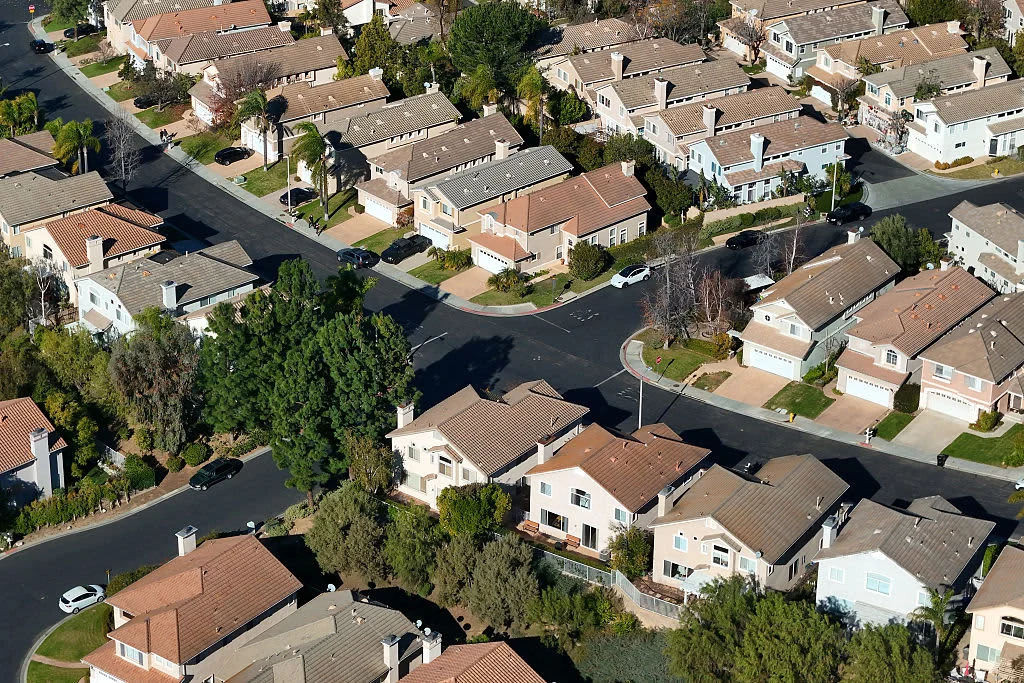
- Sustained Purchase Activity: The increase in purchase applications suggests that despite higher rates, underlying demand for housing remains robust. This could lead to a relatively active spring and summer selling season, potentially preventing significant price declines in many areas and even fostering modest appreciation where supply remains tight. The aerial view of two-story single-family homes lining the streets of Thousand Oaks, California, captured on January 14, 2026, visually encapsulates the ongoing development and demand for housing in desirable regions.
- Limited Refinance Opportunities: For existing homeowners, the era of widespread refinancing to dramatically lower rates is largely over. Most homeowners who could benefit have likely already done so. Future refinance activity will likely be driven by homeowners needing to tap into equity for home improvements or debt consolidation, rather than simply reducing their interest rate, unless there is a substantial and sustained drop in rates.
- Affordability Challenges Persist: While buyers are adapting, affordability remains a critical challenge, especially in high-cost areas. Higher rates mean higher monthly payments, which can price out a segment of potential buyers, particularly first-time homebuyers or those with less disposable income. This could lead to continued demand for more affordable housing options or a shift towards smaller homes or different geographies.
- Economic Impact: The housing sector is a significant component of the U.S. economy. Sustained purchase activity contributes to economic growth through construction, related services, and consumer spending on home furnishings and improvements. However, if rates continue to climb steeply, it could eventually dampen even purchase demand, creating headwinds for overall economic expansion. The Federal Reserve’s careful balancing act between controlling inflation and supporting economic growth will therefore remain paramount.
- Regional Variations: It is crucial to acknowledge that housing market conditions are highly localized. While national trends provide a general overview, specific regions will experience different dynamics based on local job markets, population growth, housing supply, and affordability levels. Areas like Thousand Oaks, California, known for their desirable amenities and strong job markets, may see continued demand even in a higher-rate environment, potentially sustaining home values more robustly than less desirable or economically challenged regions.
Looking Ahead: The Fed’s Shadow and Future Outlook
The trajectory of mortgage rates in the coming months will largely hinge on the Federal Reserve’s actions and the broader economic data, particularly inflation reports and employment figures. If inflation continues to moderate in line with the Fed’s targets, there might be room for rates to stabilize or even decline slightly later in the year. Conversely, any resurgence in inflationary pressures or unexpectedly strong economic data could prompt the Fed to maintain a tighter monetary policy, leading to further upward pressure on mortgage rates.
Borrowers, lenders, and real estate professionals will continue to monitor every statement from Chairman Powell and every data release, understanding that these signals can significantly alter market conditions. The housing market of 2026 is clearly one of adaptation and resilience, where buyers are increasingly making peace with a higher-rate environment, eager to secure homes in a market with incrementally improving supply, even as the cost of borrowing remains a central factor in their decisions. The interplay of these forces will define the shape of the U.S. housing market through the spring and beyond, making expert analysis and timely market intelligence, such as that provided by CNBC’s Property Play newsletter, more critical than ever for investors and prospective homeowners alike.
