

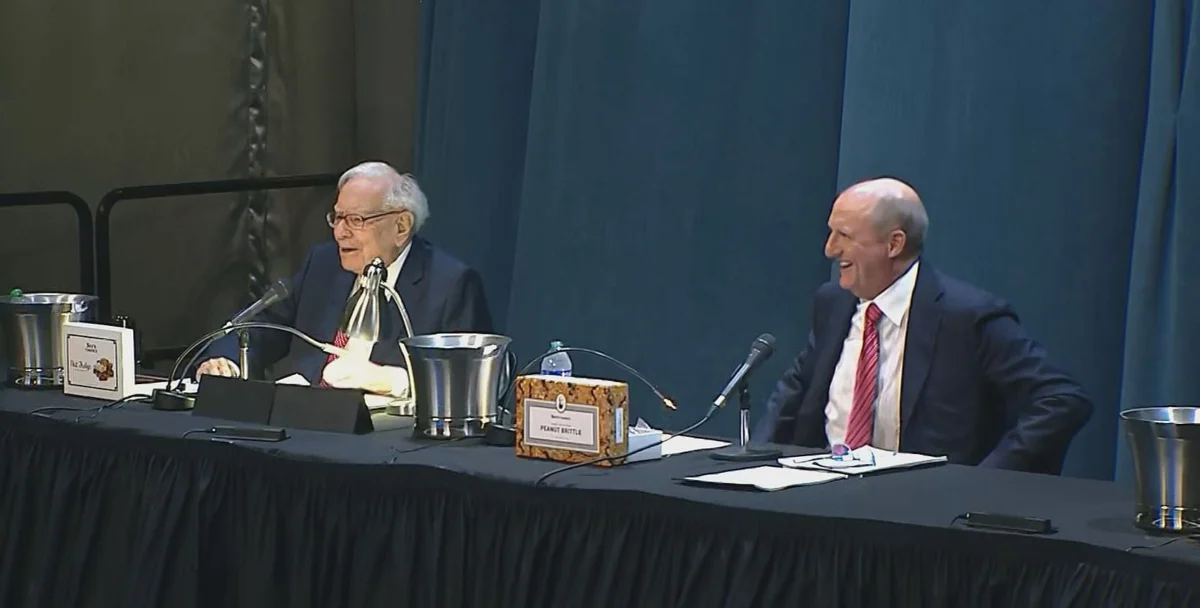
Omaha, Nebraska — Berkshire Hathaway, the sprawling conglomerate led by legendary investor Warren Buffett and helmed by CEO Greg Abel, has made a notable return to the airline industry, acquiring a substantial stake in Delta Air Lines, marking a significant reversal of its complete divestment from the sector during the depths of the COVID-19 pandemic in 2020. This strategic pivot, revealed in a recent regulatory filing for the first quarter, signals a broader realignment of Berkshire’s formidable equity portfolio, characterized by increased exposure to certain technology giants, cautious trimming in other sectors, and a systematic unwinding of positions previously managed by former investment lieutenant Todd Combs.
A Surprising Re-entry into the Airline Sector
The filing indicates that Berkshire Hathaway built a position in Delta Air Lines valued at more than $2.6 billion by the end of March, instantly elevating it to become the conglomerate’s 14th-largest holding. This move has drawn considerable attention from financial markets and analysts, primarily because it directly contradicts Warren Buffett’s dramatic exit from the entire U.S. airline sector just six years prior.
In the second quarter of 2020, as the global pandemic brought air travel to a near standstill, Buffett stunned investors by disclosing that Berkshire Hathaway had sold its entire equity portfolio of U.S. airlines. This divestment included significant stakes, collectively valued at over $4 billion at the time, across major carriers such including United Airlines, American Airlines, Southwest Airlines, and Delta Air Lines. Buffett candidly stated during Berkshire’s annual shareholders meeting in May 2020 that the pandemic had "fundamentally altered" consumer behavior and travel patterns, transforming the industry into a far more capital-intensive and less predictable business than previously perceived. He acknowledged the decision was his own, and while the initial investments had been promising, the unforeseen global health crisis necessitated a reevaluation of the sector’s long-term prospects.
The timing of the current re-entry suggests a renewed confidence in the airline industry’s recovery and future profitability. Post-pandemic travel demand has surged globally, with many carriers reporting record passenger numbers and robust revenue streams, despite inflationary pressures and higher fuel costs. Delta Air Lines, in particular, has often been highlighted by industry observers for its strong brand loyalty, operational efficiency, and a proactive approach to managing its balance sheet. The airline reported record first-quarter revenue in 2024 and provided an optimistic outlook for the year, driven by strong international demand and premium product offerings. This improved financial health and a more stable operating environment may have presented an attractive valuation opportunity for Berkshire Hathaway’s investment team, signaling that the "fundamental alteration" Buffett once cited might have been more temporary or manageable than initially feared.
Broader Portfolio Adjustments: Tech, Energy, and Retail
Beyond the headline-grabbing airline re-entry, Berkshire Hathaway’s first-quarter regulatory filing revealed several other significant shifts in its diverse portfolio, reflecting evolving investment theses and potentially the influence of its younger investment managers.
One of the most notable changes was a significant increase in Berkshire’s relatively new position in Alphabet (GOOGL), the parent company of Google. This substantial boost now places Alphabet as Berkshire’s seventh-largest holding, a testament to the conglomerate’s evolving stance on technology investments. Historically, Warren Buffett had been wary of the tech sector, preferring businesses with clear, enduring competitive moats and predictable cash flows. However, under his guidance and the influence of his investment lieutenants, Berkshire has embraced certain tech giants, most notably Apple, which remains its largest holding by a wide margin. The increased Alphabet stake underscores a growing recognition of the company’s powerful ecosystem, dominant search advertising business, and rapidly expanding cloud computing division (Google Cloud), all of which exhibit characteristics of strong moats and consistent profitability. This strategic tilt towards tech suggests a pragmatic adaptation to the modern economic landscape, where digital platforms play an increasingly central role.
Conversely, Berkshire Hathaway trimmed its stake in energy giant Chevron (CVX) during the quarter. While still a significant holding, this reduction might reflect a more cautious approach to the volatile energy sector or a reallocation of capital to other opportunities deemed more attractive. Berkshire has also been a major investor in Occidental Petroleum, further solidifying its presence in the energy space. The decision to slightly reduce Chevron could be a tactical move to lock in gains after a period of strong performance for oil and gas companies, or it could indicate a recalibration of its energy exposure in anticipation of market shifts.
In a smaller, yet intriguing move, Berkshire also initiated a new position in department store chain Macy’s (M), valued at roughly $55 million at the end of the first quarter. This relatively modest investment in a traditional retail player comes at a time when brick-and-mortar retail faces ongoing challenges from e-commerce and shifting consumer preferences. Macy’s has been undergoing a significant restructuring effort, including store closures and a focus on its digital presence. Such an investment by Berkshire could be interpreted as a value play, betting on a successful turnaround, or a smaller-scale initiative by one of Berkshire’s investment managers, identifying overlooked value in a distressed sector.
Unwinding the Legacy of Todd Combs
The first quarter also saw Berkshire Hathaway systematically divest from a slew of stocks, a move largely interpreted by market observers as part of an effort to unwind positions tied to its departed investment lieutenant, Todd Combs. Combs, a key portfolio manager recruited by Buffett, along with Ted Weschler, to help oversee Berkshire’s vast equity portfolio, transitioned to JPMorgan at the end of 2025 (note: original article inconsistently cited dates, assuming end of 2025 for Combs’ departure based on context of Q1 2026 filing). Ted Weschler continues his role, managing approximately 6% of Berkshire’s total holdings.
Combs’ departure necessitated a review and potential re-alignment of the positions he specifically managed. Among the most notable sales were Mastercard (MA) and Visa (V). These financial payment processing giants were among the very first stocks Combs purchased after joining Berkshire, and these positions mirrored major holdings from his former hedge fund, Castle Point Capital. The complete exit from these highly profitable, high-moat businesses suggests a divergence from Combs’ original thesis or a broader strategic decision to reallocate capital, perhaps driven by the remaining investment team.
Berkshire also fully exited its position in Amazon (AMZN), after having trimmed the stake late last year. The Amazon investment had long been viewed by some investors as a Combs-driven bet, representing a foray into a rapidly growing tech and e-commerce giant that Buffett himself had initially shied away from. The complete divestment suggests that the current management or remaining portfolio managers did not see the same long-term value or strategic fit for Amazon within Berkshire’s core holdings, especially compared to its increasing conviction in Alphabet.
Other stocks that Berkshire sold entirely during the quarter include:
- UnitedHealth Group (UNH): A major player in the healthcare sector, its exit could signal a shift in healthcare investment strategy or concerns about regulatory pressures.
- Aon (AON): An insurance brokerage firm, this divestment might reflect a consolidation of Berkshire’s extensive insurance operations or a reassessment of the industry’s outlook.
- Pool Corporation (POOL): A leading distributor of swimming pool supplies, its sale could indicate a cautious stance on consumer discretionary spending or a cyclical peak in the housing-related market.
- Domino’s Pizza (DPZ): A prominent fast-food chain, this exit might be linked to a re-evaluation of the restaurant industry’s competitive landscape or a preference for other consumer staples.
- Charter Communications (CHTR): A major cable and broadband provider, its sale could be part of a broader move away from certain telecommunications or media assets.
The systematic unwinding of these positions highlights the ongoing process of portfolio management and the strategic adjustments that occur when key personnel transition. It also underscores the distinct investment philosophies that Combs brought to Berkshire, which are now being re-evaluated under the conglomerate’s current leadership structure.
Leadership, Cash Hoard, and the Search for Value
These portfolio changes occur against a backdrop of significant leadership evolution at Berkshire Hathaway and a persistent challenge in deploying its massive cash reserves. Warren Buffett, though no longer CEO, remains Chairman of the Omaha, Nebraska-based company and continues to maintain an active presence, reportedly coming into the office five days a week. His successor as CEO, Greg Abel, who assumed the role in 2021, has affirmed that he consults with Buffett, 95, on crucial decisions regarding investments and capital allocation. This ongoing collaboration ensures a degree of continuity with Berkshire’s long-standing investment principles while allowing for fresh perspectives. Abel has also overseen the resumption of share buybacks in the first quarter, a move that signals confidence in Berkshire’s intrinsic value when attractive external investment opportunities are scarce.
Indeed, one of the most pressing issues for Berkshire Hathaway has been its burgeoning cash hoard, which is nearing a staggering $400 billion. This unprecedented liquidity underscores a challenge that Buffett himself has frequently acknowledged: the difficulty of finding large, high-quality investment opportunities at attractive valuations in the current market environment. During Berkshire’s 2024 annual meeting in May, Buffett expressed his "displeasure with the investing backdrop," stating, "It isn’t our ideal surrounding area — or environment, I should say — in terms of deploying cash for Berkshire."
This sentiment reflects a market characterized by elevated valuations, particularly in the technology sector, and intense competition for high-quality assets. For a company of Berkshire’s immense size, finding investments that can meaningfully move the needle requires significant capital outlays, which are increasingly hard to come by without overpaying. The record cash pile suggests that despite the recent investments in Delta and Alphabet, the company is still struggling to find sufficiently large "elephant-sized" acquisitions or equity stakes that meet its stringent criteria for value and long-term prospects.
Implications and Future Outlook
Berkshire Hathaway’s first-quarter portfolio adjustments provide valuable insights into its evolving investment strategy. The re-entry into Delta Air Lines suggests a belief that the airline industry has fundamentally recovered and now offers compelling value, perhaps under the guidance of Greg Abel or Ted Weschler, who may hold a different perspective than Buffett’s 2020 thesis. The increased stake in Alphabet reinforces Berkshire’s growing, albeit selective, embrace of the technology sector, acknowledging the enduring power of digital platforms. The unwinding of Todd Combs’ positions, particularly in Visa, Mastercard, and Amazon, marks a clear strategic cleanup and a re-centering of the portfolio around the current leadership’s collective vision.
These moves collectively paint a picture of a conglomerate navigating a complex market, balancing its traditional value-oriented approach with the need to adapt to modern economic realities. While the record cash hoard continues to present a challenge, these recent adjustments demonstrate an active and deliberate approach to capital allocation. Investors will be closely watching future filings to see how Berkshire Hathaway continues to deploy its vast resources, whether through further significant equity investments, a major acquisition, or continued share buybacks, all while maintaining its long-term focus on intrinsic value and durable competitive advantages. The ongoing transition of leadership and investment stewardship at Berkshire Hathaway remains a central theme, shaping its trajectory in the coming years.
