

The world is facing a critical juncture where the very lifeblood of our planet, the global water cycle, is under unprecedented strain. A recent declaration by the United Nations, labeling this era as one of "global water bankruptcy," underscores the urgent need for concerted action. While all life on Earth fundamentally depends on the intricate processes of this cycle – its role as an environmental pump, a global thermostat, and a natural purifier – its capacity to perform these essential functions is diminishing. Rising global temperatures, widespread ecosystem degradation, and increasingly unpredictable rainfall patterns are weakening the natural systems that regulate water flows and quality. Compounding this crisis, conventional water infrastructure, often designed for historical hydrological conditions, is proving increasingly vulnerable to variability, sedimentation, and extreme weather events.
The scientific community has long recognized the multifaceted importance of the water cycle. Forests, through transpiration, play a vital role in replenishing atmospheric rivers of freshwater. Evaporation and cloud formation contribute significantly to climate regulation. The percolation of water through soil and wetlands acts as a natural filtration system, purifying water before it reaches rivers and oceans. However, the cumulative impact of human activities and climate change is disrupting these delicate balances.
The Imperative for a Systemic Approach to Water Management
Addressing this escalating challenge necessitates a fundamental shift in perspective, moving from fragmented, localized approaches to a holistic, systemic view. This means recognizing the water cycle itself as a form of shared, transnational infrastructure and recalibrating investments and governance frameworks accordingly. The United Nations Environment Programme (UNEP) has consistently highlighted the interconnectedness of environmental systems, emphasizing that neglecting one aspect, such as water, has cascading negative effects on biodiversity, climate stability, and human well-being.
A crucial first step in protecting this vital natural infrastructure involves prioritizing the retention of water in its natural environments. Governments, investors, and multilateral development banks must champion initiatives aimed at preserving and restoring forests, wetlands, river basins, and soil cover. These natural systems are not merely aesthetic features of the landscape; they are the fundamental regulators of water cycles, essential for mitigating disruptions and fostering resilience against climate-induced shocks.
Nature-Based Solutions: The Power of Green Infrastructure
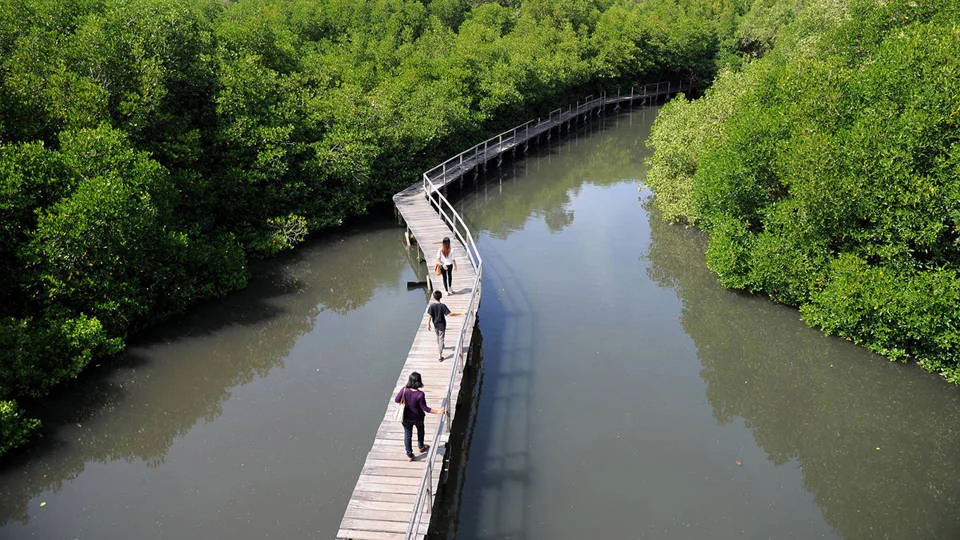
The efficacy of these interventions is significantly amplified when conceived at the level of entire ecosystems. A compelling example of this approach is the Delta Blue Carbon project in Pakistan. As the world’s largest mangrove restoration initiative, it has spearheaded the planting of tens of millions of mangrove seedlings along the southeast coast of Sindh province. This ambitious undertaking has already restored over 75,000 hectares of degraded mangrove forests and tidal wetlands. Beyond its immediate ecological benefits, the project is projected to sequester an estimated 142 million tons of carbon dioxide over the next five decades. Furthermore, these restored mangrove ecosystems offer crucial protection against storm surges, a growing threat in coastal regions, and serve as vital nurseries for marine biodiversity, supporting local fisheries and economies.
The rationale behind prioritizing nature-based solutions, often referred to as "green infrastructure," is rooted in their cost-effectiveness and long-term sustainability. Unlike engineered solutions that can require extensive maintenance and are susceptible to obsolescence, healthy ecosystems naturally perform vital services with minimal human intervention. The economic benefits derived from these services, including flood control, water purification, and carbon sequestration, are substantial, though often undervalued in traditional economic models.
Bridging the Gap: Integrating Green and Gray Infrastructure
While the emphasis on natural solutions is paramount, the reality of a rapidly changing climate demands a dual approach that also incorporates traditional "gray" infrastructure. Investments in engineered solutions are crucial for building water system resilience against escalating challenges such as higher global temperatures, accelerated glacial melt, and more volatile weather patterns.
The Indonesia Dam Operational Improvement and Safety Project Phase II, co-financed by the Asian Infrastructure Investment Bank (AIIB), the World Bank, and the Indonesian government, exemplifies this integrated strategy. This project aims to bolster flood defenses and safeguard essential water sources. Its approach is multi-pronged, combining critical engineering measures like dredging and structural rehabilitation with concurrent ecosystem restoration efforts. This integrated strategy directly addresses issues of sediment accumulation, a significant problem for dam longevity and water availability, by tackling both its causes and consequences.
The synergy between green and gray infrastructure offers a powerful pathway for both mitigating climate change impacts and adapting to its inevitable consequences on the water cycle. However, the successful implementation of such integrated strategies hinges on achieving alignment in governance, data management, and financial mechanisms.
Reimagining Water Governance: From Local Commodity to Global Commons
A significant impediment to effective water management is the persistent tendency to treat water as a purely local commodity, rather than the shared, transboundary resource it undeniably is. This fragmentation of governance often hinders coordinated action, particularly in regions with limited institutional capacity and financial resources. The Ramsar Convention, an intergovernmental treaty focused on wetland conservation, has demonstrated success in developed economies, particularly for smaller wetlands. However, its effectiveness has been demonstrably less pronounced in countries facing institutional constraints, as highlighted in a recent report by the AIIB titled "Where the Water Flows."
The implications of this governance gap are profound. Without coordinated transboundary agreements and robust national frameworks, efforts to manage shared water resources are often undermined by competing national interests, leading to inefficiencies, conflicts, and environmental degradation. The concept of "water diplomacy" has gained traction as a means to foster cooperation, but its practical implementation requires stronger institutional backing and a shared understanding of water’s value beyond immediate national benefit.
The Data Revolution: Harnessing Technology for Smarter Water Management
Fortunately, emerging scientific advancements and technological innovations hold the potential to revolutionize water governance. The ability to track individual water flows, once an insurmountable challenge, is becoming increasingly feasible. Satellite data, remote sensing technologies, and sophisticated modeling capabilities now provide real-time monitoring of water flows, the performance of infrastructure, and prevailing environmental conditions.
Furthermore, the integration of artificial intelligence (AI) and machine learning is opening new frontiers in water management. These technologies can significantly enhance flood forecasting accuracy, optimize irrigation schedules for agricultural efficiency, and support predictive maintenance of water infrastructure, thereby reducing operational costs and minimizing downtime. The application of AI in analyzing vast datasets related to precipitation, evaporation, soil moisture, and water usage can lead to more informed decision-making and proactive interventions.
Closing the Financing Gap: A Call to Action for Development Banks
The imperative to invest in the hydrological cycle is not merely an environmental concern; it is an economic necessity. Current estimates suggest a staggering $7 trillion financing gap to address global water infrastructure needs by 2030. Bridging this deficit requires a significant scaling up of investment, and multilateral development banks (MDBs) have a pivotal role to play in mobilizing capital toward water cycle preservation.
The AIIB’s findings indicate that water-related projects currently constitute a declining share, approximately 14%, of diminishing overall official development assistance. This trend is alarming, given the escalating challenges. Development banks must therefore substantially increase their investment portfolios across the entire water cycle. This includes prioritizing projects that integrate natural, engineered, and digital infrastructure solutions. Moreover, MDBs can foster economic reforms that align fiscal policies across borders, creating an enabling environment for cross-border water cooperation. Crucially, they must also focus on mobilizing private finance towards water-focused interventions, leveraging their convening power and risk mitigation instruments.
The strategic deployment of blended finance models, where public and private capital are combined, can unlock significant new funding streams for water projects. This can involve guarantees, concessional loans, and equity investments to de-risk projects and attract private sector participation.
Broader Implications and the Path Forward
The implications of failing to address the water crisis are far-reaching, extending beyond environmental degradation. Water scarcity can exacerbate food insecurity, fuel social unrest, and hinder economic development. In regions already facing political instability, water disputes can emerge as significant geopolitical flashpoints.
Conversely, effective water management and investment can unlock immense economic and social benefits. Enhanced water security can support agricultural productivity, industrial growth, and urban development. Investments in sustainable water infrastructure can create jobs, improve public health, and build more resilient communities.
As the world navigates an increasingly uncertain and insecure water future, a collective and urgent commitment from governments and financial institutions is paramount. Restoring and maintaining the planet’s water cycle must be elevated to a key development priority. By embracing recent advances in science, leveraging cutting-edge monitoring technologies, and harnessing the power of data availability, we can foster improved governance and significantly scale up the necessary financing. Water is not just a resource; it is the fundamental foundation that connects every aspect of human life and natural ecosystems. Protecting the water cycle, therefore, represents the highest possible priority for our collective future. The time for incremental change has passed; a transformative global effort is now indispensable.
