

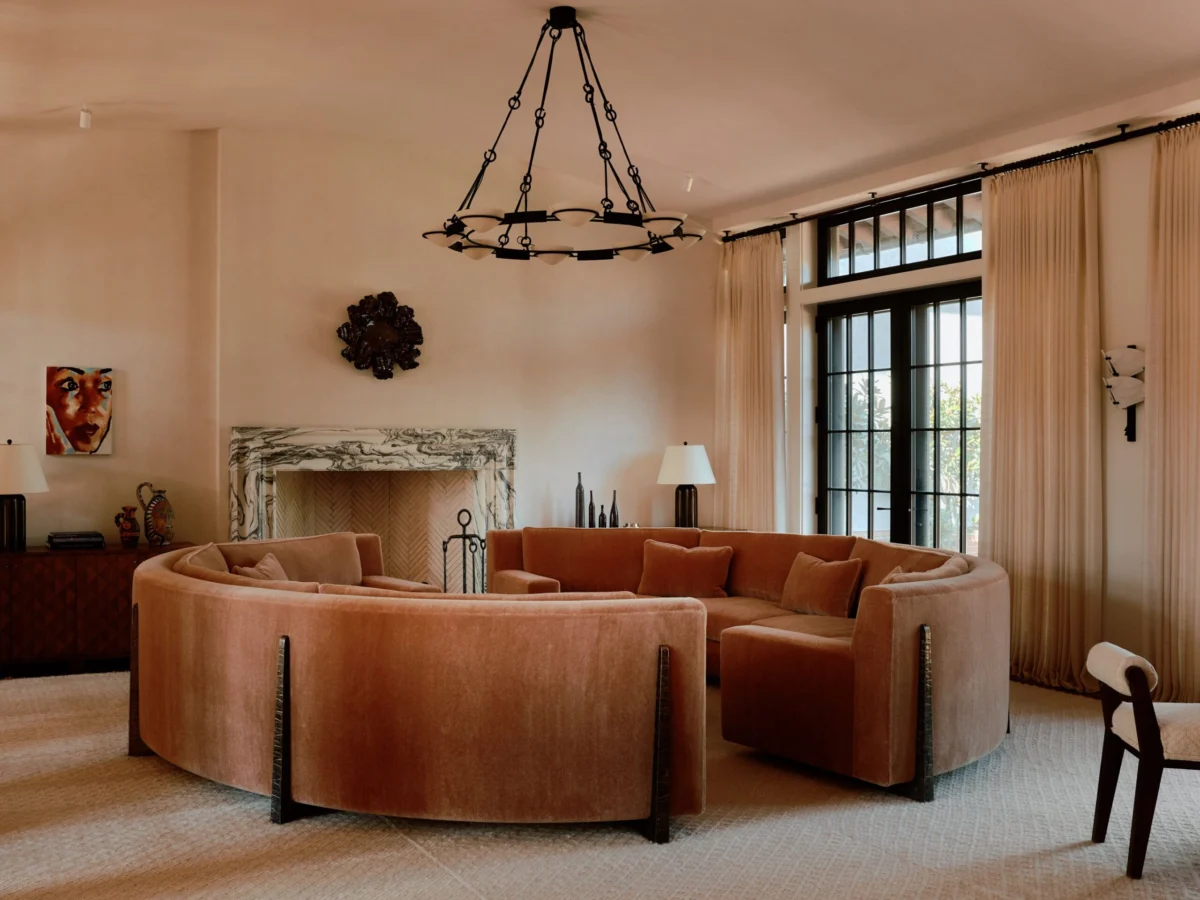
In the competitive landscape of Hamptons real estate, where the "shingle style" often reigns supreme, a newly completed 15,000-square-foot estate has emerged as a rigorous masterclass in architectural history and international collaboration. Situated on five leafy acres near the Atlantic Ocean, the residence represents a sophisticated bridge between the English Arts and Crafts movement of the early 20th century and the functional requirements of a contemporary American family. The project brought together the architectural expertise of Kligerman Architecture & Design and the interior vision of Bryan O’Sullivan, resulting in a home that prioritizes proportion, materiality, and bespoke craftsmanship over transient design trends.

The genesis of the project was rooted in the homeowner’s deep appreciation for the work of Sir Edwin Lutyens, the preeminent British architect known for his ability to blend traditional styles with inventive, often witty, details. For this ambitious ground-up construction, the owner sought a team that could translate Lutyens’ signature elements—steeply pitched rooflines, massive chimneys, and carefully considered window patterns—into a residence suitable for the unique light and landscape of Eastern Long Island.

The Architectural Foundation: Emulating the Lutyens Legacy
To execute the structural vision, the homeowner commissioned Kligerman Architecture & Design, a firm celebrated for its fluency in traditional vernaculars. Partner Joe Carline led the architectural team, focusing on the "quiet perfection of proportion" that defined Lutyens’ country houses. The 15,000-square-foot structure utilizes a palette of brick and local stone, grounded by the heavy, sculptural chimneys that anchor the building to its five-acre site.

The Arts and Crafts movement, which reached its zenith between 1880 and 1920, advocated for traditional craftsmanship and the use of local materials as a reaction against the perceived soullessness of industrial production. By channeling this philosophy, Kligerman Architecture & Design created a home that feels established rather than brand-new. The architecture emphasizes the "honest expression of materials," where the texture of the stone and the rhythm of the gables provide the primary decorative interest.

"What Lutyens understood, and what continues to inspire our work, is that true luxury lies in the quiet perfection of proportion and the honest expression of materials," Joe Carline noted regarding the project’s philosophy. This architectural rigor provided the necessary framework for an interior design that needed to be equally disciplined yet welcoming for a family with three teenagers.

A Serendipitous Partnership: From London to New York
While the architectural team was quickly established, finding an interior designer who could match the project’s creative and organizational demands proved more challenging. The homeowner interviewed several candidates but found that many lacked the specific blend of rigor and whimsy she desired. The search eventually led her to Bryan O’Sullivan, an Irish designer based in London and New York, whose portfolio included high-profile hospitality projects such as the redesign of the restaurant at Claridge’s in Mayfair and the Westmoreland Café at the Frick Collection.

The collaboration began with a modern outreach: an Instagram message. The homeowner reached out to O’Sullivan to inquire about his availability for U.S. projects. In a stroke of serendipity, O’Sullivan and his husband were scheduled to be in New York just days later. Upon meeting and reviewing the architectural drawings by Kligerman, O’Sullivan was immediately drawn to the project’s scale and the "expansive countryside" feel of the Hamptons site.

The commission had significant professional implications for O’Sullivan. The scale and success of the Hamptons estate prompted him to establish a permanent Manhattan office and eventually relocate his family to New York. For the client, O’Sullivan’s background in hospitality was a decisive factor. "I loved that they did hospitality; it gives you discipline in terms of budget, execution, and timing," she explained.

Chronology of Design: A Three-Year Vision
The project’s timeline spanned several years, requiring a high degree of coordination between the architects, the interior designer, and a host of international artisans. The design process was characterized by a "million decisions," ranging from structural niches to the specific veining of marble slabs.

- Initial Planning and Siting: The project began with the selection of the five-acre plot, chosen for its proximity to the ocean and its mature trees, which provided the "canvas" for the Lutyens-inspired structure.
- Architectural Drafting: Kligerman Architecture & Design developed the plans, focusing on the interplay between the massive chimneys and the steeply pitched rooflines.
- Interior Design Integration: O’Sullivan joined the team early enough to collaborate on architectural details within the interior, such as the curved niches for vanities and the layout of the orangerie-style gallery.
- Sourcing and Travel: A pivotal moment in the chronology was a three-day trip to Italy. The design team and the client visited numerous quarries from morning until night to select the exact marble slabs used in the primary and guest bathrooms.
- Craftsmanship and Installation: The final phase involved the installation of custom furniture and site-specific art, including a painted mural in the dining room and a conceptual art piece at the bottom of the swimming pool.
Interior Narrative: Materials and Palette
O’Sullivan and the client settled on a sophisticated palette of dusty peach, sage green, and burnt ochre, complemented by extensive use of exposed wood. The goal was to create an environment that felt authentic to the Arts and Crafts era but modern enough for a family with teenagers.

The foyer sets the tone with a vintage marble console and 1940s vessels by Gio Ponti. The staircase features custom-made balusters by David DeSantis of Forged Artistry, a testament to the project’s commitment to bespoke metalwork. In the dining room, O’Sullivan’s hospitality experience is evident in the custom wood table with a fluted base and chairs upholstered in rosy taupe tweed. The walls are hand-painted with geometric patterns by Maria Redondo, adding a layer of contemporary artistry to the traditional wood paneling.

One of the most distinctive spaces is the "summer sitting room," furnished with a custom curved sofa designed to fit the casement windows perfectly. The room also features 1970s rocking chairs covered in Pierre Frey fabric and a custom ceramic-top table. This blend of vintage finds and custom-made pieces ensures that the home does not feel like a period piece but rather a curated collection of design history.

The Dialogue Between Structure and Landscape
A central tenet of the Lutyens philosophy was the harmony between the house and its grounds, often achieved through his collaborations with the legendary garden designer Gertrude Jekyll. For this Hamptons estate, landscape architect Deborah Nevins was brought in to create a naturalistic dialogue between the 15,000-square-foot house and the five-acre site.

The transition between the interior and the exterior is anchored by an orangerie-style gallery. This space, featuring brick floors, French doors, and lemon trees, has become the homeowner’s favorite area. The gallery runs parallel to the living and dining rooms, flooding the interior with natural light and providing a vista that connects the various wings of the house.

The landscape design avoids overly formal parterres in favor of a naturalistic approach that complements the heavy stone and brick of the architecture. This relationship is further highlighted by a unique art installation: the bottom of the swimming pool is painted with a work by the late conceptual artist Lawrence Weiner, a project overseen by art consultant Ivy Shapiro.

Broader Impact and Design Trends
The completion of this Hamptons estate reflects several broader trends in the high-end residential market. First, it signals a move away from generic luxury toward "modern heritage"—a design movement that seeks to reinterpret historical architectural styles with contemporary rigor. The involvement of Kligerman Architecture & Design, a firm known for its traditional fluency, highlights the enduring appeal of classical proportions.

Second, the project demonstrates the increasing influence of hospitality designers in the residential sector. Designers like Bryan O’Sullivan bring a level of operational discipline and a "sexy, surprise" element—often seen in luxury hotels—to private homes. This is perhaps most evident in the home’s basement cocktail bar, which features crimson brocatelle fabric and a swooping velvet banquette, designed specifically for hosting dinner parties and social gatherings.

Finally, the project underscores the importance of the "artisan economy" in luxury construction. From the custom metalwork of David DeSantis to the hand-painted murals of Maria Redondo, the home is a showcase for specialized skills that cannot be replicated by mass-market furniture or finishes.

Conclusion: A Modern Family Home Rooted in Memory
While the estate pays extensive tribute to the architectural history of Sir Edwin Lutyens and the Arts and Crafts era, its ultimate success lies in its livability. The design team successfully avoided the stiffness often associated with grand-scale traditional homes. By incorporating elements like the "conversation pit" sofas in the living room and a basement level designed specifically for teenage sleepovers, the house functions as a vibrant family hub.

As Joe Carline of Kligerman Architecture & Design noted, the project demonstrates how memory and historical reference can enrich a modern family’s daily life. In the Hamptons, where architectural statements are often loud, this residence stands as a testament to the "quiet perfection" of thoughtful design and the enduring power of well-executed craftsmanship. The collaboration between a creative homeowner, a traditionalist architect, and an international designer has produced a property that is not just a house, but a landmark of contemporary architectural reinterpretation.
