

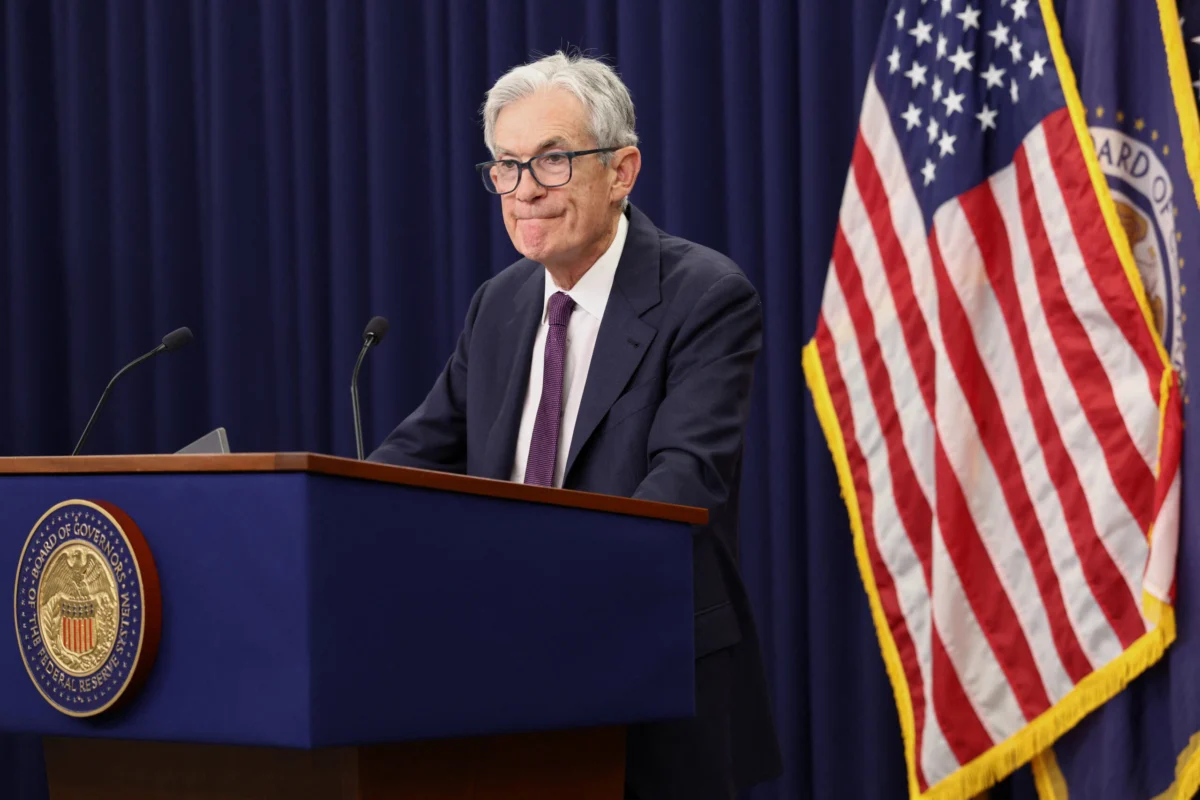
On Friday, Jerome Powell’s consequential term as chair of the United States Federal Reserve Board of Governors will come to a close, marking the end of a period characterized by intense political pressure from the White House and unprecedented economic challenges. His departure on May 15 paves the way for Kevin Warsh, a former member of the central bank’s board of governors and a Trump appointee, to assume the chairmanship. Powell, who was initially appointed by Donald Trump in 2018, will remain on the board as a governor, a decision he stated was aimed at safeguarding the central bank’s crucial independence, especially in the face of persistent demands from President Trump for more aggressive interest rate cuts. This transition occurs against a backdrop of ongoing economic shifts and heightened scrutiny regarding the Fed’s autonomy and its role in managing the nation’s monetary policy.
A Legacy Forged in Conflict: Powell’s Stance on Independence
Jerome Powell’s tenure as Fed chair during the second Trump administration was largely defined by a public and often acrimonious struggle for the Federal Reserve’s independence. From the outset, President Trump vociferously pushed for lower interest rates, frequently criticizing Powell and the central bank for not acting quickly or aggressively enough to stimulate the economy through monetary easing. This pressure intensified, with Trump assigning Powell the pejorative nickname “Too Late Powell,” reflecting his frustration with the Fed’s perceived hesitancy to cut rates swiftly.
Powell, however, consistently defended the central bank’s apolitical mandate, stressing that monetary policy decisions must be based on economic data and not on political expediency. This commitment to independence became a hallmark of his leadership. Babak Hafezi, a professor of international business at American University, observed to Al Jazeera, "His legacy was, ‘We need to reclaim independence for the Federal Reserve,’ and I think that’s exactly what he did. He fought the Trump administration on lowering interest rates. He’s worked really hard not to be a political tool and to keep the Fed as independent as possible."
The conflict transcended mere rhetoric, escalating to a point where the administration launched an investigation into Powell concerning renovations at the Federal Reserve’s Washington headquarters. While government prosecutors ultimately found no evidence of wrongdoing, the investigation became a political leverage point. Republican Senator Thom Tillis of North Carolina, for instance, publicly stated he would not vote for any new nominee to the central bank until the Department of Justice dropped its probe into Powell. The investigation was eventually suspended, allowing the Senate Banking Committee to advance Warsh’s nomination. It was only during his final news conference that Powell spoke more candidly about the toll of such political interference. "I worry these attacks are battering the institution and putting at risk the thing that matters to the public, which is the ability to conduct monetary policy without taking into consideration political factors," Powell told reporters, underscoring the profound concerns about the long-term integrity of the institution.
A Tumultuous Timeline: Monetary Policy and Presidential Pressure (2018-2020)
Powell’s journey as Fed chair was a chronological tapestry woven with critical monetary policy decisions and relentless presidential pressure. Although appointed by Trump in 2018, the relationship quickly soured. By October 2018, Powell found himself in Trump’s crosshairs as the Fed embarked on a series of interest rate hikes. Trump famously took to X (then Twitter) to label the Fed "crazy." The central bank raised rates four times that year, moving the benchmark federal funds rate from an initial range of 1.25–1.50 percent to 2.25–2.50 percent by year’s end, a move intended to normalize policy after years of post-financial crisis stimulus. Trump, in an interview with The Wall Street Journal, even claimed Powell "almost looks like he’s happy raising interest rates."
This period highlighted a fundamental divergence in economic philosophy. As Brett House, an economics professor at Columbia University’s Business School, explained, "The desires of Trump 1 and Trump 2 are the same, and that is lower Fed policy rates. Neither during the early days of the first Trump administration nor now is there a clear justification for cuts in the Fed funds rate target." Trump continued his rhetorical assault, going as far as to call Powell an "enemy" in August 2019 and openly advocating for his removal, despite the legal complexities involved in such an action.
Amidst this political firestorm, the Fed did, in fact, cut rates in the summer of 2019. Skanda Amarnath, a former analyst for the New York Federal Reserve, noted the economic rationale behind this decision. "Inflation was running pretty low, and the economy looked like it was slowing down. The Fed did show a lot of flexibility on that side." This flexibility, however, was tested by subsequent economic developments.
Navigating the COVID-19 Economic Storm
Powell’s leadership faced its most profound test with the onset of the COVID-19 pandemic in early 2020. The ensuing economic fallout was unprecedented, triggering widespread business closures, mass unemployment, and severe market disruptions. Under Powell’s guidance, the Federal Reserve mounted an extraordinary response, working in close coordination with the Treasury Department to stabilize the economy.
Key measures included the implementation of the Coronavirus Aid, Relief, and Economic Security (CARES) Act, which provided direct payments to individuals, alongside a suite of emergency lending programs. Among these was the Paycheck Protection Program (PPP), designed to offer short-term relief and help small businesses retain employees. The central bank also engaged in massive asset purchases, buying both US government and mortgage-backed securities to inject liquidity into financial markets and keep borrowing costs low. Furthermore, it aggressively cut short-term interest rates to a near-zero range of 0 to 0.25 percent, aiming to support economic activity and prevent a deeper recession.
These swift and decisive actions were largely credited with averting a more catastrophic economic collapse. Interestingly, this period saw a temporary cessation of Trump’s criticism. In a November 2020 interview, Trump expressed satisfaction, telling Fox Business that he was "very happy with his performance," as recounted by Amarnath. This brief respite, however, would be short-lived.
The Post-Pandemic Inflation Surge and Aggressive Tightening (2021-2023)
As the economy began to recover from the pandemic-induced shutdowns, new challenges emerged. When Powell’s term expired in 2021, President Joe Biden, a Democrat, nominated him for another term as head of the central bank, signaling bipartisan recognition of his crisis management. However, the recovery brought with it a surge in inflation, driven by supply chain disruptions, robust consumer demand, and expansive fiscal and monetary stimulus. By mid-2022, inflation soared to a 40-year high, significantly eroding purchasing power and becoming a dominant economic concern.
In response, the Federal Reserve, under Powell’s continued leadership, embarked on one of the most aggressive monetary tightening cycles in decades. Beginning in March 2022, the Fed initiated a series of rapid interest rate hikes, ultimately raising the benchmark rate to a range of 5.25 to 5.5 percent by July 2023. This dramatic shift was a necessary, albeit painful, measure to bring inflation under control. "It turned out, both in retrospect and at the time, that they did need to raise rates substantially in the fastest rate-hiking cycle we’d seen in decades to address that spike in inflation," House affirmed. He added that while some inflation was an "unfortunate byproduct" of the fast recovery, the Fed’s actions, in contrast to the 2008 financial crisis, "helped ensure a very quick rebound from the massive public health-related restrictions on the economy we put in place in March 2020." This period cemented Powell’s image as a leader willing to make tough, unpopular decisions based on economic imperatives, further solidifying his commitment to the Fed’s independence.
Powell’s Broader Legacy: "Too Big to Fail" and Regulatory Reform
Beyond his chairmanship, Jerome Powell’s career at the Federal Reserve showcased a consistent philosophy regarding financial stability and regulatory oversight. Prior to his leadership role, he served as one of the board’s seven governors, having been first appointed by President Barack Obama in 2012. During this period, Powell was a vocal advocate for reforming "too big to fail" policies, which had led to taxpayer-funded bailouts of large financial firms during the 2008 financial crisis. In a notable 2013 speech, he declared, "Too big to fail must end, even if more intrusive measures prove necessary in the end." By 2017, Powell expressed satisfaction with the progress made, asserting that regulators had "made a great deal of progress" and that concerns about banks being "too big to fail" had largely been quelled. This early stance demonstrated his commitment to robust financial regulation and systemic stability, a foundational principle that informed his later approach to monetary policy.
The New Era: Kevin Warsh’s Mandate and Challenges
With Jerome Powell’s departure, Kevin Warsh is now poised to take the helm of the central bank. His confirmation hearing before the Senate Banking Committee in April was contentious, underscoring the political sensitivities surrounding the Fed’s leadership. Senator Elizabeth Warren, a prominent Democrat, accused Warsh of being a "sock puppet" for the president, a charge Warsh vehemently denied, reiterating his commitment to the central bank’s independence. Warsh’s prior experience on the Fed’s board of governors from 2006 to 2011 provides him with institutional knowledge, but the current economic and political climate presents a unique set of challenges.
The economic landscape Warsh inherits suggests a period of sustained high interest rates. Analysts at JPMorgan currently forecast that the central bank will maintain its benchmark rate between 3.5 and 3.75 percent well into 2027. This projection comes as prices continue to jump, with a recent annual inflation rate of 3.8 percent, marking the largest uptick since May 2023. Contrary to the White House’s ongoing push for rate cuts, JPMorgan anticipates the next change to be a 25-basis-point hike in the third quarter of next year. The CME FedWatch Tool, which tracks the market’s perceived likelihood of monetary policy decisions, indicates a 97 percent chance that rates will remain unchanged at the next policy meeting, scheduled for June 16-17.
Economic Outlook and Monetary Policy Projections
The incoming Fed chair will face immediate pressure to navigate a complex economic environment where inflation, though off its peak, remains elevated above the Fed’s 2 percent target, and economic growth shows signs of resilience but also potential vulnerabilities. The market’s expectation of sustained higher rates contrasts sharply with the political rhetoric from the White House, which continues to advocate for easing monetary policy to further stimulate growth. This divergence will test Warsh’s stated commitment to independence.
Historically, the Federal Reserve’s dual mandate is to foster maximum employment and price stability. Balancing these objectives will be paramount for Warsh. With current unemployment rates near historic lows, the primary focus is likely to remain on taming inflation without triggering an economic downturn. Any significant deviation from the projected rate path, whether due to unexpected economic data or perceived political influence, could destabilize markets and erode public confidence in the Fed’s autonomy.
Expert Analysis on Future Independence and Implications
The transition to Kevin Warsh raises significant questions among experts about the future trajectory of the central bank’s independence. Amarnath voiced concerns that "There’s a real risk that the institution becomes more politically vulnerable and more politically manipulated, rather than exercising independent judgment around monetary policy. Jay Powell tried to do his best to steward the Fed through those pressures." This apprehension is amplified by Warsh’s own past positions; Amarnath notes, "Kevin Warsh, who has become Fed chair, was highly critical of the Fed considering rate cuts in 2024 and then suddenly became one of the biggest champions of rate cuts in 2025." Such shifts in perspective, particularly if aligned with political agendas, could fuel skepticism.
Further adding to these concerns are other appointments and investigations that have emerged under the current administration, raising questions about the central bank’s impartiality. These include President Trump’s firing of Fed Governor Lisa Cook, appointed by former US President Joe Biden, over alleged mortgage fraud; the appointment of Trump ally Stephan Miran, previously chair of the White House Council of Economic Advisers; and Trump’s explicit remarks in December that he would only appoint someone who agreed with him on interest rates. These actions collectively paint a picture of an administration intent on shaping the Fed’s composition and policy direction.
Kevin Warsh’s initial actions and public statements will be closely scrutinized for any indication of deviation from the Fed’s long-standing tradition of apolitical decision-making. His challenge will be to demonstrate, through concrete policy choices and transparent communication, that the Federal Reserve remains dedicated solely to its economic mandate, insulated from the intense political pressures that have marked recent years. The delicate balance between managing inflation and growth, while safeguarding the institution’s independence, will define his chairmanship and significantly impact the stability and credibility of the US economy on both domestic and international fronts.
