

U.S. consumers are grappling with a significant uptick in inflation, with the annual rate reaching 3.8% in April, the highest in nearly three years. While geopolitical events, specifically the ongoing Iran War, are frequently cited as a primary driver due to their impact on energy prices, a deeper analysis of the latest Consumer Price Index (CPI) data reveals a more pervasive inflationary trend affecting a broad spectrum of goods and services. The Bureau of Labor Statistics reported a 0.6% increase in the CPI for April on a seasonally adjusted basis, underscoring the widespread nature of these price pressures that extend well beyond the gasoline pump and are impacting the core of household budgets.
This latest inflation report arrives on the heels of a stark decline in consumer confidence. The University of Michigan’s preliminary reading for May revealed a record low sentiment, with rising oil prices directly linked to the Middle East conflict identified as a significant dampener on consumer outlook. However, the detailed CPI figures indicate that consumers are experiencing "sticker shock" across numerous categories, suggesting that the inflationary pressures are multifaceted and not solely attributable to energy market volatility. This broader inflation scenario presents a complex challenge for policymakers, economists, and households alike as they navigate an increasingly unpredictable economic landscape.
A Chronology of Rising Prices and Shifting Consumer Sentiment
The current inflationary environment has been building over several months, with April’s figures representing a notable acceleration. The year-over-year inflation rate has been steadily climbing from 3.5% in March, and before that, 3.2% in February. This upward trajectory has raised concerns among economists and Federal Reserve officials about the potential for inflation to become entrenched.
The impact of the Iran War, which escalated in late March following a series of regional skirmishes and heightened tensions, has been a recurring theme in discussions about energy prices. The conflict has disrupted supply chains and created uncertainty in global oil markets, leading to a surge in crude oil prices. This, in turn, has translated to higher gasoline prices at the U.S. pumps. However, the economic fallout of the conflict has also had ripple effects on other commodities and shipping costs, contributing to broader inflationary pressures.
Against this backdrop, consumer sentiment began to show signs of strain. The University of Michigan’s Consumer Sentiment Index, a key gauge of consumer confidence, has been on a downward trend. The preliminary reading for May, released just days before the CPI data, hit an all-time low, reflecting a growing sense of pessimism among households. This sentiment is often closely correlated with inflation, as rising prices erode purchasing power and create financial anxieties. The report specifically highlighted that surging gas prices, directly influenced by the geopolitical situation, were a primary factor contributing to this dip in confidence.
The Bureau of Labor Statistics’ April CPI report, released on Tuesday, provided a granular view of where these price increases are most acutely felt. The data paints a picture of an economy where inflation is not an isolated phenomenon but a pervasive force impacting daily life.
Housing: A Persistent Driver of Inflationary Pressure
Housing costs, a significant component of the CPI, continue to exert upward pressure on the overall inflation rate. In April, shelter inflation rose by 0.6%, contributing to a year-over-year increase of 3.3%. This category encompasses a range of housing-related expenses, and specific sub-components have seen particularly sharp increases.
Lodging away from home, which includes hotel stays and other temporary accommodations, jumped by a notable 2.4% in April, resulting in a substantial 12-month gain of 4.6%. This increase can be attributed to a combination of factors, including increased travel demand and the broader inflationary environment affecting operational costs for hospitality businesses.
Tenant and household insurance also saw a modest uptick of 0.1% in April, bringing its annual inflation rate to a concerning 7.2%. This reflects rising costs for insurance providers, which are subsequently passed on to consumers.
Economists have been particularly attentive to housing inflation due to past data anomalies. Following a government shutdown in the previous year, there were concerns that price changes for owners’ equivalent rent (OER) were not adequately captured. OER, a hypothetical measure of what property owners could charge for their dwellings, is a critical component of overall housing inflation. Inaccurate readings during that period could have skewed the overall inflation picture, making the current robust reporting all the more important for accurate economic assessment. The persistent rise in shelter costs underscores the ongoing challenge of housing affordability and its contribution to the broader inflation narrative.
Food Prices: A Growing Concern for Household Budgets
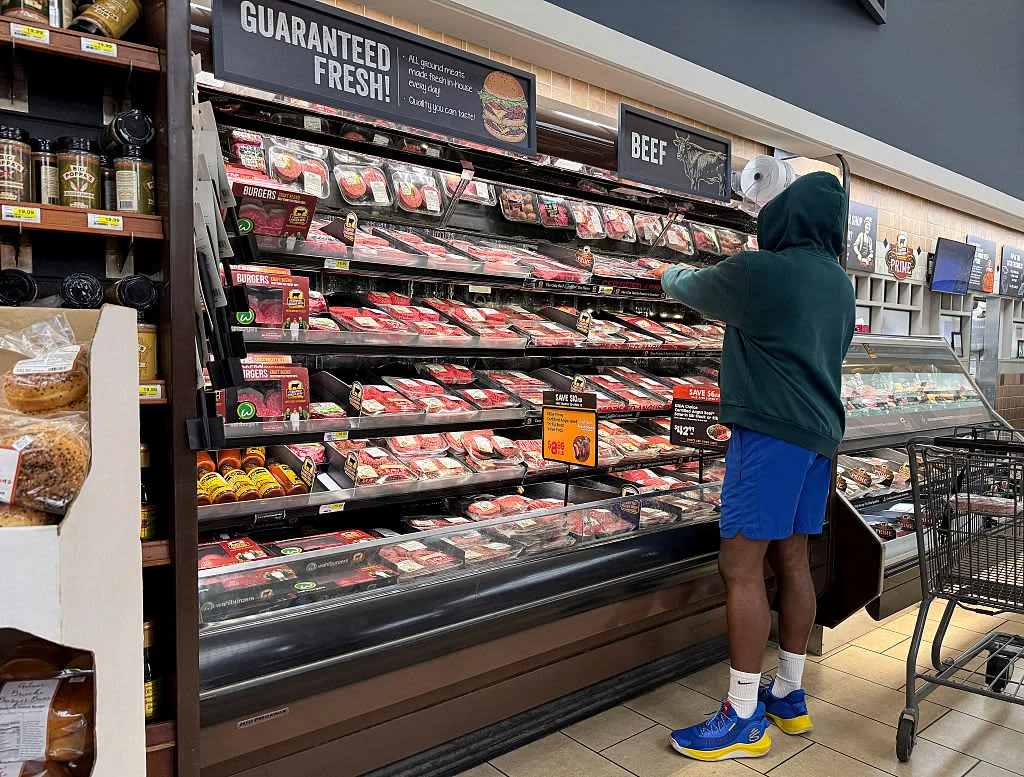
The cost of food has become another significant area of concern for U.S. consumers. Food at home experienced a 0.7% increase in April compared to March, marking the largest one-month rise since August 2022. Year-over-year, food prices are now 2.9% higher. This sustained increase in grocery bills is a direct hit to household budgets, particularly for families with lower incomes.
Specific food items have seen particularly dramatic price hikes. Uncooked ground beef, a staple for many households, increased by 2.7% in April alone, pushing its price tag a staggering 14.5% higher than a year ago. This surge is largely attributed to soaring cattle prices, a trend that has been exacerbated by supply chain issues and increased demand. With the summer grilling season approaching, consumers are likely to face even higher costs for barbecue essentials.
Frankfurter prices have also seen a significant increase, climbing 10.7% compared to the same month in the previous year. This rise was partly driven by a 5.8% gain month-over-month in April, reflecting broader inflationary pressures on processed meats and ingredients.
Tomatoes, a product often imported into the U.S. and subject to trade policies, experienced a sharp 15.1% increase in April. The product is now a substantial 39.7% more expensive than it was a year earlier. These price swings in agricultural commodities can be influenced by weather patterns, global supply and demand dynamics, and trade policies, making them particularly volatile.
Even everyday items like coffee have not been spared. Coffee prices, impacted by global supply concerns, jumped 2% in April, contributing to a significant 12-month gain of 18.5%. These increases across a range of food categories demonstrate a widespread inflationary trend that is affecting the grocery basket.

Shopping Cart Squeeze: Retail Goods See Price Hikes
The inflationary pressures are also evident in the retail sector, affecting a variety of household goods. Window coverings, for instance, have become 8.2% more expensive than a year ago, with a 0.9% increase observed from March to April. Similarly, prices for dishes and flatware climbed 1.6% in the month, contributing to an annual cost increase of 15.4%.
The allure of jewelry has also come with a higher price tag. The price of jewelry increased by 3.7% in April, pushing its one-year increase to a notable 16.1%. While watch prices saw a more marginal increase in the month, they have still experienced a year-over-year jump of 8.8%.
Footwear prices have also been on the rise, gaining 1.4% from March to April, bringing prices to 4.2% above their levels a year ago. These increases across different retail categories suggest that businesses are facing higher input costs, including raw materials, manufacturing, and transportation, which are then being passed on to consumers.
Services Sector Not Immune to Inflationary Pressures
Beyond tangible goods, the cost of services has also been affected by the prevailing inflationary environment. This includes areas that directly impact daily life and entertainment.
Rentals and subscriptions for videos and video games saw a significant increase, costing 16.6% more than a year ago. This rise was fueled by a 2.1% increase between March and April, indicating that the cost of digital entertainment and related services is escalating.
Delivery services, a crucial part of modern commerce and convenience, have also become more expensive. These services posted a cost increase of 4.3% in April and are now 13.6% more costly on a 12-month basis. This rise in delivery costs can be attributed to increased labor costs, fuel prices, and the growing demand for on-demand services.
Areas of Respite: Where Consumers Find Relief
Despite the widespread increases, there are a few areas where consumers have found some measure of relief. While smartphones saw a 1% increase in price in April, they remain 12.4% less expensive than they were 12 months ago. This suggests that technological advancements and increased competition in the smartphone market are helping to moderate prices in this sector.
The used car market, which experienced significant price hikes in recent years, has shown signs of cooling. Used car and truck prices held steady on the month and are down 2.7% compared to a year earlier. This stabilization in the used car market can be attributed to an easing of supply chain disruptions that had previously constrained new vehicle production, leading to higher demand and prices for used vehicles.
In the apparel sector, men’s outwear, which includes items like suits and sport coats, saw a decrease of 2% on the month. Prices in this category are now 7.1% lower than in April 2025. This decline may reflect changing consumer demand, increased promotional activity by retailers, or an easing of input costs for textile manufacturers.
Analysis and Implications
The broad-based nature of the current inflation surge has significant implications for the U.S. economy. The persistent rise in prices, particularly in essential categories like housing and food, erodes consumer purchasing power and can lead to a slowdown in consumer spending, which is a major driver of economic growth.
The Federal Reserve faces a delicate balancing act. On one hand, the central bank is tasked with controlling inflation. However, aggressively raising interest rates to combat inflation could also risk triggering an economic recession. The current data suggests that the Fed may need to maintain a hawkish stance for a longer period than initially anticipated, potentially leading to higher borrowing costs for consumers and businesses.
The geopolitical tensions in the Middle East, particularly the Iran War, remain a significant wildcard. Any further escalation or prolonged conflict could lead to renewed spikes in energy prices, exacerbating the existing inflationary pressures and further complicating the economic outlook. This highlights the interconnectedness of global events and their impact on domestic economic stability.
Furthermore, the decline in consumer sentiment, as indicated by the University of Michigan survey, suggests that households are increasingly concerned about their financial well-being. This sentiment can become a self-fulfilling prophecy, as consumers cut back on spending, leading to reduced economic activity.
The multifaceted nature of this inflation requires a comprehensive approach from policymakers. While addressing energy price volatility is crucial, so too is tackling the underlying inflationary pressures in other sectors. This may involve a combination of monetary policy adjustments, targeted fiscal measures, and efforts to bolster supply chain resilience. The coming months will be critical in determining whether the current inflationary trend can be brought under control without inflicting undue hardship on the American economy and its citizens.
