

The American consumer, often seen as the engine of the national economy, has once again demonstrated remarkable resilience, defying widespread expectations of a significant slowdown amidst persistent inflationary pressures, surging energy costs, and escalating geopolitical tensions. This underlying strength was vividly highlighted in the latest earnings reports from two bellwether companies deeply intertwined with discretionary spending: Uber Technologies and The Walt Disney Co. Both giants, reporting robust first and second-quarter results for 2026 respectively, painted a picture of a consumer base largely unfazed by the prevailing economic headwinds, continuing to allocate significant portions of their budgets to experiences, travel, and convenience.
Shares of Uber surged more than 8% following its Q1 2026 earnings release, while Disney’s stock popped over 7% after its Q2 2026 announcement, underscoring investor confidence in their ability to navigate a challenging macro environment. The strong market reaction reflected a collective sigh of relief and renewed optimism regarding the durability of consumer demand, particularly in sectors prone to being impacted by discretionary spending cutbacks. These results challenge the conventional wisdom that higher gasoline prices and broader economic anxieties would inevitably lead to a contraction in non-essential expenditures.
Detailed Performance Breakdown: Uber Technologies
Uber’s first-quarter 2026 results showcased impressive growth across its core segments, reaffirming its position as a dominant force in both ride-hailing and food delivery. The company reported that its delivery division remained its fastest-growing business, with revenue jumping a remarkable 34% to $5.07 billion, up from $3.78 billion in the comparable period a year earlier. This substantial increase underscores a sustained consumer appetite for on-demand food and grocery delivery services, a trend that accelerated during the pandemic and has since solidified into a permanent lifestyle fixture for many.
The ride-hailing division, traditionally Uber’s flagship service, also exhibited strong performance, with revenue rising 5% to $6.8 billion. This growth was attributed to a confluence of factors, including a continued return-to-office trend across major metropolitan areas, a resurgence in travel, and a general increase in local social and commercial activities. Uber CEO Dara Khosrowshahi, speaking on CNBC’s "Squawk Box" following the earnings release, emphasized the sustained strength of consumer behavior. "We watched consumer patterns really closely. Are people taking shorter trips? Are people trading down in terms of the size of their grocery basket, so to speak? With the kinds of restaurants that they’re eating at, are consumers tipping as much as they were? All of those indicators continue to be really strong," Khosrowshahi stated. He further noted, "The consumers are spending, they’re spending locally, and we don’t see any signs of that weakening at this point."
Khosrowshahi highlighted that the company is observing consumers leaving their homes more frequently, a behavior directly benefiting its ride-hailing segment. The return-to-office dynamic, while varying by industry and geography, has demonstrably contributed to increased commuting demand, bolstering Uber’s ride volume. Furthermore, the global reach of Uber’s platform continues to expand, with the company proudly reporting more than 10 million earners—comprising both drivers and delivery workers—on its platform worldwide. This vast network of independent contractors is crucial to sustaining the operational efficiency and scalability required to meet growing demand.
Detailed Performance Breakdown: The Walt Disney Co.
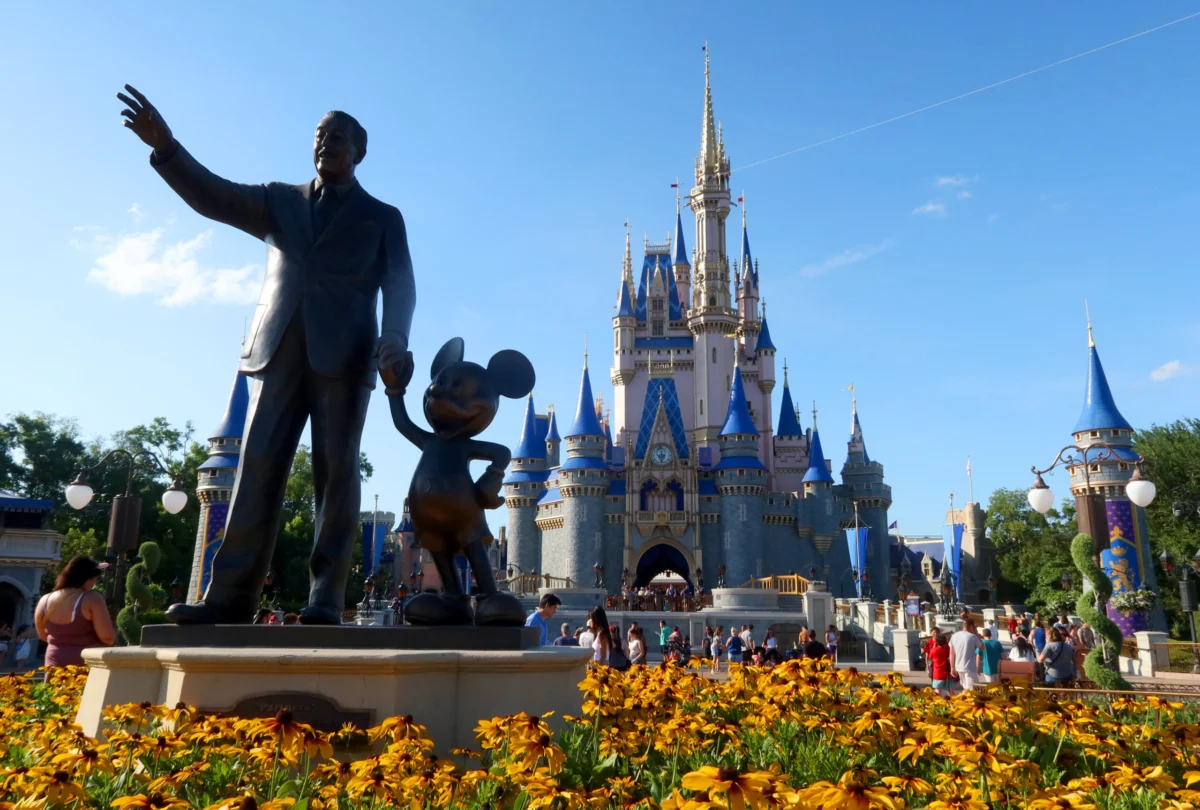
The Walt Disney Co. similarly reported robust second-quarter 2026 results, surpassing Wall Street’s expectations on the back of impressive performances from its experiences division and continued progress in its streaming ventures. Disney’s experiences division, which encompasses its globally renowned theme parks, resorts, and cruise lines, posted nearly $9.5 billion in quarterly revenue, marking a healthy 7% increase from the prior year. This segment’s strength reflects a powerful "revenge travel" phenomenon and a persistent demand for high-quality leisure and entertainment options, even as household budgets face external pressures.
Global attendance at Disney’s parks rose by 2%, a positive indicator of broad international appeal and sustained visitor interest. While domestic park visitation experienced a slight 1% dip, the company remained optimistic, attributing it potentially to localized factors or a normalization after peak post-pandemic surges. In its earnings materials, Disney articulated confidence in its future outlook for this segment: "Current demand at our domestic parks and resorts is healthy. While we acknowledge the potential impact of heightened global macro uncertainty on consumers, we are encouraged by current demand and expect year-over-year attendance at our domestic parks in Q3 to show improvement compared to Q2 results." This forward-looking statement suggests that the company anticipates a rebound in domestic visitation, perhaps as seasonal factors shift or specific marketing initiatives take hold.
The performance of both Uber and Disney collectively paints a compelling picture of a bifurcated economy where, despite widespread concerns, a significant segment of consumers maintains the capacity and willingness to spend on discretionary services and experiences. This phenomenon has prompted economists and market analysts to re-evaluate their projections for consumer behavior in the face of ongoing economic uncertainties.
The Broader Economic Landscape and Its Impact
These strong earnings reports emerge against a backdrop of considerable economic turbulence. One of the most immediate and visible challenges has been the relentless surge in energy prices. The national average price for regular gasoline had climbed to $4.54 a gallon in the reported period, a staggering 52% increase since the onset of intensified geopolitical tensions in the Middle East. Similarly, diesel prices surged to $5.67 a gallon, representing approximately a 51% increase since late February. These elevated fuel costs directly impact household budgets, increasing the cost of commuting, transportation, and consumer goods due to higher shipping expenses.
Beyond energy, broader inflationary pressures have been a consistent concern, with the Consumer Price Index (CPI) remaining elevated, eroding purchasing power. Central banks globally, including the U.S. Federal Reserve, have been engaged in a concerted effort to combat inflation through interest rate hikes, which in turn raise borrowing costs for businesses and consumers, potentially cooling economic activity. Geopolitical tensions, particularly those impacting global energy markets and supply chains, add another layer of complexity, fostering uncertainty and potentially dampening business investment and consumer confidence.
Market Reactions and Analyst Perspectives

The market’s enthusiastic response to Uber and Disney’s earnings reflects a relief that the consumer-driven segments of the economy are proving more resilient than many had feared. Analysts widely viewed these results as a strong indicator that despite the headline economic challenges, a significant portion of the population continues to possess disposable income and a desire for experiences.
"These results from Uber and Disney are a crucial data point," noted a senior analyst at a major investment bank, preferring to remain anonymous. "They suggest that the widely anticipated ‘pullback’ in discretionary spending might be more nuanced than a broad-based slowdown. Consumers appear to be prioritizing experiences and convenience, perhaps cutting back in other, less visible areas, or drawing on accumulated savings from previous periods."
Other analysts pointed to a potential "K-shaped" economic recovery, where certain segments of the population, particularly those with higher incomes or more stable employment, continue to thrive and spend, while others struggle with rising costs. The strong labor market in the reported period, characterized by low unemployment rates and, in some sectors, wage growth, likely provided a buffer for many consumers, enabling them to absorb higher costs without drastically altering their spending habits on preferred services.
Consumer Behavior Analysis: Why the Resilience?
Several factors could be contributing to this surprising consumer resilience:
- Pent-Up Demand: Following periods of restricted activity and travel during the pandemic, there remains a strong underlying desire for experiences, travel, and social engagement. Consumers may be prioritizing these activities even at higher costs.
- Strong Labor Market: A robust job market, characterized by low unemployment and consistent wage growth in many sectors, provides consumers with the financial confidence and means to sustain their spending patterns.
- Savings Buffer: While aggregate savings rates may have normalized, many households accumulated substantial savings during the pandemic, which they may now be tapping into to maintain their lifestyle or fund desired experiences.
- Shifting Priorities: There’s an argument to be made that consumers are increasingly valuing experiences over material goods. Companies like Uber and Disney, which facilitate these experiences, are direct beneficiaries of this cultural shift.
- Adaptation to Inflation: Consumers may be adjusting to the "new normal" of higher prices, integrating them into their budgets rather than entirely curtailing spending, especially for services they deem essential or highly valued.
Company Strategies and Future Outlook
Both Uber and Disney are not complacent about the macro environment. While acknowledging current strength, they are also actively strategizing to mitigate future risks.
Uber, for instance, has been continuously optimizing its platform, expanding into new verticals (like grocery and retail delivery), and investing in technology to enhance efficiency for both earners and consumers. Khosrowshahi’s emphasis on local spending and the growing number of earners on the platform highlights a strategy focused on deepening market penetration and ensuring service availability. The diversification into delivery services provides a crucial hedge against potential fluctuations in ride-hailing demand.
Disney Chief Financial Officer Hugh Johnston, while expressing confidence in current demand, offered a cautious note regarding the potential for sustained high fuel costs to eventually pressure consumers. "We’re mindful of the macro uncertainty consumers are facing and we’re not immune to the impacts, including how a significant further rise in fuel prices from current levels could eventually lead to changes in consumer behavior," Johnston stated during the earnings call. He added that if such a scenario were to materialize, "each business has levers in place to make adjustments in order to offset those kinds of macro pressures." These levers could include dynamic pricing, cost management initiatives, operational efficiencies, or strategic marketing adjustments to maintain demand. Disney’s diversified portfolio, spanning theme parks, cruise lines, streaming services, and media networks, also provides a degree of insulation against downturns in any single segment. The focus on high-value, premium experiences within its parks division, for example, allows for some pricing power even in a challenging economic climate.
Implications for Policy Makers
The sustained strength of consumer spending, as evidenced by these earnings, presents a complex challenge for central banks, particularly the U.S. Federal Reserve. If consumer demand remains robust despite efforts to cool the economy through interest rate hikes, it could suggest that inflationary pressures are more deeply entrenched than previously assumed. This scenario might compel the Fed to maintain a more aggressive stance on monetary tightening, potentially leading to higher interest rates for longer, in order to effectively bring inflation back to its target levels.
Conversely, if consumer spending were to eventually wane significantly, it could signal that the cumulative effect of rate hikes and economic headwinds is finally taking hold, potentially opening the door for a more measured approach by the central bank. The performance of consumer-facing companies like Uber and Disney therefore serves as a critical barometer for policymakers assessing the efficacy of their monetary policies.
Potential Headwinds and Cautions
Despite the current optimism, several significant headwinds could still temper consumer spending in the coming quarters:
- Prolonged High Energy Prices: While consumers have absorbed current prices, a further significant escalation or prolonged period of elevated fuel costs could eventually force more substantial budget reallocations.
- Deepening Geopolitical Tensions: Any further escalation of global conflicts or new geopolitical flashpoints could disrupt supply chains, drive up commodity prices, and erode consumer and business confidence more broadly.
- Lagged Impact of Interest Rate Hikes: The full effect of aggressive interest rate increases often takes time to permeate through the economy. Mortgage rates, credit card interest, and business borrowing costs continue to rise, potentially squeezing budgets in the future.
- Job Market Weakness: While currently strong, a significant downturn in the labor market (e.g., rising unemployment, widespread layoffs) would be a critical blow to consumer spending capacity.
- Exhaustion of Savings: If consumers are indeed drawing down pandemic-era savings to maintain spending, this buffer will eventually diminish, potentially leading to a more pronounced pullback.
In conclusion, the Q1 and Q2 2026 earnings reports from Uber and Disney offer a compelling narrative of consumer resilience in the face of considerable economic challenges. They underscore that while macroeconomic indicators may point to headwinds, the American consumer’s willingness to spend on experiences and convenience remains remarkably robust. This trend provides a lifeline to key sectors of the economy and offers a glimmer of optimism, even as companies and policymakers remain vigilant, acknowledging the potential for future shifts in this dynamic and unpredictable economic landscape. The coming quarters will be crucial in determining whether this resilience is a sustainable trend or merely a temporary reprieve before broader economic forces exert their full influence.
