

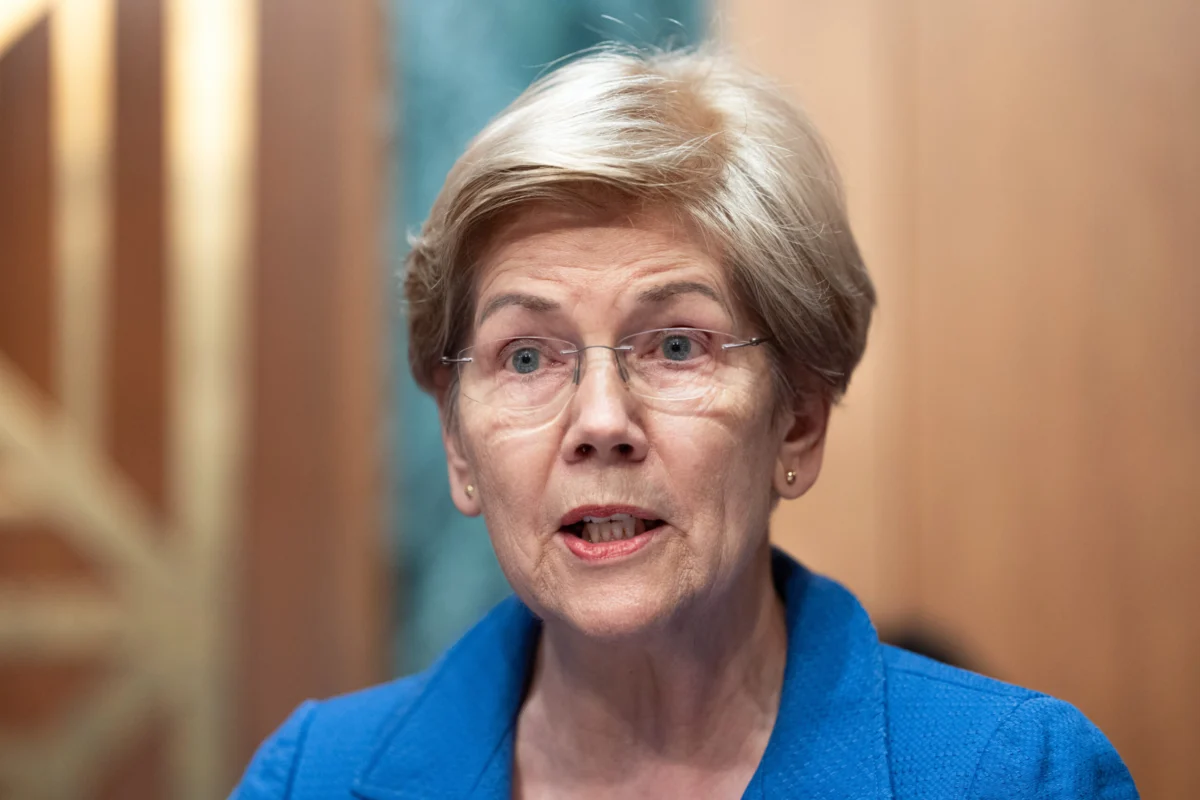
Senator Elizabeth Warren, a prominent Democrat from Massachusetts and the ranking member of the influential Senate Banking, Housing, and Urban Affairs Committee, launched a searing attack on Federal Reserve chair nominee Kevin Warsh on Thursday, March 26, 2026. In an eight-page letter, first reported by CNBC, Senator Warren predicted that Warsh would act as a "rubber stamp for President Trump’s Wall Street First Agenda" and accused him of having learned "nothing from your failures" during his previous tenure at the central bank. The pointed critique casts a significant shadow over Warsh’s already precarious path to confirmation, intertwining his fate with broader political battles surrounding the Federal Reserve’s independence and the contentious policies of the Trump administration.
Senator Warren’s letter, characterized as a "blistering" indictment, meticulously dissected Warsh’s record as a member of the Fed’s Board of Governors from 2006 to 2011, a period encompassing the tumultuous 2008-09 financial crisis and the subsequent Great Recession. She asserted that this record "should disqualify you from a promotion" to lead the nation’s central bank. The Massachusetts senator, known for her staunch advocacy for consumer protection and robust financial regulation, underscored President Donald Trump’s stated desire for a compliant Fed chair, noting his vow that "anybody that disagrees with" him "will never be the Fed Chairman." Warren added, with a clear implication of subservience, "And you, apparently, have passed his test."
Senator Warren’s Scathing Indictment
The core of Senator Warren’s critique centers on Warsh’s perceived prioritization of Wall Street interests over the well-being of American families, both before, during, and after the 2008 financial meltdown. Her letter, intended to solicit detailed answers for his upcoming confirmation hearing before the Senate Banking Committee, was far more than a mere questionnaire. It served as a comprehensive prosecution of his past actions and policy positions.
"I write to better understand what, if anything, you’ve learned from your failure to prioritize American families over Wall Street before, during, and after the 2008 financial crisis while serving as a member of the Board of Governors of the Federal Reserve System," Warren’s letter began, setting an immediate adversarial tone. She continued, "Rather than implementing policies to improve the lives of the American public, you ignored the obviously excessive risk-taking on Wall Street; worked tirelessly to bail out large financial institutions after their bets blew up the economy; and advocated for policies that would have further harmed the millions of Americans who lost their jobs, were thrown out their homes, and saw their life savings evaporate."
Warsh, through his representatives, declined to comment on the letter, a common practice for nominees facing Senate scrutiny. However, the absence of a direct rebuttal from the nominee only amplifies the impact of Warren’s detailed accusations, leaving them to resonate within the political discourse surrounding his nomination.
A Career Under Scrutiny: Warsh’s Federal Reserve Tenure
Kevin Warsh’s career trajectory leading up to his time at the Fed and his subsequent policy stances are central to Warren’s attack. Before joining the Federal Reserve Board of Governors, Warsh spent seven years as a mergers and acquisitions executive at Morgan Stanley, a major Wall Street investment bank. This experience, Warren argues, inherently biased his perspective during the financial crisis. He later served as Special Assistant to the President for Economic Policy and Executive Secretary of the President’s Working Group on Financial Markets under President George W. Bush from 2002 to 2006, before his appointment to the Fed.
The Looming Shadow of the 2008 Financial Crisis
Senator Warren meticulously detailed Warsh’s actions during his Fed tenure (2006-2011), particularly concerning the lead-up to and aftermath of the 2008 crisis.
- Pre-Crisis Negligence: Warren alleged that as early as 2006, "warning signs of the coming crisis" were evident in the subprime home-lending market. She accused Warsh of failing to utilize the Fed’s "powerful supervisory and regulatory authorities" to address these risks. Instead, she claimed he "defended and even implicitly promoted these products," citing a December 2007 instance where he agreed that "subprime mortgages have gotten a bad name in this environment." Furthermore, Warren highlighted his promotion of "derivatives and other forms of ‘financial innovation’ as vehicles to disperse risk and make the financial system safer," concluding emphatically, "Again, you were wrong." The subprime mortgage crisis, driven by risky loans to borrowers with poor credit, and the proliferation of complex financial instruments like mortgage-backed securities and credit default swaps, are widely recognized as key catalysts for the 2008 meltdown.
- Crisis-Era Bailouts and Conflicts of Interest: During the height of the financial crisis, Warren asserted that Warsh "prioritized the interests of large financial institutions ahead of the American public." She specifically linked his "eagerness to bail out Wall Street, including through taxpayer-assisted megamergers," to his prior experience at Morgan Stanley. The letter noted his "central role helping to arrange numerous [multibillion-dollar] bailouts" and, crucially, his obtaining an "ethics waiver to deal directly with Morgan Stanley, which received the special regulatory approvals from the Fed on an expedited basis necessary to access additional emergency support." This detail points to a perceived conflict of interest, where Warsh was involved in decisions that directly benefited his former employer during a period of unprecedented financial distress. The Fed’s actions during the crisis, including facilitating the acquisition of Bear Stearns by JPMorgan Chase and extending emergency credit to AIG, were highly controversial, sparking intense debate about moral hazard and the "too big to fail" dilemma.
- Post-Crisis Advocacy: Beyond his actions during the crisis, Warren criticized Warsh’s post-Fed career, stating, "Since leaving the Fed, you have advocated against tougher safeguards intended to prevent big bank failures and taxpayer bailouts." This is a direct reference to the Dodd-Frank Wall Street Reform and Consumer Protection Act, enacted in 2010 to prevent a recurrence of the crisis. Many conservatives, including Warsh, have argued that Dodd-Frank imposed excessive burdens on financial institutions, hindering economic growth. Warren, conversely, views such safeguards as essential for financial stability and consumer protection.
- Monetary Policy Record: The senator also attacked Warsh’s monetary policy record, specifically his advocacy for higher interest rates during a period when the economy was "hemorrhaging jobs." She wrote, "Your monetary policy record shows a repeated failure to accurately assess the impact of inflation on the American economy." During the Great Recession, the Fed, under Chairman Ben Bernanke, embarked on an aggressive policy of near-zero interest rates and quantitative easing to stimulate the economy. Calls for higher rates during such a downturn would be seen by many economists as counterproductive, potentially deepening and prolonging the recession.
The Federal Reserve’s Critical Mandate and Political Pressures
The Federal Reserve, established in 1913, serves as the central bank of the United States. Its primary objectives, often referred to as the "dual mandate," are to maximize employment and maintain stable prices (control inflation). Beyond these, the Fed plays a crucial role in regulating banks, maintaining the stability of the financial system, and providing financial services to the U.S. government and depository institutions. The independence of the Federal Reserve from political interference is considered paramount to its ability to make sound, long-term economic decisions free from short-term electoral pressures.
However, the Fed’s independence has repeatedly come under fire, particularly during the Trump administration. President Donald Trump has consistently expressed his desire for a Federal Reserve that aligns with his economic agenda, often publicly criticizing Fed chairs who did not conform to his preferences for lower interest rates. This historical context forms a critical backdrop to Warsh’s nomination.
Trump’s Influence and the Quest for a Compliant Fed
Warren’s assertion that Warsh "apparently, has passed [Trump’s] test" for a Fed chair reflects the broader concern among Democrats and some independent economists about the politicization of the central bank. Trump’s past actions, including his repeated and unsuccessful attempts to pressure current Fed Chair Jerome Powell and the entire Board of Governors to cut interest rates more quickly and deeply since reentering the White House in January 2025, illustrate his strong desire for a Fed chairman who would support his administration’s economic policies without dissent.
A Fed chair who is perceived as overly aligned with the executive branch could undermine the institution’s credibility, both domestically and internationally. Such a perception could lead to market instability, as investors might question the Fed’s impartiality and its commitment to its dual mandate, potentially impacting the dollar’s value and investor confidence.
A Nomination in Limbo: Intertwined Fates and Political Maneuvering
The controversy surrounding Kevin Warsh’s nomination is not solely confined to Senator Warren’s criticisms. His confirmation process is currently ensnared in a complex web of political maneuvering, an ongoing criminal investigation, and the uncertain future of current Fed Chair Jerome Powell.
The Jerome Powell Investigation: A Tangled Web
Warsh’s nomination is effectively blocked by a fellow Banking Committee member, Senator Thom Tillis, a Republican from North Carolina. Senator Tillis has stated he will prevent the nomination from being considered by the full Senate until a criminal investigation into Fed Chair Jerome Powell is resolved. This investigation, led by Jeanine Pirro, the U.S. Attorney for the District of Columbia, is reportedly focused on cost overruns related to the expensive renovation of the Fed’s headquarters and Powell’s testimony about that project to the Banking Committee.
However, the legitimacy and intent of Pirro’s probe have been called into question. District Court Judge James Boasberg, in his March 11 ruling to quash subpoenas issued to the Fed as part of the investigation, wrote, "There is abundant evidence that the subpoenas’ dominant (if not sole) purpose is to harass and pressure Powell either to yield to the President or to resign and make way for a Fed Chair who will." This judicial assessment lends significant weight to the argument that the investigation is politically motivated, aimed at removing Powell, who has often resisted Trump’s demands for monetary policy changes. Pirro’s office has indicated its intention to reverse Judge Boasberg’s ruling, ensuring the legal battle over the investigation will continue.
Senator Tillis’s Stance and the Road Ahead
Senator Tillis’s decision to leverage Warsh’s nomination as a means to resolve the Powell investigation highlights the highly politicized nature of these appointments. It creates a stalemate where Warsh’s fate is tied not only to his own record and Senate support but also to an unrelated, controversial criminal probe.
Jerome Powell’s term as Fed Chair expires in May. Earlier in March, Powell stated he would remain as chair pro tem if Warsh is not confirmed by that deadline. This provides a temporary solution but underscores the urgency and high stakes involved in resolving the leadership question at the Fed. The protracted nature of the confirmation process, coupled with the political machinations, could create instability and uncertainty in financial markets, which prefer clarity and continuity in central bank leadership.
Broader Implications for Monetary Policy and Financial Stability
The debate surrounding Kevin Warsh’s nomination carries significant implications for the future direction of U.S. monetary policy and financial regulation.
The Future of Financial Regulation
If Warsh were to be confirmed, and given his stated views and Warren’s accusations of his advocacy "against tougher safeguards," there is a strong possibility of a push to roll back or significantly weaken post-crisis financial regulations like the Dodd-Frank Act. This would align with President Trump’s broader deregulatory agenda, which has often criticized these measures as stifling economic growth. Such a move could reignite concerns about systemic risk and the potential for future financial crises, particularly among those who believe the 2008 crisis was a direct result of insufficient oversight.
Preserving Fed Independence
The entire saga, from Trump’s public pressure on Powell to the seemingly politically motivated investigation and Senator Tillis’s blocking tactic, raises serious questions about the long-term preservation of the Federal Reserve’s independence. A central bank that is perceived as bowing to political pressure risks losing its credibility and effectiveness in managing the economy. Its ability to make unpopular but necessary decisions, such as raising interest rates to curb inflation, could be compromised if its leadership fears political retribution. This erosion of independence could have profound consequences for economic stability, potentially leading to greater volatility and less predictable policy outcomes.
Conclusion: A High-Stakes Confirmation Battle
Senator Elizabeth Warren’s "blistering letter" to Kevin Warsh is more than just a procedural step in a confirmation hearing; it is a declaration of war on a nominee she views as fundamentally unfit to lead the Federal Reserve. Her detailed accusations, rooted in Warsh’s record during one of the most significant financial crises in modern history, resonate with a broader political narrative about Wall Street’s influence and the need for robust financial regulation.
Coupled with the extraordinary circumstances surrounding the criminal investigation into current Chair Jerome Powell and the ensuing political blockade by Senator Tillis, Warsh’s path to confirmation appears increasingly fraught. The outcome of this high-stakes battle will not only determine the leadership of the nation’s central bank but also send a powerful signal about the future of financial regulation, the independence of the Federal Reserve, and the balance of power between political leadership and economic stewardship in the United States. The confirmation hearing, scheduled for April 21, 2026, before the Senate Banking Committee, promises to be a pivotal moment in this unfolding drama.
