

The insatiable appetite for artificial intelligence (AI) is precipitating an unprecedented expansion of data center infrastructure, consuming vast tracts of land, straining electrical grids, and escalating energy costs for communities. This rapid proliferation has ignited a fervent public and political backlash, positioning data centers as a potent symbol of big tech’s burgeoning power and its environmental footprint. Yet, as traditional data center development faces increasing headwinds, an audacious and potentially transformative alternative is gaining traction within real estate and technology circles: the integration of miniature data center nodes directly into residential properties.
The Unprecedented Demand for AI Infrastructure
The global push into AI has unleashed a torrent of capital into the construction of specialized computing infrastructure. Major technology companies in the U.S. are projected to spend an astonishing $1 trillion annually on AI-related capital expenditures by 2027, according to recent Wall Street estimates. Globally, a McKinsey report forecasts that spending on data centers will reach a staggering $7 trillion by 2030. This monumental investment underscores the foundational role data centers play in powering AI models, machine learning, and advanced analytics, which are becoming indispensable across every industry sector.
However, this explosive growth comes at a significant cost. Hyperscale data centers, designed to house thousands of servers and network equipment, demand enormous amounts of land, often requiring hundreds of acres for sprawling campuses. More critically, they are colossal energy consumers. A single large data center can draw 50-100 megawatts of power, equivalent to the electricity consumption of a small city, and this demand is projected to soar. The International Energy Agency (IEA) has warned that electricity consumption by data centers globally could double by 2026, reaching the energy usage of Japan. This escalating demand drives up electricity bills for residential and commercial users alike, placing immense strain on existing power grids and necessitating costly upgrades or the construction of new power generation facilities, often from fossil fuel sources, exacerbating climate concerns. Beyond electricity, data centers also require significant amounts of water for cooling systems, further taxing local resources in often drought-prone regions.
The Growing Backlash Against Traditional Data Centers
The environmental and economic impact of data centers has not gone unnoticed by the public and policymakers. Communities across North America and Europe are increasingly vocal in their opposition to new data center projects. Concerns range from the visual blight of massive industrial complexes to noise pollution from cooling systems, and most significantly, the strain on local infrastructure and the environmental footprint.
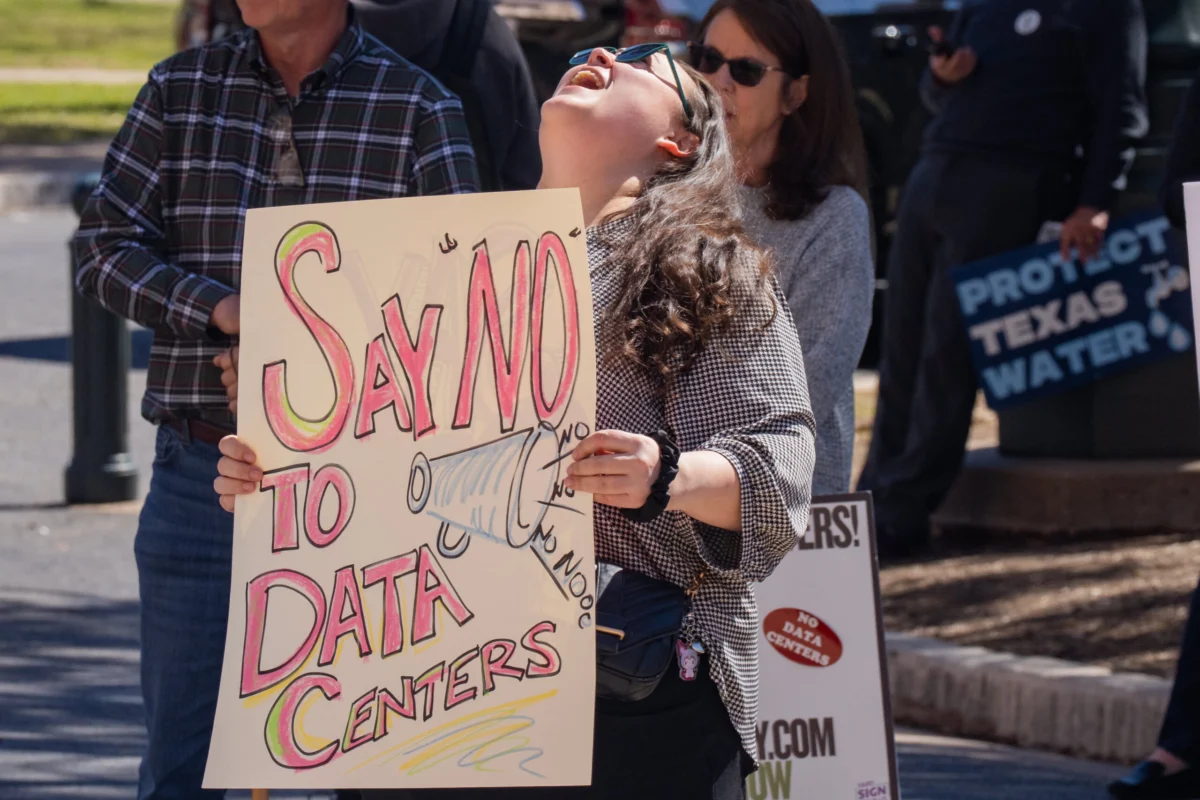
This public discontent has translated into legislative action. Maine’s legislature, for instance, recently passed a statewide ban on new data centers, though it ultimately failed to override the governor’s veto. This move, however, signals a growing trend. According to the National Conference of State Legislatures, at least 14 states, representing a broad political spectrum from Oklahoma to New York, are currently deliberating legislation that would either ban or impose a moratorium on the construction of new data centers. This legislative push coincides with a notable shift in public opinion regarding AI, which has increasingly veered towards skepticism and concern, further fueling the resistance against its foundational infrastructure. Protests, like those witnessed outside the Texas Capitol in Austin in early 2026, where advocacy groups and community members rallied against data center laws, highlight the intensity of this burgeoning grassroots movement.
The Emergence of the "Home as Data Center" Concept
Amidst this backdrop of soaring demand and growing opposition, a novel solution is gaining traction: decentralizing data processing by integrating smaller "nodes" into residential settings. The idea of distributing computing power closer to the end-user is not entirely new; it echoes earlier concepts like SETI@home or Folding@home, where volunteers contributed their home computer’s idle processing power to scientific research. More recently, the phenomenon of individuals using latent home power for cryptocurrency mining or selling excess rooftop solar power back to the grid has paved the way for this more ambitious vision.
This emerging model envisions homes, or even specific exterior walls of newly constructed homes, hosting fractional data center units. This distributed approach promises several potential benefits, including reducing the extensive land and infrastructure requirements of hyperscale facilities, bringing compute capabilities closer to end-users for reduced latency, and creating natural incentives for homeowners through energy savings or direct compensation. Moreover, it offers a strong sustainability angle, as the waste heat generated by these residential nodes could be repurposed, rather than dissipated at great expense, a critical challenge for traditional data centers.
Balaji Tammabattula, Chief Operating Officer at BaRupOn, a U.S.-based energy and technology company, confirms the technical viability. "It is technically possible and already being explored," Tammabattula stated, explaining that just as a home computer can contribute to a distributed network, a home can host compute hardware feeding into a larger data processing system. He notes that "feasibility depends on available power, internet connectivity, heat management, and the type of workload," concluding that "for batch processing and non-time-sensitive tasks, the home environment works surprisingly well."
Pioneering Pilot Programs and Economic Arguments
Real-world proof-of-concept examples are already unfolding. In the United Kingdom, a startup named Heata installs servers in people’s homes to process cloud computing workloads. Critically, the heat generated by these servers is channeled directly into the home’s hot water cylinder, effectively providing homeowners with free hot water in exchange for hosting the hardware. British Gas has already backed a trial of this innovative model, demonstrating its practical application. On a larger scale, operations have commenced in Finland where waste heat from Microsoft data centers is being routed via heat pumps to warm approximately 250,000 local residents’ homes, showcasing the community-level potential of waste heat repurposing. Tammabattula highlights these initiatives as clear demonstrations of the concept’s viability at both household and community levels.
In the U.S., major players are beginning to explore this residential data center model. Homebuilder PulteGroup is reportedly engaged in early testing with technology giant Nvidia and California-based startup Span. This collaboration aims to install small fractional data center "nodes" on the exterior walls of newly built homes, as reported by CNBC’s Diana Olick. Span, in particular, is pioneering a compelling economic model. They own and install liquid-cooled Nvidia RTX PRO 6000 Blackwell GPUs in residential homes. Span then sells the compute power to hyperscalers and AI cloud providers. In return, the homeowner receives a Span smart panel, battery backup, and discounted rates for electricity and internet, typically for a monthly fee of around $150, with installation provided free of charge.

Arthur Ream, a computer information systems lecturer at Bentley University, underscores the compelling economic argument. He points out that a 100 MW traditional data center costs roughly $15 million per megawatt and takes three to five years to build. Span, by contrast, claims it can match that capacity by deploying XFRA nodes across 8,000 new homes in about six months at an estimated cost of $3 million per megawatt. "Even haircut that aggressively for marketing math, the speed-to-power gap is real," Ream notes, emphasizing the significant advantage in deployment speed and potentially cost-efficiency.
Technical and Operational Hurdles
Despite the innovative potential, the path to widespread adoption of home-based data centers is fraught with significant technical and operational challenges. While the concept may work for certain tasks, it is highly unlikely to replace the need for hyperscale data centers for the most demanding AI workloads.
Residential environments fundamentally lack the power density, redundancy, and specialized environmental controls that enterprise-grade workloads require. Sean Farney, Vice President of Data Center Strategy for the Americas at JLL, a global professional services firm managing extensive data center space, highlights the power limitation. "A 20-kilowatt residential generator doesn’t even give you a cabinet of AI servers," he explains, indicating that a typical home’s electrical supply is vastly insufficient for the intensive power demands of advanced AI hardware. Moreover, internet connectivity quality varies drastically across households, creating potential reliability issues at scale. For high-density AI training or real-time, low-latency workloads, residential constraints on heat management, power stability, and guaranteed uptime are difficult to overcome. As Tammabattula confirms, "Anything requiring guaranteed uptime or low latency is not a good fit for this model yet." Currently, the economics primarily work for specific workload types such as batch processing, rendering, and certain research computations that are less time-sensitive.
Cybersecurity and Physical Security: A Decentralized Challenge
Beyond technical limitations, the security implications of a distributed residential data center network present a formidable hurdle. Aimee Simpson, Director of Product Marketing at Huntress, a global cybersecurity company, expresses skepticism regarding the cybersecurity vulnerabilities. "A collection of home-based micro data centers creates the need for a more robust network security approach," Simpson explains. While decentralization can offer redundancy benefits—more sites mean greater resilience if any single data center fails—it also vastly expands the attack surface, making overall security more complex to manage and monitor. Each individual site’s hardware and software would require rigorous security protocols and constant monitoring to prevent vulnerabilities.
The challenge of physical security is even more pronounced. "Physical security of the site, meanwhile, would be almost impossible to guarantee," Simpson states. She contrasts this with the formidable security measures surrounding hyperscale data centers, which are typically enclosed by high fences, equipped with advanced surveillance, and guarded 24/7. The prospect of sensitive, confidential information being processed and managed by servers potentially sitting in someone’s garage raises significant concerns for end-users with stringent data security and compliance obligations. While tamper-proof physical containers could mitigate some physical security risks if deployed in residences, the broader challenges of securing thousands or millions of distributed nodes remain substantial.
Regulatory, Social, and Community Acceptance
Perhaps the most significant non-technical hurdles for the home-as-data-center model lie in regulatory frameworks and social acceptance. The concept of installing commercial-grade computing equipment in private homes raises a myriad of regulatory and insurance questions. Zoning laws, building codes, and safety regulations would need to be re-evaluated or created to accommodate this new form of residential infrastructure.
Community acceptance, already a major pain point for traditional data centers, could prove even more challenging for a distributed model. Jeff Lichtenstein, President and Founder of Echo Fine Properties in Palm Beach Gardens, Florida, vividly illustrates the potential for backlash from homeowner associations (HOAs). "HOAs would absolutely go to town on this idea," Lichtenstein predicts, imagining intense disputes over aesthetics, potential noise, increased traffic from maintenance, and perceived impacts on property values. "Fighting between data companies and cities and homeowner associations would make typical Republican versus Democrat fighting look like child’s play," he quips, underscoring the potential for fierce local opposition. The shift in public opinion on AI, which has become increasingly negative, also suggests that homeowners might be hesitant to embrace a technology that many view with suspicion or concern.
The Future Landscape: Niche Layer or Transformative Shift?
Ultimately, experts agree that the home data center is far more likely to become a crucial niche layer of future infrastructure rather than a wholesale replacement for hyperscale data centers. Gerald Ramdeen of Luxcore, a company developing next-generation optical networking, posits that homes are not equipped to replace hyperscale facilities, especially for large AI training clusters that demand dense power, high-speed networking, specialized cooling, and tightly controlled environments. Instead, he envisions a more realistic opportunity for homes to serve as professionally managed "edge compute nodes," ideal for AI inference, low-latency workloads, flexible/batch compute, cloud gaming, and heat-reuse applications.
Sean Farney of JLL believes that while competing with hyperscalers operationally is expensive due to the highly distributed footprint, the company that successfully scales this model could achieve a "nice-sized valuation." He draws a parallel to the computing power of smartphones, noting that today’s devices surpass the first data center ever built, suggesting that miniaturization and distribution are inevitable trends.
However, some experts remain highly skeptical. Sviat Dulianinov, Chief Strategy Officer of Bright Machines, a software and robotics company, firmly states, "Infrastructure for AI isn’t infrastructure for crypto. You don’t run data centers in basements." He emphasizes that modern AI relies on "AI factories" comprising thousands of GPUs working in concert, demanding complex engineering, precision manufacturing, tightly integrated supply chains, and industrial-scale power and cooling. While he agrees that compute will move closer to the edge, he asserts it will be through "standardized, engineered systems versus crowdsourced home data centers."
The ongoing debate centers on whether the benefits of speed-to-market, sustainability, and distributed compute can outweigh the formidable challenges of security, reliability, regulation, and community acceptance. As Arthur Ream thoughtfully concludes, "The interesting question isn’t whether residential compute works. It’s whether the security, reliability, and regulatory story holds up at gigawatt scale or whether the industry has quietly figured out that the cheapest place to put the operational risk of AI is in someone else’s utility room." The future of AI infrastructure may well involve a hybrid approach, where centralized hyperscale facilities handle the most intensive training, while a distributed network of residential edge nodes provides localized inference and specialized workloads, reshaping the very fabric of how AI is powered and integrated into daily life.
