

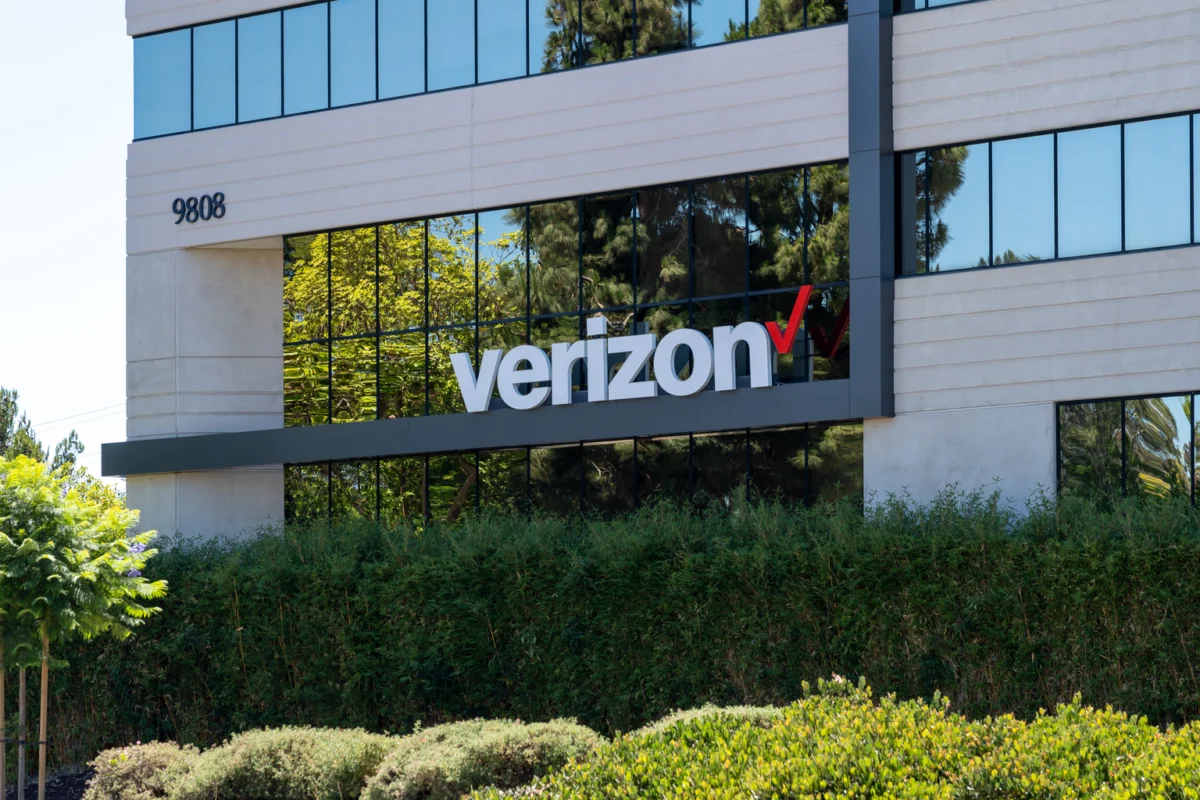
Verizon Communications Inc. (VZ) has announced a strong start to fiscal year 2026, delivering non-GAAP earnings per share (EPS) of $1.28 for the first quarter, significantly surpassing the analyst consensus of $1.21. This impressive financial performance has prompted the telecommunications giant to raise its full-year profit guidance, signaling improving operational momentum and a more optimistic outlook across its diverse business segments. The beat underscores Verizon’s strategic execution in a highly competitive market, particularly its advancements in 5G deployment, fixed wireless access (FWA) expansion, and disciplined cost management initiatives.
Detailed Financial Highlights of Q1 2026
For the quarter ended March 31, 2026, Verizon reported total consolidated operating revenue of $33.8 billion, a 2.5% increase year-over-year, driven primarily by robust growth in its wireless service revenue and strong performance in its fixed wireless access segment. Wireless service revenue, a critical metric for the company, climbed 4.1% to $19.5 billion, reflecting a healthy blend of subscriber additions and an uptick in average revenue per user (ARPU).
The company’s non-GAAP EPS of $1.28 represents a 5.8% increase compared to $1.21 in the prior-year quarter, translating to a net income of $5.4 billion. Adjusted EBITDA for the quarter reached $12.5 billion, demonstrating effective cost controls and operational efficiencies. Capital expenditures for the first quarter totaled $5.1 billion, in line with the company’s aggressive network expansion plans, particularly in its 5G Ultra Wideband and fiber optic infrastructure. Free cash flow for the quarter was reported at $6.8 billion, providing ample liquidity for ongoing investments and shareholder returns.
A key highlight of the quarter was the significant subscriber growth. Verizon added 520,000 postpaid phone net subscribers, a testament to its competitive offerings and network quality. Furthermore, the fixed wireless access (FWA) segment continued its impressive trajectory, adding 410,000 net broadband subscribers, showcasing the increasing demand for high-speed internet alternatives to traditional cable and fiber. Churn rates remained stable at 0.85% for postpaid phone, indicating strong customer retention amidst intense market competition.
Strategic Context and Industry Landscape
The telecommunications industry in early 2026 is characterized by rapid technological evolution and fierce competition. The widespread deployment of 5G networks, particularly the mid-band C-band spectrum, has become a pivotal battleground for wireless carriers. Verizon’s multi-year strategic objectives have centered on leveraging its extensive C-band holdings to expand its 5G Ultra Wideband coverage, enhance network capacity, and deliver superior user experiences. This focus is critical for attracting and retaining high-value customers.
Beyond traditional mobile services, the market for fixed wireless access has emerged as a significant growth vector. Verizon’s FWA offering, leveraging its 5G infrastructure, directly competes with established wireline broadband providers such as Comcast, Charter, and AT&T’s fiber division. The company’s consistent FWA subscriber additions underscore the appeal of wireless broadband solutions for both residential and small business customers, particularly in areas where fiber optic deployment is economically challenging or unavailable.
Competition from rivals like AT&T and T-Mobile remains intense. AT&T has been aggressively expanding its own fiber footprint and 5G network, while T-Mobile has maintained its focus on value propositions and expanding its mid-band 5G network, particularly benefiting from its acquisition of Sprint. The competitive landscape necessitates continuous innovation, aggressive marketing, and a relentless focus on customer satisfaction and network performance from all major players.
Verizon’s strategy also includes a significant emphasis on its Business Group, targeting enterprise, small and medium business (SMB), and public sector clients with advanced connectivity solutions, including private 5G networks, IoT services, and managed security. The company aims to transform from a pure connectivity provider to a comprehensive technology solutions partner, driving higher-margin revenue streams. Cost efficiency initiatives, including network densification, automation, and streamlining operational processes, have also been central to Verizon’s strategy to maintain profitability and improve financial leverage.
Revised Full-Year Outlook and Driving Factors
Following the stronger-than-expected Q1 performance, Verizon has raised its full-year 2026 profit guidance. The company now anticipates full-year non-GAAP EPS to be in the range of $5.05 to $5.20, up from its previous projection of $4.95 to $5.10. This revised outlook reflects confidence in sustained operational momentum and a more favorable market environment. Consolidated operating revenue growth is now projected to be in the range of 2.0% to 3.0%, an increase from the earlier forecast of 1.5% to 2.5%.
The primary drivers behind this elevated outlook are multifaceted. Management cited continued strong subscriber growth in both postpaid phone and FWA segments, indicating successful execution of marketing campaigns and the competitive advantage of Verizon’s network. The sustained strength in ARPU suggests effective pricing strategies and the successful upsell of premium plans and services. Furthermore, improvements in churn rates reflect enhanced customer experience and loyalty initiatives.
On the cost front, ongoing operational efficiencies and disciplined expense management played a crucial role. Verizon has been actively optimizing its network infrastructure, consolidating legacy systems, and leveraging automation to reduce operating costs. The integration of artificial intelligence into customer service and network management is also contributing to improved efficiency and resource allocation. The Business Group’s performance, particularly in securing new enterprise contracts and expanding its IoT offerings, has also contributed positively to the overall revenue and profit trajectory.
Segmental Performance Breakdown
Consumer Group: The Consumer Group demonstrated robust performance, recording 520,000 postpaid phone net additions, an improvement from the 450,000 additions in Q4 2025 and 480,000 in Q1 2025. This growth was fueled by compelling promotional offers, the continued expansion of 5G Ultra Wideband coverage, and strong demand for premium unlimited plans. Postpaid phone ARPU increased by 1.8% year-over-year to $53.50, driven by higher-value plan migrations and ancillary services. The FWA offering for residential customers added 350,000 subscribers, bringing its total FWA customer base to over 4.5 million, solidifying its position as a major broadband player. Fios broadband net additions stood at 55,000, indicating steady growth in its fiber-optic footprint.
Business Group: The Business Group also delivered a strong quarter, with total operating revenue of $7.9 billion, representing a 1.5% year-over-year increase. This growth was primarily driven by continued expansion in its enterprise and public sector segments, as well as an uptick in IoT solutions. Verizon Business secured several key contracts for private 5G networks and edge computing solutions, showcasing its leadership in advanced enterprise connectivity. Small and medium business (SMB) segment revenue saw a modest increase, benefiting from enhanced bundled offerings and personalized service. The Business Group added 60,000 wireless postpaid net subscribers, reflecting ongoing demand for reliable mobile connectivity solutions for corporate users.
Leadership Commentary and Strategic Vision
Hans Vestberg, Chairman and CEO of Verizon, expressed satisfaction with the Q1 results, stating in an earnings call, "Our strong first-quarter performance underscores the efficacy of our long-term strategy and the relentless execution by our teams. We are delivering on our commitments to expand our 5G Ultra Wideband network, provide exceptional value to our customers, and drive sustainable growth. The significant subscriber additions in both postpaid phone and fixed wireless access, coupled with our disciplined approach to cost management, clearly demonstrate our improving operational momentum. We are well-positioned to capitalize on the opportunities presented by the 5G era and remain focused on enhancing shareholder value."
Tony Skiadas, Chief Financial Officer, reiterated the company’s commitment to financial discipline. "Our strong free cash flow generation in Q1 provides us with the flexibility to continue investing in our network while maintaining a healthy balance sheet. The raised full-year guidance reflects our confidence in our ability to sustain this positive trajectory through effective cost controls, optimized capital allocation, and a focus on profitable growth. We are particularly encouraged by the improving profitability trends across both our Consumer and Business segments."
Analyst and Market Reactions
Following the announcement, financial analysts largely reacted positively, with several investment banks reiterating "Buy" ratings and increasing price targets for VZ shares. Analysts from firms like JPMorgan Chase and Goldman Sachs highlighted Verizon’s robust postpaid phone additions and impressive FWA growth as key drivers for future revenue streams. "Verizon’s ability to exceed expectations in a challenging macroeconomic environment speaks volumes about its operational resilience and strategic foresight," noted a senior analyst at Morgan Stanley. "The upward revision of guidance provides a strong signal of confidence from management, which should resonate well with investors."
While the overall sentiment was positive, some analysts pointed to ongoing capital expenditure requirements for 5G and fiber deployment as a potential pressure point on free cash flow in the long term, although acknowledging the necessity of these investments for future growth. Verizon’s stock (VZ) saw an initial surge of over 3% in pre-market trading following the news, reflecting investor optimism regarding the company’s improved outlook and execution. The stock maintained much of these gains throughout the trading day, signaling a renewed confidence in Verizon’s strategic direction.
Broader Implications for the Telecom Sector
Verizon’s strong Q1 2026 performance carries significant implications for the broader telecommunications sector. It signals that investment in high-quality 5G networks and diversified service offerings, such as FWA, can yield substantial returns even in a mature market. This success puts additional pressure on competitors like AT&T and T-Mobile to demonstrate equally compelling growth and profitability metrics. It may also accelerate the pace of 5G C-band deployment and fixed wireless expansion across the industry as rivals strive to keep pace.
For consumers, increased competition driven by Verizon’s strong showing could translate into more innovative service plans, improved network coverage and speed, and potentially more aggressive pricing, particularly in the broadband market. The continued success of FWA as a viable alternative to traditional internet service providers highlights a significant shift in consumer preferences and technological capabilities, further intensifying competition between wireless carriers and cable companies.
Looking Ahead: Verizon’s Trajectory
As Verizon moves further into 2026, the company is expected to maintain its focus on several key initiatives. Continued investment in its 5G Ultra Wideband network, particularly expanding coverage in underserved areas and enhancing capacity in high-traffic zones, remains paramount. The company will likely seek to further monetize its network assets through new enterprise solutions, including private networks and mobile edge computing, driving growth in its Business Group.
Verizon’s FWA strategy will also be critical, with aggressive targets for subscriber additions as it seeks to capture a larger share of the broadband market. The emphasis on customer experience, coupled with ongoing efforts to streamline operations and enhance cost efficiency, will be crucial for sustaining profitability and driving long-term shareholder value. With a robust first quarter behind it and an elevated outlook for the year, Verizon appears to be on a clear path to reinforcing its leadership position in the evolving telecommunications landscape.
