

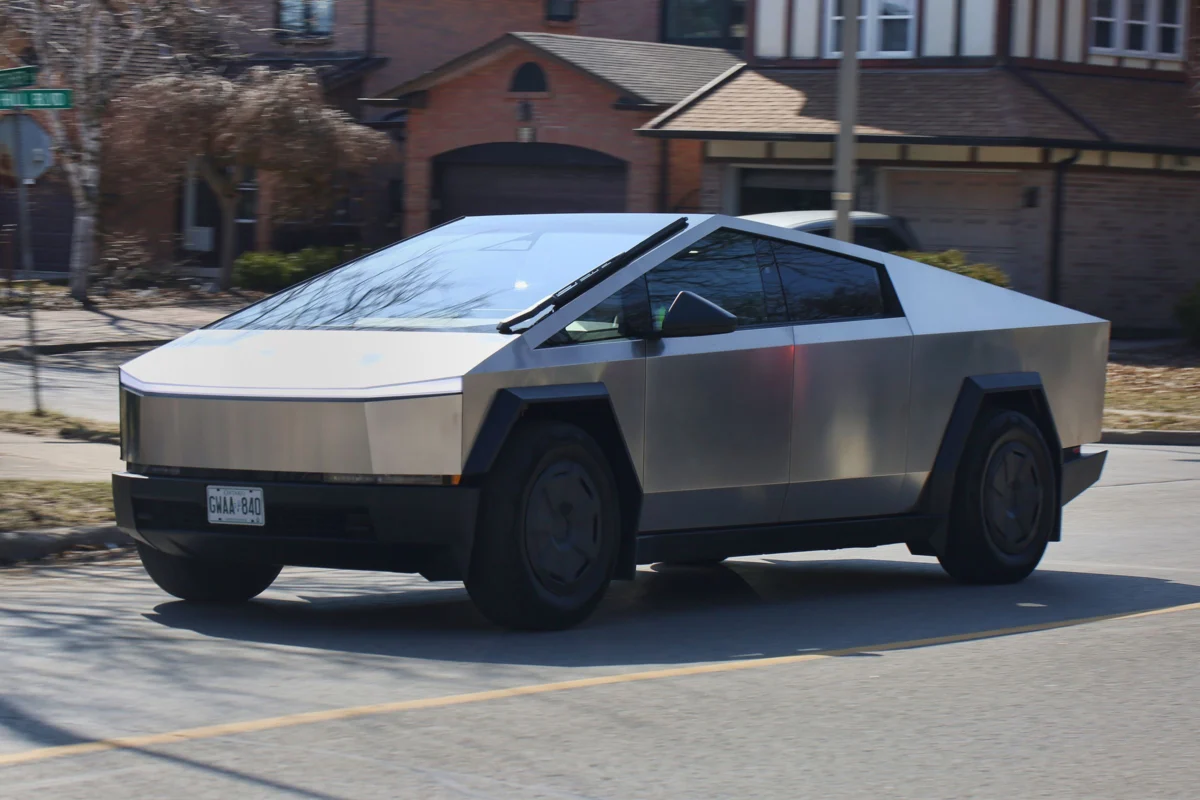
Tesla Inc. has initiated its eleventh recall for the Cybertruck since the vehicle’s high-profile launch, citing a manufacturing error involving the application of incorrect grease during the assembly process. This latest safety notification, filed with the National Highway Traffic Safety Administration (NHTSA), specifically targets the Rear Wheel Drive (RWD) Cybertruck Long Range variant. The defect involves the potential for brake rotor stud holes to crack under stress, a condition that could ultimately lead to the wheel separating from the hub assembly while the vehicle is in motion.
According to the official recall documentation, the root cause of the issue stems from a specific batch of lubricants used on the lug nuts that secure the 18-inch wheels to the brake rotors. Tesla engineers discovered that the grease applied during a certain production window did not provide the necessary friction-reduction properties. This deficiency can cause the lug nuts to loosen over time, leading to excessive vibrations and mechanical strain. When the vehicle encounters "higher severity road perturbations"—such as potholes or uneven terrain—or undergoes sharp cornering, the strain on the stud holes in the wheel rotor can cause microscopic cracks to form. If these cracks propagate, the structural integrity of the wheel hub is compromised, posing a significant safety risk to the driver and other road users.
Technical Analysis of the Component Failure
The mechanical failure described by Tesla is a result of metallurgical fatigue accelerated by improper torque retention. In automotive engineering, the interface between the wheel, the lug nuts, and the brake rotor is a critical safety junction. The use of grease on lug nuts is a precise science; it is intended to ensure that the torque applied during assembly translates into the correct amount of clamping force. When the wrong lubricant is used, the "coefficient of friction" is altered. In this instance, the grease failed to maintain the tension required to keep the wheel assembly seated firmly against the hub.
As the nuts loosen, the wheel assembly experiences "micro-movements" relative to the rotor. Over thousands of rotations and impacts from the road, these movements create a hammering effect on the wheel studs and the holes in the rotor. The stainless steel and heavy-duty alloys used in the Cybertruck’s construction are designed for durability, but they are not immune to the physics of vibration-induced fatigue. Tesla’s filing notes that if the cracking is allowed to continue, the wheel stud could eventually separate entirely from the wheel hub. This would result in the wheel detaching from the axle, a catastrophic failure that could lead to a loss of vehicle control.
Chronology of Cybertruck Recalls and Quality Control Issues
The Cybertruck has faced a tumultuous first year of production, with this 11th recall serving as another chapter in a series of manufacturing hurdles. To understand the significance of the current "wrong grease" issue, it is necessary to look at the timeline of previous mechanical and software setbacks that have plagued the electric pickup:
- The Accelerator Pedal Pad (April 2024): One of the most publicized recalls involved the accelerator pedal. A "soap-like" lubricant used during assembly caused the metal cover of the pedal to slide off and become wedged in the interior trim, potentially pinning the throttle wide open.
- The Trim Panel Adhesive (June 2024): Tesla had to recall nearly every Cybertruck on the road after discovering that a large steel trim panel on the truck bed could fly off at high speeds. The cause was identified as the use of the wrong type of adhesive or "glue" during the bonding process.
- Wiper Motor Failures: Early owners reported that the massive, single-blade windshield wiper—a signature design element—would fail due to electrical overstress in the motor, leading to a recall of several thousand units.
- Rearview Camera Delays: A software-based recall was issued when it was found that the rearview camera feed might not appear on the screen within the federally mandated two seconds after shifting into reverse.
- Stainless Steel Corrosion Concerns: While not a formal safety recall, Tesla faced significant public relations pressure following reports from owners that their "rust-proof" stainless steel exteriors were developing orange spots (iron contamination) after exposure to rain and salt.
This latest recall regarding the RWD models highlights a recurring theme: small, seemingly minor deviations in materials or factory floor communication leading to significant mechanical vulnerabilities.
Production Floor Communication Gaps
Sean Tucker, the managing editor at Kelley Blue Book, has provided insight into how such a specific error could occur within a high-tech facility like Tesla’s Gigafactory Texas. According to Tucker, the issue was not a design flaw in the traditional sense but a failure in the execution of a production change.
"A car is such a complex machine that a very small change to design can have consequences years down the road," Tucker noted. In this case, Tesla engineers had identified a need to change the grease specification for the lug nuts to ensure better long-term stability. However, the directive to switch to the new lubricant did not reach the production line before a batch of vehicles was assembled.
"They changed the grease, but that message didn’t get to the production floor in time, and they built 173 with the wrong grease," Tucker explained. This resulted in what he describes as a "subset of a subset" of vehicles—specifically RWD models with 18-inch wheels produced on specific dates—being shipped with a known defect.
Tesla has confirmed that it will address the issue by completely replacing the wheel hubs, rotors, and lug nuts for all 173 affected vehicles. This comprehensive "hardware fix" is intended to ensure that any potential micro-cracking already present in the rotors is eliminated, rather than simply retightening the nuts with the correct grease.
Market Context and Sales Performance
The small number of vehicles affected by this specific recall—only 173 units—has sparked a broader discussion regarding the actual production and delivery volume of the Cybertruck’s RWD variant. When Elon Musk first unveiled the Cybertruck in 2019, he boasted of over one million pre-orders. However, translating those "reservations" into actual sales has proven difficult.
Industry data suggests that Tesla’s production ramp-up for the Cybertruck has been slower than anticipated. In the first 14 months of sales, the company reportedly moved approximately 46,096 trucks. While this makes the Cybertruck a competitive player in the niche electric pickup market, it falls short of the "mass market" disruption originally promised. The RWD version, which is the most affordable entry point into the Cybertruck lineup, appears to represent only a small fraction of current deliveries, as evidenced by the low number of units impacted by the wheel hub recall.
The Cybertruck currently competes in an increasingly crowded segment that includes the Ford F-150 Lightning, the Rivian R1T, and the Chevrolet Silverado EV. Unlike its competitors, which utilize traditional body-on-frame construction, the Cybertruck’s "exoskeleton" design and stainless steel skin require entirely new manufacturing techniques. Analysts suggest that these unique engineering requirements are the primary reason for the frequent "material-specific" recalls, such as the wrong glue or the wrong grease.
Official Responses and Remediation Efforts
Tesla has begun notifying affected owners via the Tesla app and official mailers. The company has instructed owners of the affected RWD models to schedule service appointments immediately. Because the fix requires physical replacement of the hub and rotor assembly, it cannot be resolved via an over-the-air (OTA) software update—a method Tesla frequently uses to solve other issues.
In their notice to the NHTSA, Tesla stated: "At no cost to the customer, Tesla Service will replace the wheel hubs and rotors with components that have been validated for the correct friction specifications. Tesla will also provide new lug nuts and ensure the correct lubricant is applied to all mounting surfaces."
Safety advocates and automotive analysts view these frequent recalls with a mix of concern and pragmatism. While the number of recalls is high, some argue that Tesla’s ability to identify and rectify these niche issues quickly is a testament to their data-driven monitoring of vehicle performance. Conversely, critics argue that the Cybertruck was rushed to market, effectively using early adopters as "beta testers" for a vehicle that was not fully "production-ready."
Broader Implications for the Automotive Industry
The Cybertruck’s journey serves as a cautionary tale for the broader automotive industry regarding the risks of radical innovation in high-volume manufacturing. The transition from internal combustion engines to electric vehicles has already strained traditional supply chains, but Tesla’s insistence on reinventing the fundamental structure of the pickup truck has added layers of complexity.
The "wrong grease" recall is a reminder that even in an era of AI-driven factories and automated assembly, human communication and the selection of basic industrial consumables remain critical failure points. For Tesla, the challenge moving forward will be to stabilize its production processes to move past the "recall of the month" cycle. As the company looks to expand the Cybertruck’s reach into international markets and increase production of the RWD model, ensuring that the "apocalypse-proof" branding matches the mechanical reality of the vehicle will be paramount to maintaining brand loyalty and consumer trust.
For now, the 173 owners affected by the wheel hub issue are encouraged to park their vehicles or seek immediate service to prevent their "apocalypse-proof" trucks from losing the very wheels they depend on.
