


Torrance Coste spends a significant portion of his life beneath the ancient canopies of British Columbia’s old-growth forests, navigating a landscape of moss-draped cedars and towering Douglas firs. As the associate director of the Wilderness Committee based in Victoria, Coste’s work involves building trails, camping, and documenting the state of one of the world’s most vital temperate rainforests. However, the serenity of these expeditions is increasingly interrupted by a stark, jarring reality: the expansive scars of industrial clear-cutting. For Coste, the most troubling aspect of these decimated landscapes is not just the loss of biodiversity, but the stamp of approval they often carry. Many of these clear-cuts exist within territories certified by the Sustainable Forestry Initiative (SFI), a label intended to signal to global markets that the timber was harvested with the utmost care for the environment.
The discrepancy between the "sustainable" label found on consumer products—ranging from tissue paper to cardboard packaging—and the industrial practices Coste witnesses on the ground has sparked a high-stakes legal and regulatory battle. At the heart of this conflict is a comprehensive complaint filed with the Competition Bureau of Canada, alleging that the SFI is engaging in systemic greenwashing. The complaint, led by the environmental law firm Ecojustice on behalf of a coalition including the Wilderness Committee, Greenpeace Canada, and several other conservation groups, challenges the very integrity of North America’s most prevalent forestry certification.
The Foundation of the Dispute: Certification vs. Reality
The Sustainable Forestry Initiative was established in 1994, a period when the global timber industry faced mounting pressure from environmental movements and "eco-conscious" consumers. Originally birthed by the pulp and paper industry, the SFI was designed to provide a framework for responsible management. Today, it is a non-profit organization that has certified more than 150 million hectares of forest across North America, with a staggering 76% of that land located within Canada.
The core of the legal challenge lies in the definition of "sustainability." The complainants argue that the SFI’s standards are fundamentally performative rather than substantive. They contend that the criteria used by the SFI allow for practices that are ecologically devastating, such as the large-scale clear-cutting of rare old-growth forests, the application of glyphosate to suppress the regrowth of natural deciduous vegetation, and the eventual replacement of complex ecosystems with monoculture softwood plantations.
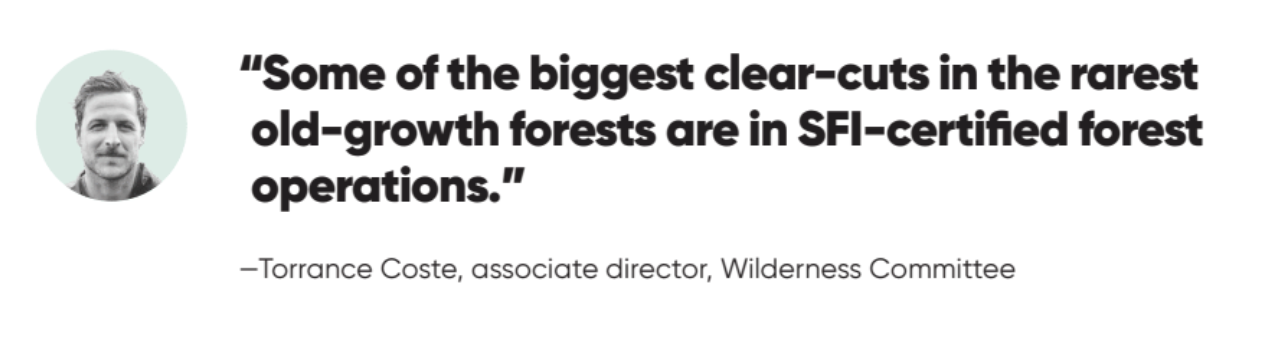
"People desperately want to believe that logging can be done well, and that we can meet our needs for timber and fibre without having a devastating impact," Coste remarked in a recent interview. "The story that can’t be manipulated is the one told out on the land. You get out into some of these areas, into some of these clear-cuts in forests that are SFI-certified, and there’s absolutely nothing sustainable about it."
A Chronology of the Investigation
The current investigation by the Competition Bureau is the result of years of mounting tension between environmental advocates and the forestry industry.

- 1993–1994: The Forest Stewardship Council (FSC) is founded by a multi-stakeholder group including environmentalists and Indigenous leaders. Shortly after, the American Forest & Paper Association launches the SFI as an industry-led alternative.
- 2021: A coalition of environmental groups, represented by Ecojustice, files a formal 39-page complaint with the Competition Bureau of Canada. The filing alleges that SFI’s claims of sustainability are false and misleading under the Competition Act.
- 2022: The Competition Bureau officially launches an investigation into the SFI’s marketing practices.
- 2023–2024: The SFI defends its standards, pointing to its multi-stakeholder board and periodic standard revisions. Meanwhile, critics continue to document clear-cutting in certified areas.
- April 2026: SFI issues a formal rebuttal to ongoing criticisms, asserting that their standards are outcome-based and independently verified, while the Competition Bureau maintains its confidential investigation.
The Competition Bureau is tasked with enforcing the Competition Act, a federal law that prohibits companies from making "false or misleading representations" to the public. If the Bureau finds that the SFI’s "sustainable" label constitutes a misrepresentation of the actual environmental impact of the logging it certifies, the organization could face a fine of up to $10 million and be forced to issue public retractions and change its branding.
Technical Critiques: Vague Standards and Auditor Independence
A central figure in the critique of SFI is Peter Wood, a professor in the Department of Forest Resources Management at the University of British Columbia. Having studied forestry certification since the late 1990s, Wood argues that the promise of third-party certification—to bypass government stagnation and ensure ecological health—has largely failed to materialize in the case of the SFI.
In his analysis, Wood points to the "vague and discretionary" nature of the SFI’s requirements. Unlike some certification systems that mandate specific, measurable ecological outcomes, the SFI often requires only that companies have "programs" in place. For instance, while the SFI includes performance measures for protecting endangered species, Wood notes that the standard typically asks only that a company "address" the issue through a program. It does not necessarily require the company to prove that the species’ population is stable or that the logging did not negatively impact the habitat.
Furthermore, Wood highlights a structural conflict of interest: the "auditor-pays" model. Forestry companies seeking SFI certification are responsible for hiring and paying the third-party auditors who assess their compliance. "The standards focus on whether companies have programs in place rather than whether those programs produce measurable results," Wood says. This, he argues, allows vast quantities of wood to enter the global market with a green seal of approval without requiring significant changes to industrial logging practices.
The SFI Defense: Governance and Verification
The Sustainable Forestry Initiative has not remained silent in the face of these allegations. In a detailed response to the Competition Bureau and in statements provided to Corporate Knights, the SFI asserts that the complaint is without merit and is an attempt to create "confusion in the marketplace."
The SFI defends its integrity by pointing to its governance structure. The organization is overseen by an 18-member board equally divided into three sectors: economic, environmental, and social. This board includes representatives from major Canadian timber firms like Canfor and Irving, alongside conservationists and Indigenous leaders. The SFI argues that this "balanced" approach ensures that all perspectives are considered.
Additionally, the SFI emphasizes that its standards undergo a rigorous revision process every five to seven years. This process includes input from technical experts, government agencies such as Natural Resources Canada, and the public. In its April 2026 response, the SFI stated: "Contrary to the article’s claims, SFI’s Standard requires prompt reforestation using ecologically appropriate native species and prohibits the conversion of native forests to plantations. Every Objective, Performance Measure, and Indicator in the Standard must be met and independently verified by a third-party auditor."
To counter the claim that certification is never revoked, an SFI spokesperson noted that 19 certificates were relinquished between January 2022 and June 2024 by companies that could not meet updated, more stringent requirements.
Supporting Data: The Shrinking Frontier
The urgency of the complaint is underscored by the state of British Columbia’s forests. Of the approximately 25 million hectares of old-growth forest that once characterized the province, only about 11 million hectares remain. However, environmental groups point out that even this figure is misleading, as much of the remaining "old forest" consists of small trees at high elevations or in bogs, which do not support the same biodiversity as the "big-tree" old-growth found in valley bottoms—the very areas most targeted by the logging industry.
Independent studies have shown that in some regions of BC, less than 3% of the original high-productivity old-growth forest remains. The fact that SFI-certified operations continue to operate in these high-value ecological zones is the primary catalyst for the "greenwashing" accusation. Critics argue that a truly "sustainable" certification would prohibit the logging of these irreplaceable ecosystems entirely.
Broader Implications: Consumer Trust and Global Policy
The outcome of the Competition Bureau’s investigation could have far-reaching implications for the global timber trade. Canada is one of the world’s largest exporters of forest products, with the industry contributing roughly $25 billion to the national GDP. Much of this trade relies on the "social license" provided by certifications like SFI.
If the Bureau rules against the SFI, it would send a shockwave through the retail sector. Major global brands—from home improvement giants to fast-moving consumer goods companies—rely on SFI labels to meet their corporate social responsibility (CSR) goals. A finding of greenwashing would not only expose these brands to reputational risk but could also lead to a shift in market preference toward the Forest Stewardship Council (FSC). While smaller in terms of total acreage (certifying about 50 million hectares in Canada), the FSC is generally viewed by environmental and Indigenous groups as having a more rigorous, multi-stakeholder governance model that provides stronger protections for biodiversity and Indigenous rights.
Kegan Pepper-Smith, a managing lawyer at Ecojustice, emphasizes that the case is fundamentally about the right of the consumer to make an informed choice. "It’s not only about the impact in the forest; it’s also about the impact on the consumers and their ability to use their money to support sustainable practices," Pepper-Smith says. "They are being misled to think that they’re purchasing products that are sustainably sourced."
As the Competition Bureau continues its confidential work, the forestry industry stands at a crossroads. The resolution of this case will likely define the legal boundaries of environmental marketing in Canada for a generation, determining whether "sustainable" remains a meaningful standard or becomes a casualty of corporate branding. For Torrance Coste and those on the front lines of forest conservation, the goal is simple: ensuring that the reality on the ground finally matches the label on the shelf.
