

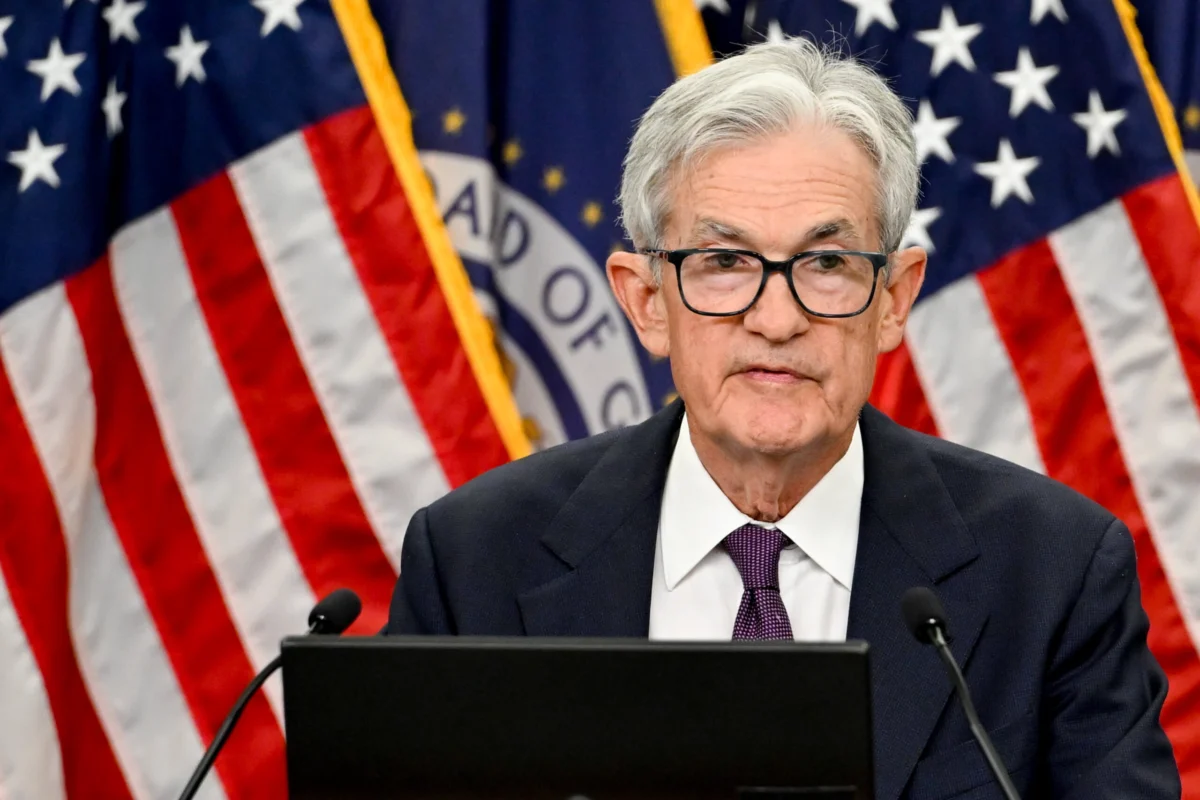
The Federal Reserve concluded its policy meeting on Wednesday, April 29, 2026, by holding interest rates steady, maintaining the federal funds rate in a target range of 3.5% to 3.75%. This decision arrives at a pivotal and uncertain juncture for the U.S. economy, grappling with the dual challenges of escalating geopolitical instability and persistent inflationary pressures. The meeting marked a potentially significant moment, as it could be Jerome Powell’s last as chair before President Donald Trump’s yet-to-be-confirmed nominee, Kevin Warsh, assumes leadership of the central bank. The immediate consequence of the Fed’s inaction is a continuation of current economic conditions for American consumers and businesses, with little immediate relief in sight from the mounting cost-of-living challenges.
Background and Context: A Central Bank Navigating Turbulence
The Federal Reserve operates under a dual mandate from Congress: to achieve maximum employment and maintain stable prices. In recent years, balancing these objectives has become increasingly complex, particularly with external shocks disrupting economic forecasts and policy efficacy. The current decision by the Federal Open Market Committee (FOMC) reflects a cautious stance, acknowledging the delicate balance required when faced with significant global and domestic uncertainties.
The Genesis of Inflationary Pressures:
Prior to the full-scale onset of the war with Iran, the U.S. economy was already experiencing inflation that, while above the Fed’s long-term 2% target, was generally perceived as manageable and not rapidly worsening. The Consumer Price Index (CPI) in February 2026, for instance, showed an annual increase of approximately 3.1%, largely driven by a robust labor market and steady consumer demand. The Fed had, in fact, implemented three interest rate cuts in the second half of 2025, signaling a period where policymakers felt the economy needed a boost or was heading towards a more accommodative stance. These cuts were primarily a response to slowing global growth concerns and a desire to ensure domestic economic resilience, bringing the federal funds rate down from earlier, higher levels.
However, the geopolitical landscape dramatically shifted with the commencement of hostilities involving Iran. The ensuing "oil shock" sent crude oil prices soaring, with Brent crude futures breaching $120 per barrel in early March 2026, up from approximately $85-$90 per barrel just weeks prior. This surge in energy costs swiftly translated into higher gasoline prices at the pump, increased transportation expenses for businesses, and a ripple effect across supply chains, reigniting and exacerbating inflationary pressures. By March and April 2026, preliminary inflation readings indicated a renewed upward trajectory, with energy components being the primary drivers.
The Political Dimension of Monetary Policy:
Adding another layer of uncertainty to this complex environment is the looming leadership transition at the Federal Reserve. Jerome Powell, appointed by President Trump in 2018 and reappointed in 2022, has guided the central bank through unprecedented economic challenges, including a global pandemic and subsequent recovery. However, with a new presidential term beginning in January 2025, the possibility of a new Fed chair has been a subject of intense speculation. President Trump’s nomination of Kevin Warsh, a former Fed governor known for his more hawkish views on monetary policy, coupled with reports of a "criminal probe" related to Powell, has created an environment of political flux within the institution. This potential change in leadership, with a nominee who might advocate for different policy approaches, further complicates the Fed’s ability to signal a clear path forward, contributing to what Sean Snaith, the director of the University of Central Florida’s Institute for Economic Forecasting, described as a state of "suspended animation." Snaith aptly summarized the prevailing sentiment: "We’re in a kind of suspended animation — between Iran and the Fed transition."
Supporting Data and Economic Indicators
The Fed’s decision was undoubtedly influenced by a tapestry of economic data, each presenting its own challenge and reinforcing the argument for a neutral stance.
Inflationary Landscape:
The immediate aftermath of the Iran war saw a dramatic shift in inflation dynamics. While February 2026 CPI was 3.1%, the March and April figures, though not fully released during the meeting, were trending higher, with preliminary estimates suggesting a headline CPI closer to 4% or even 4.5% year-over-year. This acceleration was almost entirely attributable to energy costs, which saw monthly increases of 10-15%. Food prices, already elevated, also continued their steady climb, albeit at a slower pace than energy. Core inflation, which excludes volatile food and energy components, remained sticky, hovering around 3.5%, indicating that price pressures were broadening beyond just the immediate impact of the war. This persistent elevation above the Fed’s 2% target underscores the limited room policymakers have to ease monetary policy without risking an even more entrenched inflationary cycle. Economists widely agree that the jump in energy costs could have significant longer-term inflationary effects, feeding into producer prices and eventually consumer goods as businesses pass on higher input costs.
Consumer Sentiment and Spending:
Consumer sentiment, a critical barometer of economic health, reflected the mounting pressures. The Conference Board’s Consumer Confidence Index, for instance, showed a decline in April 2026, falling to 97.5 from 101.8 in March. Similarly, the University of Michigan Consumer Sentiment Index dipped to 77.2 from 79.4 over the same period. While not indicative of a collapse in confidence, these figures suggest that "consumers are feeling okay but not great," as noted by Steve Odland, CEO of The Conference Board. Higher gas prices, coupled with the overall affordability challenges stemming from persistent inflation in housing, food, and services, have begun to pinch household budgets. Retail sales data, while still positive, showed a moderation in growth, indicating that discretionary spending might be contracting as essentials consume a larger portion of income. The labor market, while still relatively strong with an unemployment rate around 3.8%, saw a slight deceleration in wage growth, perhaps a sign of employers bracing for a tougher economic climate.
Global Economic Fallout:
The conflict in Iran has had far-reaching implications beyond energy markets. Global supply chains, already strained from previous disruptions, faced renewed pressure, leading to increased shipping costs and delays. International trade volumes showed signs of contraction, and investor confidence in emerging markets, particularly those heavily reliant on energy imports, waned. The International Monetary Fund (IMF) and the World Bank both revised down their global growth forecasts for 2026, citing the geopolitical conflict as a primary drag on economic activity. This global slowdown inevitably impacts the U.S. economy through reduced export demand and increased import costs, adding another layer of complexity for the Fed.
Official Responses and Expert Commentary
The Federal Reserve’s official statement following the meeting was, as expected, carefully worded to convey both vigilance and flexibility. It acknowledged the "significant uncertainty" stemming from geopolitical events and their impact on inflation, while reaffirming the committee’s commitment to achieving its dual mandate. There was no explicit forward guidance on future rate moves, allowing the Fed maximum optionality.
Jerome Powell’s Press Conference:
During the subsequent press conference, Chairman Powell likely emphasized the data-dependent nature of monetary policy. He would have reiterated that the Fed is prepared to adjust policy as appropriate, but that the current environment called for a period of assessment. Powell would have underscored the importance of seeing clear evidence that inflation is sustainably moving back towards the 2% target, particularly given the new inflationary impulse from energy prices. He might have also subtly acknowledged the political transition, stressing the institutional independence and long-term objectives of the Federal Reserve.

Economist Perspectives:
Beyond Sean Snaith’s assessment of "suspended animation," other economists weighed in on the Fed’s decision. Dr. Elena Petrova, chief economist at Global Insights Group, stated, "The Fed is truly between a rock and a hard place. Hiking rates now risks tipping an already fragile economy into recession, especially with the geopolitical headwinds. But cutting rates would pour gasoline on the inflationary fire. Holding steady is the least bad option, but it offers no immediate relief." Dr. Marcus Chen, a senior analyst at Macro Analytics, added, "This decision reflects a waiting game. The Fed needs to see how the war evolves, how oil markets stabilize, and whether the inflationary shock proves transient or more deeply embedded. Until then, a neutral stance is the only logical course."
These expert opinions collectively paint a picture of a central bank exercising extreme caution, choosing to observe and analyze rather than intervene decisively in a highly volatile environment. The prevailing sentiment is that the "cavalry isn’t coming anytime soon" for consumers struggling with affordability, meaning they cannot expect immediate policy-driven relief from high costs.
Broader Impact and Implications for Americans
The Federal Reserve’s benchmark federal funds rate sets what banks charge each other for overnight lending, but its influence trickles down to a vast array of consumer borrowing and savings rates, profoundly affecting household finances.
Credit Cards:
Most credit cards feature variable annual percentage rates (APRs) that are directly pegged to the prime rate, which typically hovers 3 percentage points above the federal funds rate. With the federal funds rate held steady between 3.5% and 3.75%, the prime rate remains elevated. After the Fed’s three rate cuts in the second half of 2025, the average credit card APR had settled just under 20%. This high rate means that carrying a balance on a credit card remains an extremely expensive proposition for consumers. As Matt Schulz, chief credit analyst at LendingTree, noted, "Without Fed rate cuts, there’s not much reason to expect meaningful declines anytime soon, so carrying a balance will remain very expensive." For households already facing higher costs for essentials, relying on credit cards to bridge budgetary gaps becomes a debt trap, exacerbating financial strain. Consumers are advised to prioritize paying down high-interest credit card debt, explore balance transfer options to lower introductory rates, or consider debt consolidation strategies if eligible.
Mortgage Rates:
Fixed mortgage rates do not directly track the federal funds rate but are more closely influenced by long-term Treasury yields and broader inflation expectations. Concerns about the potential for the Iran war to fuel sustained inflation and broader economic instability have already pushed these rates significantly higher. As of Tuesday, April 28, 2026, the average rate for a 30-year, fixed-rate mortgage had climbed to 6.38%, a notable increase from 5.99% at the end of February 2026, according to Mortgage News Daily. This upward trend in borrowing costs has a chilling effect on the housing market. Homeowners with existing low mortgage rates are "feeling stuck," as described by Michele Raneri, vice president and head of U.S. research and consulting at TransUnion. The incentive to move and take on a new, higher-rate mortgage is diminished, leading to reduced inventory and lower transaction volumes. First-time homebuyers face a double whammy of high home prices and elevated interest rates, severely impacting affordability and making homeownership an increasingly distant dream for many. The typical churn in the mortgage market, where dips in rates boost borrowing and refinancing activity, is currently stalled.
Student Loans:
Federal student loan rates are fixed for the life of the loan and are based in part on the 10-year Treasury note yield, rather than direct Fed actions. This structure provides some shielding for most borrowers from immediate Fed policy moves and recent economic uncertainty. Current interest rates on undergraduate federal student loans made through June 30, 2026, stand at 6.39%, as determined by the U.S. Department of Education. For the upcoming 2026-2027 school year, interest rates will be set based on the May auction of the 10-year Treasury note. While federal borrowers are insulated from variable rate shocks, the overall upward trend in Treasury yields due to inflation concerns can still lead to higher rates for new loans. Private student loans, however, are often variable-rate and directly tied to benchmarks like the prime rate or LIBOR (or its successor, SOFR), meaning they would be more immediately affected by the Fed’s steady rates.
Car Loans:
Auto loan rates are tied to several factors, including the Fed’s benchmark, the borrower’s creditworthiness, and the competitive landscape among lenders. With financing costs remaining elevated, new car buyers are increasingly resorting to longer loan terms to keep their monthly payments manageable. Data from Edmunds indicates that the average amount financed for new vehicle purchases hit a record $43,899 in the first quarter of 2026. Despite stretching loan terms, with the rate on a five-year new car loan near 7%, the average monthly payment on a new car surged to an all-time high of $773 in Q1 2026. Joseph Yoon, consumer insights analyst at Edmunds, articulated the predicament: "Car buyers are in a tough spot right now because they’re getting squeezed from both ends: high sticker prices and high interest rates, with neither showing any signs of letting up." This trend of longer loan terms, while easing immediate cash flow, ultimately adds to the total cost of ownership due to increased interest paid over the life of the loan and raises the risk of negative equity.
Savings Rates:
While the Fed has no direct influence on deposit rates, the yields offered on savings accounts and certificates of deposit (CDs) tend to correlate with changes in the target federal funds rate. Despite the Fed holding rates steady, yields on high-yield savings accounts and CDs have generally fallen from their peaks observed a few years prior when the federal funds rate was higher. Nevertheless, they are currently holding above the annual rate of inflation, offering a positive "real" return for savers. For now, top-yielding online savings accounts and one-year CD rates are paying around 4%, according to Bankrate. Matt Schulz of LendingTree remarked, "Yields on high-yield savings accounts and certificates of deposit are down from their peaks of a few years ago, but they’re still strong compared to what we’ve seen for most of the past decade." This offers a modest silver lining for diligent savers, allowing their money to grow faster than the rate of inflation, a stark contrast to periods of near-zero interest rates.
Future Outlook and Conclusion
The Federal Reserve’s decision to hold interest rates steady reflects a period of profound economic and political uncertainty. The confluence of a renewed inflationary surge driven by the war with Iran and the impending leadership transition at the central bank has placed monetary policy in a holding pattern. The "suspended animation" described by economists means that the immediate future will likely be characterized by continued vigilance and a data-dependent approach from the Fed.
Looking ahead, the policy path remains highly contingent on external developments. Should the geopolitical conflict de-escalate and energy prices stabilize or fall, the Fed might find more room to consider rate adjustments. Conversely, a further escalation or a broadening of inflationary pressures beyond energy could force the central bank’s hand towards more restrictive measures, despite the risks to economic growth. The transition from Chairman Powell to a new leader, potentially Kevin Warsh, could also usher in a shift in monetary policy philosophy, with implications for how the Fed prioritizes its dual mandate in the coming years.
For American households and businesses, the message is clear: the current economic environment of elevated costs and constrained borrowing conditions is likely to persist for the foreseeable future. There is no immediate "cavalry" coming to rescue budgets from high gas prices, expensive credit, or unaffordable housing. Adaptability, prudent financial planning, and careful management of debt will remain crucial strategies in navigating this period of sustained economic stasis and geopolitical flux. The U.S. economy, and indeed the world, awaits clearer signals from both the battlefields and the boardrooms to chart a more definitive course forward.
