

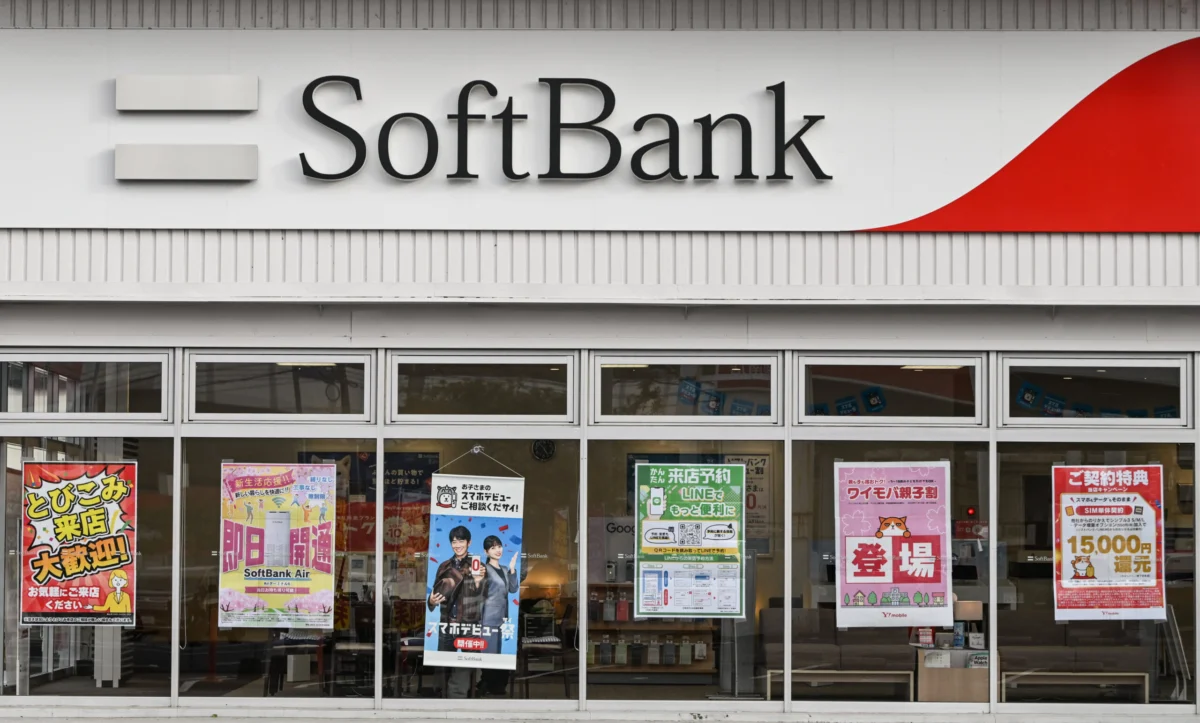
Shares in the Japanese technology investment powerhouse SoftBank Group Corp. skyrocketed by 16.5% on Thursday, spearheading a massive rally across Tokyo’s financial markets as the Nikkei 225 surged to unprecedented record highs. This dramatic upward movement occurred as Japanese investors returned from an extended public holiday, effectively playing catch-up with a global surge in artificial intelligence-related equities that had energized Wall Street in the preceding sessions. The rally underscored a significant shift in market sentiment, with SoftBank positioned at the epicenter of a revitalized tech sector that is increasingly viewed as the primary beneficiary of the next generation of computing infrastructure.
While SoftBank’s double-digit gain represented its most robust single-day performance since 2020, the optimism was far from isolated. The broader semiconductor and hardware ecosystem in Japan saw massive inflows. Advantest Corp., a leading manufacturer of chip-testing equipment, climbed nearly 7.8%, while Tokyo Electron, a critical supplier of semiconductor production tools, surged by 9.2%. Renesas Electronics, a major provider of automotive and industrial chip solutions, jumped 13.8%. The collective movement reflected a broader realization among market participants that the infrastructure required to sustain the artificial intelligence boom—ranging from high-end logic chips to the equipment used to manufacture and test them—is entering a period of prolonged, high-intensity demand.
The Global Catalyst and the Golden Week Catch-Up
The catalyst for Thursday’s surge can be traced directly to the performance of the tech-heavy Nasdaq Composite in the United States. While Japanese markets were shuttered for the latter portion of the "Golden Week" holiday period, global risk assets experienced a significant upward trajectory. On Wednesday, the Nasdaq hit yet another record high, fueled by a blistering rally in AI-linked stocks. Advanced Micro Devices (AMD) saw its shares rise by 18.6%, server manufacturer Super Micro Computer Inc. soared 24.5%, and Arm Holdings—the UK-based chip designer majority-owned by SoftBank—advanced by 13%.
Financial analysts noted that the timing of the Japanese market reopening created a "coiled spring" effect. Billy Leung, an investment strategist at Global X ETFs, explained that the market move was essentially the Nikkei pricing in three sessions of global gains into a single trading day. According to Leung, while Tokyo was closed, the S&P 500 and Nasdaq reached fresh peaks led by the semiconductor sector. He characterized Advantest and Tokyo Electron as the "most liquid Japanese expressions" of the global AI semiconductor trade, allowing domestic investors to gain exposure to the themes driving Wall Street.
Furthermore, a stabilization in the geopolitical landscape provided a supportive backdrop for the rally. Easing tensions between the United States and Iran led to a cooling of global oil prices. For an energy-importing nation like Japan, lower energy costs often translate to improved corporate margins and reduced inflationary pressure, further emboldening equity bulls who had been cautious about regional stability.
SoftBank as the Proxy for the AI Revolution
SoftBank Group’s exceptional performance on Thursday highlights its unique position in the global technology landscape. For years, the company’s Vision Funds were viewed with skepticism due to high-profile setbacks in the "we-work" era of venture capital. However, the current market environment has repositioned SoftBank as a primary gateway for investors seeking exposure to the AI ecosystem.
Strategists now increasingly view SoftBank as a listed proxy for two of the most influential entities in the modern tech world: Arm Holdings and OpenAI. SoftBank’s roughly 90% stake in Arm is particularly crucial. As AI workloads shift from training large language models to "inference"—the process of actually running the models to generate responses—the demand for energy-efficient central processing units (CPUs) is expected to grow. Arm’s architecture is the industry standard for power efficiency, making it an indispensable component of the data centers and edge devices required for the AI era.
"SoftBank is effectively the listed proxy for OpenAI and Arm," Leung noted. The company’s strategic pivot toward AI, spearheaded by founder Masayoshi Son, appears to be yielding fruit as the market recognizes the synergistic value between SoftBank’s portfolio companies and the burgeoning demand for AI infrastructure.
The Infrastructure Bottleneck: CPUs and Agentic AI
The rally also reflected a deeper technical shift in how investors view AI hardware. While much of the initial excitement in the AI space focused on Graphical Processing Units (GPUs) produced by companies like NVIDIA, market experts are now turning their attention to the broader infrastructure stack. Rolf Bulk, head of semiconductor and infrastructure at The Futurum Group, pointed out that the current rally is a reaction to the evolving needs of data centers.
According to Bulk, CPUs are becoming a critical bottleneck in the AI infrastructure build-out. While GPUs handle the heavy lifting of mathematical calculations, CPUs are essential for AI inference workloads. They manage "agent sandboxes," orchestration servers, database layers, and API interactions. As the industry moves toward "agentic AI"—systems capable of autonomous reasoning and executing complex multi-step tasks—the workload on the CPU layer increases exponentially.
This shift was underscored by AMD’s recent quarterly report, which provided a bullish outlook for the data center market. AMD forecast that the total addressable market (TAM) for data center CPUs could reach $120 billion by 2030, representing a compounded annual growth rate of more than 35%. This forecast has strong "read-across" implications for Arm, as many of the next-generation data center CPUs are being designed using Arm-based architectures to maximize performance per watt.
Chronology of the Market Surge
The timeline of this market movement illustrates the interconnectedness of global financial hubs:
- Early May: Japanese markets close for the Golden Week holidays, a period of traditionally low liquidity in the Asia-Pacific region.
- Mid-Week (U.S. Sessions): The Nasdaq and S&P 500 hit record highs. AMD releases a robust quarterly report highlighting the massive growth in AI data center demand. Arm Holdings and Super Micro Computer see double-digit gains as investors pile into the AI infrastructure trade.
- Wednesday Evening: Geopolitical analysts report a de-escalation in Middle Eastern tensions, causing Brent crude prices to retreat.
- Thursday Morning (Tokyo Open): The Nikkei 225 opens sharply higher, immediately gapping up to price in the missed gains from the holiday period.
- Mid-Day Thursday: SoftBank Group shares break through resistance levels, climbing past 15% as institutional buying intensifies.
- Market Close: SoftBank settles at a 16.5% gain, marking its best day in four years, while the Nikkei 225 closes at a record high, cementing Japan’s status as a top destination for global tech capital.
Broader Economic and Market Implications
The record-breaking performance of the Nikkei 225 and the surge in tech names like SoftBank carry significant implications for the Japanese economy and global investment flows. For decades, Japan’s stock market was characterized by stagnation and deflationary pressure. The current breakout suggests a structural re-rating of Japanese equities.
The Tokyo Stock Exchange’s ongoing efforts to improve corporate governance and capital efficiency have played a role in attracting foreign capital. However, it is the integration of Japanese firms into the global semiconductor supply chain that is currently the most potent driver. Companies like Tokyo Electron and Advantest are no longer seen merely as domestic industrial giants but as "toll booths" for the global digital economy. Without their precision equipment, the manufacturing of the chips that power AI would be impossible.
Furthermore, the strength of SoftBank provides Masayoshi Son with a powerful "currency" in the form of a rising share price. This could enable the group to pursue further aggressive investments or acquisitions in the AI space. There have been persistent rumors and reports regarding SoftBank’s interest in building a massive AI chip venture—internally referred to as "Izanagi"—to compete directly in the silicon space. A soaring stock price and the high valuation of Arm provide the financial cushion necessary for such ambitious endeavors.
For global investors, the message from Thursday’s trading session is clear: the AI trade is diversifying. While the initial phase of the rally was concentrated in a few U.S. mega-cap names, the "second wave" is lifting the entire supply chain, including Japanese equipment makers and investment holding companies. As data center infrastructure becomes the "new oil" of the global economy, the companies that design, test, and fund this infrastructure are seeing their valuations recalibrated to reflect a decade of anticipated growth.
As the market looks ahead, the focus will likely remain on the sustainability of AI demand and the ability of the semiconductor supply chain to keep pace with innovation. With the total addressable market for data center components expected to exceed $100 billion by the end of the decade, the rally in SoftBank and its peers may represent the beginning of a new era for the Japanese technology sector.
