

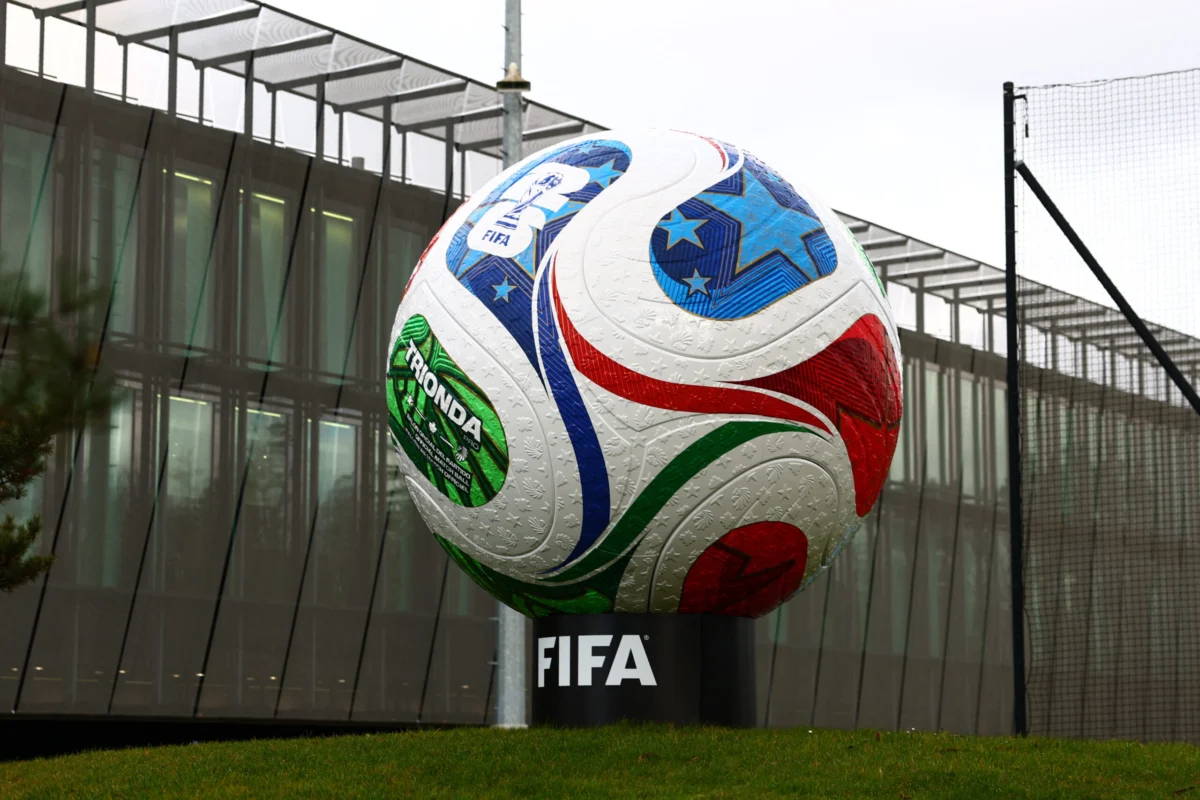
Football’s global governing body, FIFA, has updated its official resale policy for tickets to World Cup 2026 matches held in Toronto, Canada, mandating that they can now only be resold at their original face value on the FIFA Marketplace. This significant adjustment comes in direct response to the Ontario government’s recently enacted "Putting Fans First Act," a provincial law designed to combat ticket scalping by prohibiting the resale of event tickets above their initial purchase price. The policy shift underscores the complex challenges FIFA faces in navigating a mosaic of local regulations across the three host nations – Canada, the United States, and Mexico – particularly when its own global ticketing strategy has drawn widespread criticism for exorbitant pricing and a perceived embrace of secondary market speculation in other jurisdictions.
The updated terms, officially implemented by FIFA on Wednesday, mark a pivotal moment in the lead-up to the highly anticipated tournament. The change follows a week-long period during which tickets for six scheduled matches at Toronto Stadium were temporarily removed from the official resale platform. This temporary suspension was a direct consequence of the Canadian province passing its 2026 budget bill, which embedded the new consumer protection legislation, thereby creating an immediate conflict with FIFA’s previously more flexible resale policies.
The "Putting Fans First Act": A Provincial Stance Against Scalping
Ontario’s "Putting Fans First Act" (Bill 166, Schedule 1), which received Royal Assent as part of the provincial budget, clearly stipulates that "no person shall make a ticket available for sale on the secondary market or facilitate the sale of a ticket on the secondary market for an amount that exceeds the ticket’s original price." This legislation is a robust attempt by the Ontario government to protect consumers from predatory pricing practices prevalent in the secondary ticket market, often fueled by professional scalpers and automated "bot" technology. The act aims to ensure that genuine fans have a fair opportunity to purchase tickets at reasonable prices, rather than being forced to pay significantly inflated sums on speculative resale platforms.
Under FIFA’s revised terms, the implications for ticket holders for Toronto matches are unequivocal: any ticket for a game at Toronto Stadium, regardless of whether it was initially purchased directly from FIFA Ticketing or acquired through the official marketplace at an earlier, potentially higher, price, cannot be listed for resale at a value exceeding its original face value. This policy creates a stark contrast with the resale conditions for matches held at the other 15 World Cup venues across North America. For these locations, tickets can still be listed and sold above face value on the official FIFA resale and exchange marketplace. FIFA has consistently defended this marketplace model, asserting that it is "designed to protect fans" and operates "subject to federal and local regulations," a justification now sharply tested by Ontario’s stringent new law.
FIFA’s Broader Ticketing Strategy Under Fire

The incident in Toronto brings renewed scrutiny to FIFA’s overall ticketing philosophy for the 2026 World Cup, which has already faced substantial backlash. Earlier this week, FIFA President Gianni Infantino publicly defended the high cost of World Cup tickets, arguing that the organization was "obliged to take advantage of laws in the United States that allow tickets to be resold for thousands of dollars above face value." This statement, while legally sound within the US context, ignited a fresh wave of criticism from fan groups globally.
Organizations like Football Supporters Europe (FSE) have been particularly vocal, branding FIFA’s pricing structure as "extortionate" and a "monumental betrayal" of the average fan. FSE’s concerns stem from the belief that major international tournaments, particularly the World Cup, should remain accessible to a broad spectrum of supporters, not just the wealthiest. The group has consistently advocated for transparent and fair pricing, expressing alarm at the widening gap between general admission prices and increasingly prevalent, high-cost hospitality packages.
The market realities on FIFA’s platform prior to the Ontario policy change vividly illustrated these concerns. As recently as last week, the FIFA Marketplace reportedly advertised four tickets to the highly anticipated July 19 final in New York for more than $2 million each. While these represent extreme outliers likely targeting ultra-high-net-worth individuals or corporate entities, they exemplify the vast price discrepancies and speculative nature of the secondary market that FIFA’s platform, in other jurisdictions, appears to accommodate.
Despite FIFA’s announcement that over five million tickets had been sold for the June 11-July 19 tournament as of April 20, evidence suggests that the organization has encountered difficulties in selling out certain matches, even those involving host nations. For instance, seats for the USA’s opener against Paraguay, scheduled for June 12 in Los Angeles, remained available, albeit at prices that many fans found prohibitive. General admission tickets for this match reportedly started at $1,120 and soared as high as $4,105, with numerous options around the $2,000 mark. Hospitality package groupings for the same game were listed for up to $6,050 per seat, further highlighting the premium placed on enhanced fan experiences. These figures stand in stark contrast to the initial pricing expectations for a tournament of this magnitude, raising questions about demand elasticity at such elevated price points.
Chronology of Key Events:
- Early 2024: Discussions and legislative progress on Ontario’s "Putting Fans First Act" gain momentum. The bill is part of a broader effort to protect consumers in various sectors.
- Late April 2026: The Ontario government passes its 2026 budget bill, which includes the "Putting Fans First Act," formally banning the resale of event tickets above face value within the province.
- One Week Prior to Policy Update: In response to the passing of the Ontario budget bill, tickets for the six World Cup matches scheduled for Toronto Stadium are temporarily removed from the official FIFA resale and exchange marketplace. This move signals FIFA’s acknowledgment of the new legal landscape.
- Earlier This Week: FIFA President Gianni Infantino defends the organization’s overall ticketing strategy and high prices, citing the ability to leverage US laws permitting above-face-value resales. This sparks renewed criticism from fan groups.
- Wednesday (Policy Update Day): FIFA officially implements revised terms for Toronto World Cup tickets on its marketplace, restricting resale to original face value only, in compliance with Ontario law.
- April 20, 2026: FIFA announces over five million tickets have been sold for the tournament globally, yet issues with unsold tickets at high prices persist for various matches.
- June 11 – July 19, 2026: The FIFA World Cup 2026 tournament is scheduled to take place across Canada, the United States, and Mexico.
Reactions and Implications: A Fragmented Ticketing Landscape
The Ontario government’s proactive stance has been widely lauded by consumer advocacy groups and local fan organizations in Canada, who view it as a necessary measure to level the playing field for ordinary supporters. "This act ensures that the joy of attending a World Cup match isn’t reserved only for those who can afford exorbitant secondary market prices," stated a spokesperson for an Ontario consumer protection agency, who preferred to remain anonymous due to ongoing discussions. "It’s about fairness and accessibility, especially for an event of such global significance being hosted in our province."

For FIFA, the situation in Toronto presents a unique administrative and logistical challenge. While the organization maintains its official resale platform is designed to protect fans, the necessity of applying a distinct set of rules for one host city highlights the inherent tension between a global event’s standardized operations and diverse national and sub-national legal frameworks. This fragmented approach could lead to confusion among international fans, who might expect uniform ticketing rules across all tournament venues.
The decision also sets a precedent. Other jurisdictions hosting future major sporting events might observe Ontario’s success in curbing scalping and consider implementing similar legislation. This could force international sporting bodies to re-evaluate their global ticketing strategies, potentially leading to more localized or flexible approaches that better accommodate regional consumer protection laws.
Economically, the impact on the secondary ticket market in Ontario will be significant. Operators and individuals who previously profited from reselling tickets above face value will be curtailed. While this might reduce speculative profits for some, it is intended to redistribute value back to the consumers, making events more affordable and potentially boosting local spending on other services like hospitality and retail around match days. For other host cities in the U.S. and Mexico, where such anti-scalping laws are less stringent or non-existent for major events, the secondary market will likely continue to thrive, perpetuating the pricing disparities that have drawn criticism.
The Scale of World Cup 2026 and Future Outlook
The FIFA World Cup 2026 is set to be the largest in history, featuring 48 teams and 104 matches spread across 16 cities in three countries. The sheer scale of the event, with millions of tickets expected to be sold, amplifies the importance of equitable and transparent ticketing practices. The host cities, including Toronto, are gearing up for a massive influx of international visitors, with projections of significant economic boosts to local economies through tourism, hospitality, and related services.
While FIFA continues to make tickets available through its "last-minute sales" section on its official website, the controversy surrounding pricing and resale policies threatens to overshadow some of the excitement leading up to the tournament. The differing resale rules for Toronto versus other venues illustrate the complexities of organizing a mega-event across multiple sovereign territories and diverse regulatory environments. Ultimately, the Ontario government’s "Putting Fans First Act" serves as a powerful reminder that while FIFA operates on a global stage, it must also respect and adapt to local laws and the public’s demand for fair access to major cultural and sporting events. This incident highlights an evolving landscape where consumer protection is increasingly taking precedence, potentially reshaping how future global sporting spectaculars manage their ticketing ecosystems.
