

In a significant move for the renewable energy sector and the circular economy, Vancouver-based cleantech firm Moment Energy has successfully closed a $40 million Series B funding round. The capital infusion is earmarked for the rapid scaling of the company’s production capacity for Battery Energy Storage Systems (BESS) constructed from repurposed electric vehicle (EV) batteries. This strategic expansion comes at a critical juncture as the global surge in artificial intelligence (AI) and data center development places unprecedented strain on existing electrical grids.
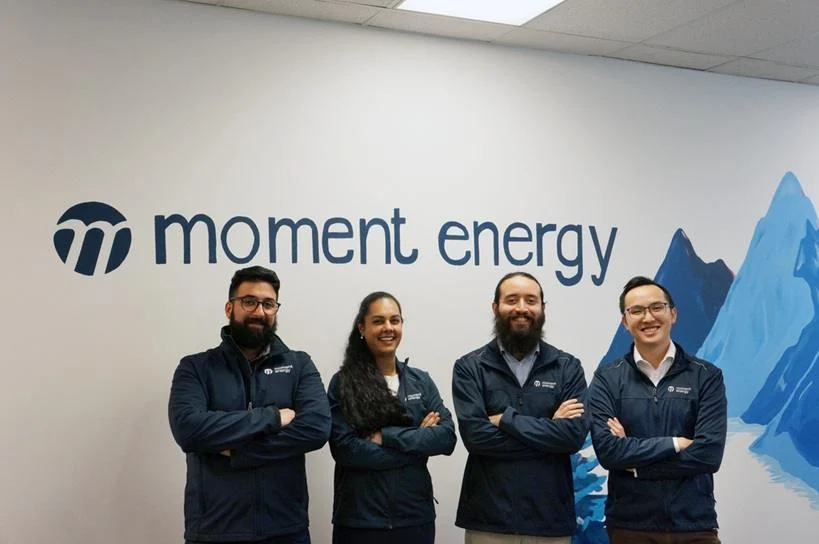
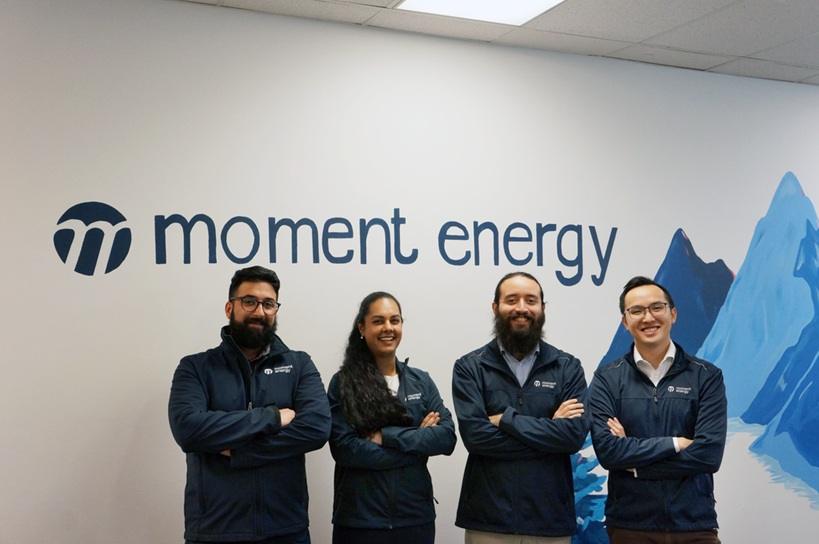
Founded in 2020 by a team of visionary entrepreneurs—Edward Chiang, Sumreen Rattan, Gabriel Soares, and Gurmesh Sidhu—Moment Energy has positioned itself at the intersection of two major industrial shifts: the mass adoption of electric vehicles and the urgent need for sustainable grid-scale energy storage. By giving a "second life" to batteries that have retired from the automotive sector, the company is tackling the dual challenges of battery waste management and the high capital costs associated with traditional energy storage solutions.
Scaling Operations for the AI Era
The primary driver behind this latest funding round is the skyrocketing demand for electricity from the data center industry. As AI models become more complex and ubiquitous, the infrastructure required to train and run them consumes vast quantities of power. Market analysts suggest that data center energy consumption could double by 2026, creating a bottleneck for tech giants and utility providers alike.
Moment Energy’s solution involves the manufacturing of commercial-scale BESS that utilize retired EV battery packs. While an EV battery may no longer meet the high-performance standards required for long-range driving, it typically retains approximately 70% to 80% of its original capacity. Moment Energy’s proprietary technology allows these packs to be integrated into stationary storage units that can buffer the grid, store renewable energy from solar or wind, and provide reliable backup power for energy-intensive industrial sites.
The $40 million Series B round was led by Evok Innovations, a venture capital firm focused on industrial decarbonization. The round also saw participation from a diverse group of strategic and financial investors, including Liberty Mutual Investments, W23 Global Fund, and Acario. Notably, several existing investors reaffirmed their commitment to the company, including Amazon’s The Climate Pledge Fund, Voyager Ventures, and In-Q-Tel, the venture capital arm of the U.S. intelligence community.
A Chronology of Innovation and Growth
The journey of Moment Energy from a startup to a major player in the energy transition has been marked by rapid technical milestones and strategic partnerships.
- 2020: Moment Energy is founded in Vancouver, British Columbia, with a focus on solving the looming "battery graveyard" problem. The founders identify that millions of EV batteries will reach their end-of-life in vehicles by the end of the decade.
- 2021-2022: The company secures initial seed funding and enters into pilot agreements with major automotive OEMs (Original Equipment Manufacturers). During this period, they focus on developing their "pack-swapping" architecture and battery management software.
- 2023: Moment Energy gains traction with industrial clients and receives backing from high-profile sustainability funds like Amazon’s The Climate Pledge Fund. This period is characterized by rigorous testing and safety certifications, essential for the second-life battery market.
- 2024-2025: The company expands its facility footprint and begins deploying commercial units to remote communities and industrial sites, proving the viability of second-life batteries in harsh environments.
- 2026: The announcement of the $40 million Series B round signals a shift from pilot-scale operations to mass-market industrial deployment, specifically targeting the data center sector.
Technical Advantages and Economic Viability
One of the most compelling aspects of Moment Energy’s offering is the extended lifecycle and reduced cost of its systems. While conventional lithium-ion storage systems typically offer a 15-year operational life, Moment Energy claims its proprietary architecture extends the system’s lifespan to 30 years. This is achieved through a modular "pack-swapping" design that allows individual battery modules to be replaced or upgraded without decommissioning the entire system.
The economic implications are profound. When combined with domestic manufacturing tax incentives—such as those provided by the Inflation Reduction Act (IRA) in the United States and similar credits in Canada—industrial users can achieve a net energy cost as low as 3 cents per kilowatt-hour (kWh). This makes second-life storage significantly more affordable than new-battery alternatives, which often face volatile pricing due to raw material costs like lithium, cobalt, and nickel.
Furthermore, by utilizing domestic battery resources, Moment Energy mitigates the geopolitical risks associated with the global battery supply chain. Currently, much of the world’s battery manufacturing and mineral processing is concentrated in a few regions, leading to long lead times and vulnerability to trade disruptions. Repurposing batteries already present in the North American market provides a more resilient and secure supply chain for critical energy infrastructure.
Official Responses and Strategic Vision
The leadership at Moment Energy and its investment partners emphasize that this funding is not just about company growth, but about systemic change in how energy is managed.
Edward Chiang, Co-Founder and CEO of Moment Energy, highlighted the urgency of the mission: “As energy demand continues to increase, Moment Energy is focused on one mission: improving grid resilience and reducing energy costs. We are building a new generation of energy infrastructure that can be deployed rapidly, manufactured domestically, and powered by existing battery resources.”
The involvement of Evok Innovations underscores the technological sophistication required to manage used batteries. Marty Reed, Partner at Evok Innovations, noted the importance of "Physical AI" in their investment thesis. “With a deep understanding of battery health and chemistry, Moment Energy is uniquely positioned to build and deploy high-performance, second-life systems at enormous scale,” Reed stated. “This is a real-world use case for Physical AI: turning complex data into the reliable energy storage needed to power our future.”
The mention of "Physical AI" refers to the sophisticated software required to monitor the state of health (SOH) and state of charge (SOC) of diverse battery packs from different manufacturers. Moment Energy’s software must harmonize these variables to ensure the safety and efficiency of the overall storage system.
Broader Impact and Industry Implications
The success of Moment Energy’s Series B round reflects a broader trend in the energy transition: the move toward a circular economy. According to industry data, by 2030, there will be over 100 million retired EV batteries globally. If these batteries are sent directly to recycling or landfills, the environmental cost and loss of residual energy capacity would be immense. Repurposing them for stationary storage maximizes the value of the carbon and energy already embedded in the manufacturing of the cells.
Grid Decarbonization and Resilience
The deployment of BESS is essential for the transition to renewable energy. Solar and wind power are intermittent; they produce energy when the sun shines or the wind blows, which does not always align with peak demand. Storage systems allow this green energy to be captured and released when needed, effectively "firming" renewable sources and reducing the reliance on fossil-fuel-based "peaker" plants.
Data Center Sustainability
For the data center industry, the pressure to go green is both regulatory and reputational. Major cloud providers have committed to net-zero targets. However, as their power needs grow, staying on track becomes increasingly difficult. Moment Energy provides these companies with a way to support their massive power needs while simultaneously contributing to the circular economy and reducing their Scope 3 emissions.
National Security and Supply Chains
The participation of In-Q-Tel in the funding round suggests that the strategic importance of energy storage extends to national security. Secure, domestic energy storage is vital for protecting critical infrastructure against grid failures and cyber-attacks. By creating a domestic market for second-life batteries, North America can reduce its dependence on foreign battery supply chains and ensure that the energy transition is powered by local resources.
Conclusion: A Pivot Toward Sustainable Infrastructure
The $40 million investment in Moment Energy represents a vote of confidence in the viability of second-life battery technology. As the company scales its production to meet the demands of the industrial and data center sectors, it provides a blueprint for how technology can bridge the gap between environmental sustainability and industrial growth. With a focus on domestic manufacturing, cost-effectiveness, and grid resilience, Moment Energy is poised to become a cornerstone of the future energy landscape, turning the "waste" of the EV revolution into the backbone of the digital economy.
