

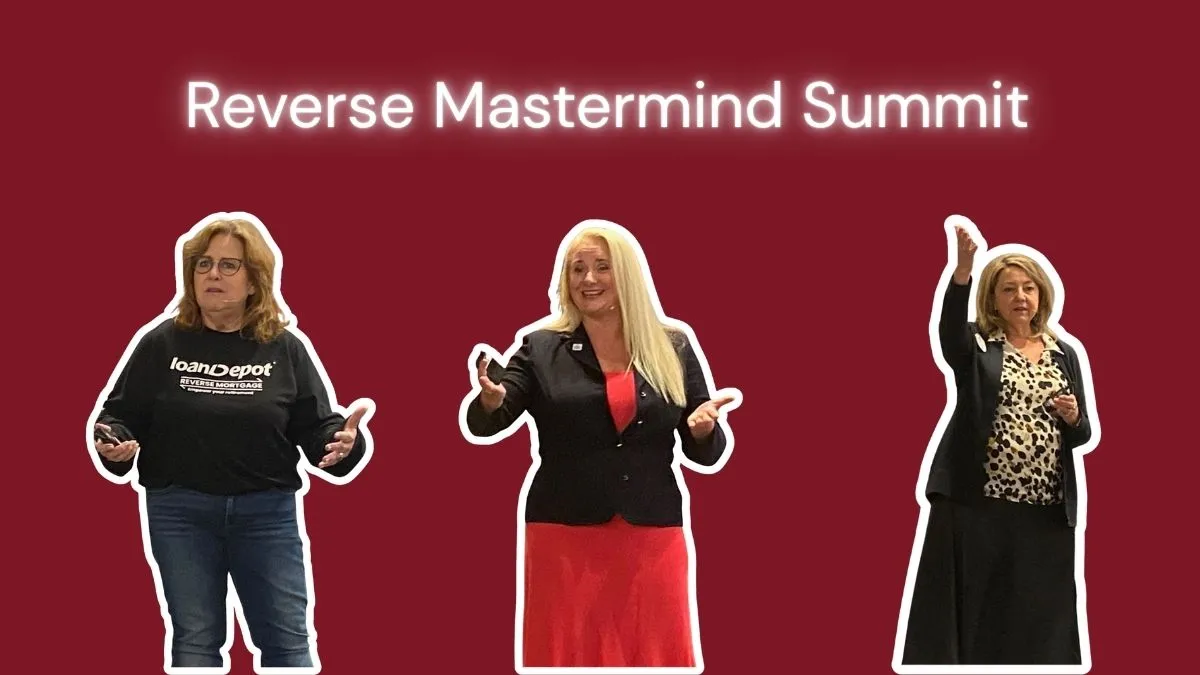
The reverse mortgage industry reached a critical juncture this week in Knoxville, Tennessee, as the Reverse Mastermind Summit brought together the sector’s most influential practitioners to address the evolving landscape of senior housing finance. During a high-profile panel featuring three prominent female executives, the discussion transcended simple sales tactics, focusing instead on a sophisticated blend of tax-advantageous financial planning, emotional intelligence, and a rigorous commitment to professional standards. Christine Jensen of Fairway Home Mortgage, Christina Harmes of Barrett Financial Group, and Lisa Moriello of loanDepot provided a roadmap for the industry’s future, arguing that the success of the Home Equity Conversion Mortgage (HECM) depends on moving the product from a "loan of last resort" to a strategic pillar of retirement security.
Chronology of the Reverse Mastermind Summit and Industry Context
The summit took place against a backdrop of significant shifts in the American housing market. According to recent data from the National Association of Realtors (NAR), Americans over the age of 60 now represent nearly half of all homebuyers, a demographic shift often referred to as the "Silver Tsunami." This trend has forced mortgage professionals to reconsider how they approach the 62-plus demographic, moving away from traditional forward mortgages toward products that prioritize cash flow preservation and tax efficiency.
The event opened with a focus on the technical and legislative changes impacting the market, followed by a deep dive into the psychological aspects of senior lending. The presence of Jensen, Harmes, and Moriello highlighted a growing trend of female leadership in a sector that requires a nuanced balance of technical expertise and empathetic communication. Their collective message was clear: the modern reverse mortgage professional must act as a financial consultant, a storyteller, and a business owner rather than a mere transaction facilitator.
Strategic Tax Integration and the HECM for Purchase
Christine Jensen, a Senior Vice President at Fairway Home Mortgage, provided the technical cornerstone of the panel by addressing the legislative environment. A central theme of her presentation was the impact of the "One Big Beautiful Bill Act," signed into law in July 2025. This legislation made the mortgage insurance tax deduction permanent, a move that Jensen argues has revolutionized the financial planning utility of the HECM product.
To illustrate the practical application of this law, Jensen presented a detailed case study involving a 72-year-old couple seeking to purchase an $800,000 home. In this scenario, the couple utilized a HECM for Purchase loan, contributing a down payment of $509,000 and financing the remainder. This strategy was paired with their Required Minimum Distribution (RMD) from a retirement account, which totaled $63,000 annually.
By utilizing the reverse mortgage, the couple could defer payments for two years while accruing $63,000 in deductible mortgage interest and insurance. When the RMD was eventually taken, it was used as a lump-sum payment toward the HECM, effectively offsetting the taxable portion of the distribution. Jensen noted that this strategy could save a household approximately $13,000 in a single cycle, with cumulative savings reaching $27,000 over five years.
"When I showed the financial planners how this works, they had no idea that this was possible," Jensen remarked, highlighting a significant knowledge gap between the mortgage industry and the broader financial planning community. Her analysis suggests that the HECM for Purchase is no longer just a way to buy a home; it is a sophisticated tool for managing tax liabilities in retirement.
The Role of Emotional Intelligence and Narrative in Senior Lending
While Jensen focused on the numbers, Christina Harmes of Barrett Financial Group addressed the human element of the industry. Harmes argued that emotional intelligence (EQ) is the most undervalued trait in the mortgage sector. She posited that the reverse mortgage sale is one of the highest-trust transactions in the financial world, often occurring during periods of high stress or transition for the borrower.
Harmes shared a poignant personal narrative to underscore the stakes of the business. She recounted the story of her grandfather, who, lacking information on modern financing options, sold his home and moved into an apartment. A subsequent fall and a period of isolation led to a tragic decline in his quality of life. This personal history serves as the foundation for her professional philosophy: a reverse mortgage is not just a loan; it is a safety net.
In her professional practice, Harmes emphasized that "human connection must come before numbers." She cited a case where a couple facing a serious illness and mounting debt used a reverse mortgage to establish a growing line of credit and a monthly income replacement. The relief expressed by the clients at the closing table, she noted, is the true measure of a successful loan.
Harmes advised originators to develop their own "origin stories" to build rapport with clients. By sharing why they entered the industry, loan officers can bridge the gap of fear and skepticism that often surrounds reverse mortgages. "It’s the connection that creates the relationship, and it’s the relationship that creates the business," she stated, urging the audience to view storytelling as a core professional skill.
Professional Standards and the Business Ownership Mindset
Lisa Moriello of loanDepot brought a sharp focus to the operational and professional standards of the industry. She challenged the audience to "stop thinking like employees" and adopt a business ownership mindset. Her critique was supported by sobering industry data: while Home Equity Conversion Mortgage (HECM) endorsements average approximately 2,000 per month, the typical reverse mortgage loan officer (LO) closes less than one deal per month.
Moriello characterized this performance level as a "part-time job" rather than a career, suggesting that the industry suffers from a lack of consistency and goal-oriented focus. She advocated for a rolling three-month pipeline, ensuring that LOs are always looking toward future business rather than becoming bogged down in the minutiae of a single pending file.
A key component of Moriello’s strategy is the rebranding of the product itself. She recommended that professionals avoid the term "reverse mortgage" in initial pitches, as it often carries historical baggage and misconceptions. Instead, she suggested framing the product as a "retirement opportunity" or a "nontaxable stream of income."
Moriello also highlighted the importance of organic lead generation. She shared how her involvement in her children’s extracurricular activities, such as spending years at an ice rink, provided a fertile ground for building local trust and generating business. Furthermore, she pointed toward professional networking communities like ProVisors and the National Association of Divorce Professionals (NADP) as "gold mines" for referrals. The latter is particularly relevant as "silver divorce" rates rise, leaving many seniors in need of creative housing wealth solutions to divide assets.
Supporting Data and Broader Market Implications
The insights shared at the Knoxville summit reflect a broader trend in the U.S. economy. As of 2024, U.S. Mortgage Insurers reported that approximately 40 million homeowners have utilized private mortgage insurance since 1957, with 800,000 using it in the last year alone. The permanent deductibility of this insurance, as discussed by Jensen, provides a level of fiscal stability that was previously missing from the senior market.
Furthermore, the "212: The Extra Degree" philosophy cited by Moriello—where a single degree of effort makes the difference between hot water and steam—serves as a metaphor for the industry’s current state. One extra contact daily results in over 180 personal connections a year, a statistic that could significantly move the needle on the 2,000-endorsement-per-month industry average.
The implications of these strategies are profound. If the reverse mortgage industry can successfully integrate with financial planning and divorce mediation, the HECM could move from the fringes of the mortgage market to the mainstream. This shift would require a new generation of loan officers who are as comfortable discussing tax law and RMDs as they are navigating the emotional complexities of aging and family dynamics.
Analysis of the Industry’s Future Path
The convergence of Jensen’s technical strategies, Harmes’s emotional intelligence, and Moriello’s business discipline suggests that the reverse mortgage industry is undergoing a professionalization phase. The focus is shifting from high-volume, low-touch sales to high-value, high-touch advisory roles.
This evolution is necessary because the consumer base—Baby Boomers—is more financially savvy and has higher expectations than previous generations. They are not looking for a "loan"; they are looking for a wealth management strategy that allows them to age in place with dignity and financial flexibility.
As the summit concluded, the consensus among the speakers was that the industry must raise its own bar. By leveraging new tax laws, mastering the art of the narrative, and maintaining a rigorous professional pipeline, reverse mortgage specialists can provide a service that is both economically vital and deeply personal. The path forward for the industry in 2025 and beyond is one of integration, where housing equity is finally recognized as a liquid and essential component of a holistic retirement plan.
