

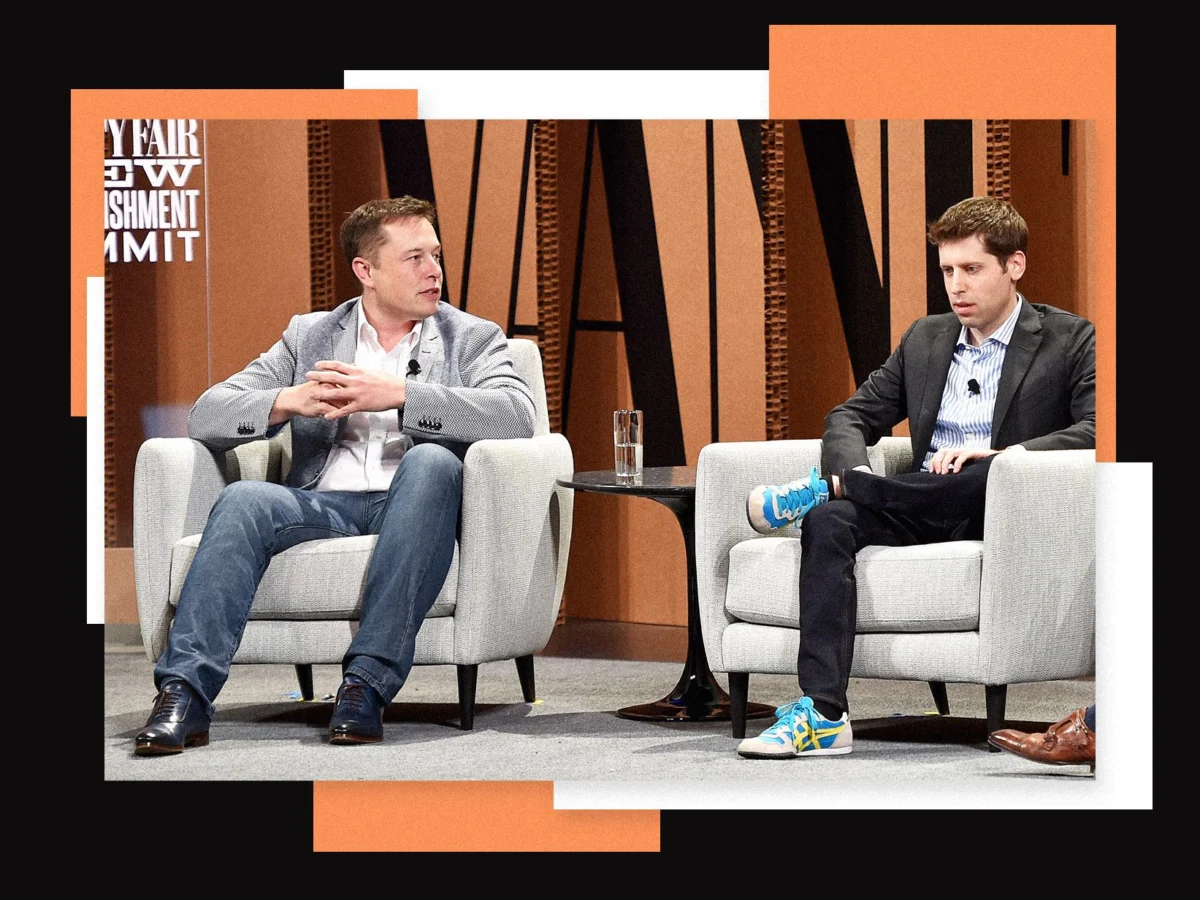
In the months preceding Elon Musk’s high-profile departure from the OpenAI board of directors in early 2018, the billionaire entrepreneur orchestrated an aggressive campaign to bring OpenAI CEO Sam Altman into the fold at Tesla. According to internal emails and court testimony presented during the ongoing federal trial of Musk v. Altman, Musk’s ambitions for artificial intelligence were inextricably linked to his automotive empire. Evidence presented on Wednesday revealed that Musk offered Altman a seat on the Tesla board of directors as part of an effort to establish a "world-class AI lab" within the electric vehicle company—a move that legal representatives for OpenAI characterize as a hostile attempt to "corrupt" and "absorb" the nonprofit organization.
The revelation emerged during the cross-examination of Shivon Zilis, a prominent figure in the tech industry who served as an adviser and board member at OpenAI while simultaneously holding executive roles at Tesla and Musk’s brain-chip startup, Neuralink. Zilis, who is also the mother of four of Musk’s children, found herself at the center of a legal storm as lawyers for OpenAI sought to portray Musk’s current lawsuit as a manifestation of "sour grapes" following his failure to seize total control of the organization years ago.
The Recruitment Campaign and the Tesla AI Strategy
The trial has cast a spotlight on a series of communications from late 2017 and early 2018, a period of existential tension for OpenAI. At the time, the organization was struggling to secure the massive computational resources and capital required to compete with industry giants like Google and Facebook. Musk’s proposed solution was a deeper integration with Tesla.
Evidence presented in court included a draft of a "Frequently Asked Questions" (FAQ) document prepared by Zilis in November 2017 for an event Tesla planned to host at the NeurIPS AI conference. The document explicitly stated that Tesla was building an AI lab intended to "rival the likes of Google/DeepMind and Facebook AI Research." Crucially, the draft noted a branding conflict: "One major issue for Tesla is when people think of Elon and AI, they think of OpenAI."
To resolve this, the plan suggested a "forcing function" to secure Sam Altman’s commitment to Tesla. Altman’s name appeared in the document alongside Musk’s, marked with question marks, suggesting his role was the final piece of the puzzle. The strategy involved positioning Altman as a moderator for the Tesla event, with the ultimate goal of transitioning him into a leadership role within a Tesla-based AI unit.
William Savitt, a lead attorney for OpenAI, argued outside the courthouse that these documents prove Musk’s intent was never to preserve OpenAI’s nonprofit mission, but rather to strip it of its talent and intellectual property for the benefit of his private ventures. "It was part of Mr. Musk’s effort to corrupt OpenAI and absorb it into Tesla," Savitt told reporters. "He was trying to get Altman to abandon the mission."
The Legal Foundation of the Musk v. Altman Dispute
The current legal battle hinges on Musk’s claim that Sam Altman and OpenAI President Greg Brockman committed a "betrayal" of the company’s founding principles. Musk, who provided approximately $38 million in seed funding during the organization’s infancy, alleges that the duo effectively "stole" a nonprofit entity and transformed it into a closed-source, for-profit powerhouse. OpenAI is currently valued at more than $800 billion, driven largely by its partnership with Microsoft and the success of its generative AI models.
Musk’s legal team presented video depositions from former high-ranking OpenAI officials, including former Chief Technology Officer Mira Murati and former board member Helen Toner. These testimonies were used to raise questions regarding Altman’s transparency and alleged history of "deceit" in his dealings with the board. The narrative pushed by the plaintiff suggests that Altman manipulated Musk and other early donors into building the foundation of what would eventually become a private "money-printing machine."
Conversely, OpenAI’s defense focuses on Musk’s own history of attempting to turn the organization into a for-profit entity under his control. The defense argues that when Musk’s 2017 proposal to merge OpenAI with Tesla was rejected by Altman and Brockman, he walked away, eventually starting his own rival lab, xAI.
Shivon Zilis: A Conflict of Interest and the Neuralink Connection
The testimony of Shivon Zilis provided a rare window into the complex interpersonal and professional web surrounding Musk and OpenAI. Zilis acted as a "conduit" between the two men during the 2017-2018 period. In one February 2018 text message, she asked Altman, "Did you think through a B Corp subsidiary of Tesla?" This suggests that the parties were actively exploring corporate structures that would allow OpenAI to operate under the Tesla umbrella while maintaining some semblance of its public-benefit mission.
However, the testimony also touched on deeply personal matters that OpenAI’s lawyers suggested created a significant conflict of interest. While serving on the OpenAI board, Zilis became pregnant with Musk’s children via IVF. She testified that she did not disclose this relationship to other board members, citing a confidentiality agreement with Musk. This lack of disclosure became a point of contention when news of the children broke in 2022.
Zilis remained on the OpenAI board until February 2023, just as Musk was preparing to launch xAI. While she initially claimed she resigned after a phone call from Altman informing her of Musk’s new competitive effort, text messages revealed in court suggested she was already aware of xAI’s formation. "When the father of your babies starts a competitive effort and will recruit out of OpenAI, there is nothing to be done," Zilis wrote to a friend on the day of her resignation.
The Talent War: The Case of Andrej Karpathy
A significant portion of Wednesday’s proceedings focused on the recruitment of Andrej Karpathy, a world-renowned AI researcher. Karpathy left OpenAI in 2017 to lead Tesla’s Autopilot program, a move that was seen at the time as a major blow to the nonprofit.
While Musk previously testified that Karpathy left OpenAI of his own volition, Zilis’s testimony suggested a more active recruitment effort by Musk. Text messages from June 2017 showed Zilis and other Tesla employees celebrating Karpathy’s hiring with messages like "Fuck yeahhhhhhh." When an employee asked if OpenAI would be angry about the "poaching," Zilis noted that Greg Brockman "clearly had no idea" the hire was happening. This discrepancy in testimony serves to undermine Musk’s portrayal of himself as a passive observer of OpenAI’s talent shifts.
Contextualizing the Rivalry: The Google Threat
To understand the motivations of both Musk and Altman in 2018, it is necessary to look at the broader AI landscape of the time. Musk was famously obsessed with the threat posed by Google’s DeepMind, led by Demis Hassabis. Musk viewed Google as a potential "monopoly" on artificial general intelligence (AGI) and feared that without a massive counterweight, the technology would be developed without sufficient safety guardrails.
In an email to Musk in February 2018, Zilis outlined several scenarios to create this counterbalance. One involved Altman running a Tesla AI lab; another suggested a bold attempt to "get Demis" away from Google. "Maybe he comes to Tesla somehow or DeepMind is spun out," Zilis wrote. This context suggests that Musk’s desire to absorb OpenAI into Tesla was driven by a belief that only the resources of a major corporation like Tesla could prevent a Google-dominated future.
Broader Implications for the AI Industry
The Musk v. Altman trial is more than a personal feud between two tech titans; it represents a fundamental clash over the future of AI governance. The outcome of the case could set a legal precedent for how nonprofit research organizations transition into commercial entities. It also raises critical questions about the "openness" of artificial intelligence. Musk’s lawsuit argues that OpenAI’s shift toward proprietary models (starting with GPT-4) violates its "founding agreement" to make its technology available to the public.
OpenAI, meanwhile, maintains that the massive costs associated with AGI development necessitated a "capped-profit" structure and that Musk’s own actions prove he was never fully committed to the "open-source" ideal if it didn’t align with his personal control.
As the trial continues, the court is expected to hear from Rosie Campbell, a former OpenAI employee, and David Schizer, a nonprofit law expert and former dean of Columbia Law School. Their testimonies will likely focus on the technicalities of OpenAI’s corporate restructuring and whether the board’s actions constituted a breach of fiduciary duty or a violation of nonprofit statutes.
Chronology of Key Events
- December 2015: OpenAI is founded as a 501(c)(3) nonprofit with $1 billion in pledges, including significant backing from Elon Musk.
- June 2017: Andrej Karpathy is recruited from OpenAI to Tesla, marking the beginning of talent tensions.
- November 2017: Tesla drafts plans for a "world-leading AI lab" to rival Google and Facebook, considering Sam Altman for a leadership role.
- February 2018: Elon Musk proposes taking control of OpenAI or merging it with Tesla. After being rejected, he resigns from the board.
- March 2019: OpenAI transitions to a "capped-profit" model to attract venture capital.
- January 2020: Shivon Zilis joins the OpenAI board of directors.
- November 2022: OpenAI releases ChatGPT, sparking a global AI boom and massive valuation spikes.
- February 2023: Zilis resigns from the OpenAI board as Musk’s xAI project becomes public knowledge.
- March 2024: Elon Musk files his initial lawsuit against Sam Altman and OpenAI, leading to the current federal trial.
The evidence presented this week suggests that the rift between Musk and Altman was not a sudden break, but a slow-motion collision fueled by competing visions of corporate power, the necessity of capital, and the ultimate control over the most transformative technology of the 21st century. The trial continues to peel back the layers of a partnership that began with a shared mission to save humanity and ended in a bitter fight over who owns the future.
