

In a significant legal rebuke to the executive branch’s immigration enforcement strategies, U.S. District Court Judge Brian Murphy of Massachusetts ruled on Wednesday that the Trump administration acted in direct violation of a standing federal injunction during the deportation of eight migrants this week. The ruling follows reports that individuals from various nations, including those with no prior ties to the region, were transported via a military aircraft to South Sudan, a country currently embroiled in political instability and internal conflict.
Judge Murphy’s decision centers on a specific legal protection established in March, which prohibited the Department of Homeland Security (DHS) from removing individuals to any country other than their nation of origin without first providing them a meaningful opportunity to contest the move. The court found that the administration’s recent actions bypassed these procedural safeguards, effectively denying the deportees the right to raise claims of potential persecution or torture in the receiving country.
"The department’s actions," Judge Murphy stated during a Wednesday hearing, "are unquestionably violative of this court’s order." The judge’s remarks followed a tense session in which government attorneys were pressed on the logistics and legal justification for the sudden removals.
The Breach of the March Injunction
The legal framework at the heart of this dispute is a preliminary injunction issued by Judge Murphy earlier this year. That order was designed to prevent "third-country deportations"—the practice of sending a migrant to a country where they do not hold citizenship—unless the government followed a strict protocol. This protocol requires that the individual be given adequate notice and the ability to consult with legal counsel to determine if they face "credible fear" in the destination country.
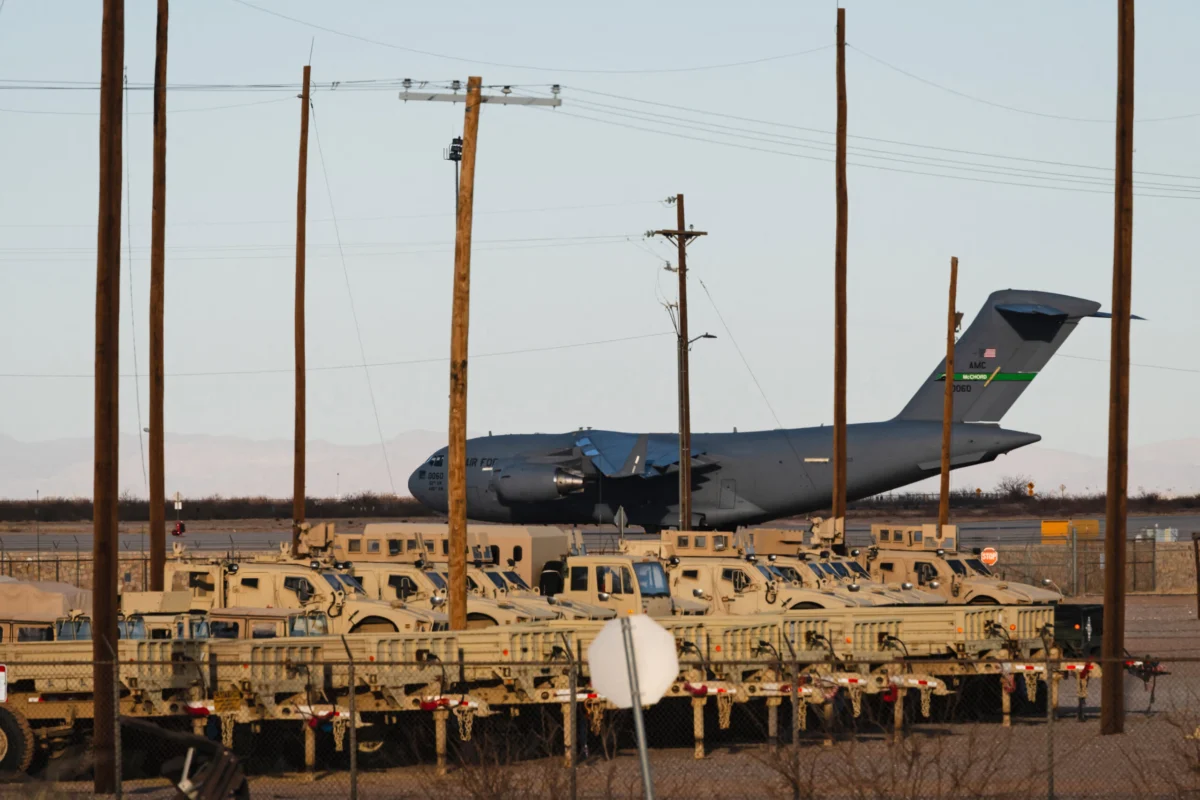
The Wednesday ruling was prompted by an emergency motion filed by immigration attorneys who discovered that several of their clients had been moved from detention centers in the early morning hours of Tuesday. According to court records, the migrants were notified of their final destination only on Monday evening, well outside of standard business hours, leaving them with no window to contact their lawyers or file appeals before they were boarded onto a Boeing C-17 military transport plane at Biggs Army Airfield in El Paso, Texas.
Judge Murphy noted that the timeline of the operation made it "impossible" for the individuals to exercise their legal rights. Evidence presented to the court indicated the migrants left their respective Immigration and Customs Enforcement (ICE) facilities between 9:00 a.m. and 10:00 a.m. on Tuesday. By the time attorneys could react, the aircraft was already in transit.
Profile of the Deportees and DHS Justification
During a press briefing on Wednesday morning, the Department of Homeland Security confirmed the deportation of eight individuals. The group included nationals from Myanmar (Burma), Laos, Vietnam, Cuba, Mexico, and South Sudan. The DHS defended the operation by highlighting the criminal backgrounds of several of the deportees. According to the agency, the group included individuals with "violent criminal convictions," citing specific cases of murder and sexual assault.
The administration has frequently argued that the presence of high-level criminal offenders necessitates expedited removal processes to ensure national security and public safety. However, Judge Murphy’s ruling clarified that even individuals with criminal records are entitled to the due process protections afforded by the U.S. judicial system, particularly regarding the destination of their removal.
Among those identified in the operation were Enrique Arias-Hierro, Jose Manuel Rodriguez-Quinones, Thongxay Nilakout, Jesus Munoz-Gutierrez, Dian Peter Domach, Kyaw Mya, Tuan Thanh Phan, and Nyo Myint. The inclusion of individuals from Southeast Asia and the Caribbean in a flight reportedly destined for East Africa has raised questions among human rights advocates regarding the logistics of the administration’s "third-country" strategy.
The Perils of South Sudan
The choice of South Sudan as a destination has drawn sharp criticism due to the country’s dire security situation. The U.S. State Department currently maintains a "Level 4: Do Not Travel" advisory for South Sudan, the highest possible warning level. The advisory cites rampant crime, kidnapping, and ongoing armed conflict.
In a notable contradiction to the deportation flight’s mission, the State Department had ordered the departure of all non-emergency U.S. government employees from South Sudan as recently as March, citing "conditions on the ground." Humanitarian organizations report that the country is currently on the precipice of renewed large-scale violence. While a 2018 power-sharing agreement between President Salva Kiir and Vice President Riek Machar officially ended a five-year civil war, violent clashes between rival factions have escalated significantly in 2025.
Legal experts argue that sending individuals—particularly those who are not South Sudanese citizens—to such a volatile environment may violate the international principle of non-refoulement, which prohibits the return of refugees to a country where they would face a high likelihood of persecution or danger.
Timeline of the Removal Operation
The sequence of events leading to the court’s ruling suggests a highly coordinated and rapid operation:
- March 2025: Judge Brian Murphy issues a preliminary injunction requiring DHS to provide notice and an opportunity to raise "fear claims" before any third-country deportation.
- Early April 2025: The administration attempts to deport individuals from the Philippines, Vietnam, and Laos to Libya. Judge Murphy blocks the move, reaffirming the injunction.
- Monday, April 14, 2025 (Evening): Migrants in ICE custody are reportedly notified that they will be deported to South Sudan the following morning.
- Tuesday, April 15, 2025 (Morning): Between 8:45 a.m. and 10:15 a.m., the migrants are moved from their holding facilities to Biggs Army Airfield.
- Tuesday, April 15, 2025 (Midday): A Boeing C-17 transport plane departs El Paso, Texas.
- Wednesday, April 16, 2025 (Morning): DHS holds a press briefing confirming the deportation of eight individuals with criminal records.
- Wednesday, April 16, 2025 (Afternoon): Judge Murphy holds a hearing in Massachusetts, spending 30 minutes in a sealed proceeding before publicly declaring the administration in violation of his order.
Concerns Over "Disappeared" Migrants
The lack of transparency surrounding the flight’s final destination has caused significant distress for the families and legal representatives of the deportees. Jonathan Ryan, a San Antonio-based immigration attorney representing Nyo Myint, a migrant from Myanmar, expressed frustration over the government’s refusal to disclose his client’s whereabouts.
"I have not heard from my client," Ryan said following the hearing. "How am I supposed to take their word that they sent him to Burma?" Ryan alleged that the government is treating due process as a "privilege" rather than a constitutional mandate. He characterized the administration’s actions as a "disappearance" of individuals under the cover of military logistics.
Government attorneys confirmed during the hearing that the plane had landed and that the migrants remained in ICE custody at an undisclosed location, but they declined to provide a specific geographic coordinate or facility name for the final destination. There is ongoing speculation that some migrants, such as Nyo Myint, may have been diverted to their home countries following the initial legal outcry, but these reports remain unverified.
The Role of Military Assets in Deportation
The use of a Boeing C-17 Globemaster III for the deportation flight marks a notable escalation in the logistics of U.S. immigration enforcement. Typically, ICE relies on "ICE Air," a network of chartered civilian aircraft, to conduct removals. The C-17 is a large military transport aircraft capable of carrying heavy payloads and operating out of austere airfields.
Analysts suggest that the use of military assets may be a response to the increasing difficulty the administration faces in securing landing rights for deportation flights in certain countries, or a logistical necessity for long-haul flights to regions like East Africa. However, the use of Air Force resources for civil immigration enforcement has also drawn criticism from lawmakers who argue it overextends the military and blurs the lines between national defense and domestic policy.
Broader Policy Implications and Analysis
The clash between the Massachusetts District Court and the Trump administration reflects a broader systemic conflict over the limits of executive power in immigration enforcement. Since taking office, the administration has prioritized "mass deportations" and sought to streamline the removal process by bypassing traditional immigration court backlogs.
The strategy of third-country removals is a cornerstone of this approach. By sending migrants to third countries—often through bilateral "Safe Third Country" agreements or other diplomatic arrangements—the administration aims to reduce the number of detainees held within the United States. However, when these removals occur without such agreements or without judicial oversight, they risk violating both domestic law and international treaties.
Judge Murphy’s ruling sets a critical precedent. It signals that the judiciary intends to maintain a "check" on the administration’s ability to execute removals in a manner that precludes legal counsel. For the eight individuals currently in the center of this legal storm, the ruling may come too late to prevent their arrival in South Sudan or other third-party nations, but it provides a framework for future challenges.
The Department of Justice is expected to appeal Judge Murphy’s finding, arguing that the executive branch maintains broad authority over the timing and destination of deportations, particularly for those classified as "criminal aliens." Conversely, civil rights groups are expected to use this ruling to demand greater transparency regarding the manifest and destination of all future ICE charter and military flights.
As the legal battle continues, the fate of the eight migrants remains uncertain. The international community continues to monitor the situation in South Sudan, where the arrival of foreign nationals from Vietnam, Mexico, and Myanmar into a conflict zone presents a complex humanitarian and diplomatic challenge. For now, the ruling serves as a stark reminder of the ongoing tension between the pursuit of aggressive enforcement and the constitutional requirements of due process.
