

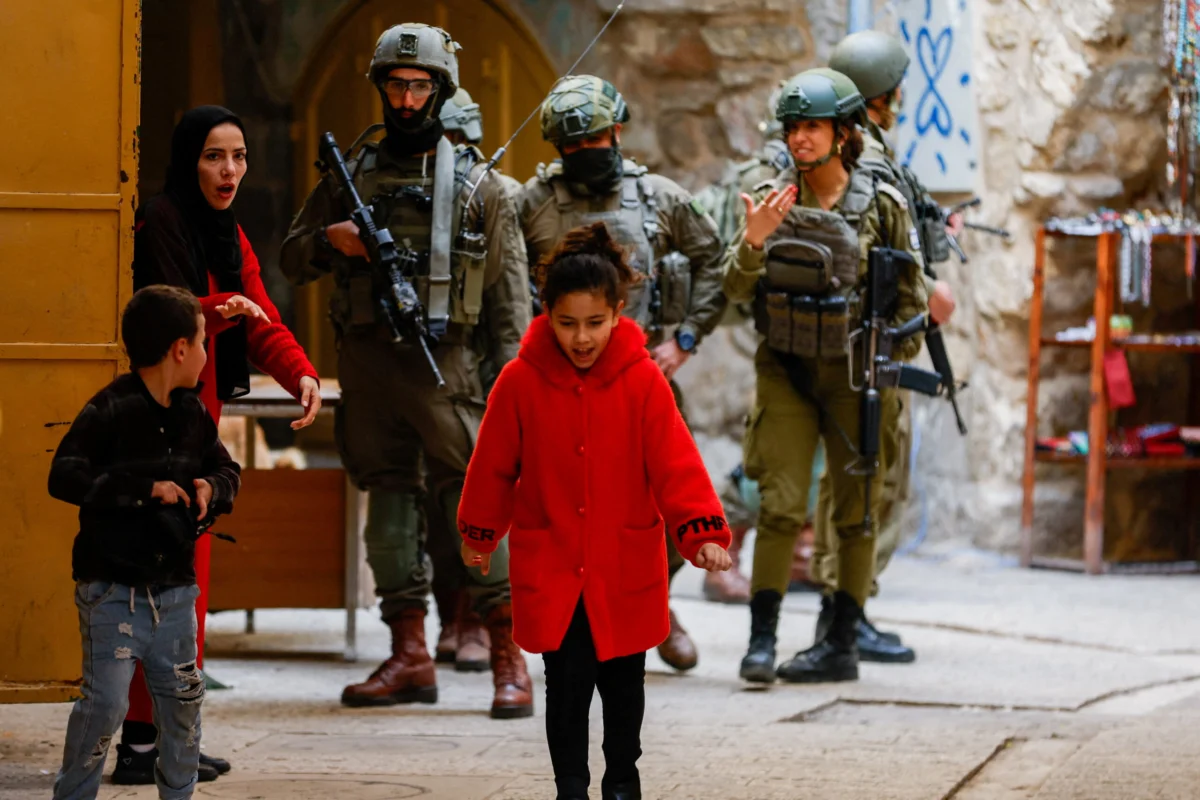
Major-General Avi Bluth, the Israeli commander overseeing operations in the occupied West Bank, reportedly did not anticipate his candid remarks would be disseminated publicly when he purportedly boasted about the efficacy of Israel’s policies in the territory. His comments, published last week by the Israeli liberal daily Haaretz, revealed a chilling assessment of the military’s recent actions and a frank admission of a discriminatory approach to law enforcement. According to the undated statements, Bluth claimed the army was "killing like we haven’t killed since 1967," a reference to the Six-Day War that led to Israel’s occupation of the West Bank, East Jerusalem, Gaza, and the Golan Heights.
Beyond the stark admission of increased fatalities, Bluth further articulated that Israel was actively "turning villages into conflict zones." Most critically, his audience was reportedly privy to an open acknowledgement of a long-suspected truth: Israel maintains a two-tier firing policy. This policy, as described by Bluth, involves actively refraining from firing upon Israeli settlers who engage in stone-throwing against Israeli forces, while simultaneously and freely using live ammunition against Palestinians committing the same act. He explicitly dismissed Palestinian stone-throwing as "terrorism, not popular or grassroots terrorism – there’s only popular [‘folk’] dancing," adding that the military had killed 42 Palestinian stone-throwers in 2025 alone. In stark contrast, he stated that firing at Israeli settlers was to be avoided due to the "profound societal consequences" such actions would entail within Israeli society. Al Jazeera reached out to Major-General Bluth, via the Israeli authorities, for comment regarding these leaked statements, but no response was received at the time of publication.
A Policy of Double Standards and Disproportionate Force
The revelations from Major-General Bluth’s comments underscore what human rights organizations and residents of the occupied West Bank and East Jerusalem have long described as a systemic and deeply entrenched discriminatory enforcement of law. The 1967 occupation has resulted in a complex and often contradictory legal landscape, where Israeli settlers living in the West Bank are governed by Israeli civil law, while Palestinians in the same territory are subject to Israeli military law, alongside a fragmented system of Palestinian Authority civil administration in limited areas. This duality creates significant legal disparities, with the military commander’s leaked remarks providing direct evidence of its operational application in matters of life and death.
The justification offered by Bluth for the differential treatment—"profound societal consequences" if Israeli forces were to fire on settlers—highlights a perceived political and social sensitivity within Israel regarding actions against its own citizens, even when they engage in violent acts. This stands in stark contrast to the readiness to employ lethal force against Palestinians for similar, or even lesser, offenses. The statistic cited by Bluth, attributing 42 Palestinian deaths in 2025 to stone-throwing incidents, paints a grim picture of the lethality of this policy. For decades, international human rights bodies have criticized Israel’s use of excessive force against Palestinian protestors, often involving live ammunition for non-lethal threats. The leaked comments confirm not only the existence of this practice but also its explicit endorsement at high military levels.
Escalating Rhetoric Amidst Shifting Israeli Politics
Within the context of Israeli society, which analysts describe as increasingly nationalistic and veering sharply to the right, such comments, far from being condemned, are increasingly becoming a source of pride, regardless of the human cost. This trend is not isolated to military figures but is evident across the political spectrum, particularly within the current governing coalition. Government ministers frequently engage in rhetoric and actions that would have been considered extreme in previous eras.

For instance, National Security Minister Itamar Ben-Gvir recently made headlines for celebrating the passage of a death penalty law targeting Palestinians with a cake decorated with a noose, a provocative gesture that underscored the punitive and discriminatory nature of the legislation. Similarly, Finance Minister Bezalel Smotrich has been widely criticized for describing an Israeli government that includes Palestinian members as "a thousand times worse" than the Hamas-led attack of October 7, 2023. Such statements, emanating from high-ranking officials, contribute to an environment where Major-General Bluth’s remarks, though shocking in their frankness, are hardly surprising to observers.
Orly Noy, editor of the Hebrew-language Local Call, articulated this societal shift to Al Jazeera, describing a process wherein Israel’s far-right has progressively taken control of the country’s institutions. Noy recalled a Breaking the Silence report from several years prior, which revealed that Israeli soldiers in Area C (the part of the West Bank under full Israeli civil and security control) were often unaware that part of their mandate included protecting Palestinians from settler violence. "That was years ago, before October 7, before the [Gaza] genocide. People in Israel could live with it then; they really don’t care now," Noy stated, highlighting a deepening desensitization within Israeli society to the plight of Palestinians. This shift suggests a growing acceptance, if not endorsement, of policies that were once, perhaps, tacitly understood but rarely openly articulated by senior military officials.
Institutionalization of Discrimination: Legislative Measures
The discriminatory policies outlined by Major-General Bluth are not merely operational but are increasingly being codified into law, further entrenching a system of separate legal regimes. In March, Israel passed controversial legislation allowing for the death penalty, but specifically for Palestinians in the occupied West Bank. This law, widely condemned internationally, exemplifies the legislative efforts to solidify a two-tiered justice system based on ethnicity and residency. Critics argue that such laws violate fundamental principles of equality and due process, applying capital punishment selectively and solely to a population under military occupation.
Just a month prior, in February, Israel introduced further legislation that drew widespread international condemnation, with nearly 20 countries describing it as a move towards the "de facto annexation" of the occupied territory. This legislation aims to formalize and expand Israeli control over the West Bank, further eroding the possibility of a contiguous and viable Palestinian state. These legislative actions, combined with the military’s operational policies, create a comprehensive system where the lives of Palestinians and Israeli settlers are governed by fundamentally different legal frameworks. While Palestinians, many of whom have lived in the territory for generations, face military law and punitive measures, Israeli settlers claim a biblical right to the land and benefit from Israeli civil protections.
Yair Dvir, from the Israeli human rights group B’Tselem, commented on these developments, telling Al Jazeera, "This isn’t new. These are the policies that have underpinned Israel’s apartheid for years." He added, "What’s new is that statements like this have become everyday comments for politicians, military leaders and those in the media. The feeling is that the international community is not stopping Israel, the US is backing it, so there is no longer any reason to hide the policies of apartheid and ethnic cleansing – on the contrary, it is something that leaders today are proud of." Dvir’s analysis highlights a disturbing trend of open endorsement of policies that were once shrouded in euphemism, now presented as justifiable and even commendable by Israeli officials.
The Human Toll: Rising Casualties and Settler Violence
The implications of these policies and the accompanying rhetoric are most starkly observed in the escalating human cost in the West Bank. According to figures compiled by the United Nations Office for the Coordination of Humanitarian Affairs (OCHA), the period following February 28, the date of Israel and the US’s first reported strikes on Iran, has seen a significant surge in violence. Since then, 12 Palestinians have been killed in settler attacks in the West Bank, with hundreds more injured and forcibly displaced from their homes. This figure represents a concerning escalation when compared to the entirety of 2025, during which the same office recorded 10 Palestinians killed by settlers. In the same period of 2025, the Israeli military killed at least 226 Palestinians, demonstrating a consistent pattern of high Palestinian casualties.

This acceleration of violence, particularly from settlers, appears to be occurring under the cover of broader geopolitical events, such as the US-Israel war on Iran. The increased settler aggression, often carried out with apparent impunity, further destabilizes an already volatile region and exacerbates the humanitarian crisis facing Palestinians. Settlements, considered illegal under international law, continue to expand, often leading to clashes over land and resources. The presence of armed settlers, frequently protected by the Israeli military, creates an environment of constant threat for Palestinian communities.
Aida Touma-Sliman, a member of parliament representing the left-wing Hadash party, provided a poignant account of the enduring impact of this violence. She recounted a recent visit to the village of Duma, near Nablus, a site tragically known for a 2015 settler attack that killed three Palestinians, including 18-month-old Ali Dawabsheh, who was burned alive in his home. "I visited Duma after the attack 11 years ago, and I visited it this week," she told Al Jazeera. "Both times, I felt the same sense of hopelessness and an understanding that nobody was there to defend them and they would face these settlers alone." Her testimony underscores the profound psychological and physical toll on communities that live under the constant threat of violence, often without adequate protection from authorities.
International Response and Future Outlook
The international community’s response to these developments has been characterized by condemnation and expressions of concern, but often without concrete action sufficient to alter Israel’s policies. While many countries have criticized the death penalty law and the de facto annexation efforts, the continued backing of Israel by key allies, particularly the United States, is frequently cited by rights groups as a primary factor enabling Israel to disregard international criticism. The perception, as articulated by B’Tselem’s Yair Dvir, that "the international community is not stopping Israel, the US is backing it," fuels the open and unashamed articulation of policies that would otherwise be considered beyond the pale.
The implications for regional stability and the prospects of a lasting peace are severe. The systematic entrenchment of a two-tier system, the escalating violence, and the increasingly extremist rhetoric from Israeli officials further dim the prospects for a two-state solution, which many international actors still nominally support. The expansion of settlements, the annexation efforts, and the daily realities of occupation make the creation of a viable and independent Palestinian state increasingly difficult, if not impossible.
For the people of the West Bank, while the ultimate hope remains an end to the occupation, immediate relief is sought through more proximate channels. Aida Touma-Sliman, while acknowledging the slim chances, expressed a faint hope in the forthcoming Israeli elections. "The only hope I have, and it’s a slight one, is that, in the elections later this year, we will finally vote these fascists out from government and perhaps begin cleaning up all of the mess they’ve made," she stated. This sentiment reflects the desperate hope that a change in Israel’s political leadership might lead to a recalibration of policies and a reduction in the violence and discrimination that define daily life in the occupied territories. However, given the current political climate in Israel, such an outcome remains highly uncertain, leaving the future of the West Bank and its Palestinian inhabitants precariously balanced.
