

Financial stress remains one of the most pervasive challenges facing the American public in 2026, impacting not only household bank accounts but also the cognitive and emotional well-being of millions. Recent studies indicate that a majority of Americans harbor significant concerns regarding their ability to pay monthly bills, fund retirement, and cover unexpected emergency expenses. This persistent state of financial insecurity, often rooted in childhood experiences of domestic tension over money, creates a "scarcity mindset" that can impair decision-making and hinder long-term wealth accumulation.
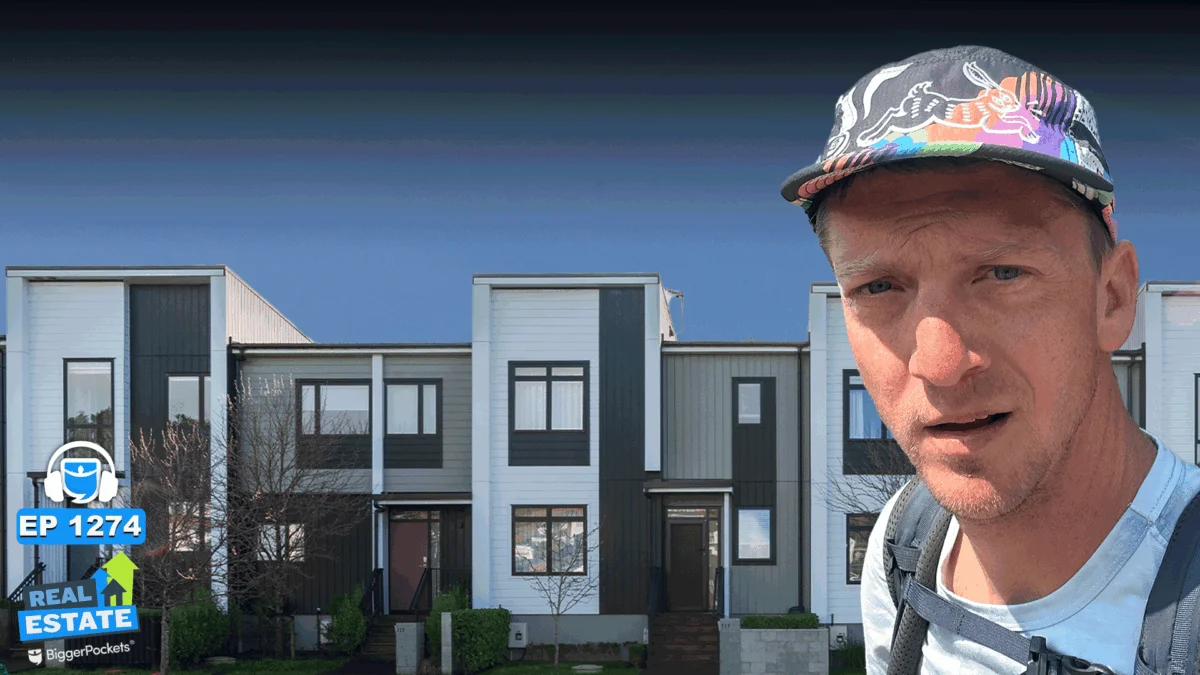
In a recent industry analysis and discussion, Joel Larsgaard, co-host of the How to Money podcast, and Dave Meyer, Chief Investment Officer at BiggerPockets, examined the intersection of psychological health and financial management. Larsgaard shared his personal trajectory from a household burdened by debt and "keeping up with the Joneses" to the construction of a resilient real estate portfolio. His story serves as a blueprint for navigating a modern economy characterized by higher interest rates, fluctuating housing prices, and shifting generational attitudes toward investing.
The Cognitive Cost of Financial Instability
The impact of money-related stress extends far beyond the ledger. Research into the psychology of scarcity suggests that constant worry about finances can lead to a significant drop in functional IQ. When individuals are preoccupied with meeting basic needs or managing debt, their "mental bandwidth" is consumed, leaving fewer cognitive resources for complex problem-solving, job performance, and long-term planning.
Dave Meyer noted that this creates a vicious cycle: financial anxiety leads to poor decision-making, which in turn exacerbates financial instability. For Larsgaard, the catalyst for change was witnessing the volatility of his parents’ finances. His father’s adherence to the common advice of buying "more house than one can afford" in anticipation of future raises proved disastrous when layoffs occurred. This experience instilled a vow in Larsgaard to prioritize financial literacy and stability over social status, a philosophy that has become a cornerstone of his professional advice to millions of listeners.
A Chronology of Strategic Growth: From 2009 to 2026
Larsgaard’s entry into the real estate market began in September 2009, a period of profound economic turmoil following the Great Recession. While the era is now viewed as a "golden age" for low-cost acquisitions, Larsgaard emphasizes that it was a time of immense uncertainty. Foreclosures and short sales were rampant, and many investors feared further price collapses.
His strategy began with a "no-brainer" house hack in Atlanta, Georgia. By purchasing a property with an extra room and renting it out, he effectively reduced his living expenses to a level comparable to or lower than local rent. This initial success established a scalable model that Larsgaard followed for the next 16 years:
- 2009–2011: Acquisition of the first single-family home in an up-and-coming Atlanta neighborhood for under $100,000.
- 2012–2015: Transitioning the first home into a full-time rental while moving into a slightly larger property nearby, utilizing low-interest financing.
- 2016–2020: Expansion into small multi-family units, including duplexes. Larsgaard focused on "sweat equity," self-managing the properties and performing repairs to maximize profitability and gain a deeper understanding of property maintenance.
- 2021–2025: Strategic "uncomfortable" moves, such as living in a smaller-than-ideal home during renovations to ensure the property would eventually serve as a high-yield rental.
- 2026: Managing a mature, diversified portfolio while navigating a market defined by higher entry costs and a plateau in rapid appreciation.
The 2026 Market: Challenges and Necessities
Investing in 2026 presents a vastly different landscape than the early 2010s. The "easy money" era of sub-3% interest rates has concluded, and the median home price in many U.S. markets has outpaced average income growth. Larsgaard acknowledges that while it is objectively harder to start a portfolio today, the necessity of doing so has never been greater.
Data from 2026 market reports suggests that the "United States housing market" is no longer a monolith. Instead, it is a collection of hyper-local economies. While some regions have seen significant drops in asking rents and property values, others remain resilient. This environment requires investors to conduct more rigorous due diligence, often involving 150 to 200 hours of local research before making an offer.
Furthermore, the "risk-off" sentiment of 2026 has forced investors to prioritize cash reserves and conservative projections. Factors such as a 10% vacancy rate and skyrocketing maintenance costs—particularly for major items like roof replacements and HVAC systems—must be built into any contemporary underwriting model.
Shifting Generational Paradigms: Gen Z and Beyond
Despite the challenging macroeconomic environment, there is a notable surge in financial engagement among younger generations. Gen Z is currently identified as the generation most keen on investing in history. Driven by skepticism regarding the future of Social Security and the decline of traditional pensions, younger Americans are taking a proactive approach to wealth building.
This demographic shift is accompanied by a broader debate over personal agency versus systemic headwinds. While critics argue that the middle class is being squeezed by inflation and housing costs, Larsgaard and Meyer contend that financial literacy remains the most potent tool for individual advancement. The rise of automatic 401(k) enrollment and the proliferation of accessible financial education through podcasts and digital platforms have lowered the barrier to entry for many, even as the "system" becomes more complex.
The Philosophy of "Stealth Wealth" and Lifestyle Design
A central theme of the Larsgaard-Meyer discussion is the rejection of "lifestyle creep"—the tendency for spending to increase in lockstep with income. Larsgaard advocates for a "stealth wealth" approach, where individuals prioritize asset accumulation over conspicuous consumption.
This philosophy is illustrated through the "craft beer" vs. "Tesla" analogy. Larsgaard argues that while it is important to spend on things that provide genuine joy—such as high-quality local beer or travel—it is equally vital to minimize costs on depreciating assets or status symbols that do not align with long-term goals. For example, both Larsgaard and Meyer continue to drive 20-year-old vehicles, viewing them as functional tools rather than reflections of their net worth.
This disciplined approach to spending allows for "optionality." Financial independence, in this view, is not a binary state reached at age 65, but a spectrum. Each intelligent investment—whether it is a single rental property or a diversified index fund—moves the individual further along that spectrum, providing more freedom to make career and life choices without the paralyzing fear of financial ruin.
Analysis of Broader Implications
The shift toward a "slow and steady" investment mindset reflects a broader maturation of the American retail investor. The speculative fervor that characterized the early 2020s has largely been replaced by a focus on fundamentals. Real estate, despite its current challenges, remains a favored asset class due to its tangibility and the power of compounding equity over time.
However, the 2026 economy also highlights the importance of diversification. Larsgaard remains an advocate for low-cost, diversified index funds alongside real estate. This "dual-track" approach mitigates the risks inherent in any single market and ensures that wealth is not entirely tied to the performance of a specific neighborhood or property type.
The transition from a high-growth, low-interest environment to a high-interest, plateauing market serves as a "cleansing effect" for the industry. It discourages over-leveraged "get-rich-quick" schemes and rewards those who view real estate as a long-term business rather than a speculative trade. For the modern investor, the goal is no longer just "getting rich," but achieving a state of "resilient optimism"—the ability to remain confident in the long-term strength of the U.S. economy while maintaining the cash reserves necessary to weather inevitable short-term recessions.
Conclusion: The Path Forward
The journey from financial anxiety to stability requires more than just a high income; it requires a fundamental shift in worldview. By treating personal finance as a learnable language and real estate as a tool for incremental growth, individuals can break the generational cycles of debt and worry.
As the 2026 market continues to evolve, the most successful participants will be those who embrace the "boring" fundamentals: high savings rates, conservative underwriting, and a 10-year minimum time horizon. In an era of headlines dominated by economic pessimism, the case for optimism remains strong for those willing to do the work, manage their risk, and prioritize their future selves over the Joneses next door.
